Understanding mass Worksheets for Ages 5-8
3 filtered results
-
From - To
Develop critical thinking and math skills with our "Understanding Mass Worksheets for Ages 5-8." At Kids Academy, we offer a variety of engaging, age-appropriate activities designed to teach young learners about comparing and measuring mass. These worksheets are perfect for classroom use or home practice, providing hands-on, practical exercises that help children grasp key concepts in a fun and interactive way. Each worksheet features colorful illustrations and easy-to-follow instructions to keep kids motivated and excited about learning. Equip your child with foundational math skills and make understanding mass an enjoyable journey with our expert-crafted resources.
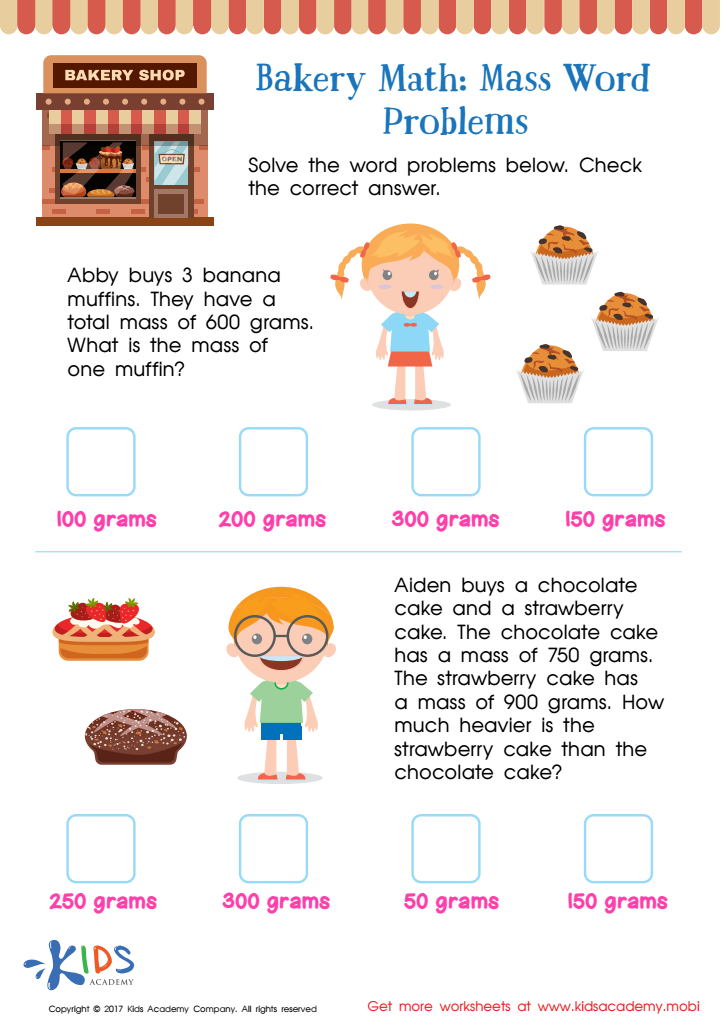
Mass Word Problems Worksheet
 Assign to My Students
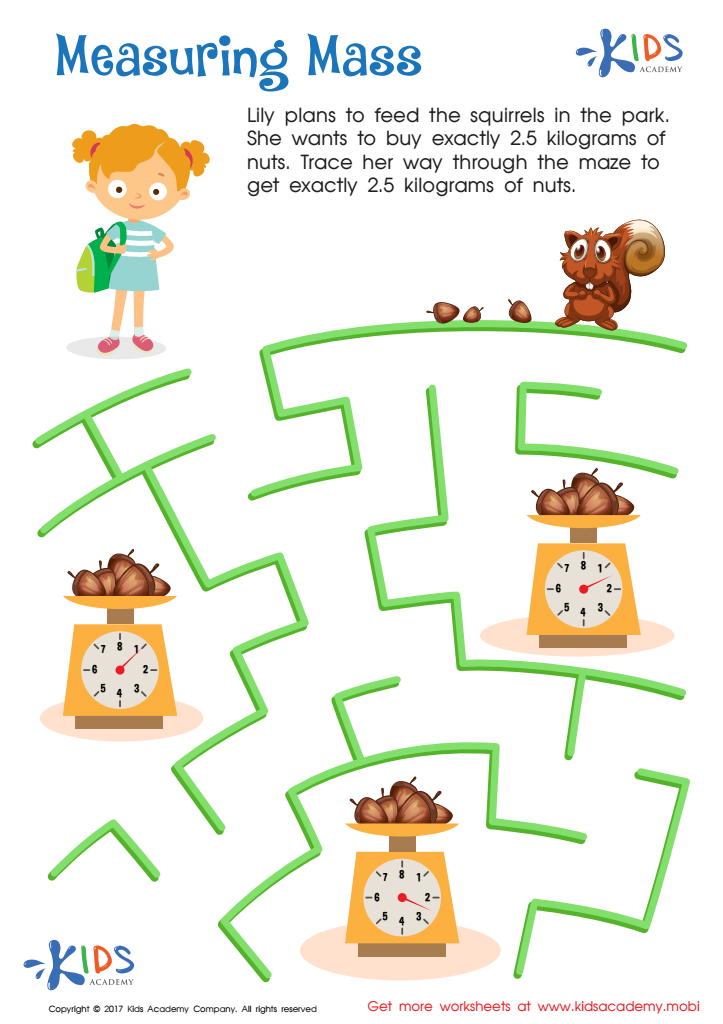
Measuring Mass Worksheet
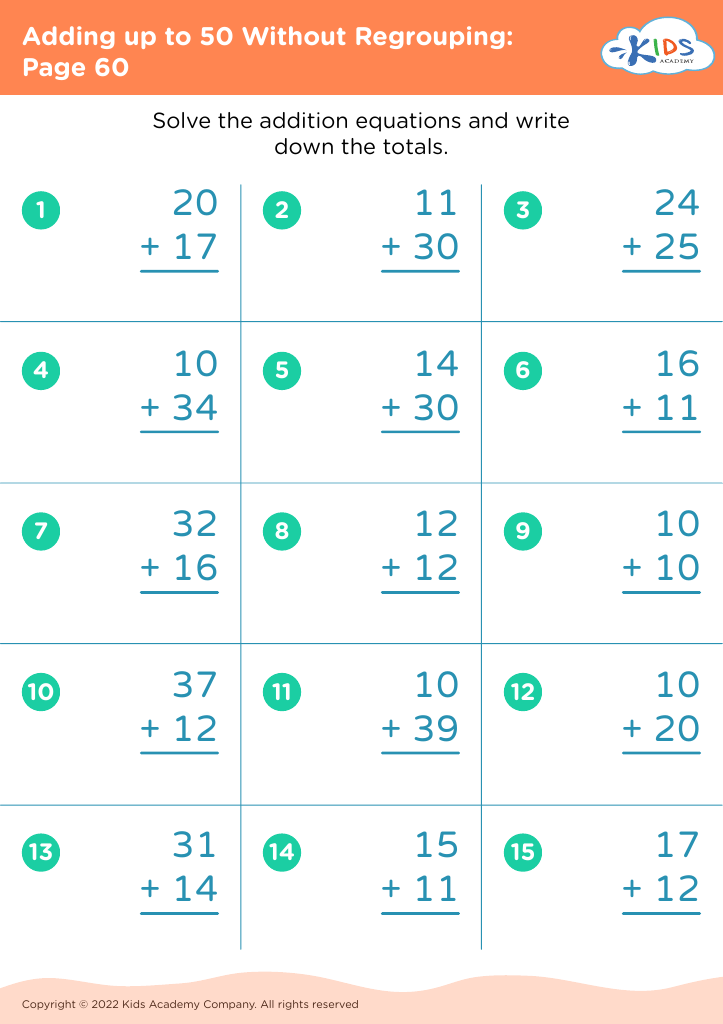







Understanding mass is crucial for young children, aged 5-8, because it lays the foundation for essential mathematical and scientific concepts. Mass helps children grasp the concept of measurement, comparison, and quantitative analysis, which are important skills in daily life and future academic pursuits.
When children learn about mass, they start to comprehend how different objects can weigh more or less, regardless of their size or shape. This understanding develops critical thinking and problem-solving skills. For example, a child might ask why a small stone feels heavier than a large sponge, fostering curiosity and inquiry-based learning.
Incorporating activities that focus on mass encourages hands-on exploration and active learning. Activities such as comparing the weights of different objects, using a balance scale, or simple experiments like floating and sinking can make learning engaging and fun. These experiences are vital for developing fine motor skills and hand-eye coordination.
For teachers, integrating mass-related activities aligns with key curriculum standards and prepares students for more complex mathematical concepts like volume and density. For parents, participating in mass-related activities can turn everyday moments, like cooking or playing with toys, into valuable learning opportunities.
In summary, understanding mass for children aged 5-8 develops their cognitive abilities, aligns with educational standards, and makes learning a joyful experience—setting the stage for lifelong curiosity and academic success.








