Understanding perspectives Worksheets for Ages 5-8
3 filtered results
-
From - To
Explore our "Understanding Perspectives Worksheets for Ages 5-8," designed to help young learners develop empathy and critical thinking skills. These engaging worksheets introduce children to the concept of diverse viewpoints through fun activities, role-play scenarios, and colorful illustrations. Each resource encourages kids to think about how others may feel or see a situation differently, fostering social awareness and emotional intelligence. Tailored to align with early education standards, these worksheets make learning about perspectives enjoyable and interactive. Perfect for classrooms or at-home learning, our materials support your child's growth as they learn to navigate and appreciate the diverse world around them.
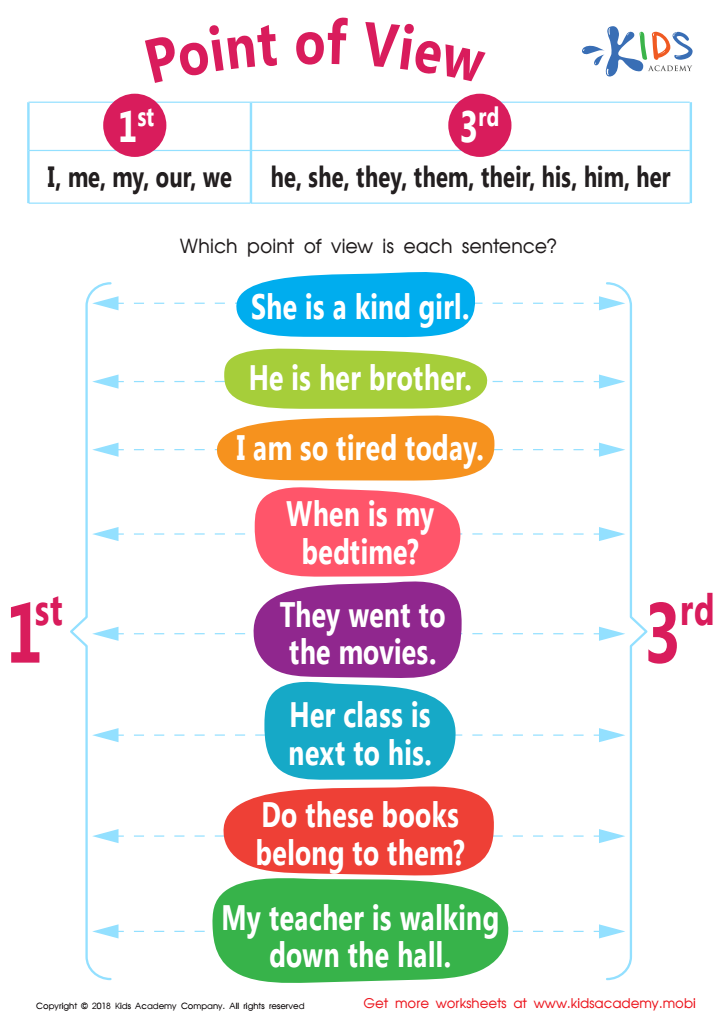
Point of View Worksheet
 Assign to My Students
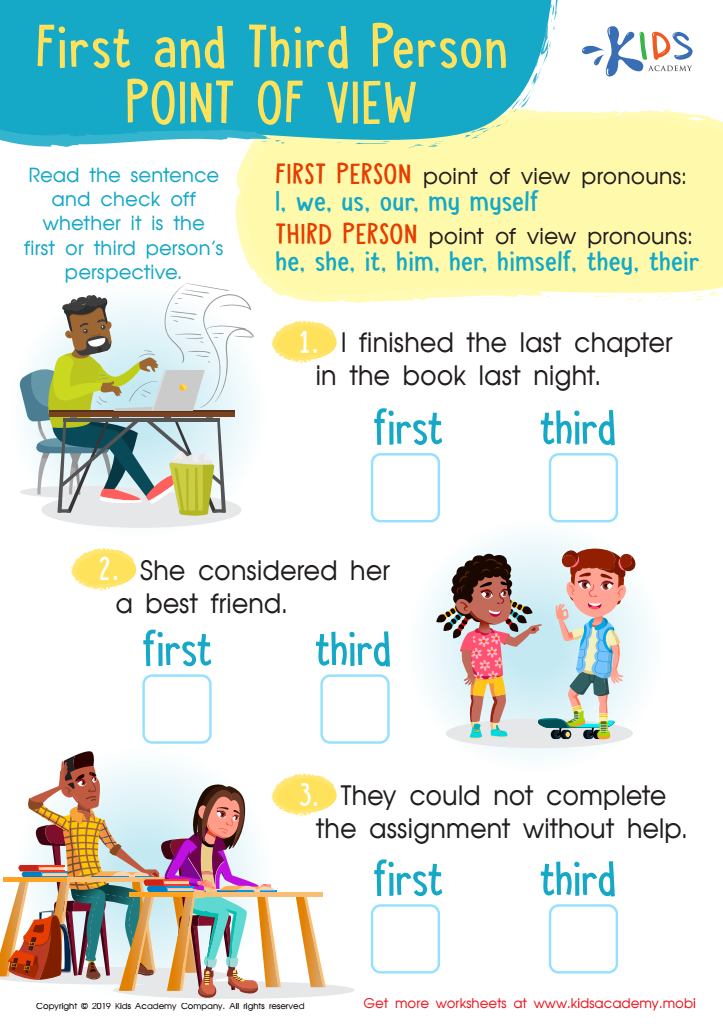
First and Third Person Point of View Worksheet
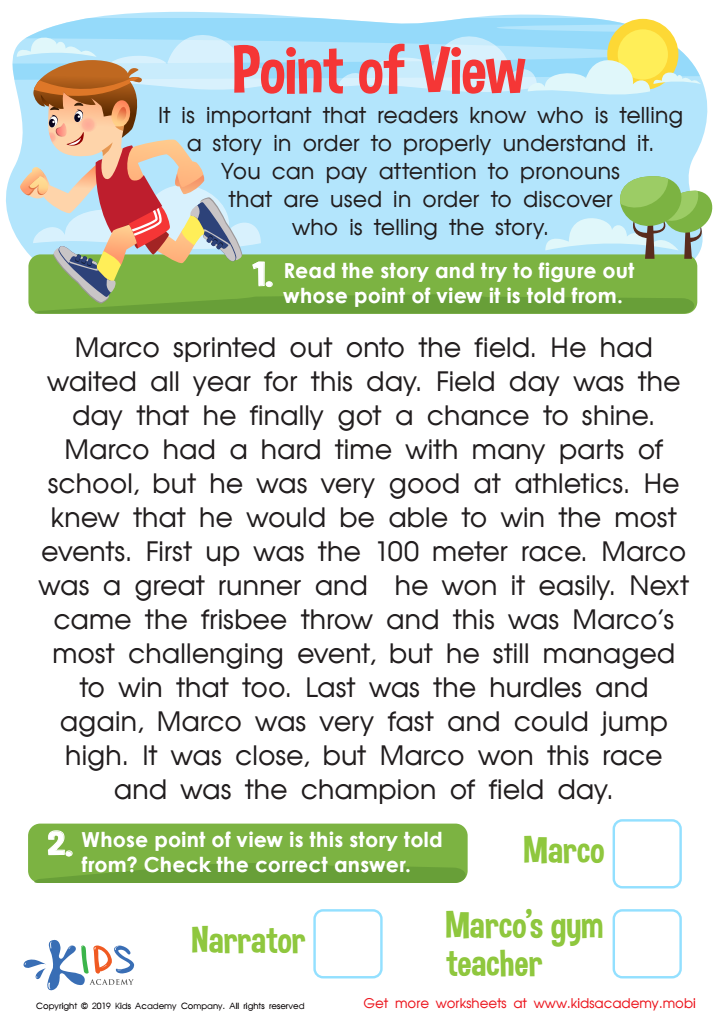
Point of View Worksheet







Understanding perspectives is crucial for children aged 5-8 as it fosters empathy, enhances social skills, and nurtures emotional intelligence. At this stage of development, children start to interact more with peers and begin to grasp that others may have different thoughts, feelings, and viewpoints. By encouraging them to recognize and appreciate diverse perspectives, parents and teachers can help children develop the ability to empathize with others. This skill not only helps children navigate friendships and social situations but also reduces bullying and conflicts among peers.
Moreover, grasping the concept of perspectives aids in language development, as children learn to articulate their own thoughts while considering how others might feel or think. This practice enhances communication skills, which are critical as they continue through their educational journey.
Collaboration and teamwork are integral to modern classrooms and society. Understanding perspectives prepares children to work effectively in groups, appreciate collaboration, and accept constructive criticism. Ultimately, nurturing this understanding helps create a foundation for respectful and inclusive interactions both inside and outside the classroom, shaping compassionate individuals who value diversity in thoughts and experiences. Therefore, it is essential that parents and teachers prioritize this aspect of emotional and social development.








