Understanding punctuation Worksheets for Ages 5-8
5 filtered results
-
From - To
Discover the joy of learning punctuation with our "Understanding Punctuation Worksheets" designed specifically for children ages 5-8. These engaging and colorful worksheets introduce young learners to essential punctuation marks, including periods, question marks, and exclamation points. Through fun exercises and interactive activities, kids will enhance their reading and writing skills while developing a strong foundation in grammar. Perfect for classroom use or at-home learning, our worksheets promote essential literacy skills and make learning enjoyable. Download your printable worksheets today and help your child become a confident communicator as they master the art of punctuation!
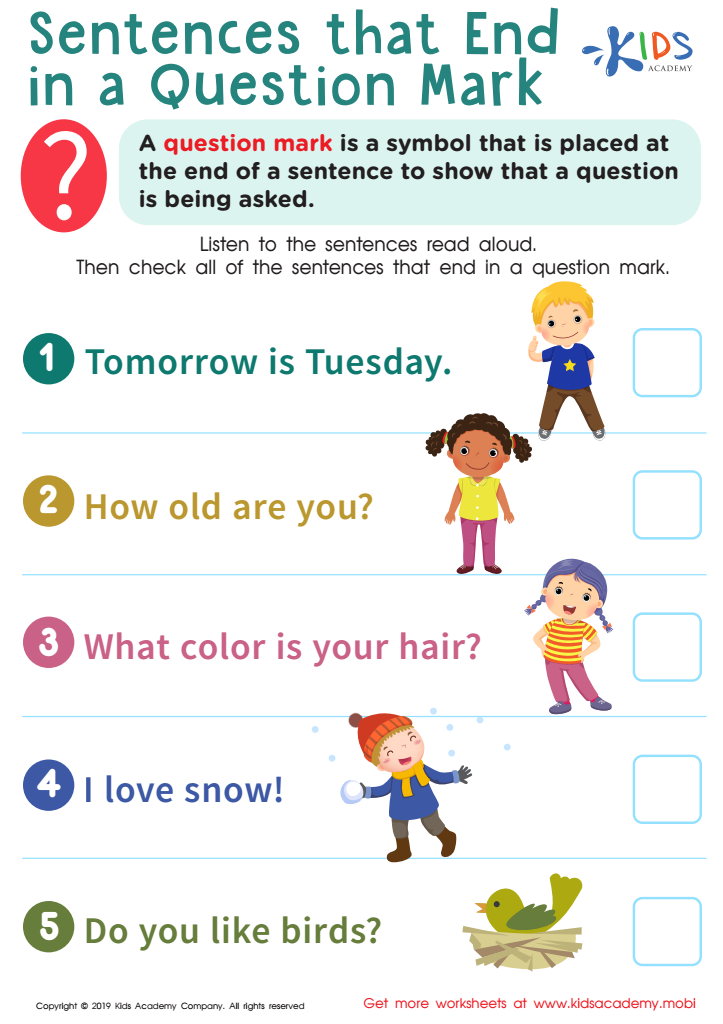
Sentences That End in an Question Mark Worksheet
 Assign to My Students
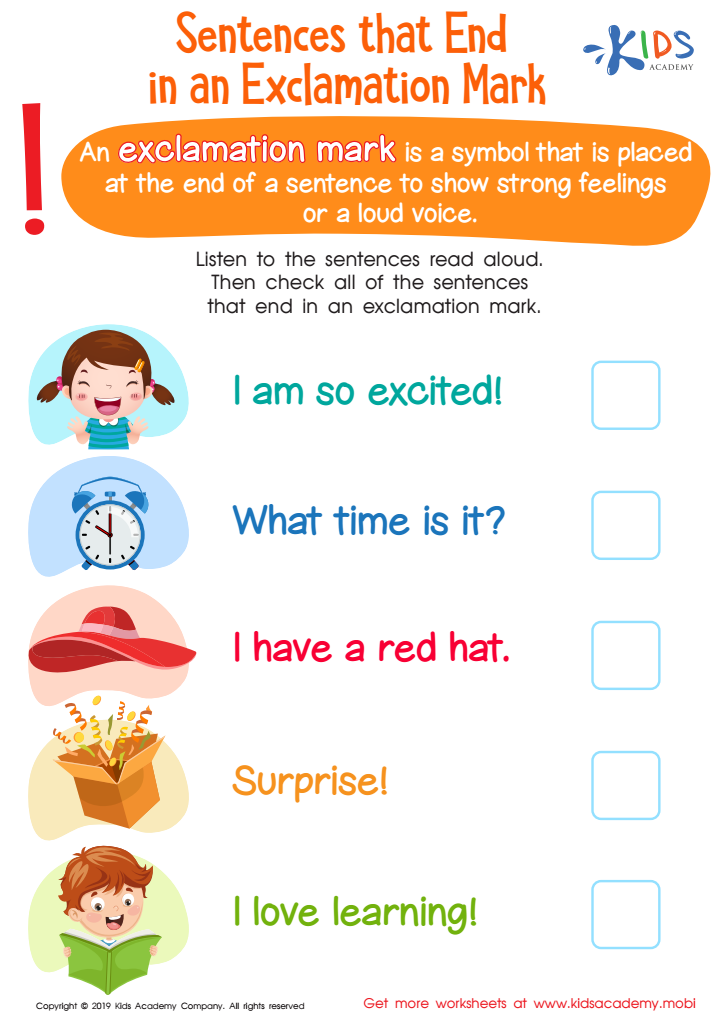
Sentences That End in an Exclamation Mark Worksheet
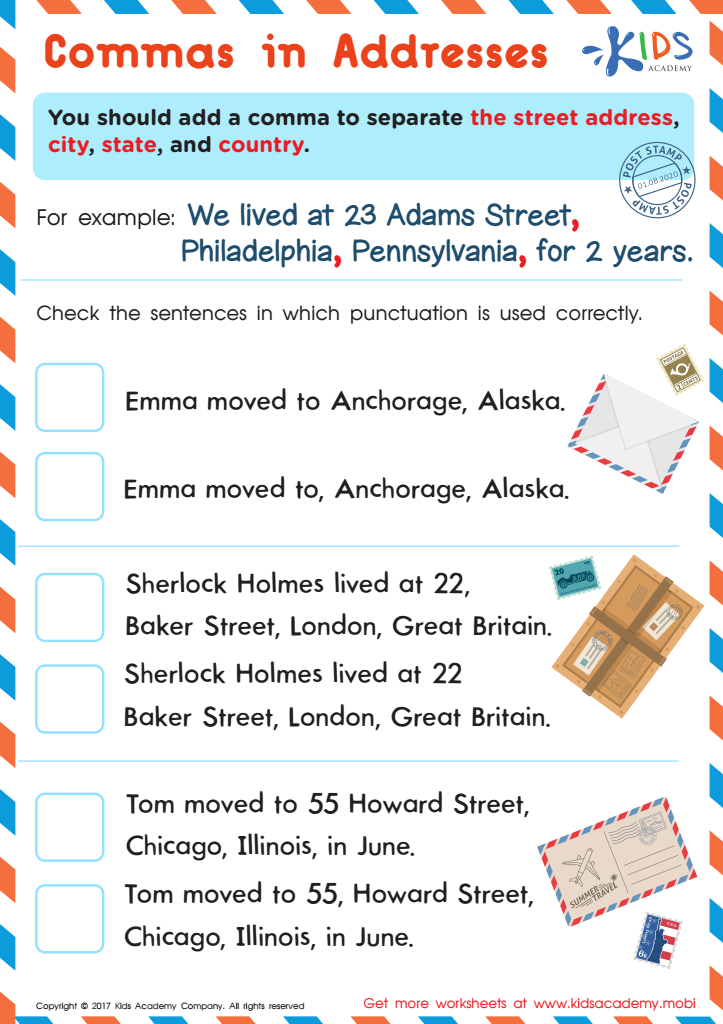
Commas in Addresses Worksheet






Understanding punctuation is crucial for children aged 5-8 as it serves as a foundational skill that enhances their literacy and communication abilities. During this developmental stage, children are primarily engaged in learning how to read and write, and punctuation plays a vital role in helping them make sense of the written word.
Firstly, punctuation marks such as periods, commas, question marks, and exclamation points help convey meaning. For example, a sentence can shift from a statement to a question simply by changing a punctuation mark, which affects comprehension. By teaching children the function of these marks, parents and teachers can improve their reading fluency and comprehension.
Moreover, mastering punctuation not only boosts children’s ability to understand others' writing but also hones their own writing skills. Proper punctuation contributes to clearer expression of thoughts and ideas, allowing children to share their stories effectively.
Lastly, early exposure to punctuation helps instill good writing habits, setting the stage for future academic success. For parents and teachers, fostering an understanding of punctuation is essential; it equips young learners with the tools they need to express themselves, comprehend texts, and engage in meaningful communication, all of which are critical skills throughout their educational journey.








