Understanding Sequences Worksheets for Ages 5-8 - Page 2
29 filtered results
-
From - To
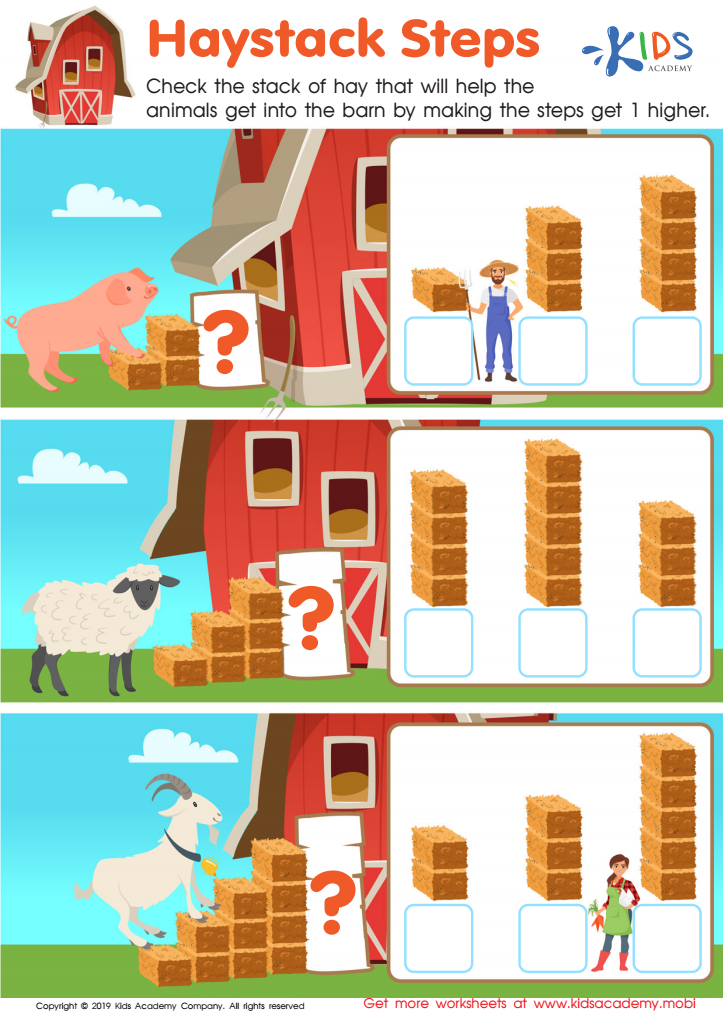
Haystack Steps Worksheet
 Assign to My Students





Understanding sequences is crucial for children aged 5-8 as it lays the foundation for various cognitive skills and future academic learning. At this age, children begin to comprehend patterns, ordinal numbers, and the concept of time, all of which are closely tied to sequences. Recognizing patterns helps children make predictions and solve problems, which enhances their logical reasoning abilities.
For parents and teachers, fostering an understanding of sequences can significantly impact a child's confidence in mathematics and literacy. In math, sequences form the basis of understanding multiplication, division, and more advanced concepts like functions. In literacy, recognizing sequences aids in understanding story structures and following instructions, supporting their reading comprehension.
Moreover, the ability to identify relationships and logical orders is essential for effective communication and critical thinking. By engaging in activities that promote sequencing, such as storytelling, arranging events, or sorting objects, parents and teachers can make learning enjoyable and interactive, reinforcing essential skills.
Investing time in teaching sequencing not only prepares children for formal education but also cultivates critical life skills that will assist them in problem-solving and decision-making throughout their lives. Ultimately, understanding sequences nurtures curious, analytical learners ready to grasp more complex subjects in the future.








