Unlock the fun of phonics with our "Understanding Syllables Worksheets for Ages 5-8"! Perfect for early readers, these engaging worksheets help children break down words into manageable syllables, boosting their reading fluency and pronunciation skills. From clapping out syllables to identifying them in words, each activity is designed to make learning interactive and enjoyable. Kids will love the colorful, kid-friendly illustrations and parents will appreciate the structured, educational content. Provide your child with the building blocks for successful reading with these dynamic and effective worksheets. Start your phonics adventure today!

Check out this FREE "Understanding syllables" Trial Lesson for age 5-8!

Find Spelling Patterns

Favorites
With answer key
Interactive
  • 5-8
  • Understanding syllables
Closed Syllable Worksheets for 3rd Grade

Closed Syllable Spelling Worksheet

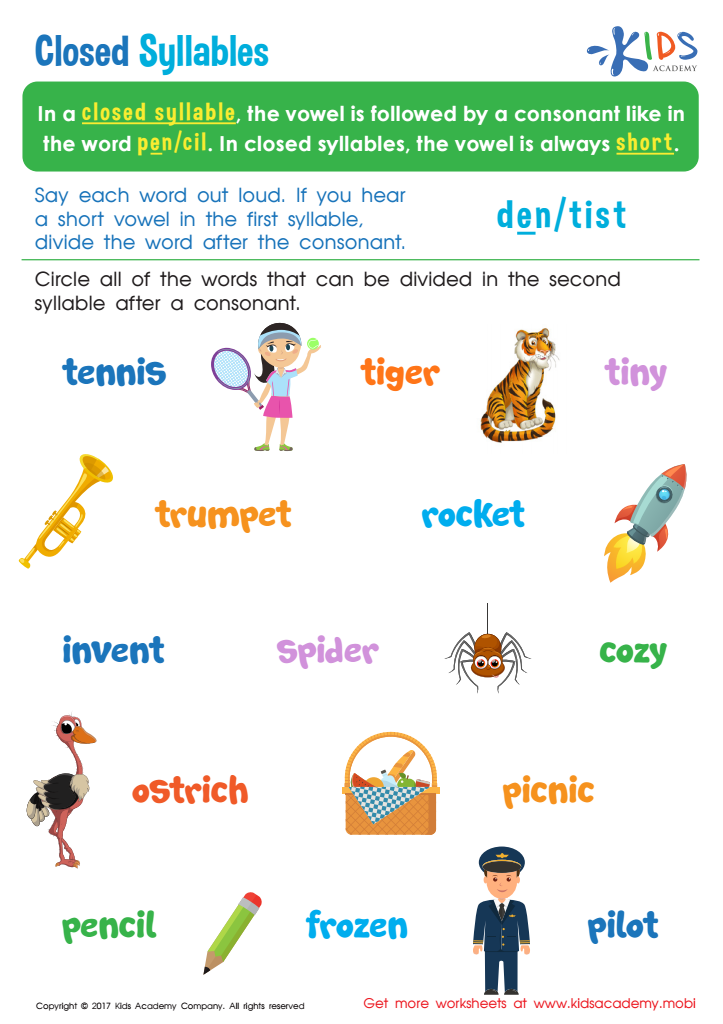
Learning syllables can be tough, but we can make it easier! Look for long and short vowel sounds to identify closed syllables. This worksheet can help 3rd graders do just that, with its fun and colorful design.
Closed Syllable Spelling Worksheet
Worksheet
Open Syllables Worksheet

Open Syllables Worksheet

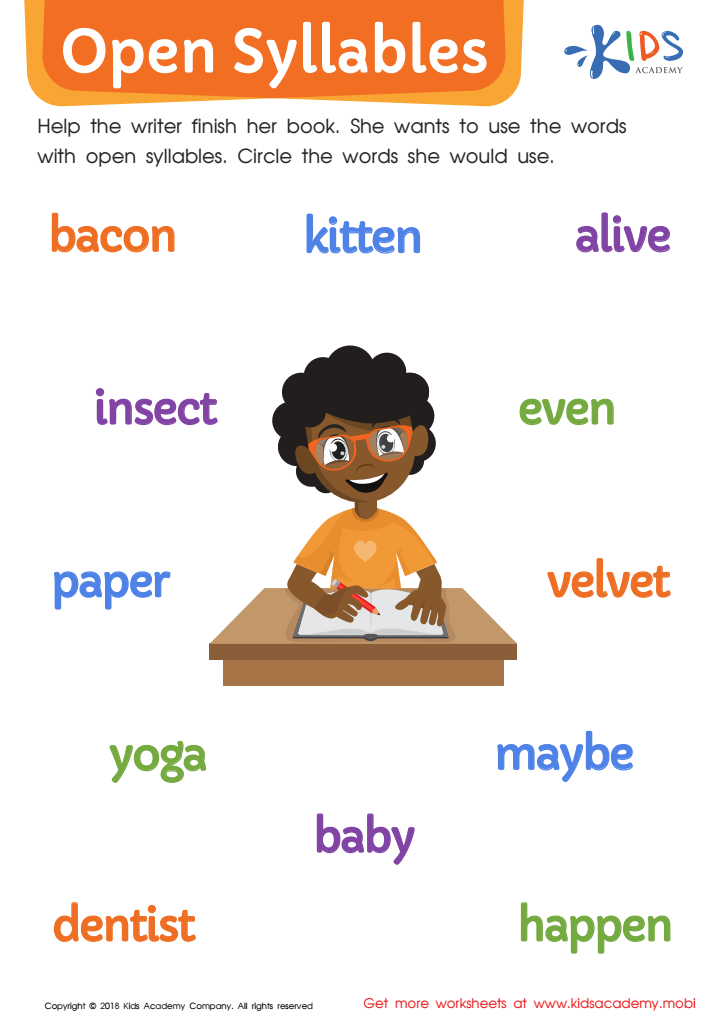
Before beginning this worksheet, make sure your child knows what open syllables are. If not, take time to teach them with examples. Then, help the writer finish her book by circling words with open syllables. She needs your child's help!
Open Syllables Worksheet
Worksheet
Which Is the Onset? Worksheet

Which Is the Onset? Worksheet

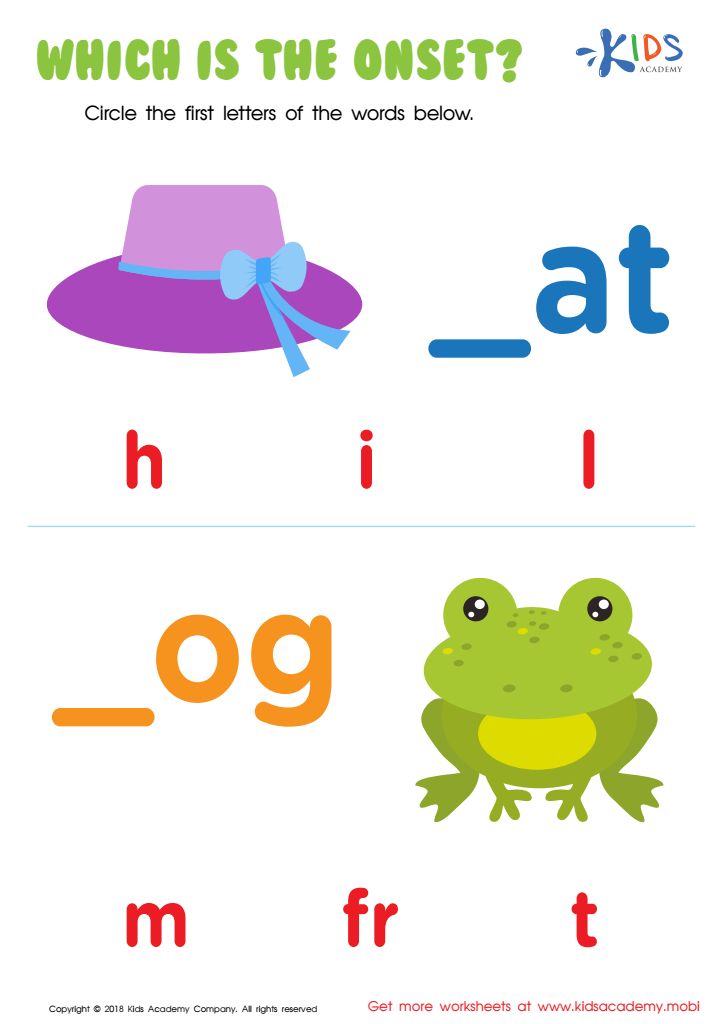
Help your children learn to spell with this bright, fun worksheet. Struggling with spelling small words can make reading and writing sentences difficult. Encourage them to look at the pictures, say the names aloud and circle the correct first letter from the options. They will soon overcome any reluctance to spell.
Which Is the Onset? Worksheet
Worksheet
Word structure worksheet: syllables

Finding Syllables Word Structure Worksheet
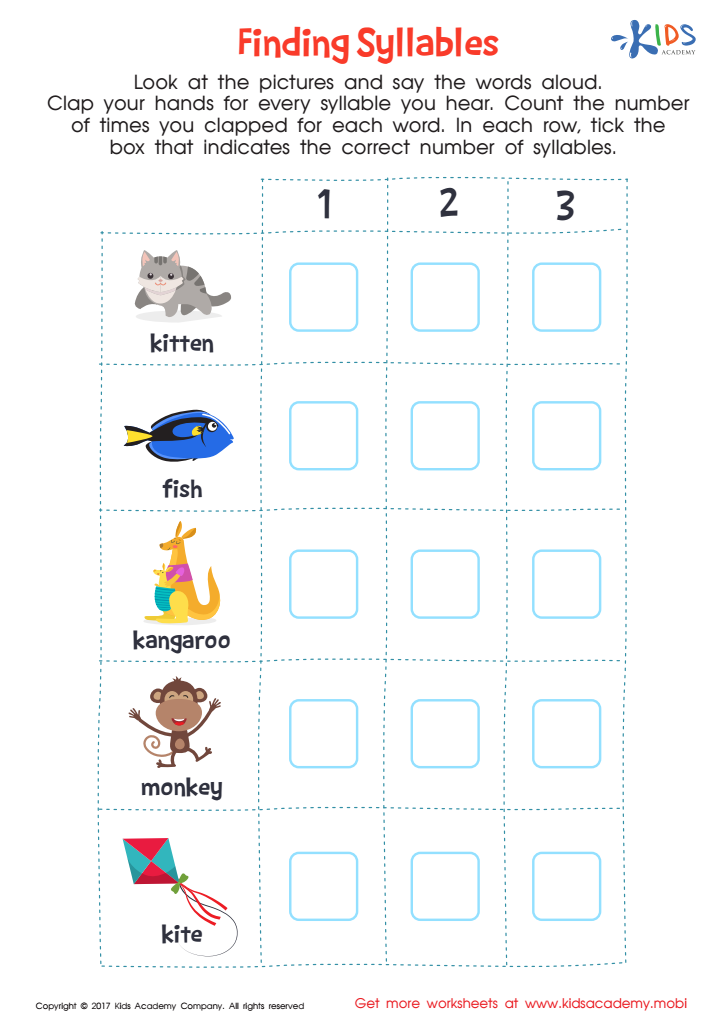
Have your kid clap and count syllables in words to improve their reading and spelling! Use this word structure worksheet for a fun activity - syllables!
Finding Syllables Word Structure Worksheet
Worksheet
The Order of Syllables Worksheet

The Order of Syllables Worksheet

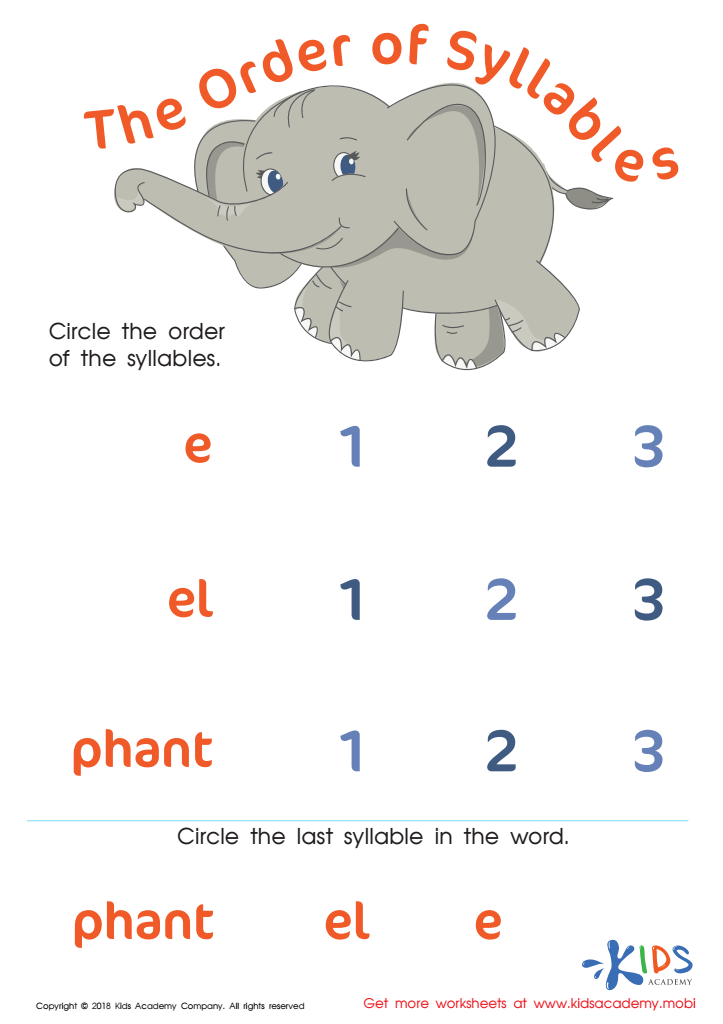
Syllabication is vital for prereading and decoding words. Download this fun, free worksheet to help your reader practice breaking words into syllables and arranging them for reading. It also strengthens fine motor skills as they trace the numbers for each syllable, guided by a cheerful elephant!
The Order of Syllables Worksheet
Worksheet
Finding Syllables in Long Vowel Words Worksheet

Finding Syllables in Long Vowel Words Worksheet

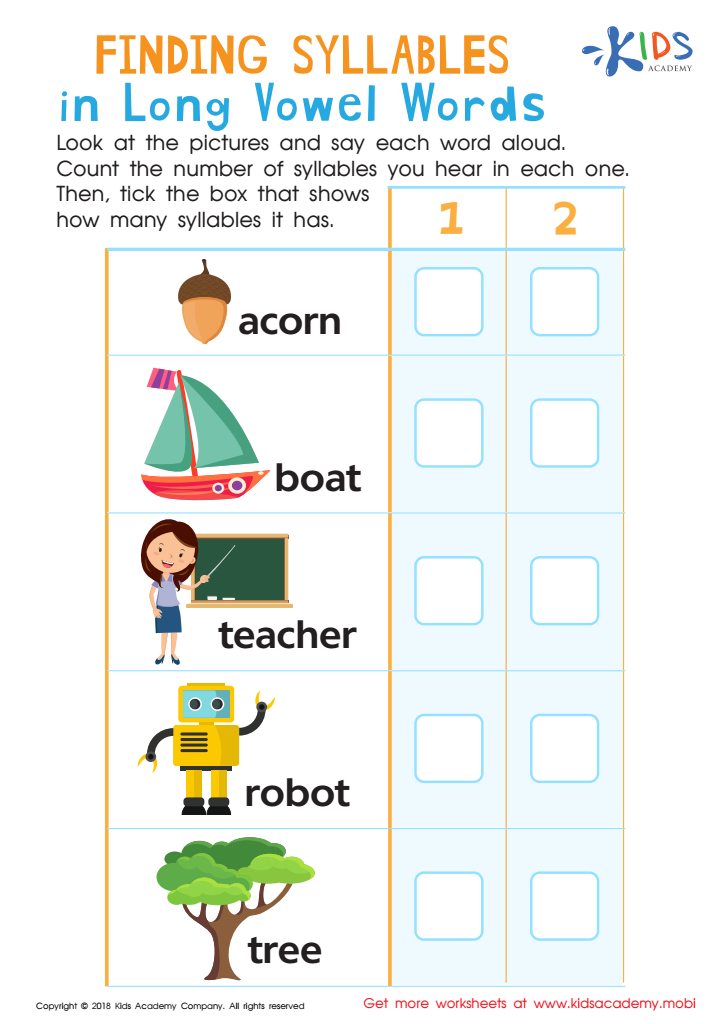
Help your kids identify objects and better count syllables in words. Look at the printout images with them and have them say each word out loud. Ask them to count syllables and tick the box with the correct number. With this worksheet, your kids will become more skilled.
Finding Syllables in Long Vowel Words Worksheet
Worksheet
Worksheet: Spelling Words Ending with -le, -el and -al

Spelling Words Ending with –le, –el and –al Worksheet
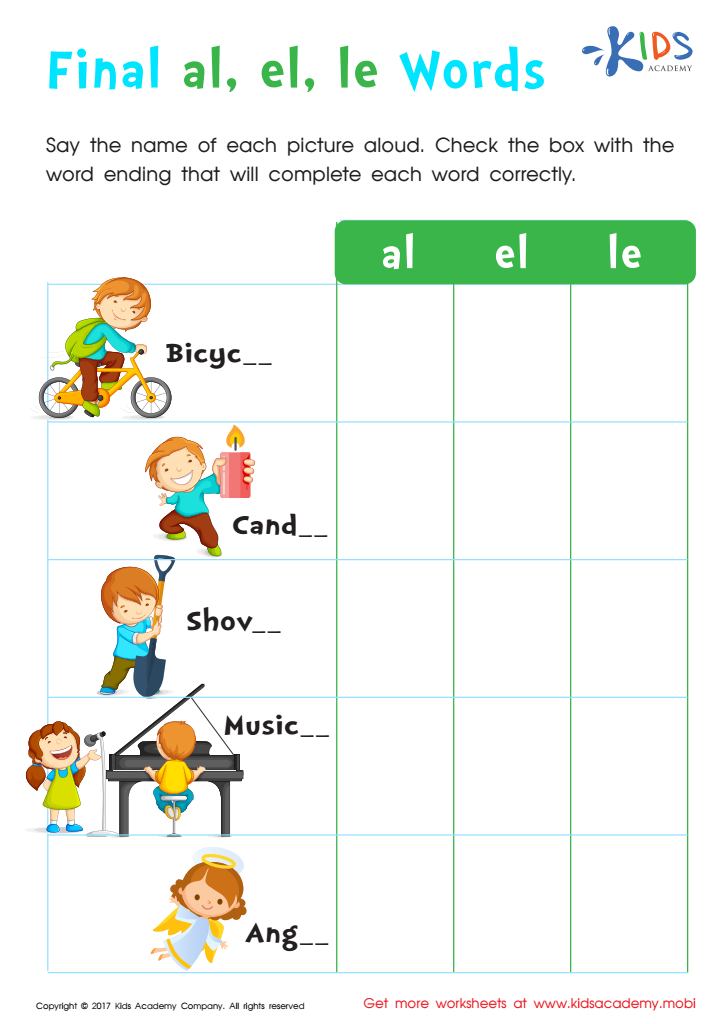
Spelling tricky words with the same ending sounds can be fun with this worksheet! Kids learn to spell -le, -el, and -al words while enjoying colorful pictures. It's a great way to refine their usage of tricky word endings.
Spelling Words Ending with –le, –el and –al Worksheet

Worksheet
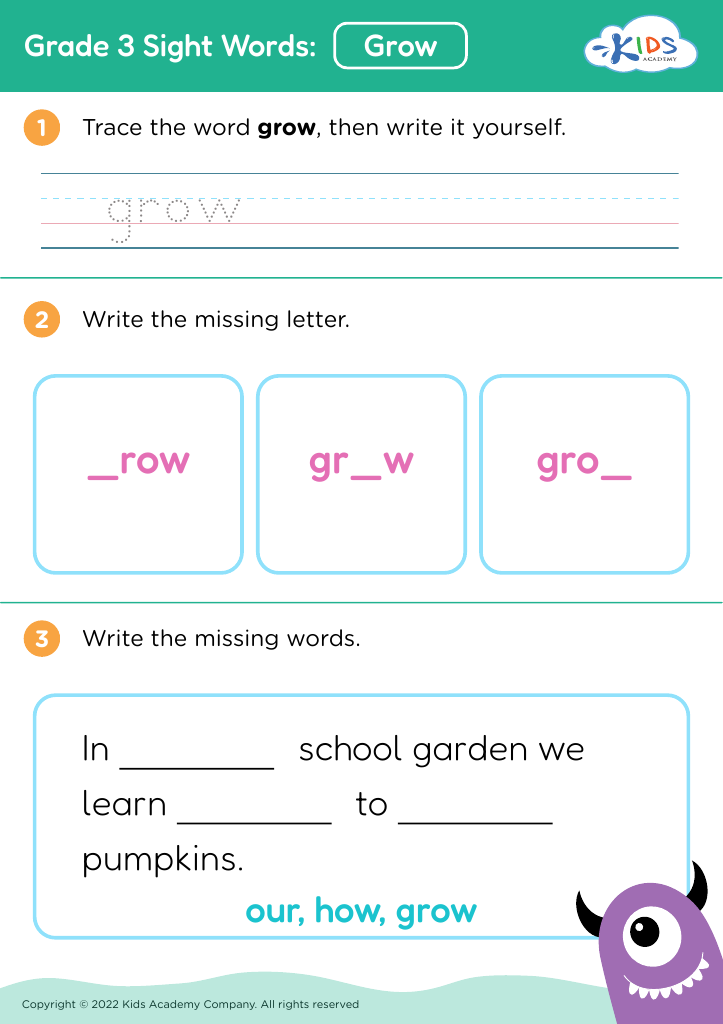
Grade 3 Sight Words: Grow

Grade 3 Sight Words: Grow

Grade 3 Sight Words: Grow
Worksheet


Understanding syllables is crucial for children aged 5-8 as it lays the foundation for strong reading and spelling skills. Syllables, or units of sound in a word, help children break down and decode unfamiliar words, making them less intimidating and more approachable. When kids learn to identify and count syllables, they can improve their phonemic awareness—how sounds function in language—which is a key predictor of future reading success.

For parents and teachers, focusing on syllable instruction can make a significant difference in a child's literacy development. Phonological awareness, including recognizing syllables, helps children understand the rhythm and structure of words. This understanding aids them in accurate pronunciation, improves their spelling by helping them segment words correctly, and boosts their reading fluency and comprehension.

Moreover, syllable practice can be engaging and fun, involving clapping hands, tapping toes, or using visual aids—all activities that keep young children motivated and attentive. Encouraging such early literacy skills also provides a strong groundwork that will support learning new, more complex concepts as children grow.

Investing in syllable awareness early on can facilitate smoother progress in literacy, creating confident, capable readers who are better poised to tackle academic challenges in later years.