Visual recognition skills Worksheets for Ages 5-8
4 filtered results
-
From - To
Enhance your child's cognitive development with our Visual Recognition Skills Worksheets for Ages 5-8. These engaging and educational worksheets are designed to improve children's ability to recognize shapes, patterns, letters, and numbers through fun activities. By working through these exercises, young learners will strengthen critical visual recognition abilities, laying a solid foundation for reading and math skills. Our worksheets use vibrant illustrations and age-appropriate challenges to keep kids motivated and entertained. Perfect for both homeschooling and classroom environments, these tools are crafted to support educators and parents in fostering essential learning skills. Visit Kids Academy and start your child's journey to visual mastery today!
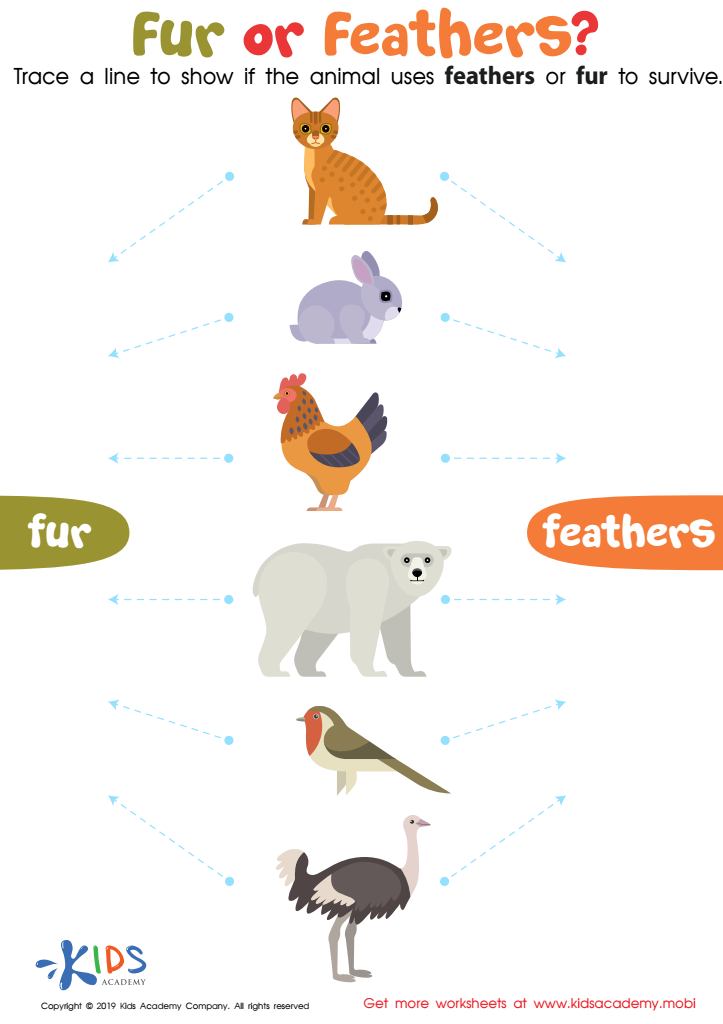
Fur or Feathers? Worksheet
 Assign to My Students
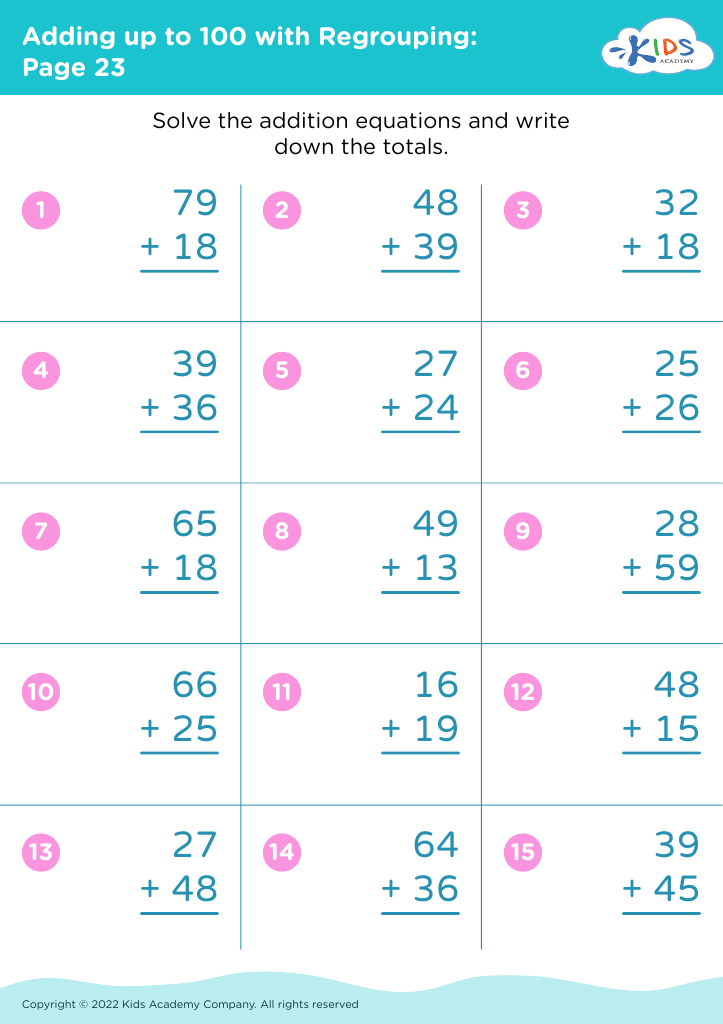
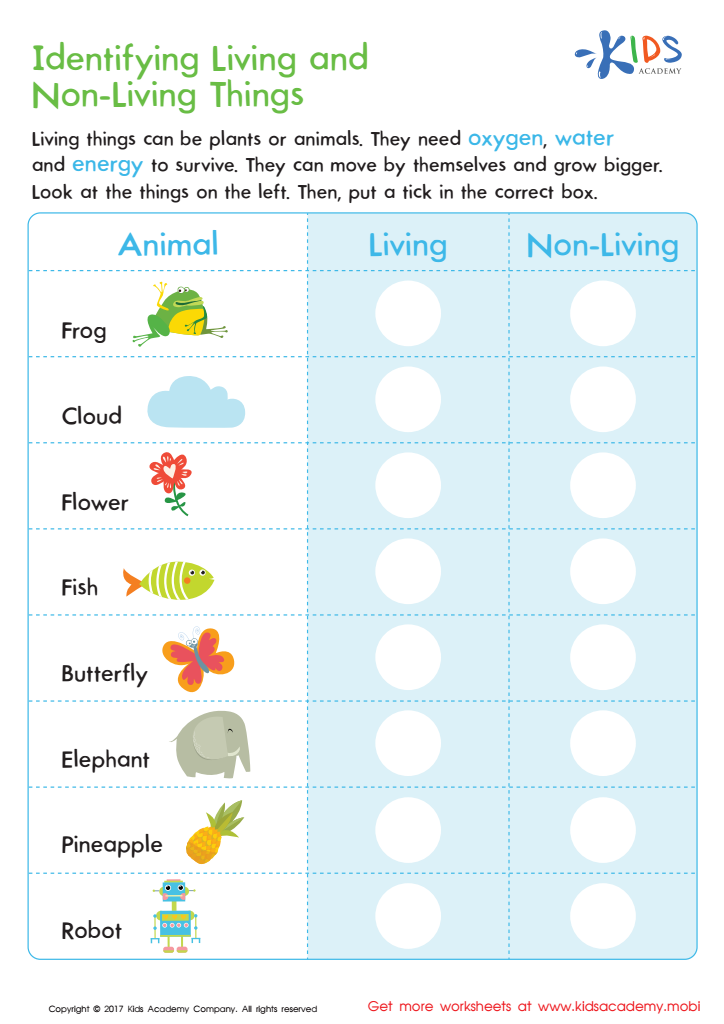
Identifying Living or Non–living Worksheet
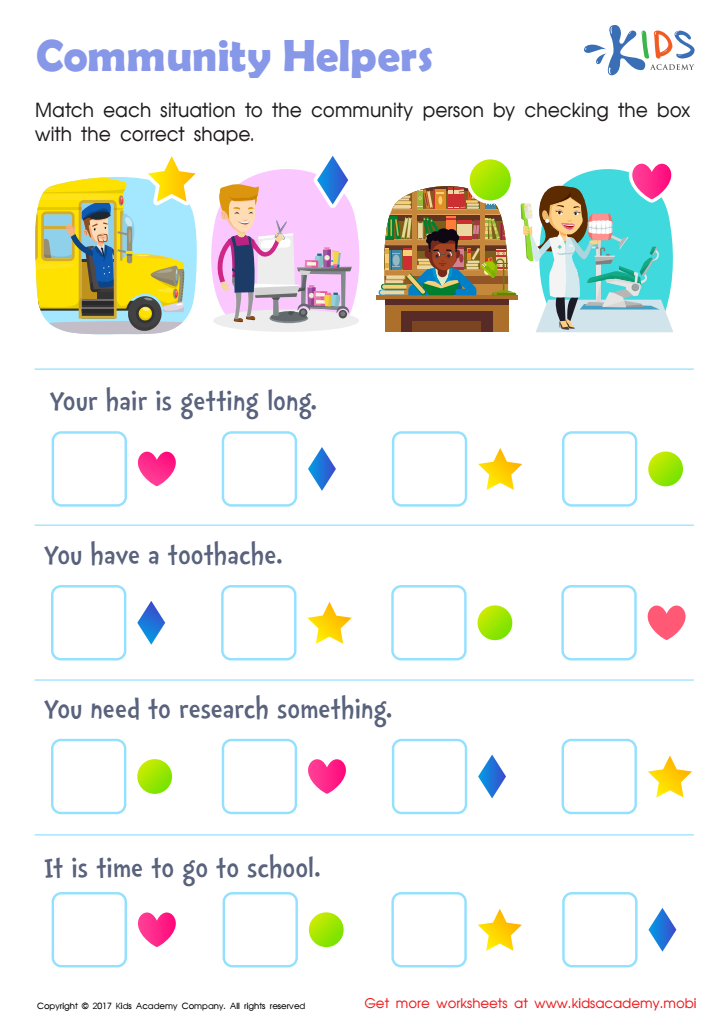







Visual recognition skills are foundational for children aged 5-8 as they play a critical role in their overall cognitive development and academic success. These skills involve the ability to process and interpret visual information efficiently, which is essential for learning to read, write, and do arithmetic. For instance, distinguishing between letters and numbers, matching shapes, and recognizing patterns are all tasks that rely heavily on visual recognition.
Improving these skills can significantly boost a child’s reading ability. For example, identifying letters and words quickly helps in developing fluency and comprehension, making reading a more enjoyable and less strenuous activity. Visual recognition is also crucial in math, where children need to understand symbols and number patterns.
Moreover, strong visual recognition skills contribute to better memory and attention, allowing children to focus on classroom activities longer and remember instructions more effectively. These skills also support the development of other essential areas, such as hand-eye coordination which is important for writing and drawing.
By nurturing visual recognition skills, parents and teachers can help lay a solid foundation for a child's academic journey. Activities like puzzles, matching games, and drawing can be both fun and educational, giving children a head start in critical cognitive areas. Therefore, investing time in developing these skills can yield long-term benefits for a child’s educational trajectory.








