
Weather Vocabulary Worksheets for Ages 5-8
5 filtered results
Difficulty Level
Grade
Age
-
From - To
Subject
Activity
Standards
Discover an engaging collection of Weather Vocabulary Worksheets designed specifically for children aged 5-8! These interactive resources help young learners explore essential weather terms through fun activities and colorful illustrations. Each worksheet aims to build vocabulary, improve reading comprehension, and enhance language skills in a playful manner. From matching terms to their definitions to completing sentences with appropriate weather words, our worksheets cater to a variety of learning styles. Perfect for classroom use or home practice, these resources inspire curiosity about the natural world while making learning enjoyable. Equip your child with the knowledge they need to confidently discuss weather phenomena!
Favorites
With answer key
Interactive
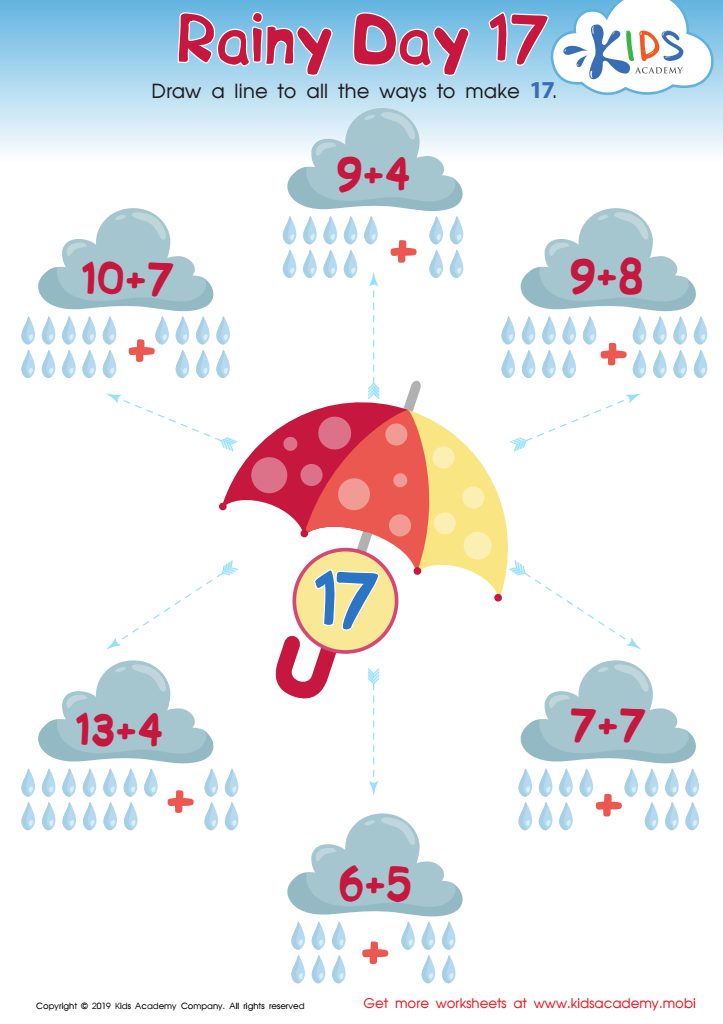
Rainy Day 17 Worksheet
Assist your kids with the 6 equations given. Each cloud displays the sum of two numbers, some of which make 17. Guide them to figure out the total of both numbers when added and draw a line to the umbrella in the center to illustrate the different ways to make 17. This activity will sharpen their addition skills.
Rainy Day 17 Worksheet
Worksheet
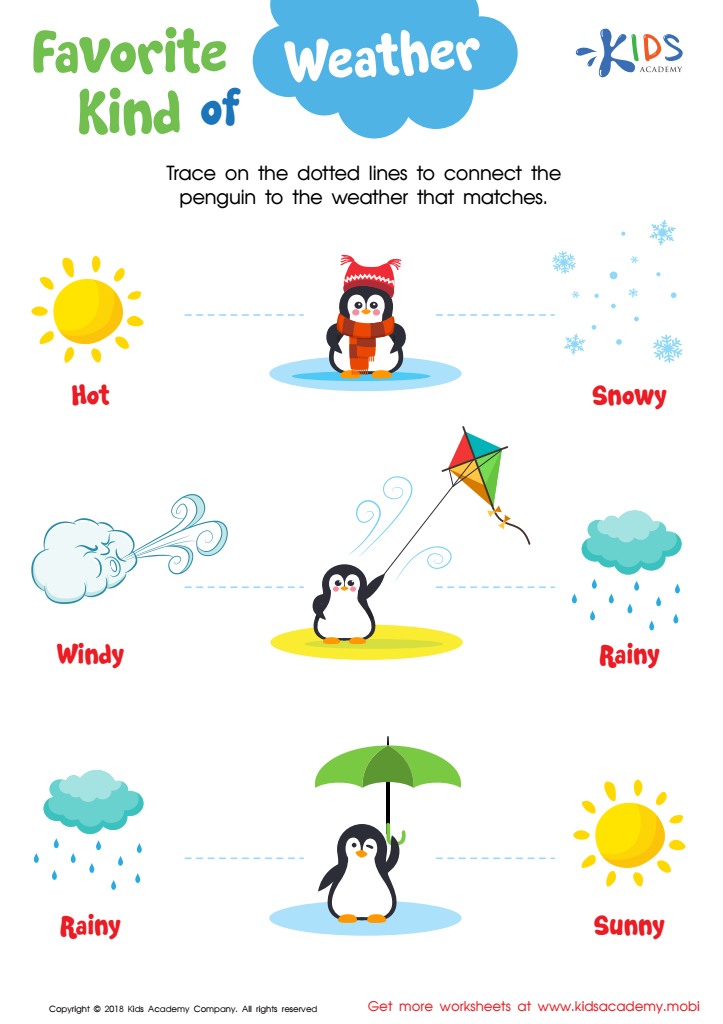
Favorite Kind of Weather Worksheet
!
Help your child understand weather and seasons with this fun worksheet featuring a cute penguin. They'll learn to recognize types of weather and associate them with seasons. To practice their fine motor skills, they'll trace lines to select the right seasons and weather. Kids will make a new friend while broadening their knowledge of nature.
Favorite Kind of Weather Worksheet
Worksheet
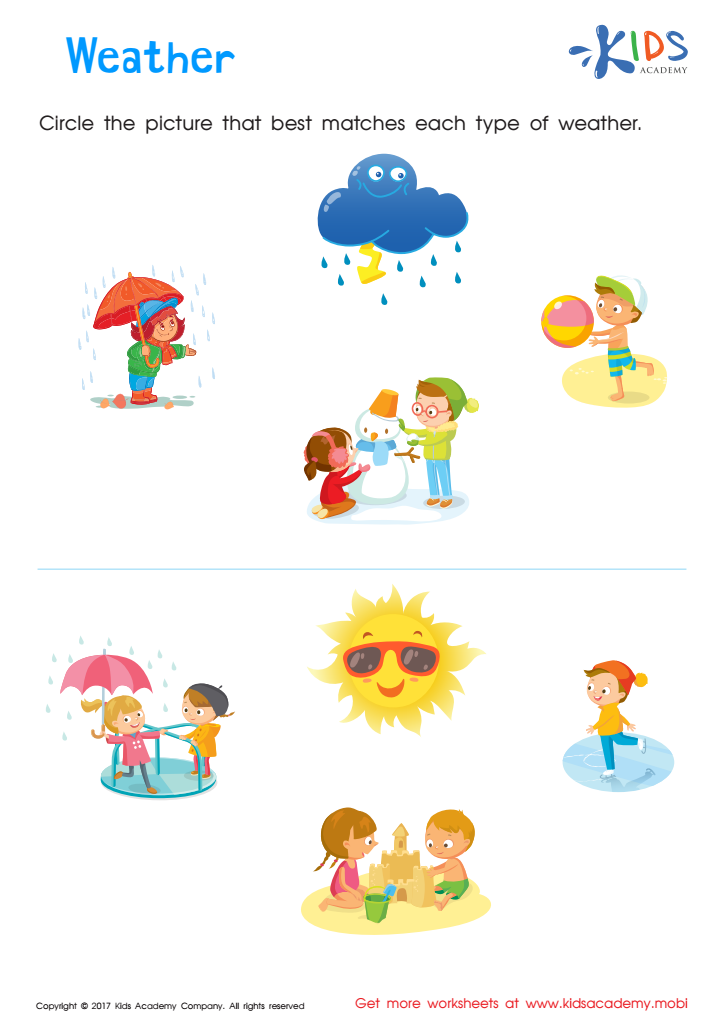
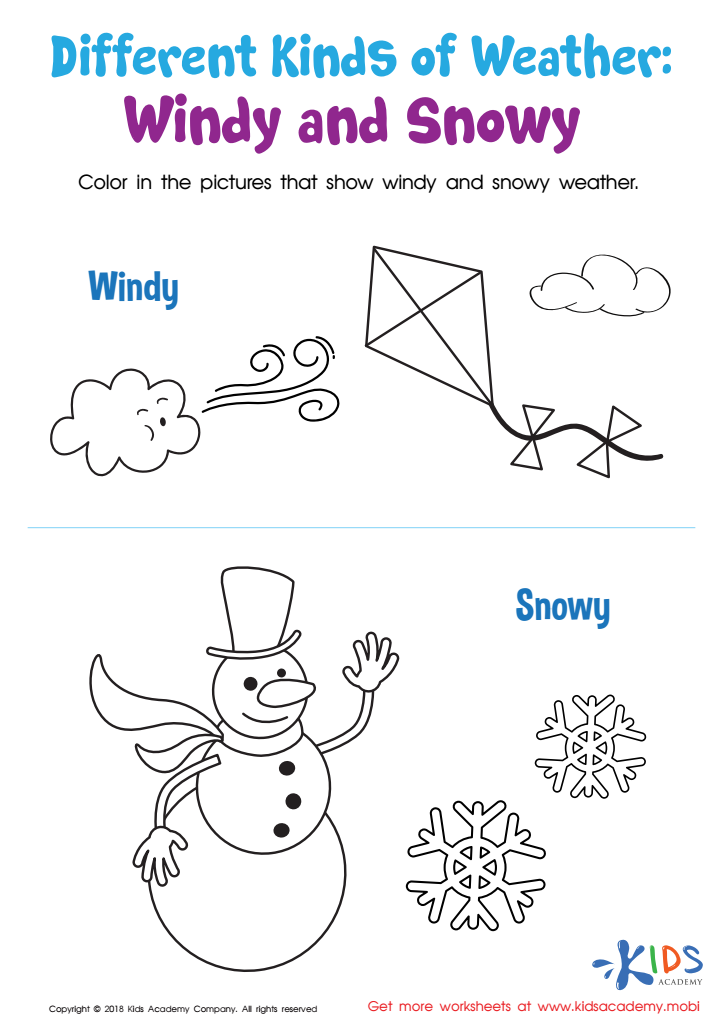
Different Kinds of Weather: Windy and Snowy Worksheet
Invite your little learner to practice their fine motor skills and learn about nature with this fun and charming PDF worksheet! Reinforce weather patterns and examine their environment as they color, giving them a foundation for understanding how weather affects them. No matter the weather, your learner will have a blast!
Download (PDF)
 Assign to My Students
Assign to My Students
Different Kinds of Weather: Windy and Snowy Worksheet
Worksheet
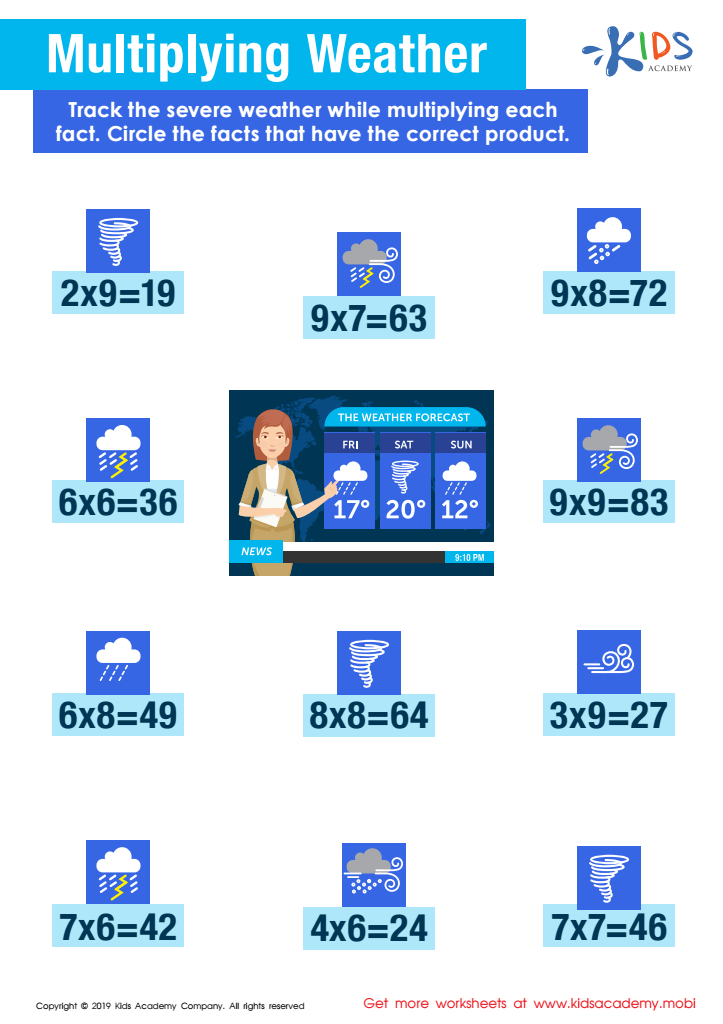
Multiplying Weather Worksheet
Most kids love playing outdoors, but weather can affect what we can do. Rain and snow can keep us from getting outside and even cancel school! Weather forecasters help us prepare for the day. In this worksheet, multiply facts to track severe weather and circle the ones with the right answer.
Multiplying Weather Worksheet
Worksheet
Join Kids Academy for Free
Who is primarily going to use this learning content?








Understanding weather vocabulary is crucial for children aged 5-8 as it not only enhances their language skills but also connects them to the world around them. Early exposure to weather-related terms such as "sunny," "rainy," "storm," and "temperature" helps children build a foundation for scientific literacy. This vocabulary allows them to describe and understand the daily weather patterns, leading to greater engagement with nature and their environment.
Moreover, weather vocabulary develops critical thinking skills. As children learn terms related to weather conditions, they become more capable of making predictions and discussing causes and effects. This understanding fosters curiosity and encourages observational skills, as children learn to connect information and analyze changes in their surroundings.
In addition, weather education is essential for safety. By understanding weather-related terminology, children can better comprehend weather reports and advisories, helping them make informed decisions about outdoor activities.
Ultimately, incorporating weather vocabulary into a child's education empowers them with knowledge, stimulates their imagination, and supports their social interactions. Parents and teachers should prioritize this learning as it enriches a child's cognitive and emotional development while promoting responsible citizenship in a climate-affected world.








