Comparing Fractions Adding 2-digit Numbers Worksheets for Ages 5-8
6 filtered results
-
From - To
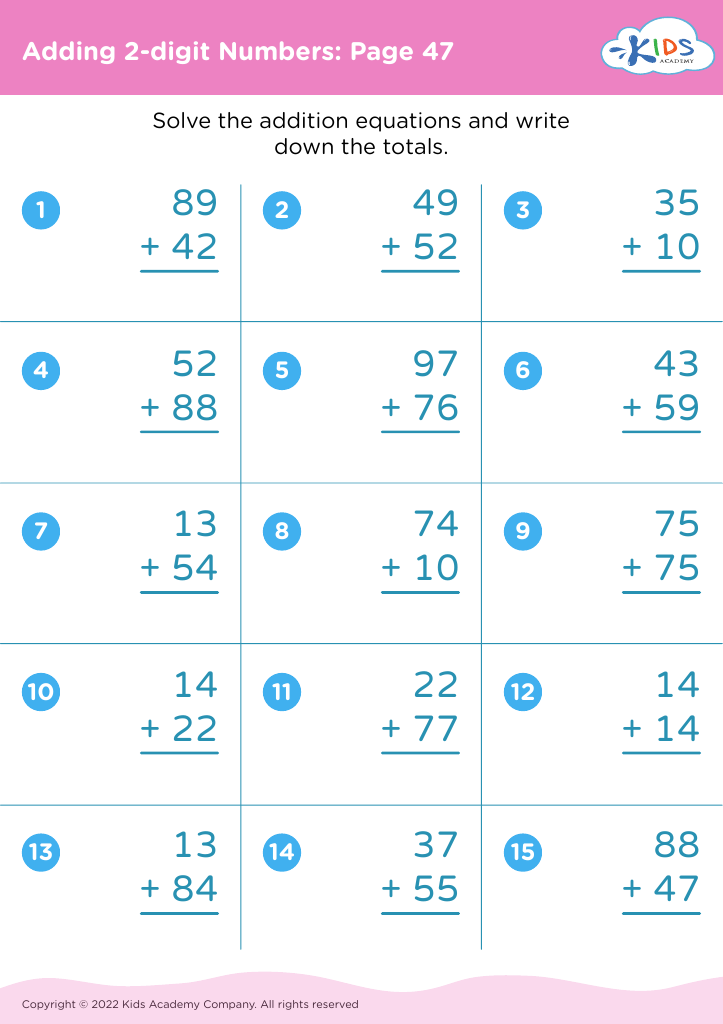
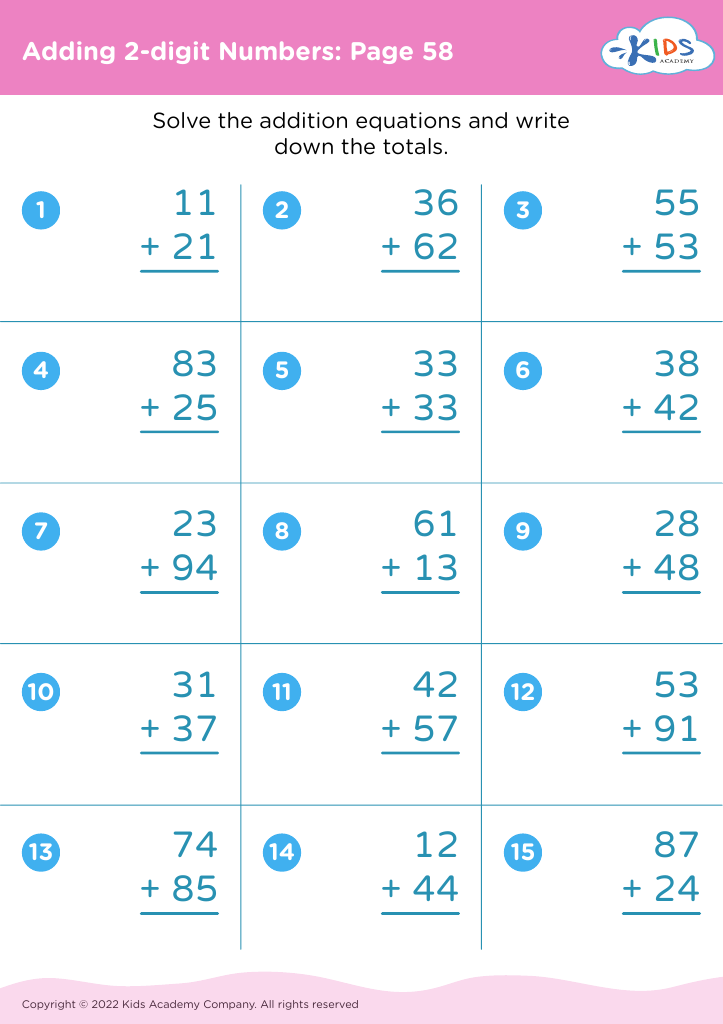
Discover our engaging "Comparing Fractions & Adding 2-Digit Numbers Worksheets" designed specifically for children ages 5-8! These beautifully crafted worksheets provide a fun and interactive way for young learners to understand fundamental math concepts. Children will develop their skills in comparing fractions and mastering the addition of two-digit numbers through a variety of stimulating exercises. With colorful illustrations and easy-to-follow instructions, these worksheets make learning enjoyable and effective. Perfect for classroom use or at-home practice, help your child build a strong math foundation while boosting their confidence! Explore our collection today and watch your child thrive in their math journey!
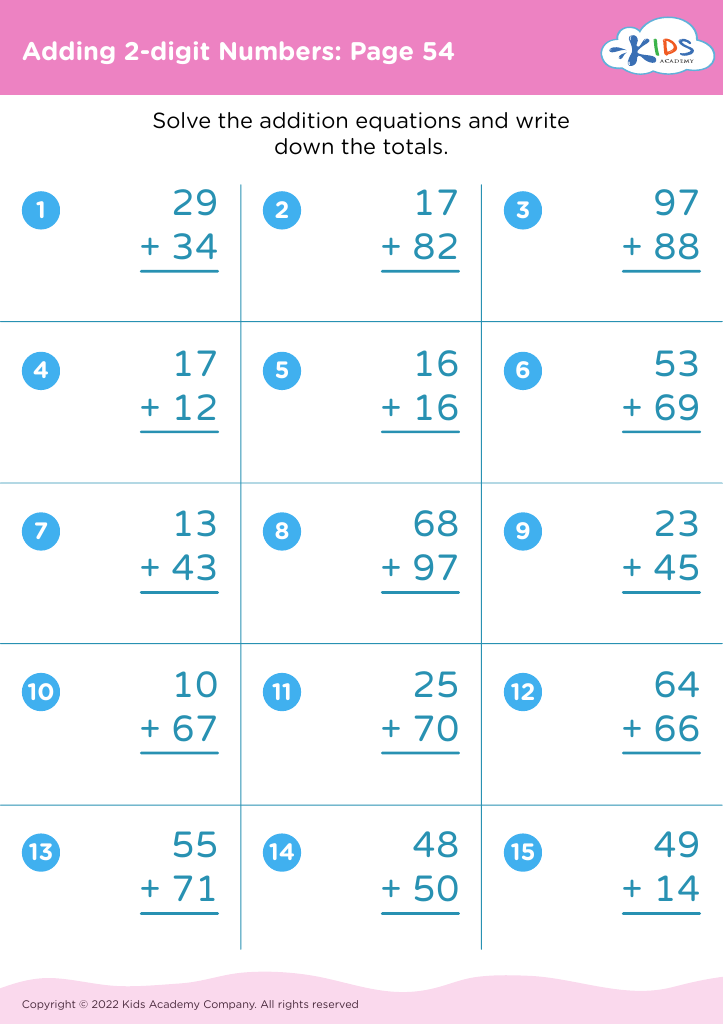
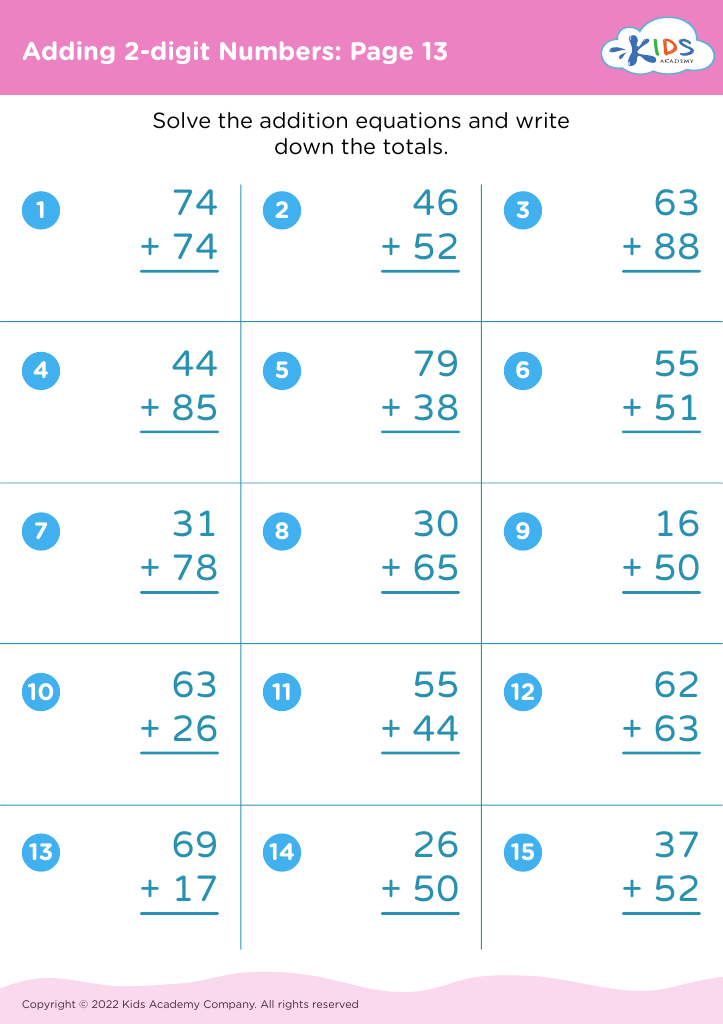
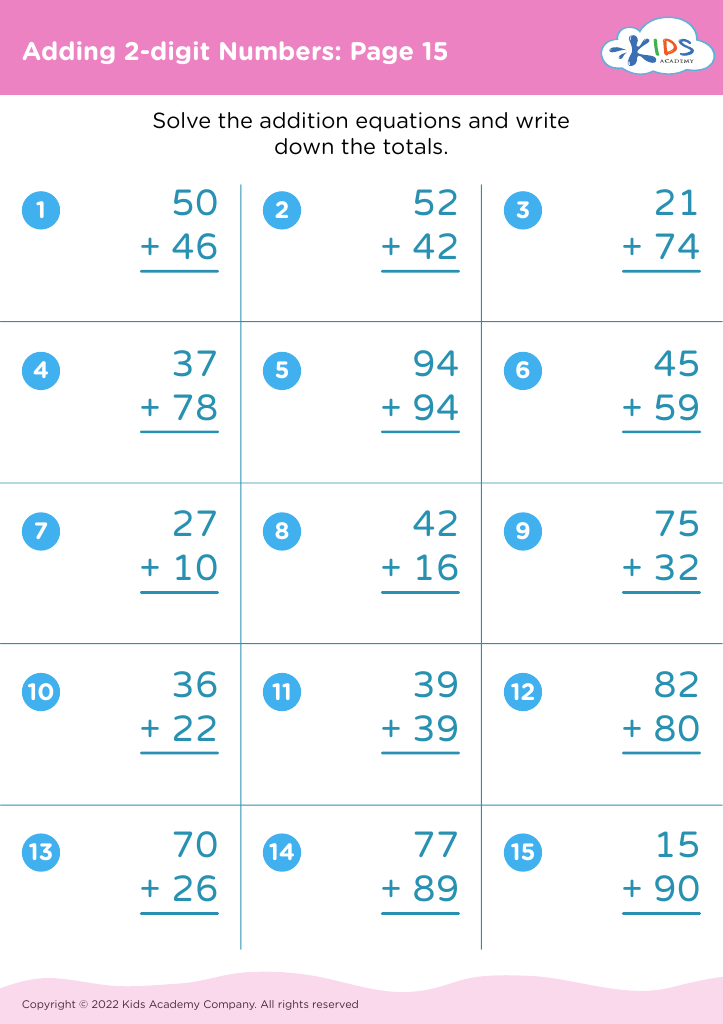
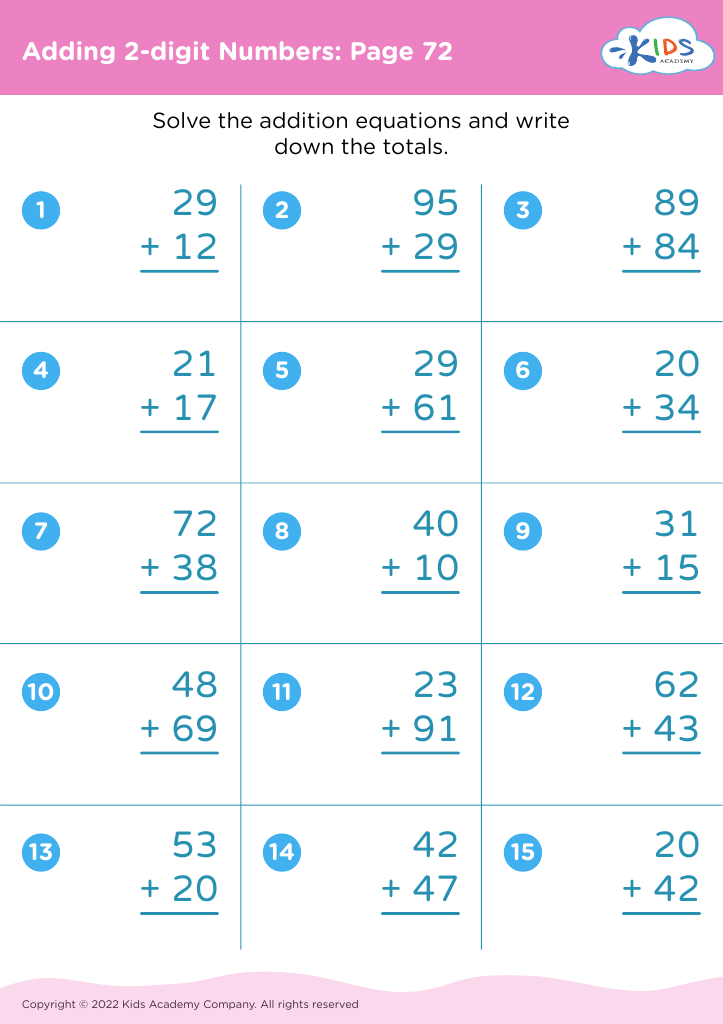








Parents and teachers should prioritize comparing fractions and adding 2-digit numbers for children aged 5-8 because these skills form a foundational understanding of mathematics critical for future learning. At this age, children are developing their cognitive abilities, and engaging with fractions enhances their conceptual understanding of numerical relationships. By learning to compare fractions, children can visualize parts of a whole, improving their problem-solving and reasoning skills. This lays the groundwork for more complex ideas in math later on, such as ratios and proportions.
Additionally, mastering the addition of 2-digit numbers fosters essential arithmetic skills that build confidence in mathematical abilities. As children practice these operations, they strengthen their computational fluency, which is vital not just in mathematics, but in real-life situations, such as managing money and understanding measurements.
Moreover, these skills can encourage a growth mindset. Celebrating progress in comparing fractions or adding numbers makes math less intimidating, promoting a positive attitude toward learning. Through collaborative games, hands-on activities, and encouragement, parents and teachers can make these concepts engaging, ensuring that kids not only understand them but also enjoy the process of learning—setting them up for future success in school and life.








