Fine Motor Skills Adding at the Zoo Worksheets for Ages 5-8
4 filtered results
-
From - To
Introduce your young learners to a fun and engaging way to improve fine motor skills with our "Fine Motor Skills Adding at the Zoo" worksheets designed for ages 5-8! This collection of interactive worksheets combines math practice with exciting zoo-themed illustrations, helping children develop their hand-eye coordination while mastering addition. As students color, trace, and manipulate these vibrant activities, they'll strengthen their fine motor skills essential for writing and daily tasks. Perfect for use at home or in the classroom, these worksheets make learning math enjoyable and encourage creativity. Explore the enchanting world of math and wildlife with our engaging resources today!
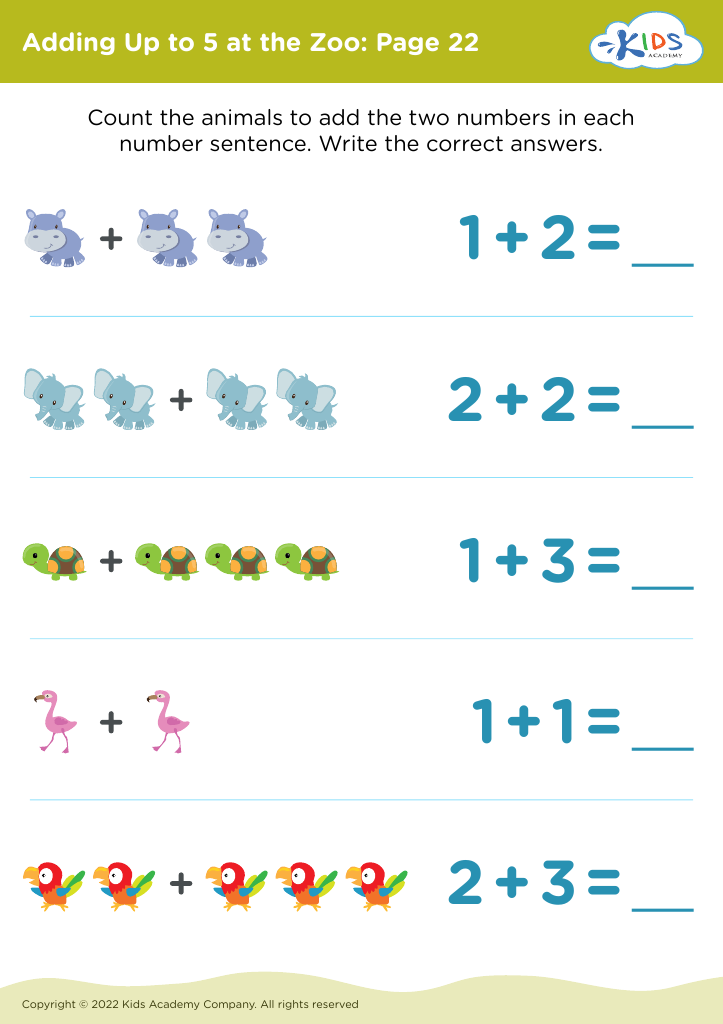
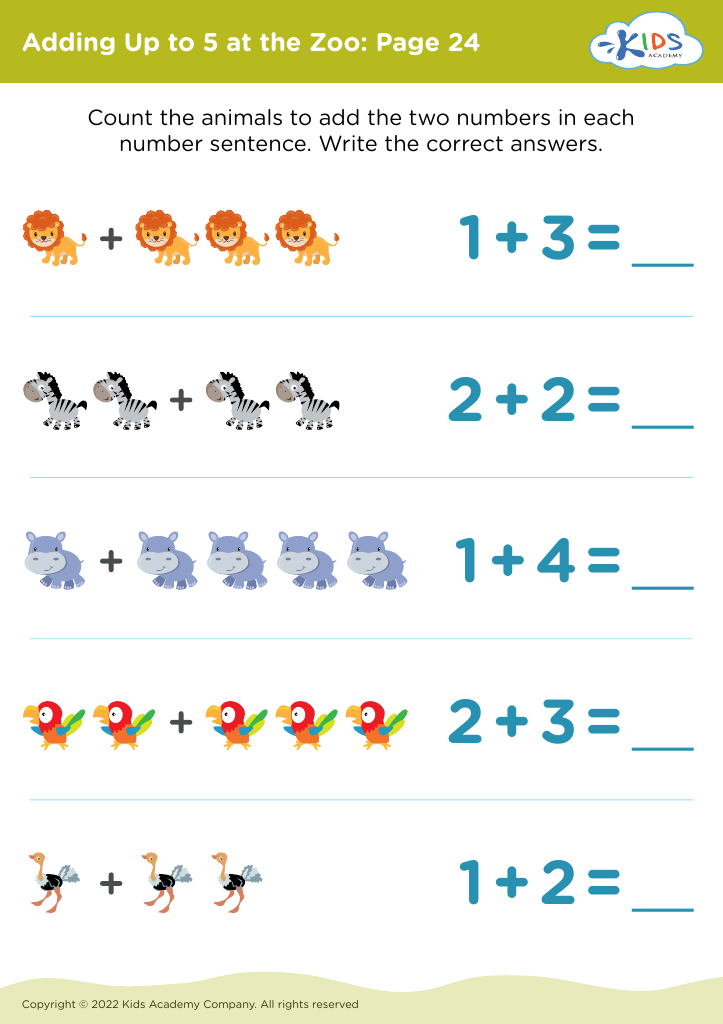
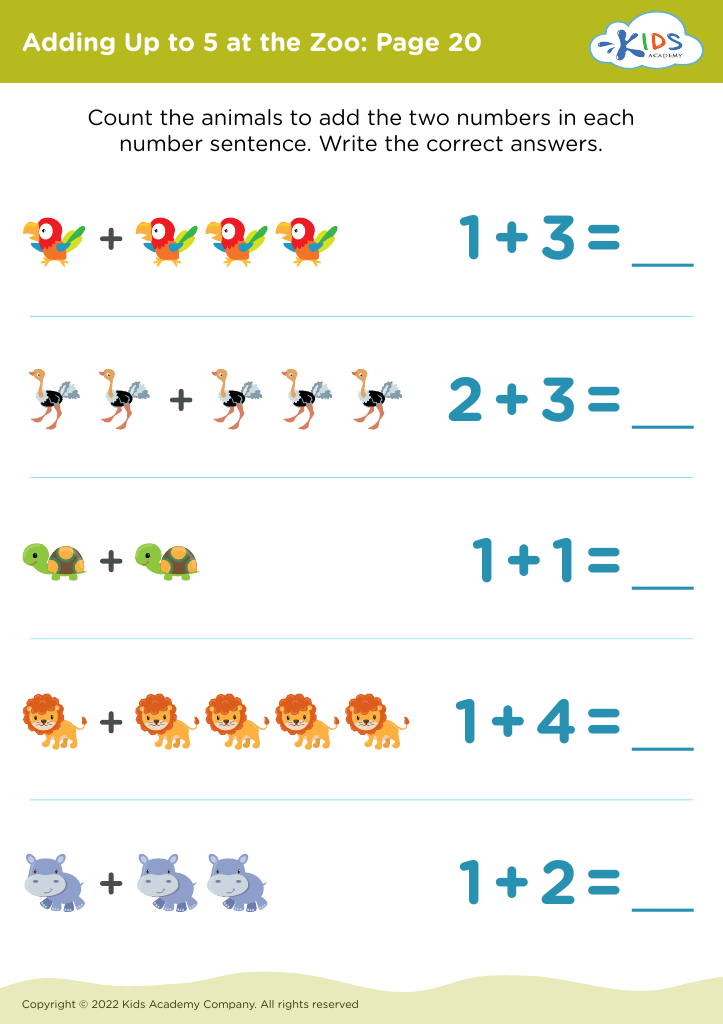
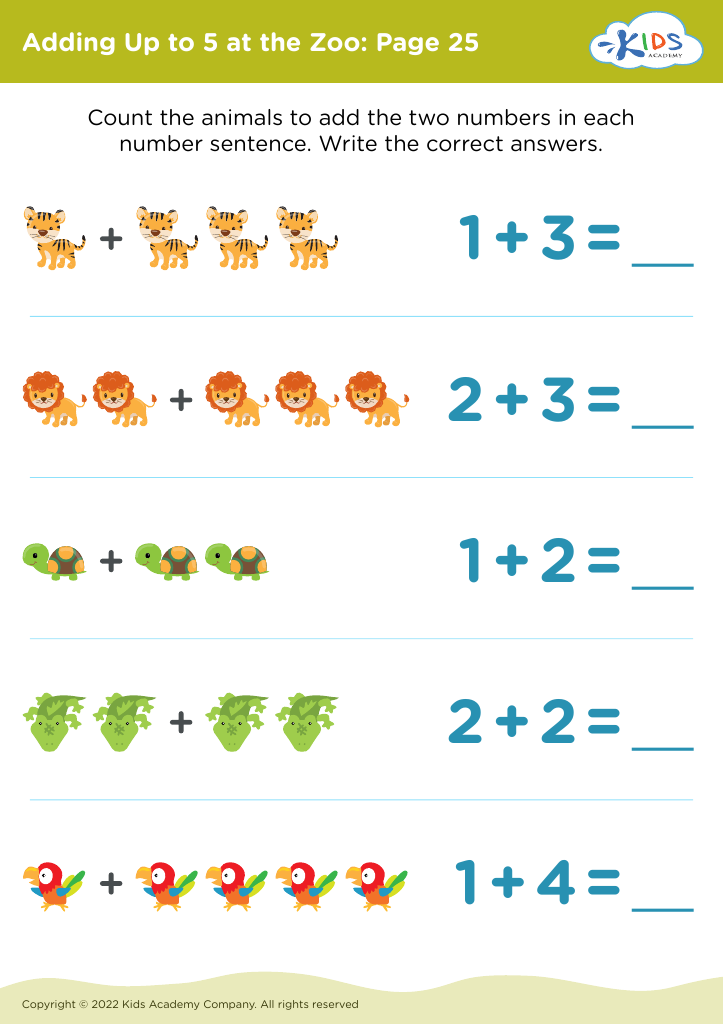



Fine motor skills are essential for young children's overall development, playing a crucial role in their ability to perform everyday tasks. "Fine Motor Skills Adding at the Zoo" is a focused activity that integrates playful learning while fostering these skills in children aged 5 to 8.
Parents and teachers should prioritize this activity because fine motor skills directly impact a child's academic achievements, particularly in writing, counting, and drawing. Activities that involve manipulating objects, such as using manipulatives to add numbers in a zoo-themed context, promote hand-eye coordination, precision, and dexterity.
Additionally, this engaging activity helps children understand basic math concepts in a fun and interactive environment—exploring numbers through the lens of animals at the zoo not only captures their imagination but also contextualizes their learning.
By cultivating fine motor skills and arithmetic abilities simultaneously, children become more confident learners, setting a strong foundation for future academic success. Parents and teachers play an influential role in guiding this development, making targeted activities like adding at the zoo an effective strategy for fostering holistic growth in young learners.