Basic addition practice Adding in the Sea Worksheets for Ages 5-8
3 filtered results
-
From - To
Discover the joy of math with our "Basic Addition Practice: Adding in the Sea Worksheets" for children aged 5-8! Tailored for young learners, these engaging worksheets combine colorful sea-themed designs with essential addition exercises, making practice fun and interactive. With various difficulty levels, children can develop their addition skills while also enhancing their problem-solving abilities. These worksheets not only focus on core math concepts but also inspire creativity and imagination as kids dive into the lively ocean world. Help your child build a strong foundation in math and boost their confidence with these delightful resources designed for effective learning.
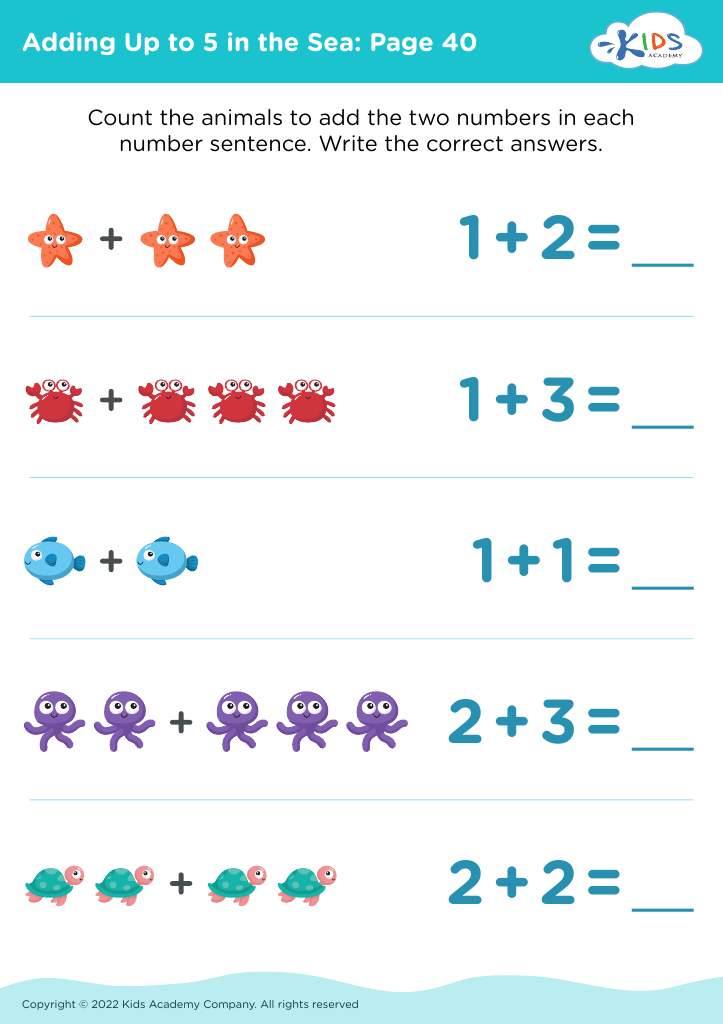
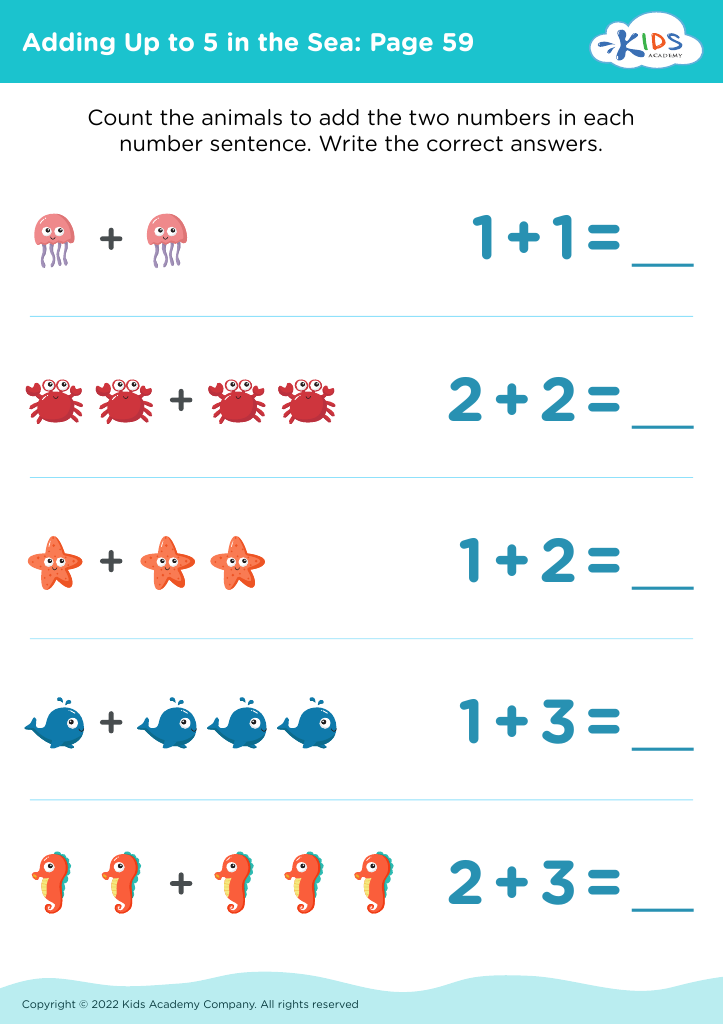
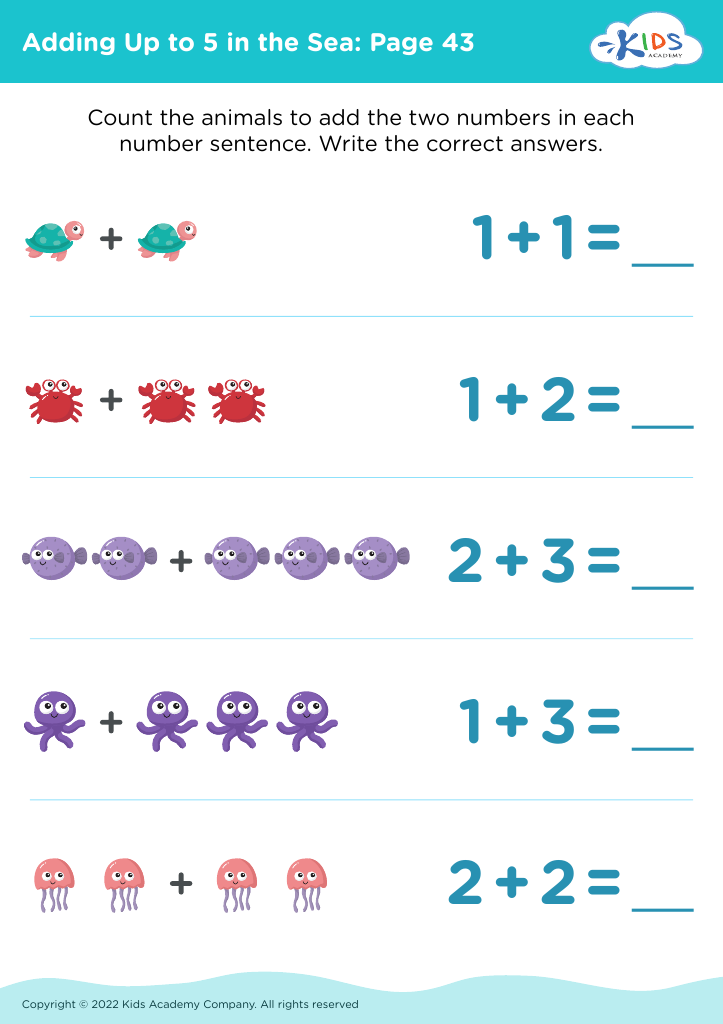



Basic addition practice, such as the "Adding in the Sea" activity for ages 5-8, is crucial for young learners for several reasons. First, it builds foundational math skills essential for more complex concepts in the future. Mastering basic addition enhances children's numerical understanding, enriching their ability to tackle more advanced math problems later in their education.
Engaging methods, like "Adding in the Sea," promote active learning. This playful approach captures children's attention and makes math enjoyable, reducing anxiety related to the subject. Utilizing a thematic context, such as an ocean setting, teaches children not only to calculate sums but also to connect numbers with real-world environments, fostering curiosity and exploration.
Additionally, developing social skills is an important benefit with collaborative activities, as children learn to work together, share ideas, and solve problems jointly. This enhances communication skills and encourages teamwork. Regular practice also boosts confidence, as children recognize their progress in mastering additions. Overall, "Adding in the Sea" and similar activities equip children with essential skills, promote a love for learning, and prepare them for future academic experiences, benefitting both parents and teachers who emphasize strong learning foundations.