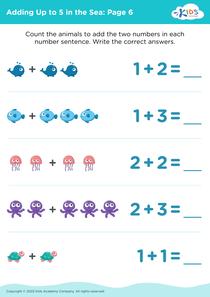
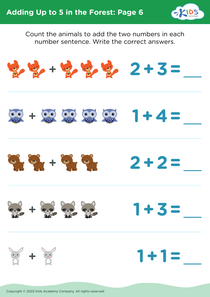
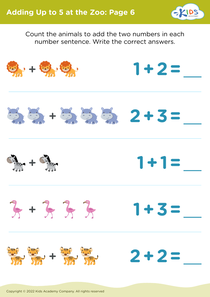
Cognitive Development Adding on the Farm Worksheets for Ages 5-8
8 filtered results
-
From - To
Enhance your children's cognitive development with our "Adding on the Farm" worksheets, designed for ages 5-8. These fun, farm-themed printables engage young learners in basic addition, improving their problem-solving skills and number sense. Each activity combines colorful illustrations with practical counting exercises, making math enjoyable and effective. Tailored to align with primary education standards, these worksheets ensure your little ones make confident strides in their mathematical journey. Perfect for homeschoolers and classroom use alike, our "Adding on the Farm" worksheets foster foundational math skills in an appealing and interactive way.
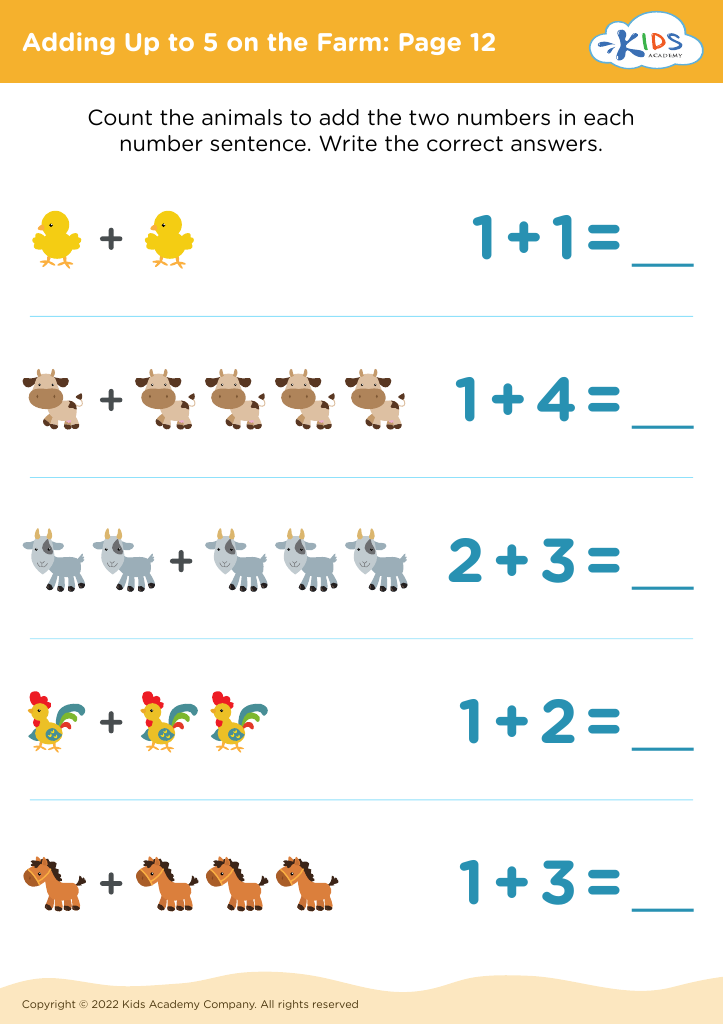
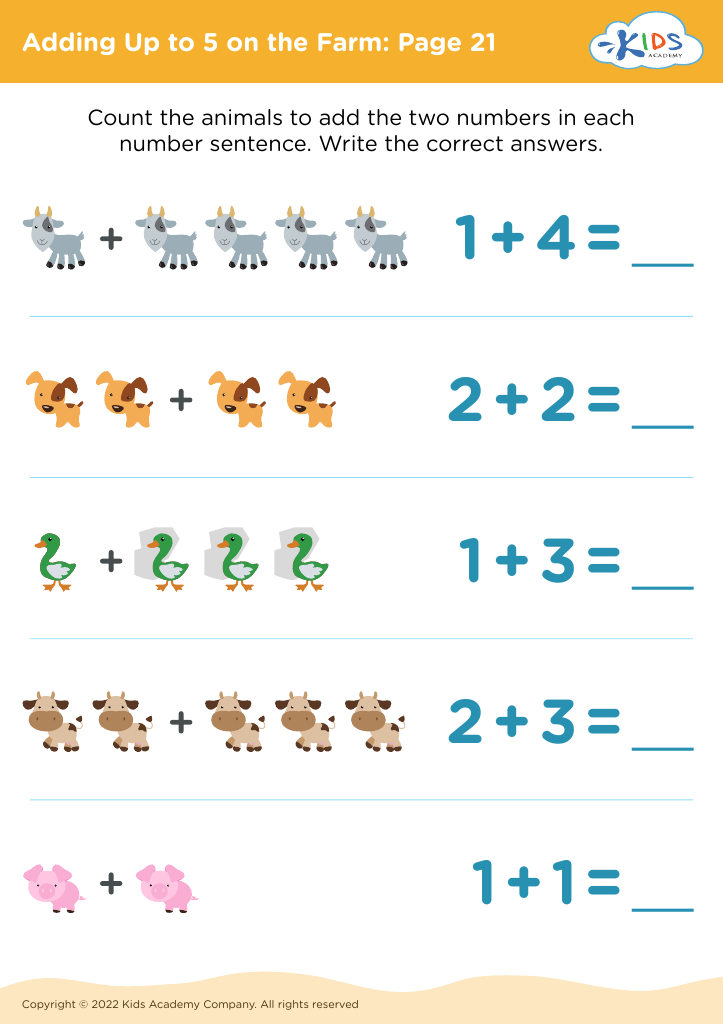
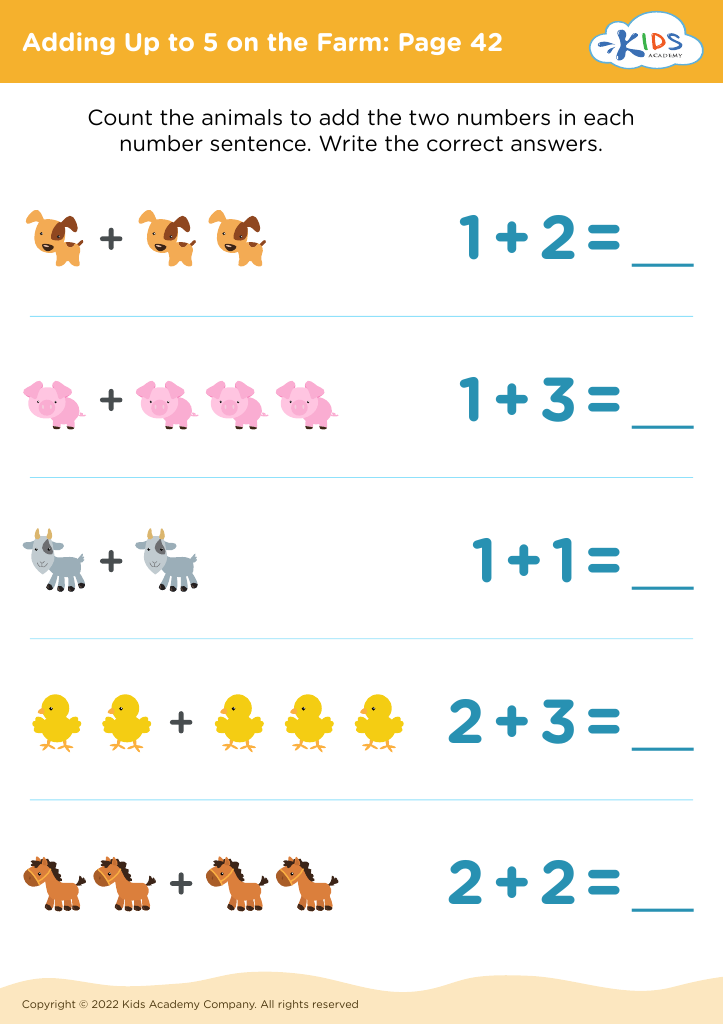
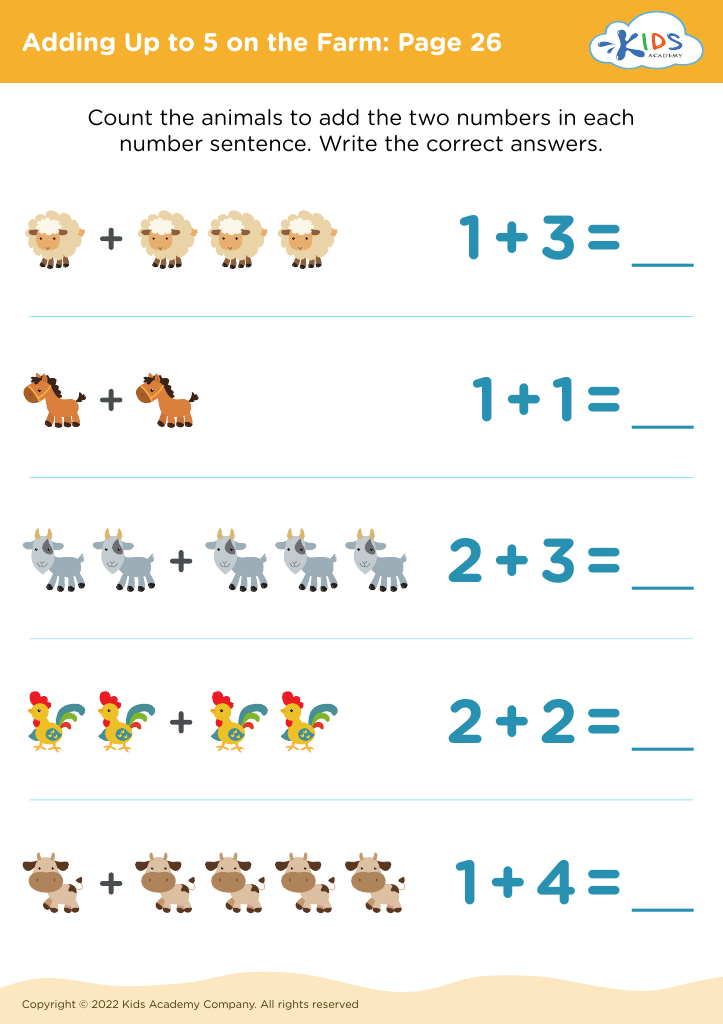
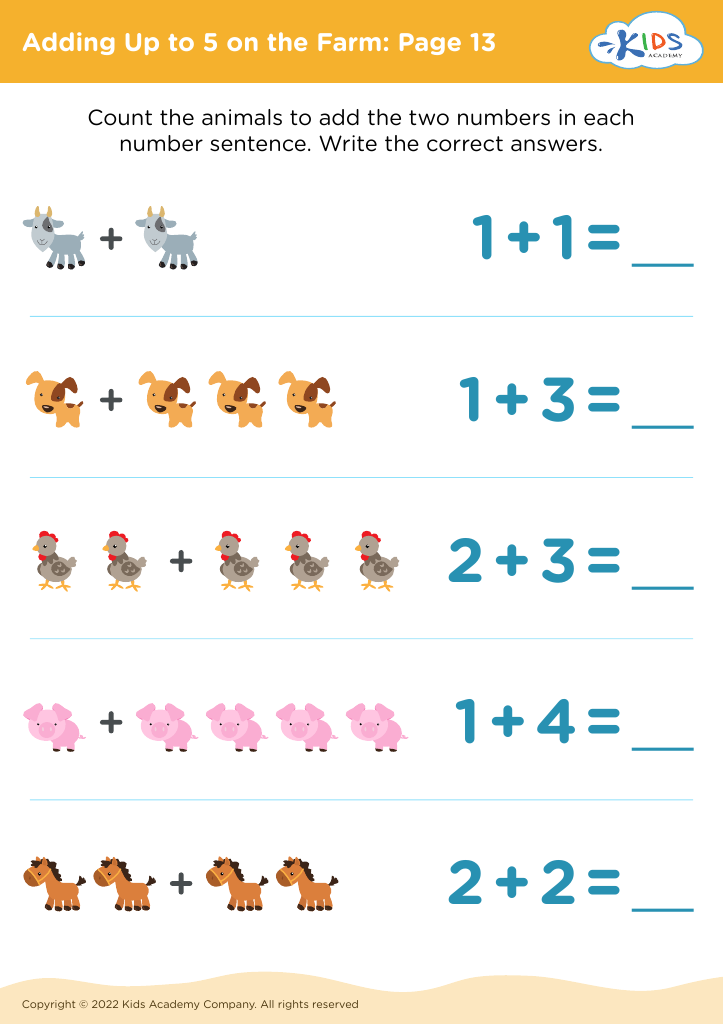
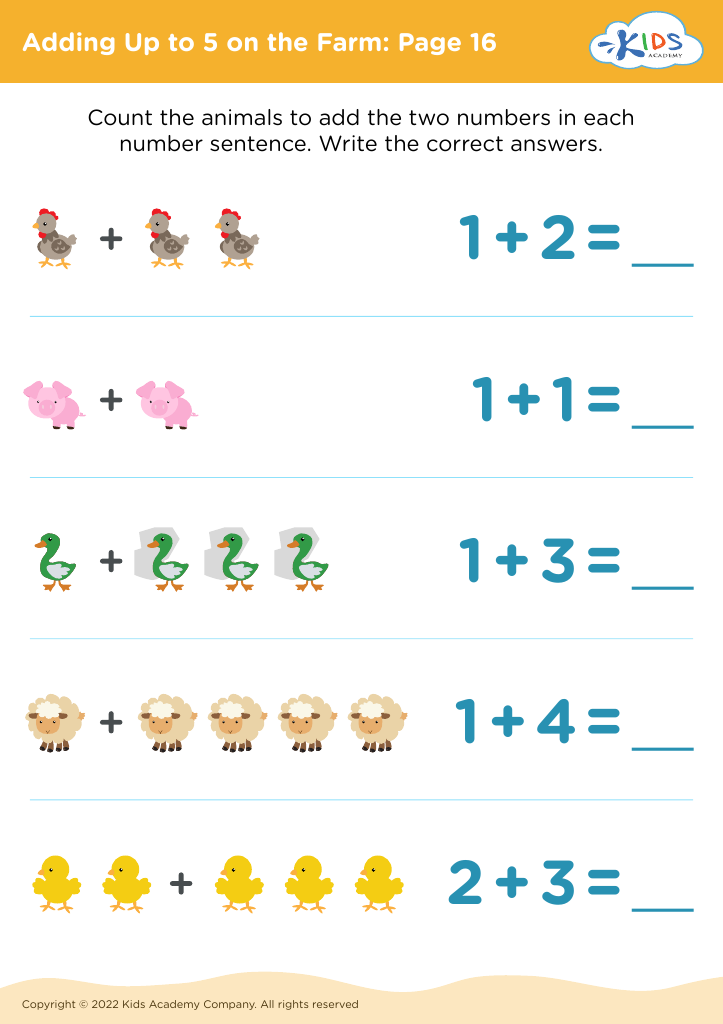
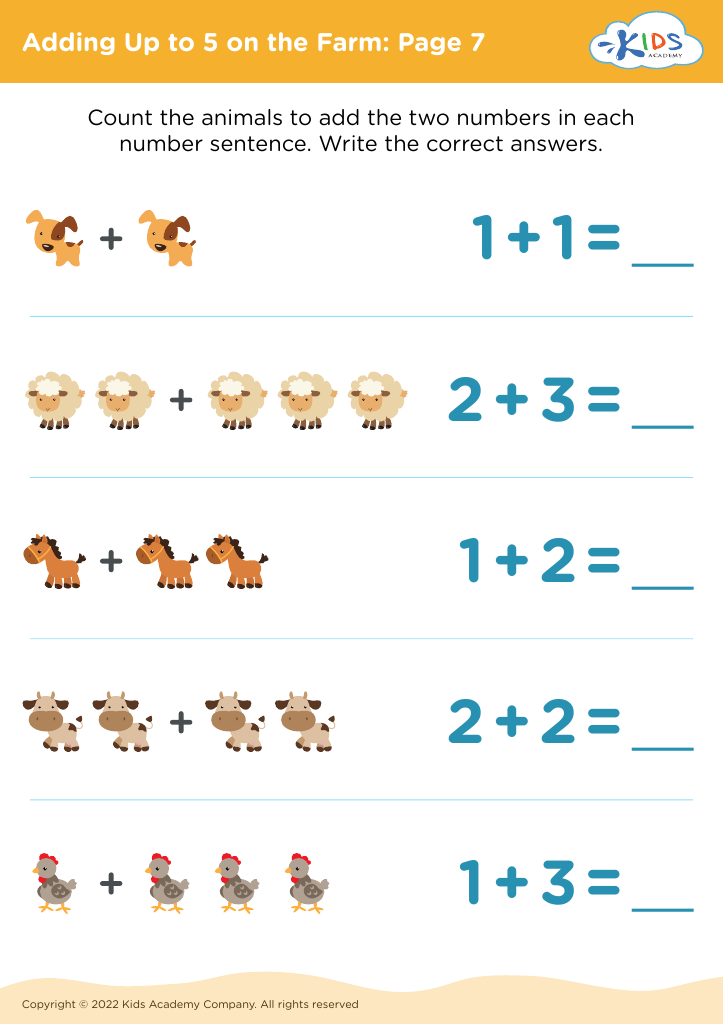
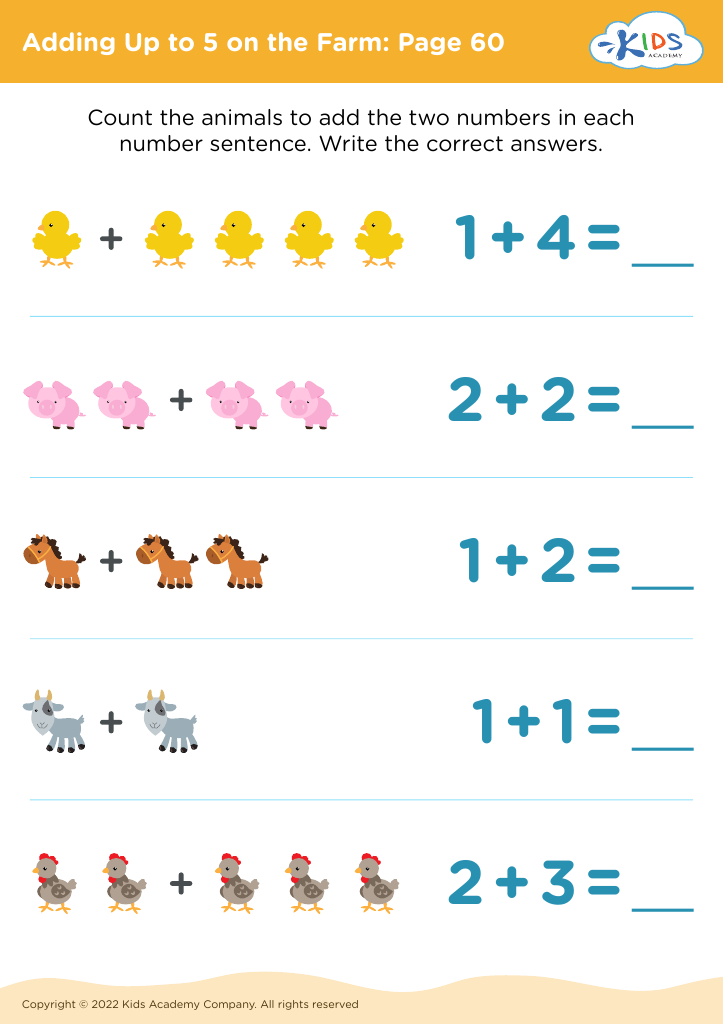



Cognitive Development Adding on the Farm is an engaging educational concept designed for children aged 5-8, blending arithmetic with a delightful farm setting. Parents and teachers should care about this method because it plays a crucial role in fostering foundational math skills, logical thinking, and problem-solving abilities during a critical developmental period.
At ages 5-8, children transition from concrete to more abstract thinking. Engaging activities like Adding on the Farm make abstract arithmetic concepts more tangible and relatable by contextualizing them in a familiar and enjoyable setting. As students count animals, add produce, or solve farm-related problems, they're not only practicing basic addition but also developing their number sense and comprehension.
Moreover, farm-themed activities can enhance memory and attention by providing a narrative that makes arithmetic enjoyable and meaningful. It helps retain children’s interest, ensures active participation, and reduces math anxiety by masking rigorous practice with play-based learning. Furthermore, the thematic approach encourages children to make real-world connections, making learning holistic and long-lasting.
Fostering cognitive development through creative methods lays a strong foundation for future academic success. Parents and teachers can leverage this strategy to build a positive mathematical mindset, ensuring that young learners view math as an interesting adventure rather than a daunting task. Investing in such thematic and developmental approaches nurtures well-rounded, enthusiastic, and confident mathematicians.