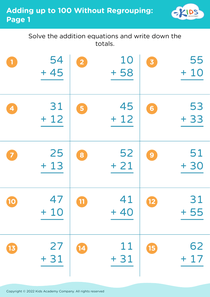
Recognize patterns Adding up to 100 with Regrouping Worksheets for Ages 5-8
3 filtered results
-
From - To
Discover dynamic "Recognize Patterns: Adding up to 100 with Regrouping Worksheets" designed for ages 5-8 at Kids Academy! These engaging worksheets hone young learners' math skills through fun and interactive exercises. Kids will develop a strong foundation in recognizing patterns while mastering addition strategies that involve regrouping. Perfect for both classroom and home use, these resources boost confidence in handling numbers up to 100. Empower your child to soar in math by exploring these expertly crafted worksheets, tailored specifically to the developmental needs of early graders. Unlock their potential with Kids Academy’s comprehensive learning tools!
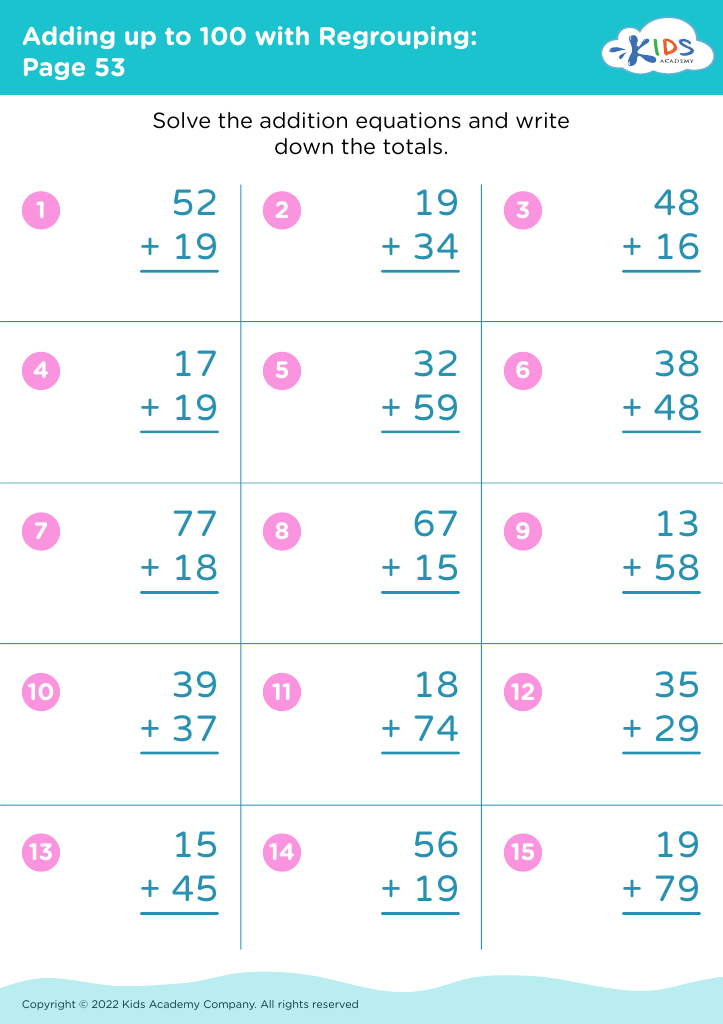
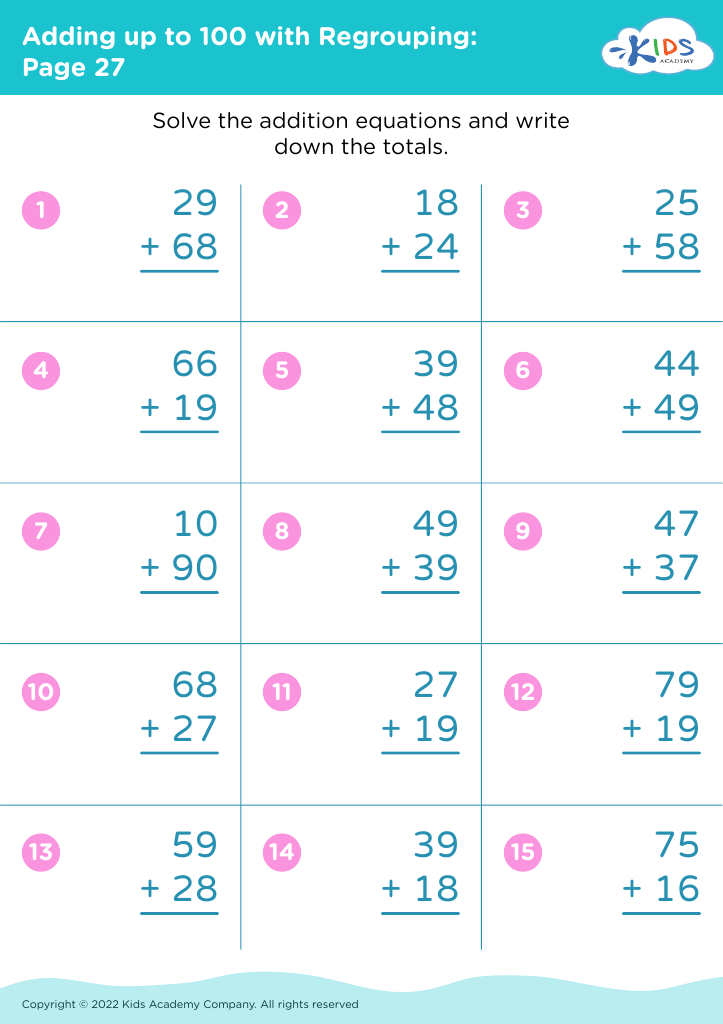
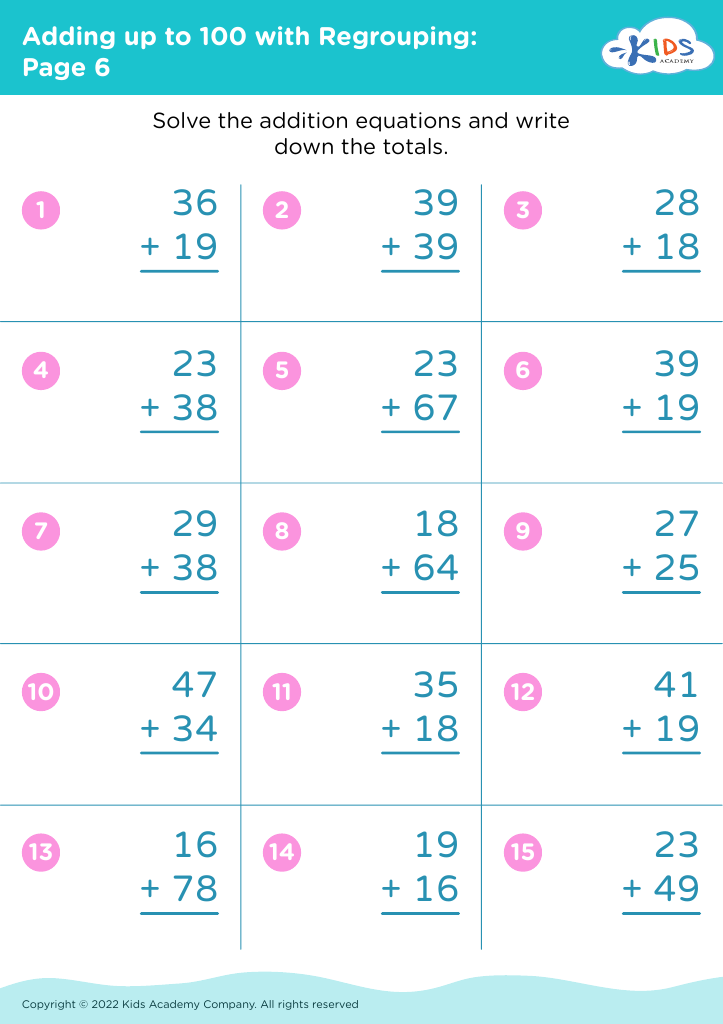




Learning to recognize patterns and mastering addition up to 100 with regrouping are fundamental skills for young children aged 5-8. Patterns are everywhere, and recognizing them helps children make predictions, understand relationships between numbers, and develop analytical thinking. This cognitive skill is crucial as it lays the groundwork for more complex mathematical concepts and problem-solving abilities they'll encounter in later grades.
Addition with regrouping introduces children to the concept of place value, an essential component of arithmetic. When children learn to regroup, they understand that numbers can be broken down and reorganized, which enhances their ability to perform arithmetic operations efficiently. This process also builds their mental math capabilities and confidence in handling larger numbers.
From a practical standpoint, these skills are vital in everyday situations, such as counting money, measuring ingredients in a recipe, or even playing games. Additionally, early competency in math fosters a positive attitude toward the subject, reducing anxiety and increasing the likelihood of academic success in future mathematics courses.
Overall, emphasizing pattern recognition and addition with regrouping supports the holistic development of young learners by fostering critical thinking, problem-solving, and life skills, making it essential for parents and teachers to prioritize these areas during early education.