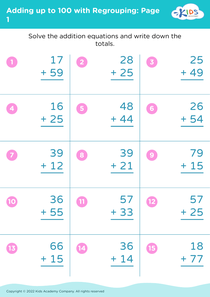
Fine Motor Skills Adding up to 100 Without Regrouping Worksheets for Ages 5-8
4 filtered results
-
From - To
Enhance your child's fine motor skills while mastering addition with our “Adding Up to 100 Without Regrouping” worksheets, designed specifically for ages 5-8. These engaging activities provide a perfect blend of math practice and hand-eye coordination development. As children practice adding numbers, they’ll strengthen their pencil grasp and dexterity, essential for their overall academic success. Each worksheet is crafted to keep young learners motivated, with colorful graphics and fun exercises that make learning enjoyable. Help your child build confidence in their math abilities while refining their fine motor skills today! Explore our collection to keep learning fun and interactive!
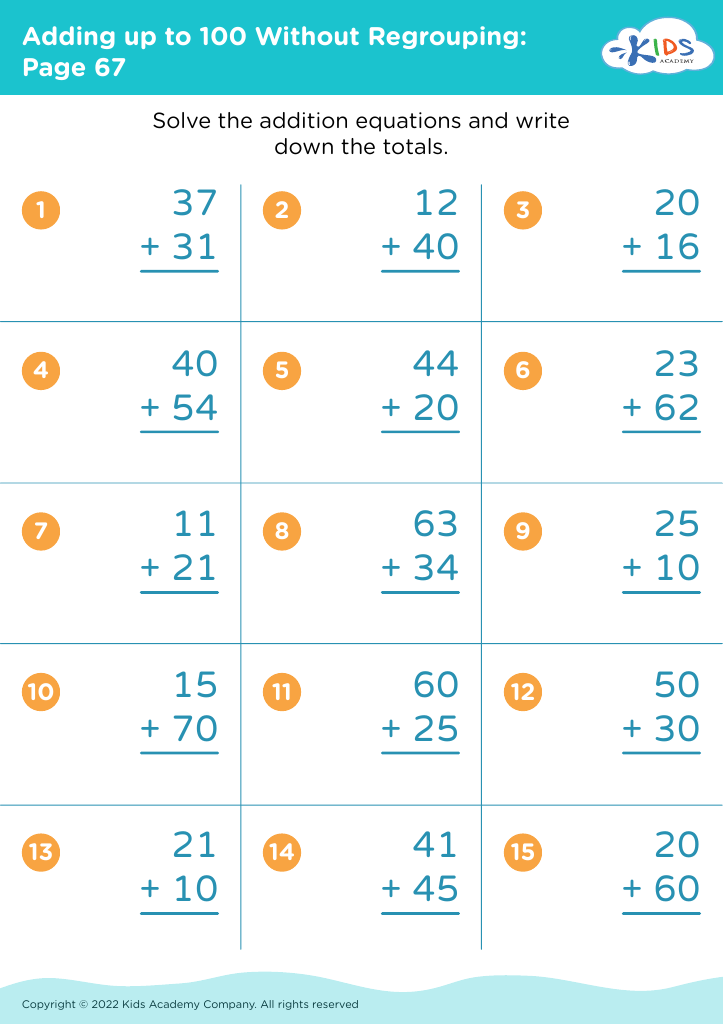
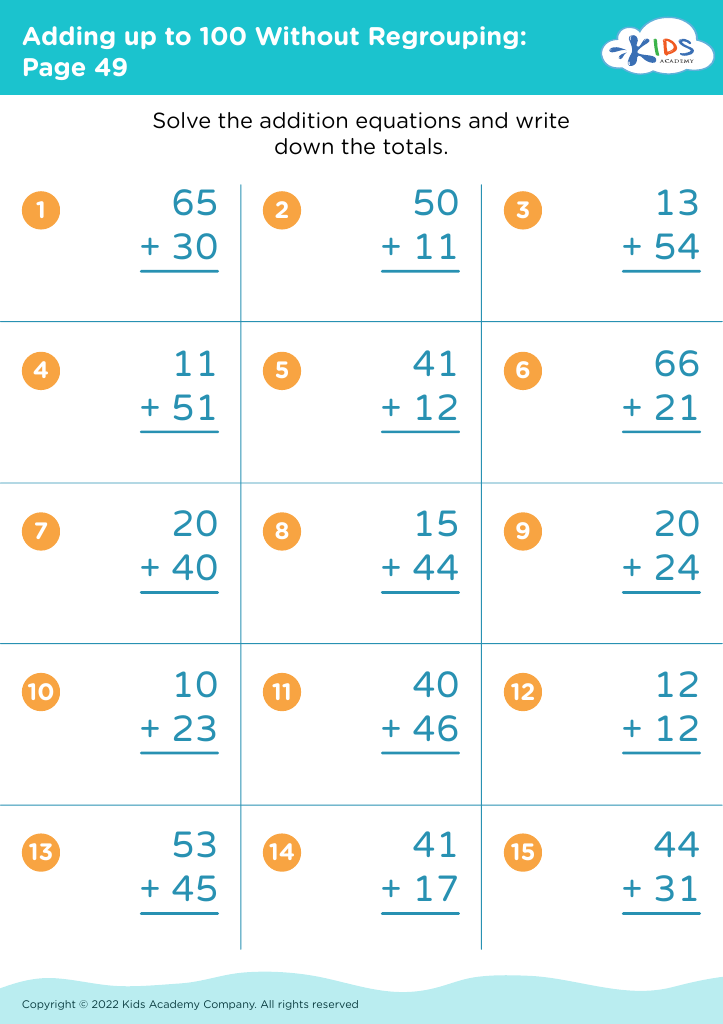
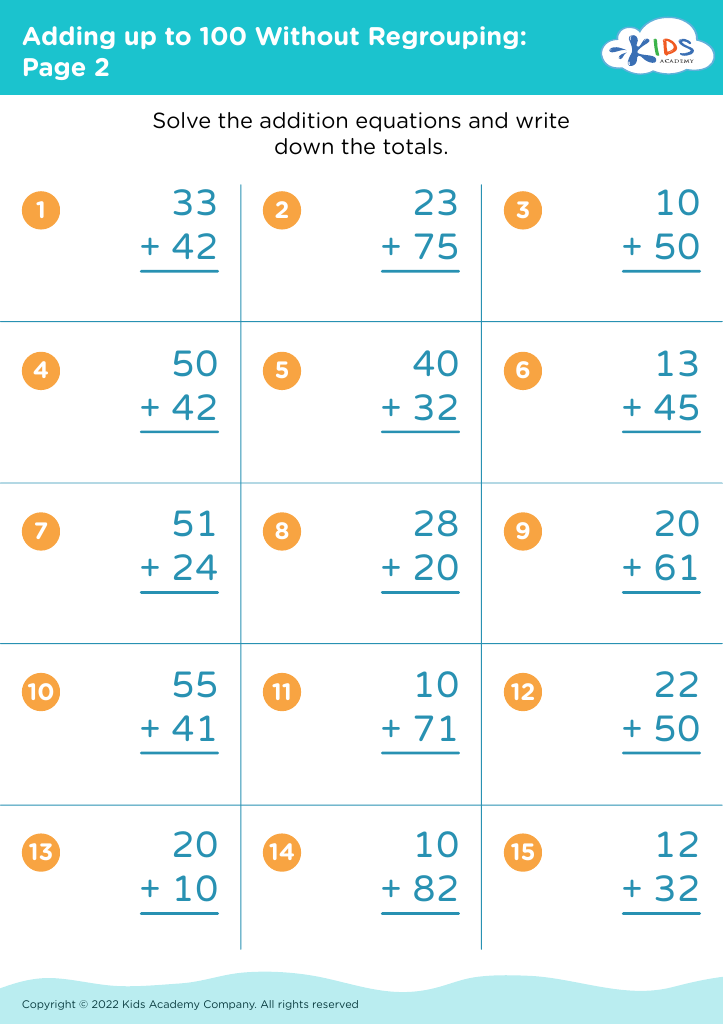
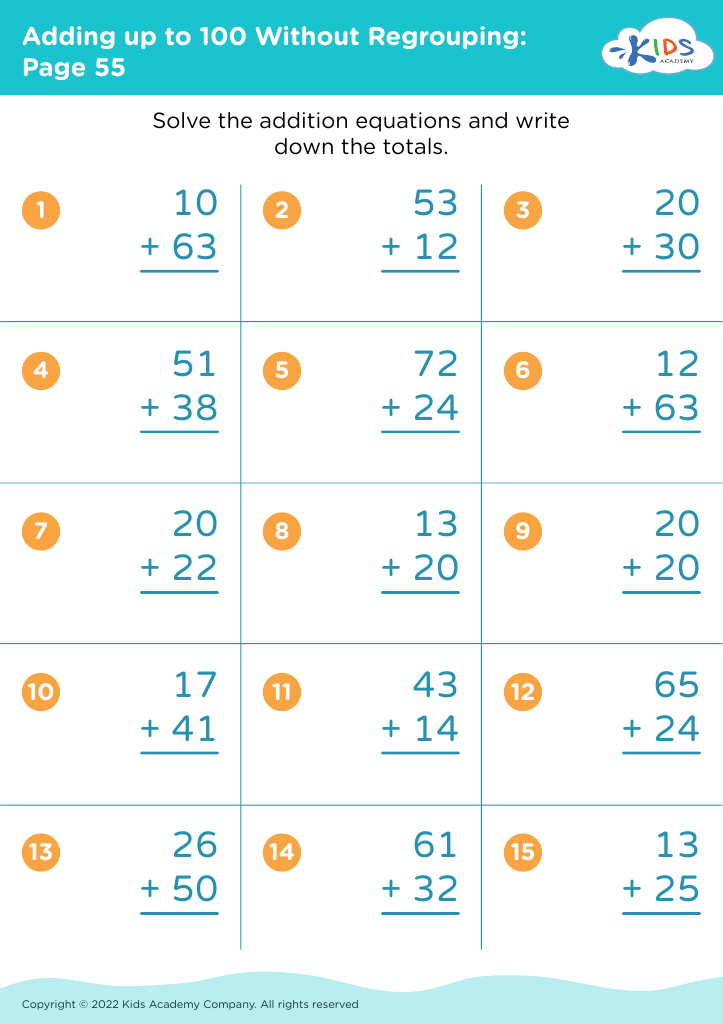




Fine motor skills and mathematical abilities, such as adding up to 100 without regrouping, are crucial for children aged 5-8. Developing fine motor skills enhances a child's ability to manipulate objects with control, which is vital for tasks like writing, drawing, and performing everyday activities. This control supports their academic progress, enabling them to express their ideas clearly and confidently.
When children practice addition without regrouping, they strengthen their numerical understanding and enhance their problem-solving skills. Mastering this skill lays a solid foundation for more complex mathematical concepts, promoting a positive attitude toward math that can last a lifetime. Furthermore, engaging in activities that both develop fine motor skills and practice addition can create an interactive learning environment that fosters a deep-seated love for learning.
As parents and teachers, paying attention to these areas helps ensure children are well-prepared for future academic challenges. This holistic development supports cognitive growth while building self-esteem and independence. Ultimately, these skills are intertwined, and supporting them is an investment in the child's overall development, equipping them with the necessary tools to succeed in school and beyond.