Basic Addition Skills Adding up to 100 Worksheets for Ages 5-8
5 filtered results
-
From - To
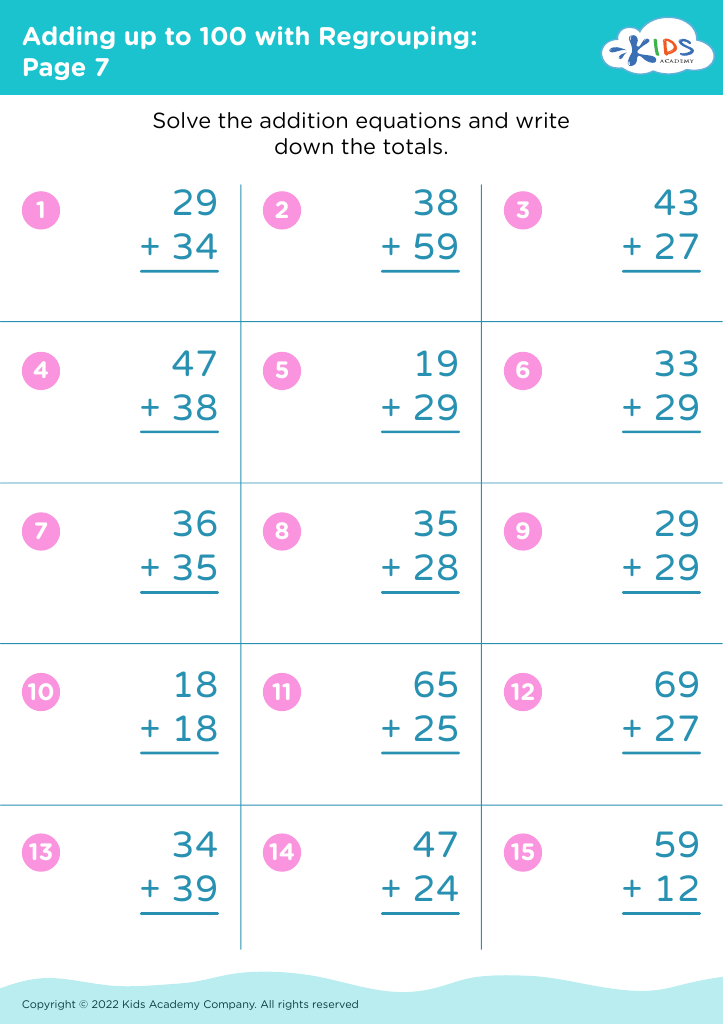
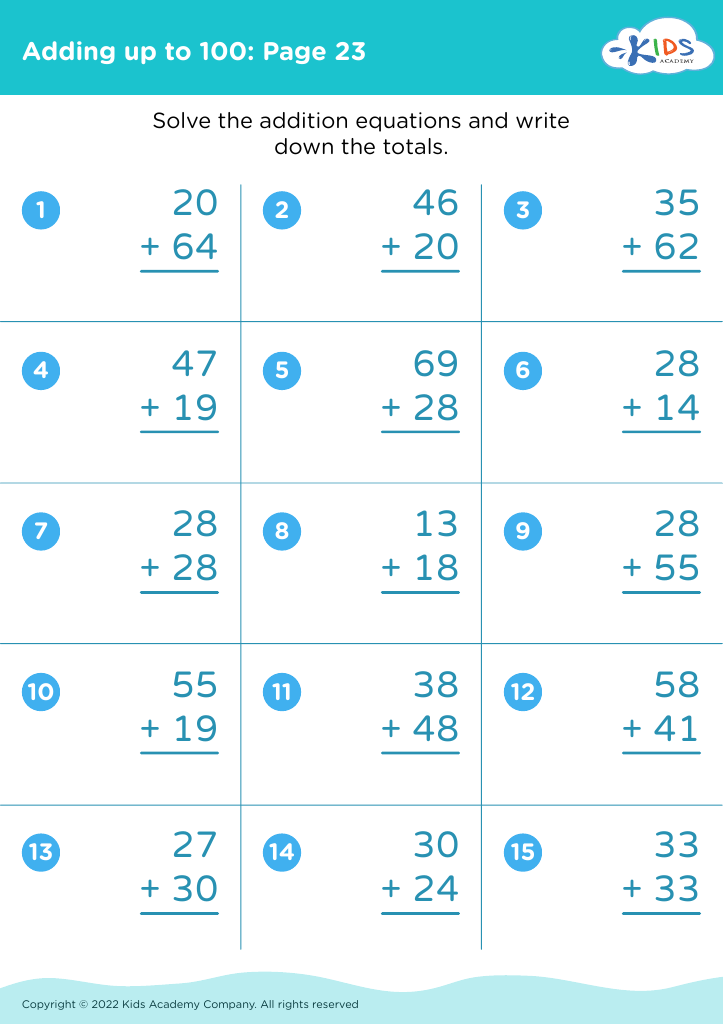
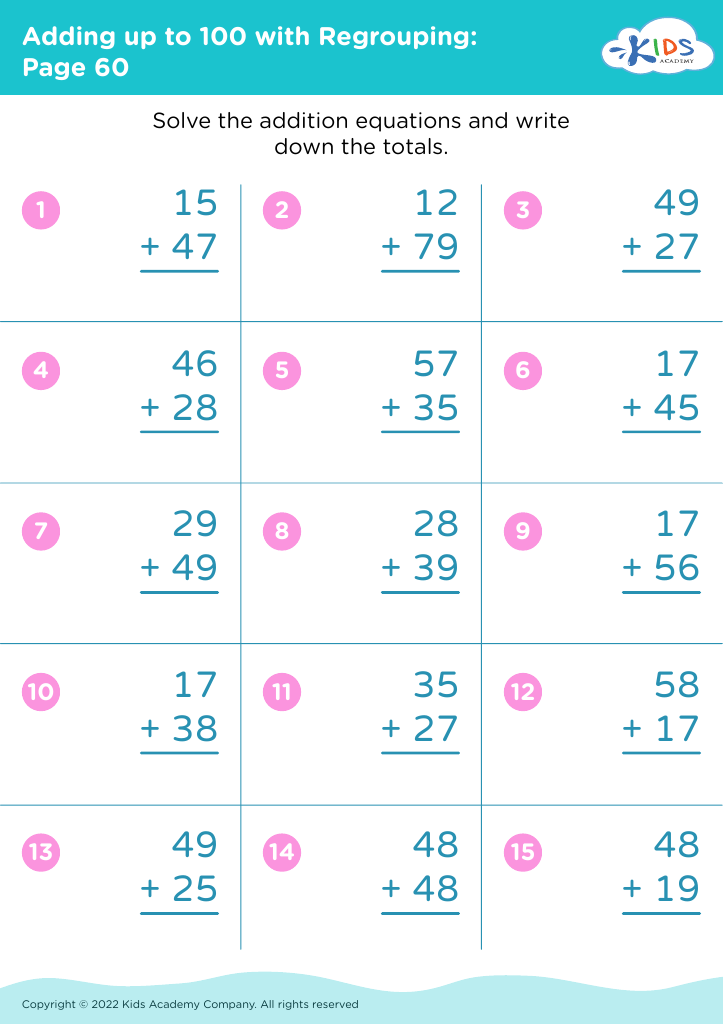
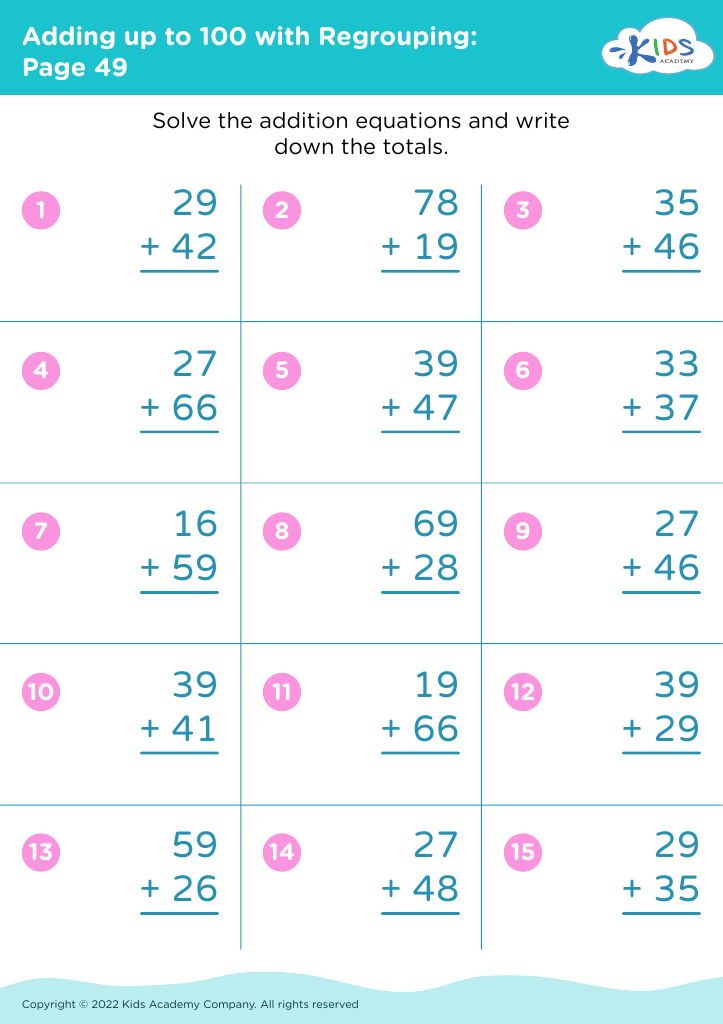
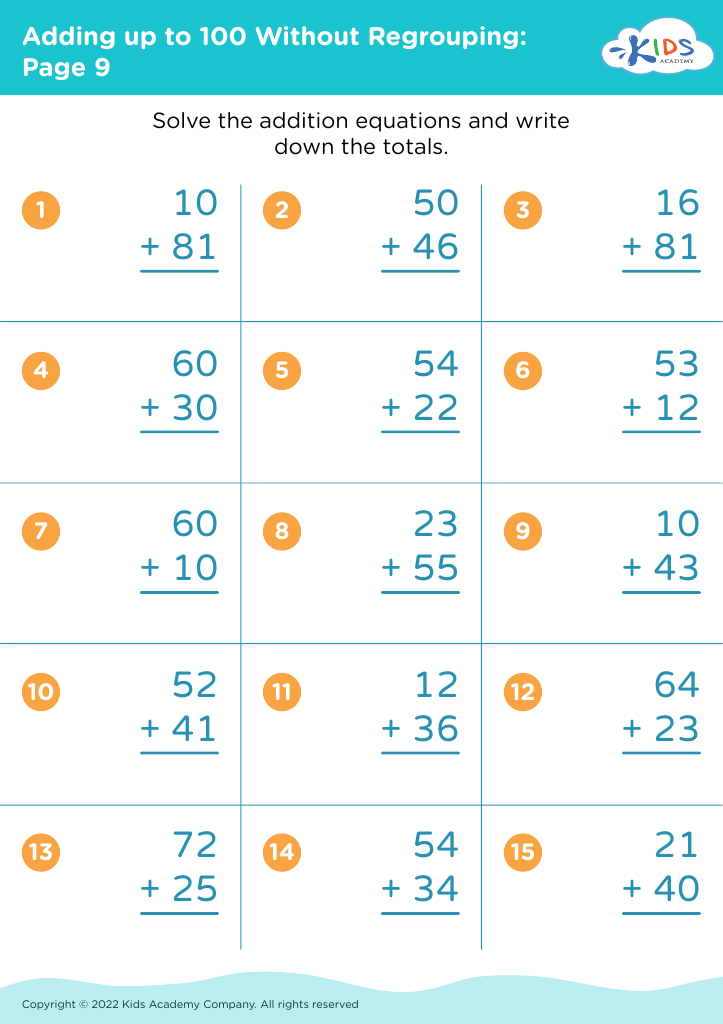
Unlock your child's math potential with our "Basic Addition Skills Adding up to 100 Worksheets" designed specifically for ages 5-8. These engaging and colorful worksheets make learning addition fun and interactive. Tailored to strengthen foundational math skills, each worksheet features a variety of exercises that encourage children to practice adding numbers up to 100, promoting both number recognition and mental math abilities. Ideal for classroom use or at-home learning, our resources cater to diverse learning styles, helping young learners build confidence and mastery in addition. Begin your child's math journey today and watch them thrive as they develop crucial skills!



%20(1).jpg)



Parents and teachers should prioritize basic addition skills up to 100 for children ages 5-8 because these foundational skills are crucial for future mathematical understanding and overall academic success. Mastering addition sets the groundwork for more complex concepts like subtraction, multiplication, and division. At this developmental stage, children are naturally curious and can easily absorb new information, making it an ideal time to instill these essential skills.
Additionally, strong addition skills boost children's confidence in their abilities, encouraging a positive attitude towards math and learning generally. This foundational knowledge can translate into better problem-solving skills and critical thinking, helping children navigate not just academic tasks, but real-life scenarios where basic arithmetic is necessary, such as budgeting or time management.
Furthermore, addition is often integrated into a variety of subjects beyond math—including science, art, and even language arts—demonstrating the interconnectedness of knowledge. For parents and educators, fostering these skills early can lead to happier, more successful learners who are well-prepared for the challenges of numbers in higher grades and life. Recognizing the importance of these skills can make a significant difference in children’s academic journey and overall confidence, setting them on a positive pathway for lifelong learning.








