Color Identification Adding up to 100 Worksheets for Ages 5-8
8 filtered results
-
From - To
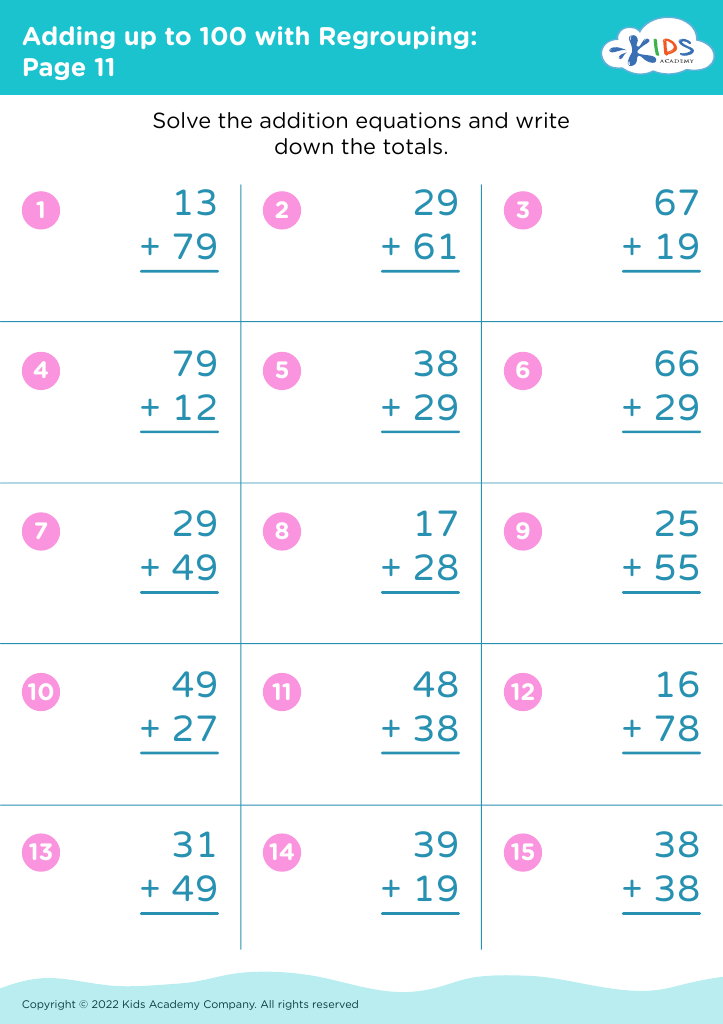
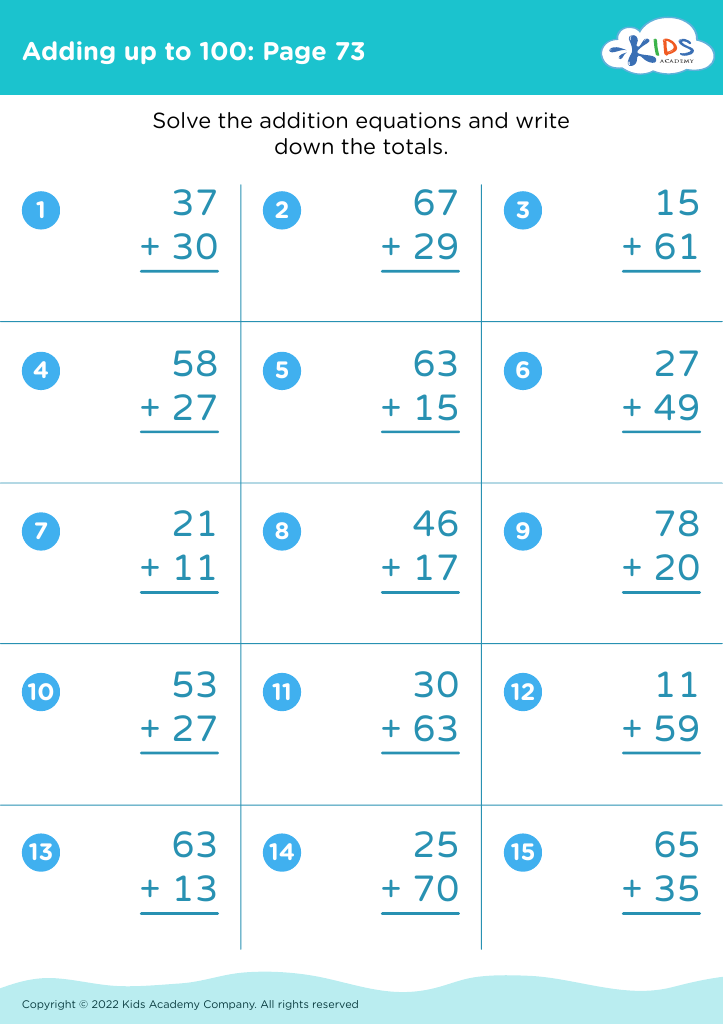
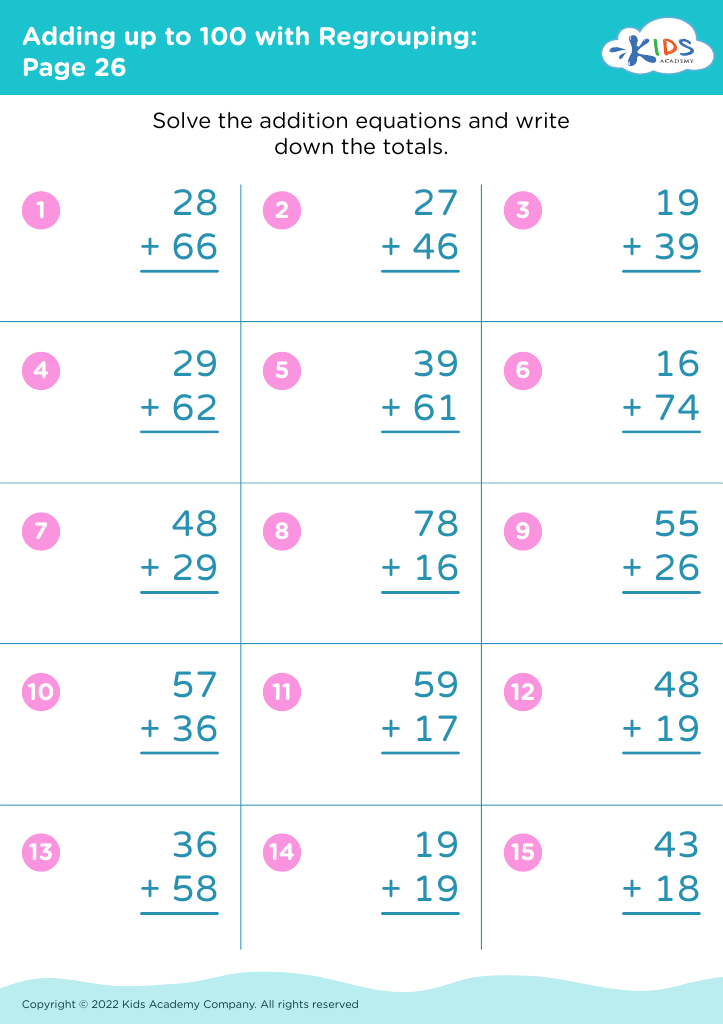
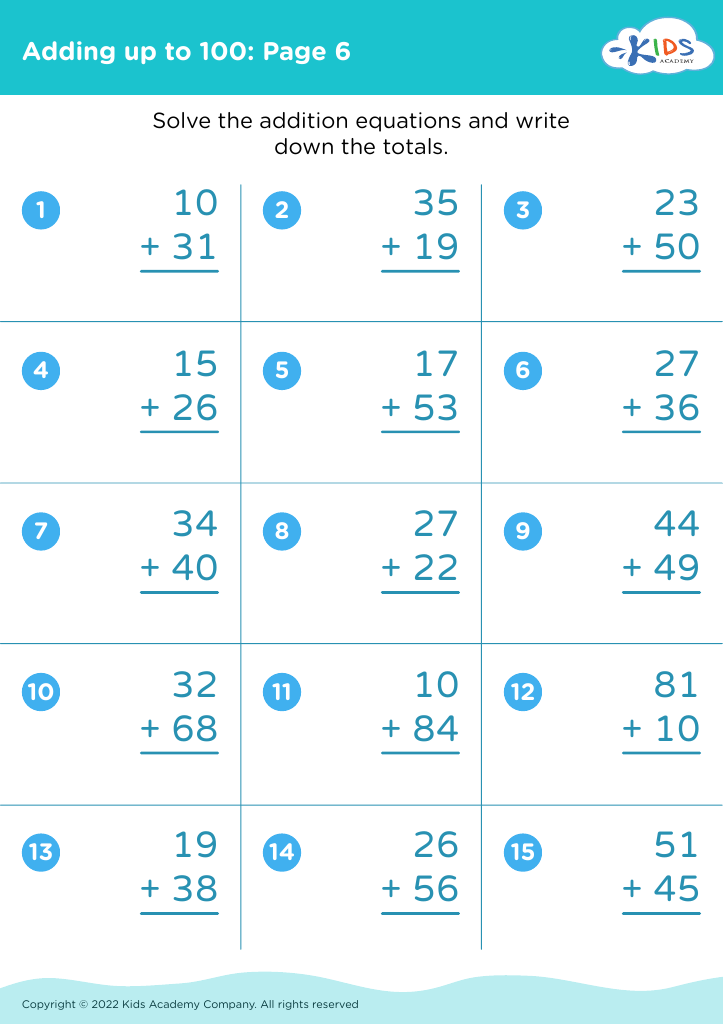
Introduce young learners to the fun world of math with our "Color Identification Adding up to 100" worksheets designed for ages 5-8. These engaging activities combine color recognition and basic arithmetic, making learning vibrant and effective. Each worksheet challenges kids to solve addition problems up to 100, then use the answers to color-coded patterns, reinforcing both math skills and color identification. Perfect for classroom or at-home practice, these printable worksheets make mastering addition a colorful adventure while enhancing cognitive development, attention to detail, and fine motor skills. Discover the joy of learning with our dynamic resources tailored for young minds!
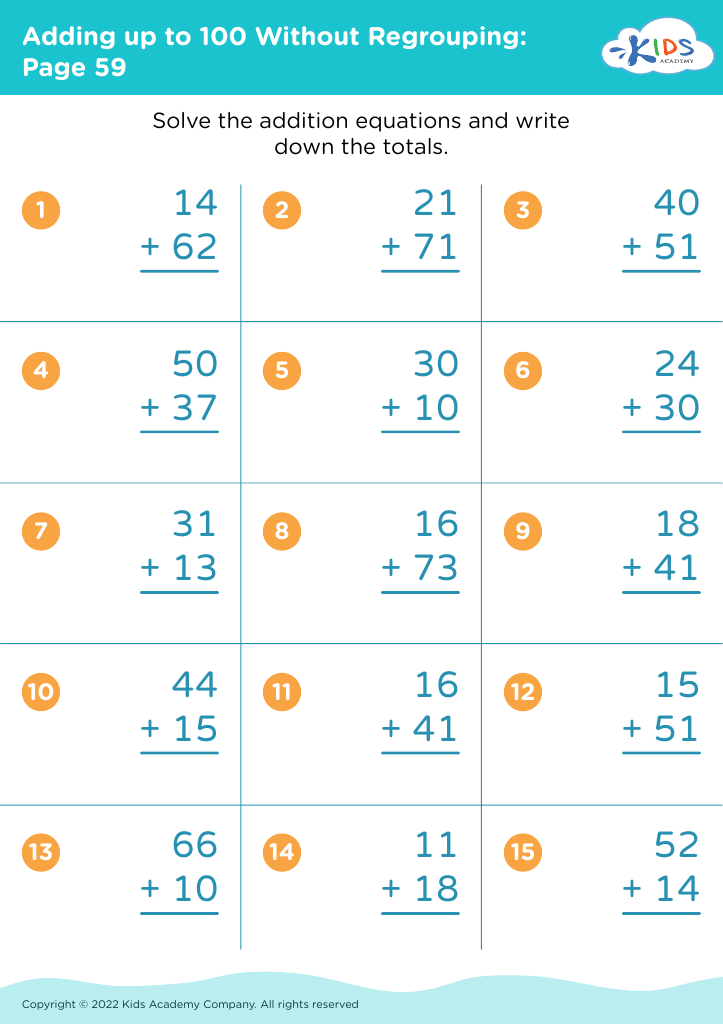
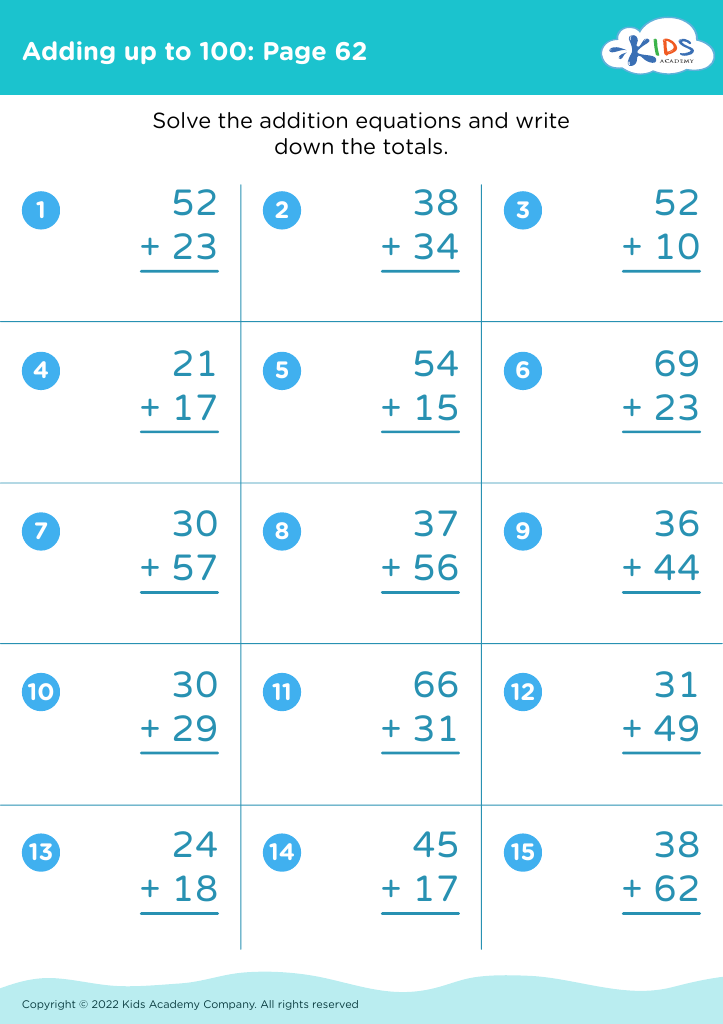
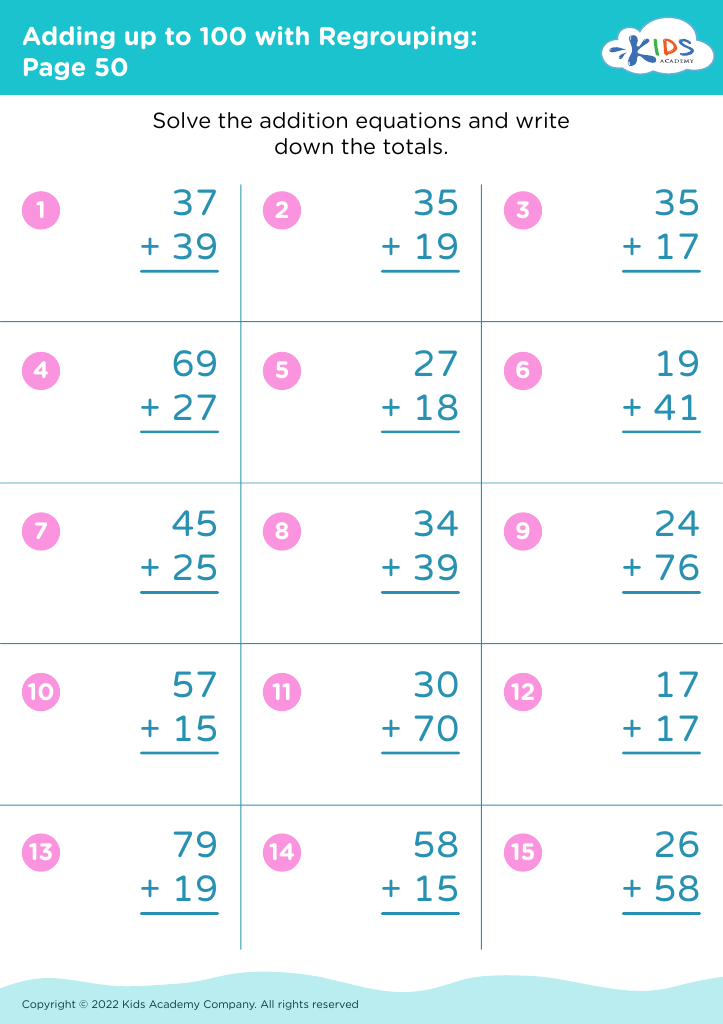
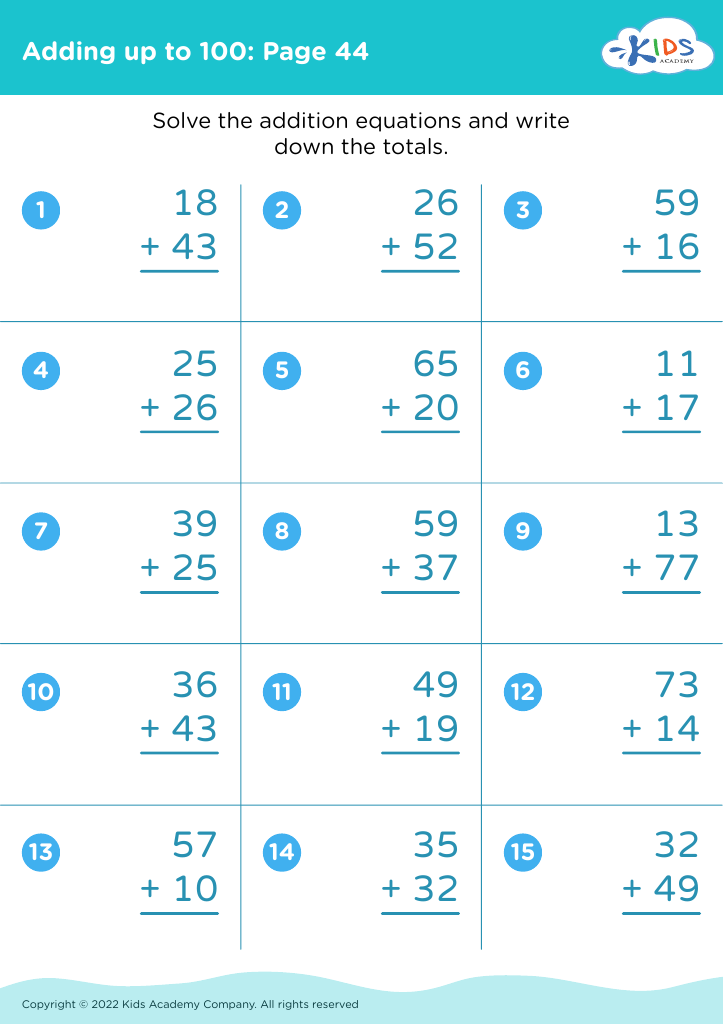






%20(1).jpg)
Color Identification Adding up to 100 for ages 5-8 is a valuable educational activity that parents and teachers should prioritize due to its multifaceted benefits. Firstly, it merges the essential skill of color recognition with fundamental math concepts, providing a dual-learning opportunity that engages children in a more immersive way. Recognizing and naming colors enhances a child's ability to classify and categorize, critical cognitive skills that lay the foundation for all learning.
On the mathematical front, introducing the concept of adding numbers up to 100 leverages their natural curiosity and helps them understand basic arithmetic. By turning it into a visual and interactive activity involving colors, children can better grasp the abstract concepts of numbers and sums. This method has a dual advantage: it reduces math anxiety by making learning fun and dynamic, and it ensures retention by associating learning with enjoyable activities.
Moreover, such activities promote fine motor skills development as children handle and arrange objects, and improve their concentration and attention to detail. Social skills can also be honed through collaborative tasks leading to better teamwork and peer interaction. In essence, Color Identification Adding up to 100 provides a well-rounded educational experience, making complex concepts accessible and enjoyable, and is imperative for comprehensive early childhood development.








