Color recognition Adding up to 100 Worksheets for Ages 5-8
4 filtered results
-
From - To
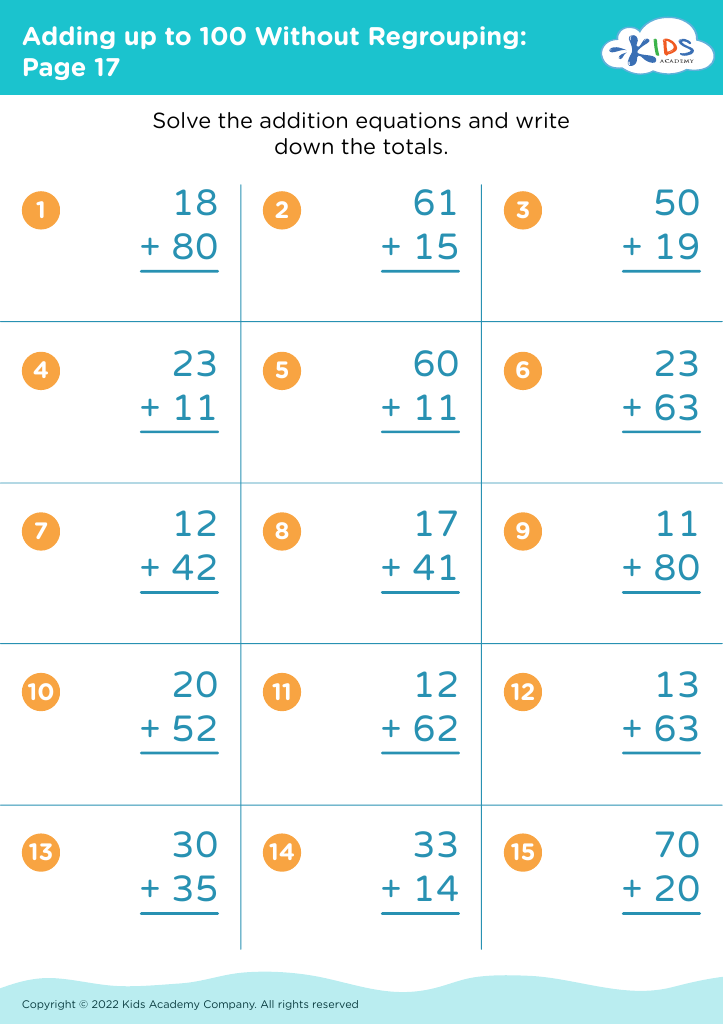
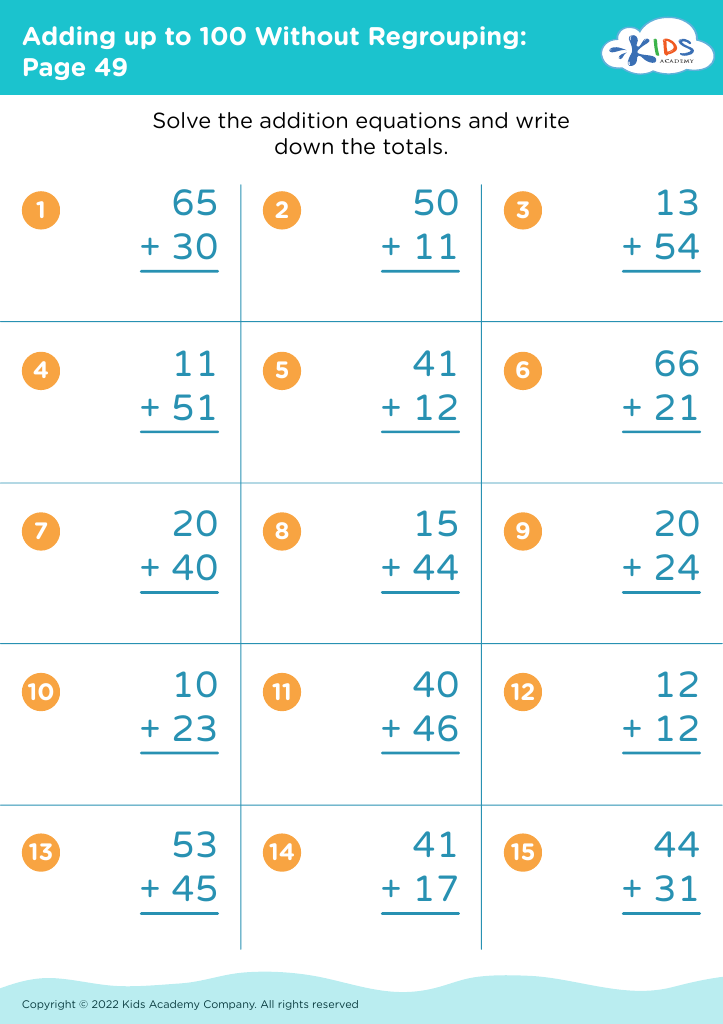
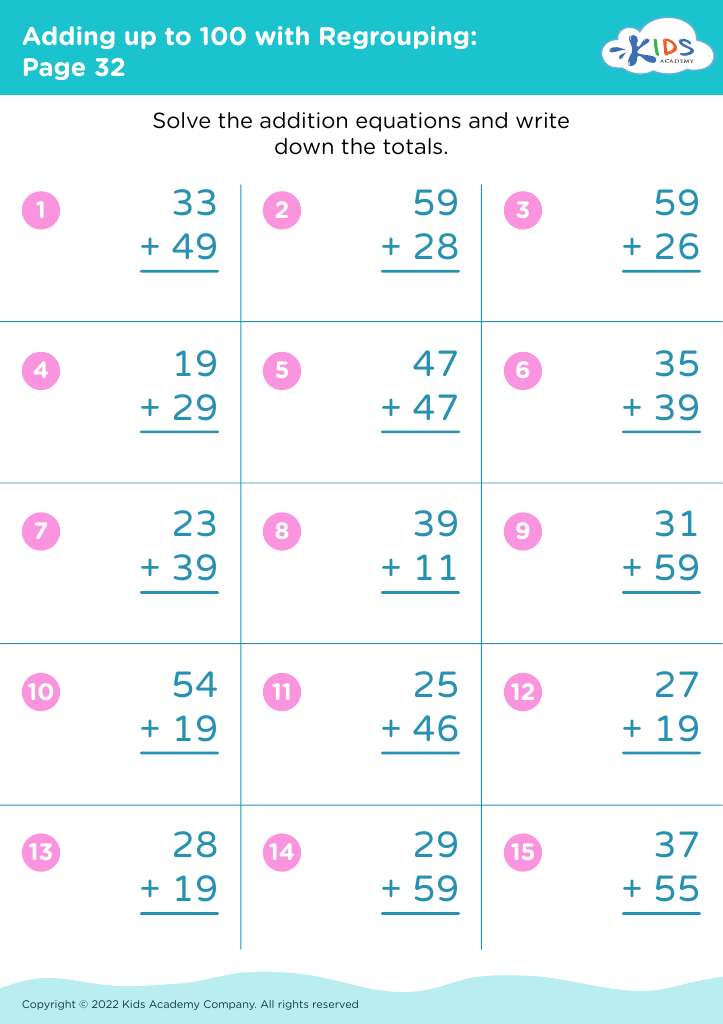
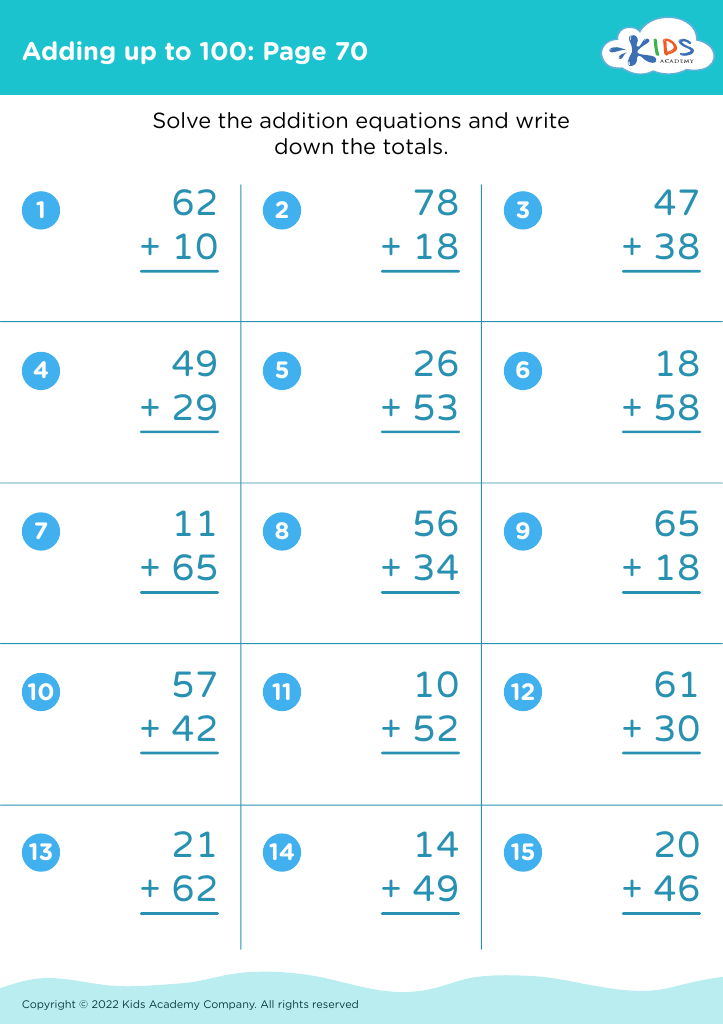
Introduce your child to the fascinating world of numbers and colors with our "Color Recognition Adding up to 100 Worksheets for Ages 5-8." These engaging worksheets combine the thrill of math and the joy of coloring to help your young learners master addition up to 100, while also enhancing their color recognition skills. Perfect for children between ages 5 and 8, these worksheets provide a fun, interactive way to boost their confidence and proficiency in math. Each activity is thoughtfully designed to keep kids entertained and motivated, making math practice an exciting adventure. Join us at Kids Academy to make learning colorful and fun!



%20(1).jpg)



Parents and teachers should place significant emphasis on color recognition and basic arithmetic skills, such as adding up to 100 for children ages 5-8, as these skills form fundamental building blocks for future learning and cognitive development.
Color recognition is a critical part of a child's early development because it stimulates brain function, aids in visual identification, and enhances memory. Recognizing colors helps children to classify objects, improving their ability to navigate and interpret their environment. For instance, identifying traffic lights or understanding color-coded instructions becomes simpler. Furthermore, engaging with colors promotes creativity and can link to emotional intelligence, allowing children to better express themselves and understand their feelings.
Simultaneously, mastering the skill of adding numbers up to 100 sets the foundation for more complex mathematical concepts. Arithmetic builds a child's logical and critical thinking abilities, and understanding numbers boosts their confidence in tackling everyday tasks like telling time, handling money, or measuring ingredients. Math skills are crucial for academic success, as they are integral not just in math-related subjects but also in areas like science and engineering.
Overall, color recognition and basic arithmetic enrich children's cognitive and developmental milestones, laying down pathways for success both inside and outside the classroom. Prioritizing these skills helps ensure a well-rounded and strong early educational experience.








