Comparing Fractions Adding up to 100 Worksheets for Ages 5-8 - Page 2
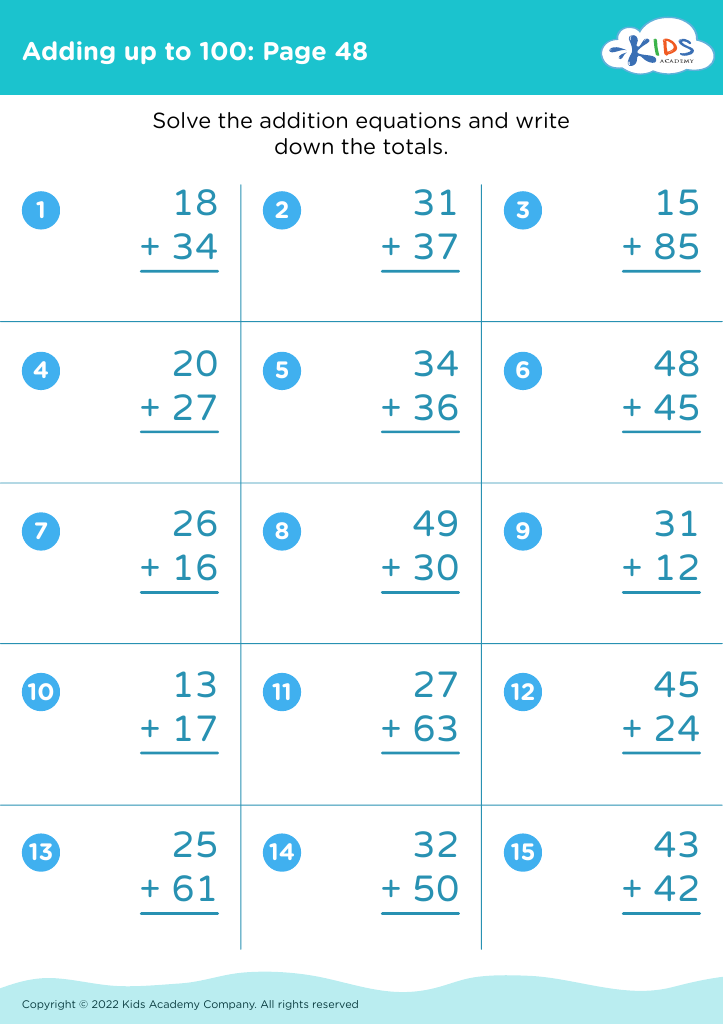
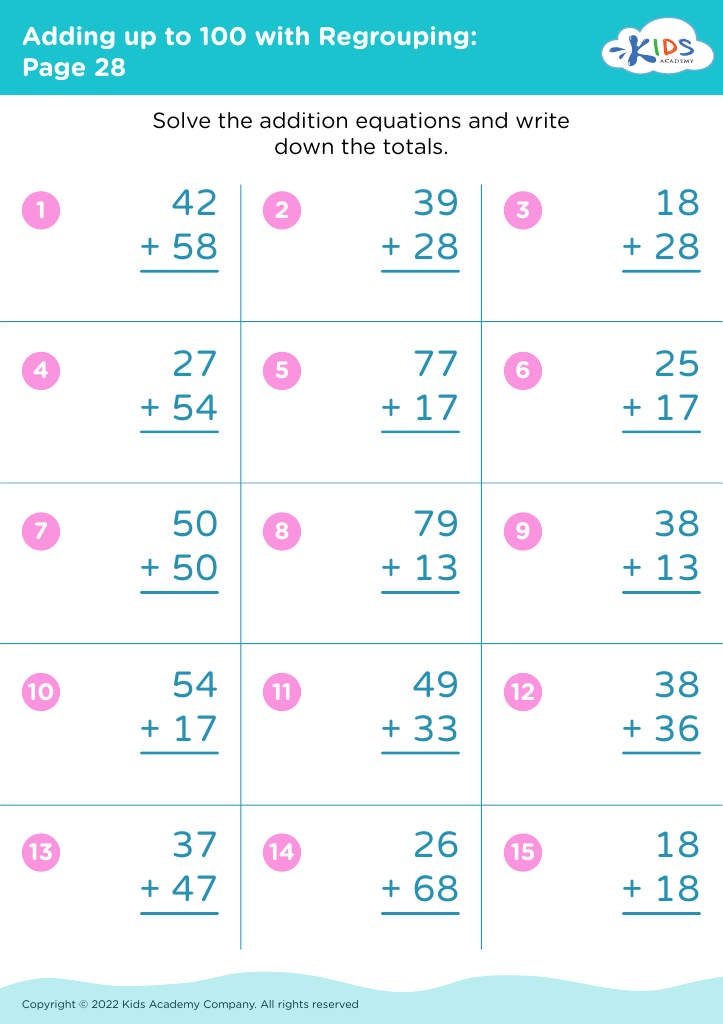
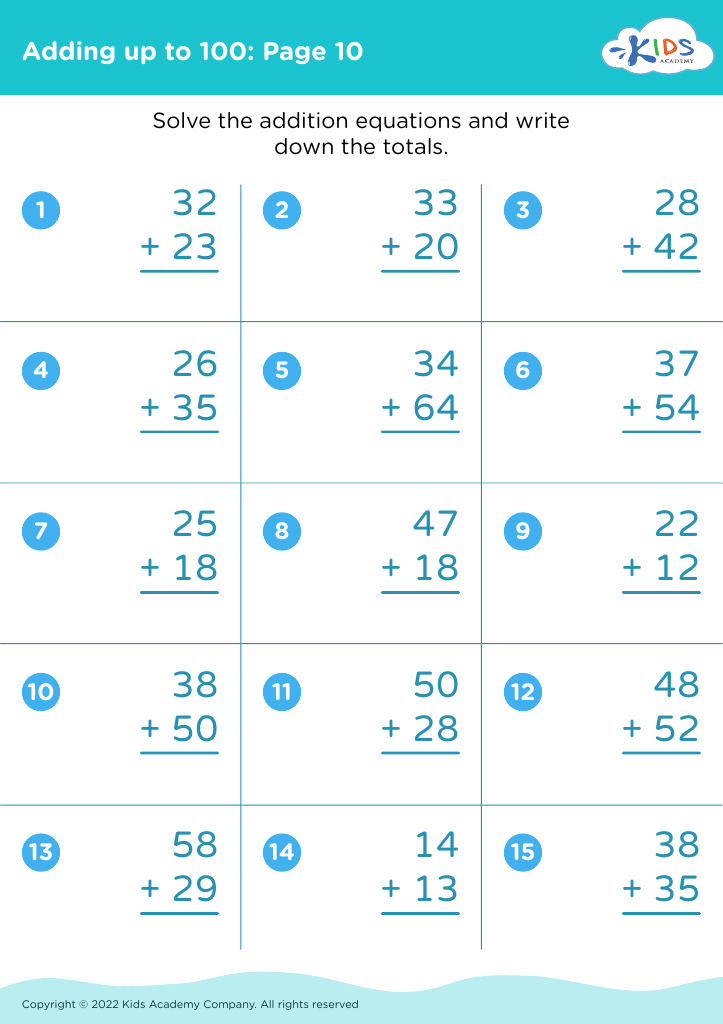
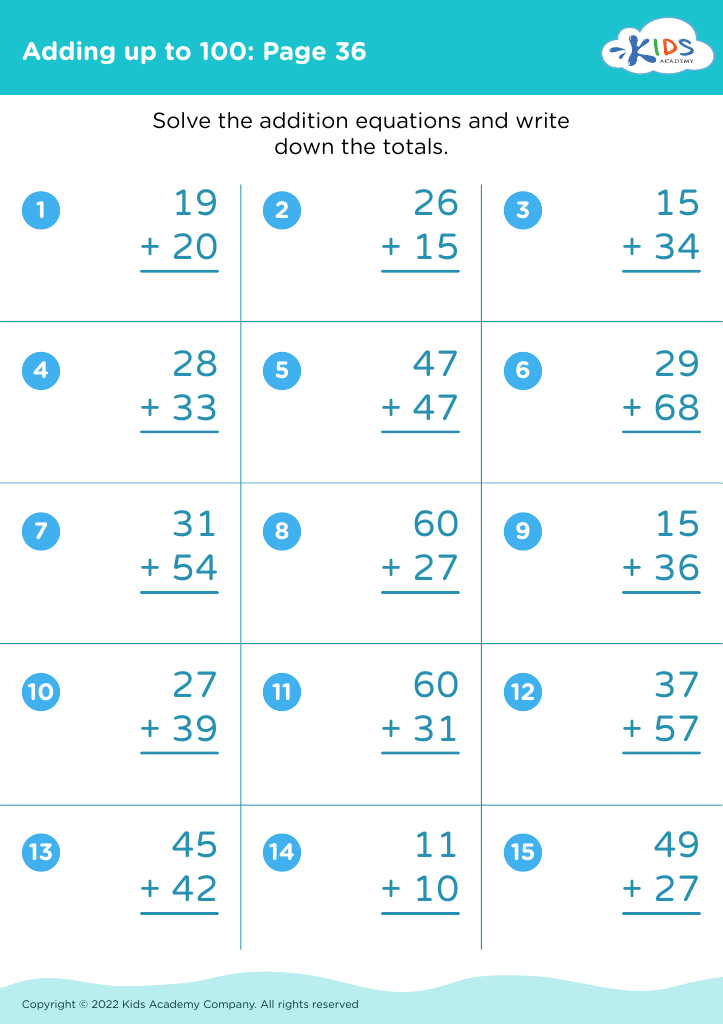
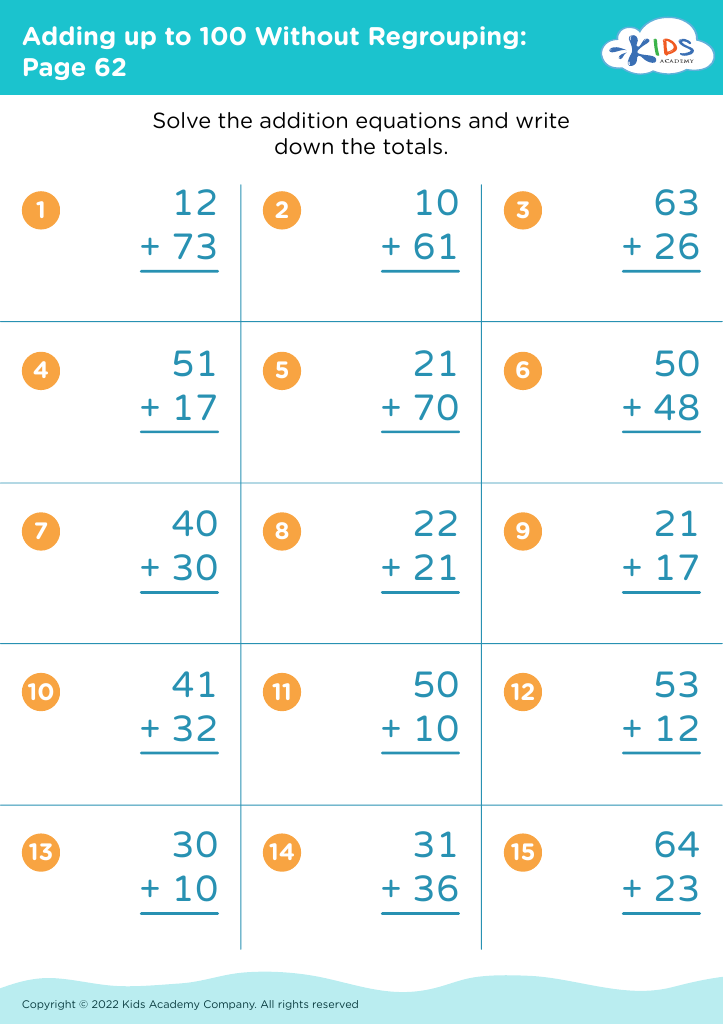
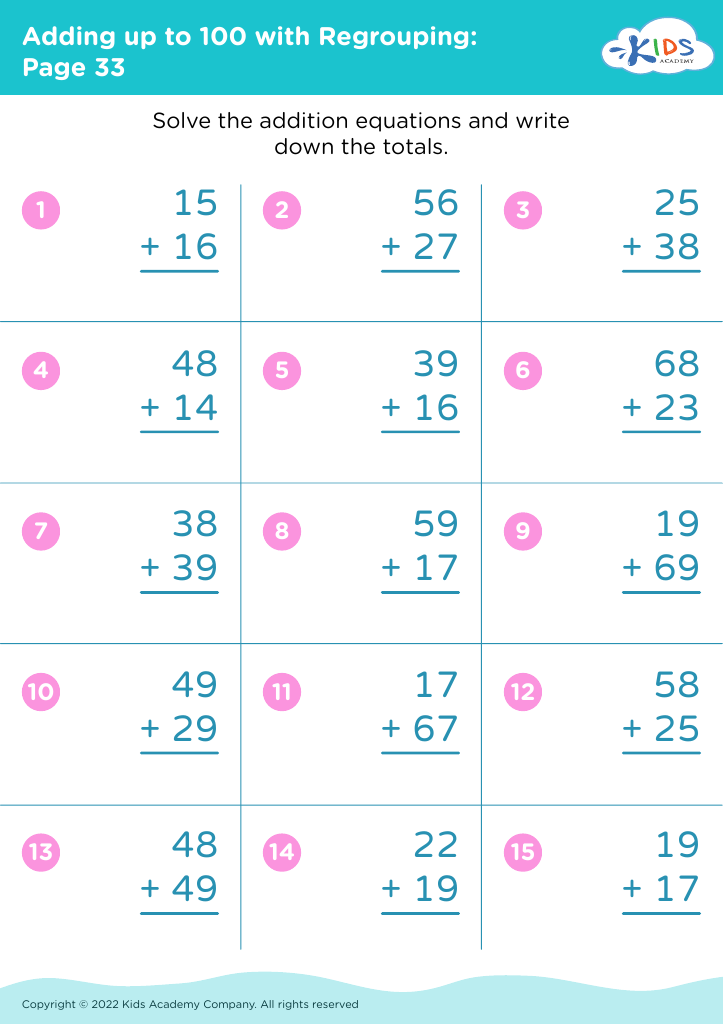








Comparing fractions that add up to 100 is a crucial skill for children aged 5-8 as it lays the foundation for a deeper understanding of numbers, proportions, and basic operations. At this age, children are developing their number sense, and learning to compare fractions enriches their mathematical thinking.
When parents and teachers highlight the relationship between fractions, it helps kids grasp the concept of part-whole relationships, which is essential not just in math, but in real-life situations. For example, understanding how much of a pizza is left after a certain amount is eaten aids in decision-making and estimations.
Moreover, engaging with fractions that add up to 100 can enhance critical thinking skills. Children learn to analyze, compare, and evaluate quantities, helping to strengthen their reasoning abilities. It encourages collaborative learning through discussions and prompts curiosity as they discover mathematical patterns.
Moreover, helping children understand fractions at an early age also paves the way for future mathematical topics like decimals and percentages. Ultimately, supporting children in this area promotes confidence and resilience in their mathematical abilities, fostering a lifelong love for learning. Encouraging this foundational skill ensures a smoother academic journey ahead.








