Develop critical thinking Adding up to 100 Worksheets for Ages 5-8
5 filtered results
-
From - To
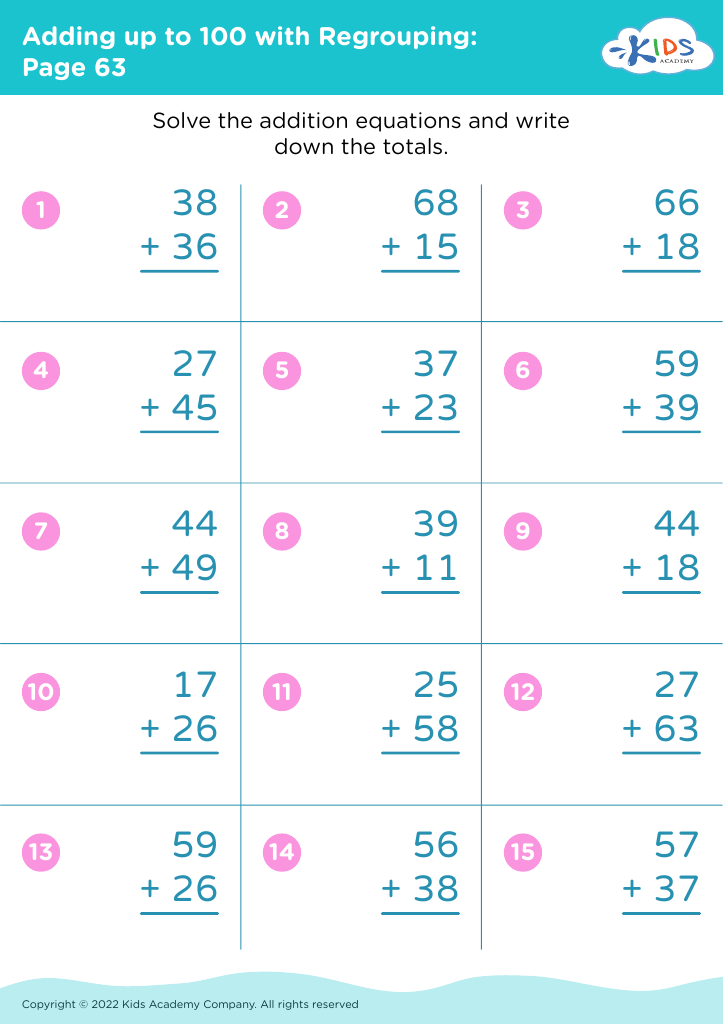
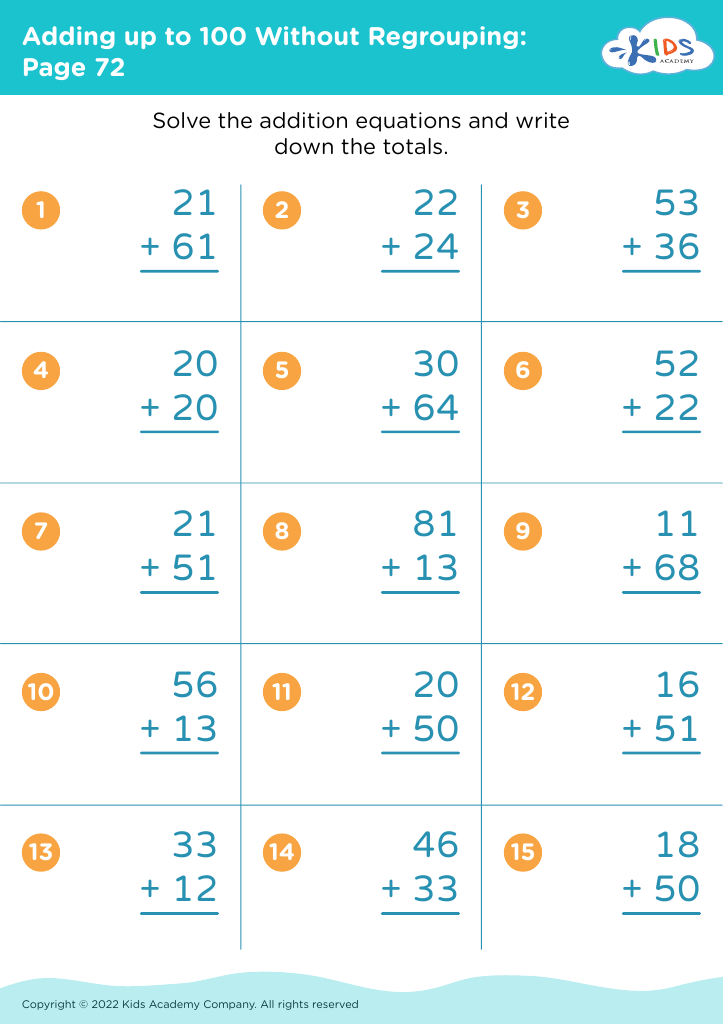
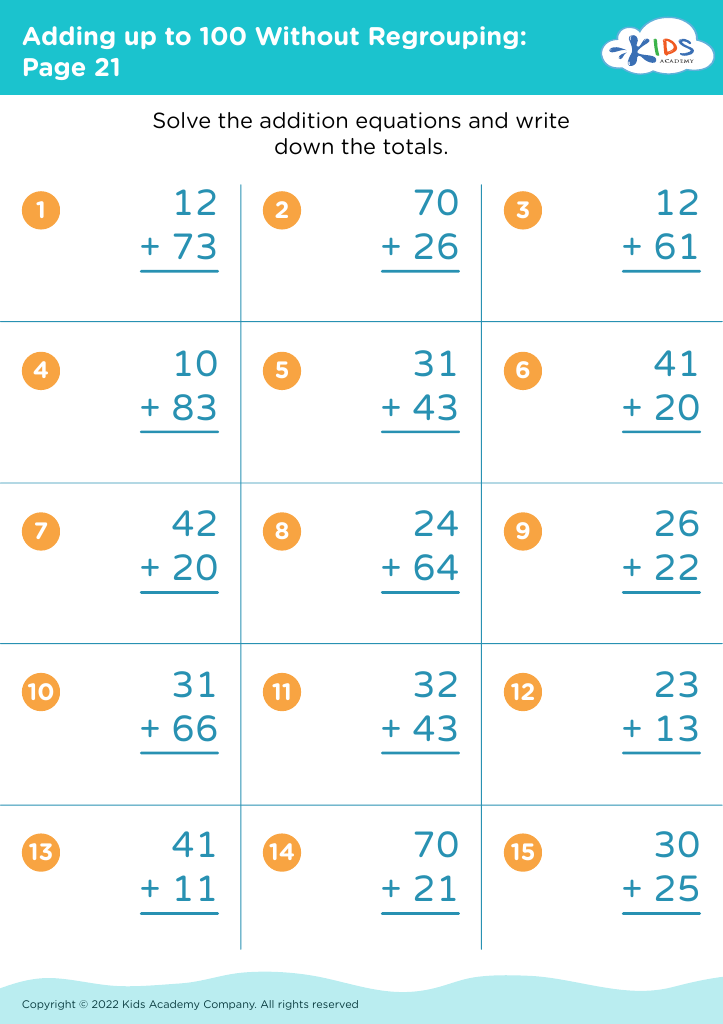
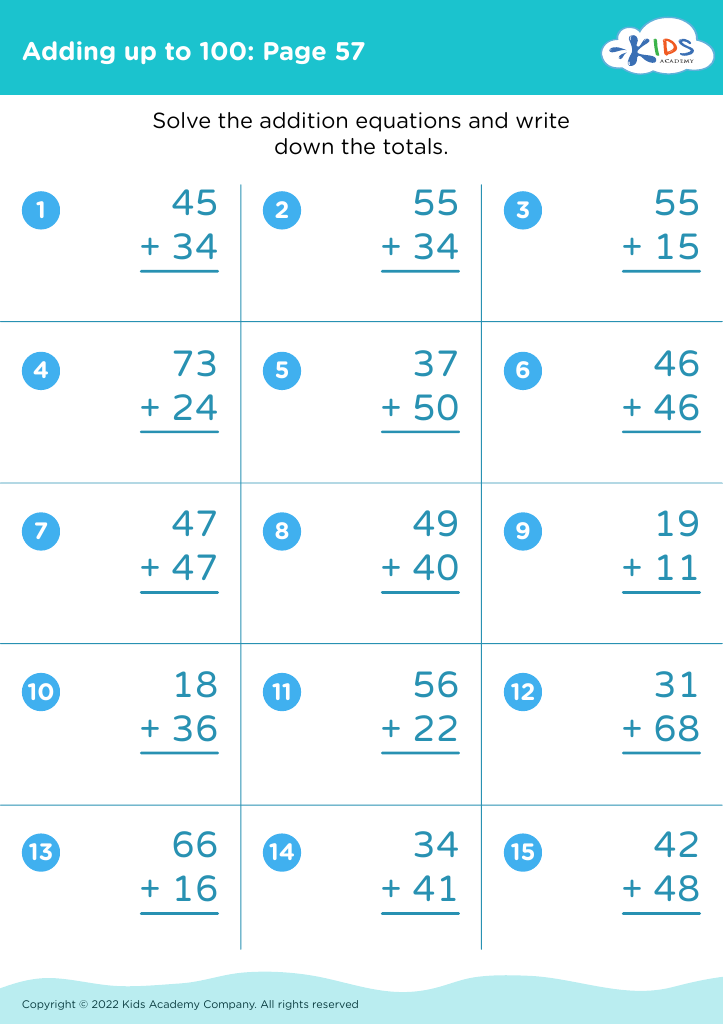
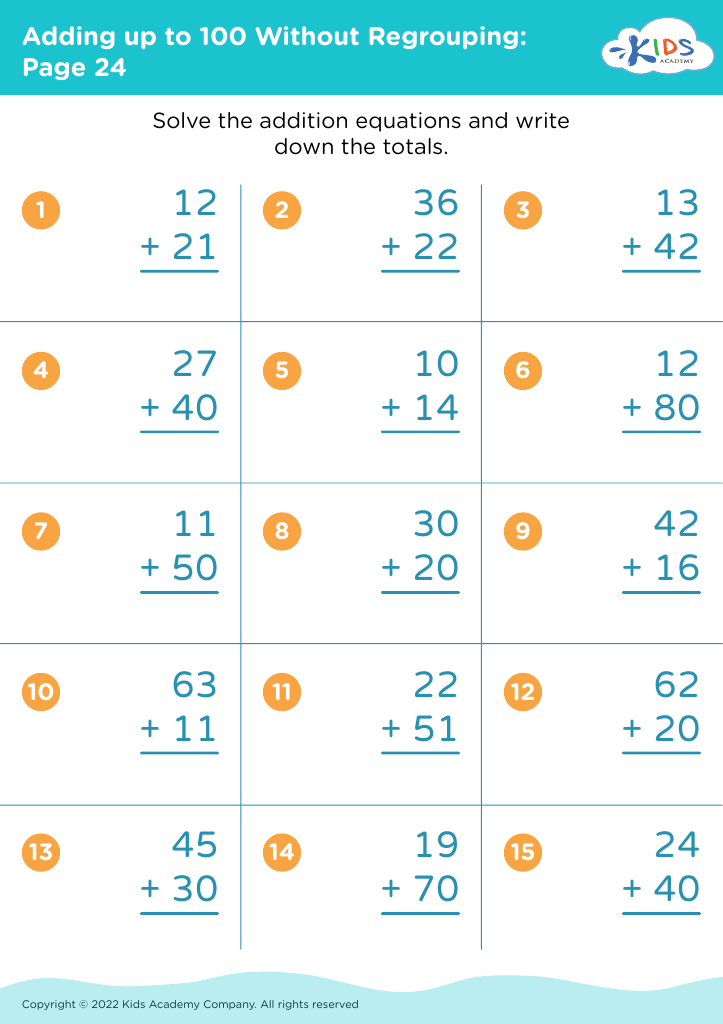
Unlock your child's potential with our "Adding up to 100 Worksheets for Ages 5-8"! Our expertly designed worksheets go beyond simple addition, fostering critical thinking and problem-solving skills in young learners. With engaging exercises and fun illustrations, children will develop a deeper understanding of math concepts while boosting their confidence. Perfectly tailored for early learners, these worksheets offer incremental challenges that keep learning exciting and effective. By integrating critical thinking with fundamental math skills, we ensure your child builds a strong foundation for future academic success. Explore our collection and make math learning enjoyable and rewarding for your little one!





%20(1).jpg)

Developing critical thinking and addition skills up to 100 at ages 5-8 lays the groundwork for robust cognitive and academic growth. For one, critical thinking empowers children to analyze, evaluate, and create solutions based on information instead of merely memorizing facts. This thorough mental engagement fosters intellectual curiosity and resilience. Problems that require careful thought and analytical skills help in developing a child's decision-making capacity and adaptability to new concepts.
Moreover, solid mathematical foundations are essential. Adding up to 100 introduces essential components like number sense, pattern recognition, and logical reasoning. These principles underpin more advanced mathematical problems encountered later in education, facilitating smoother transitions to complex topics. For instance, efficiently adding numbers enables children to grasp place value and arithmetic operations, which are crucial in problem-solving scenarios.
Not just academic progress, mastering these skills also boosts self-esteem and independence. Children get a sense of achievement and are more likely to retain an enthusiasm for learning. When parents and teachers commit to developing these dual skills, they cultivate well-rounded, confident, and capable minds prepared to tackle a wide array of future challenges both inside and outside the classroom. The earlier these skills are fostered, the more profound and long-lasting their positive impacts.








