Develop number recognition Adding up to 100 Worksheets for Ages 5-8
4 filtered results
-
From - To
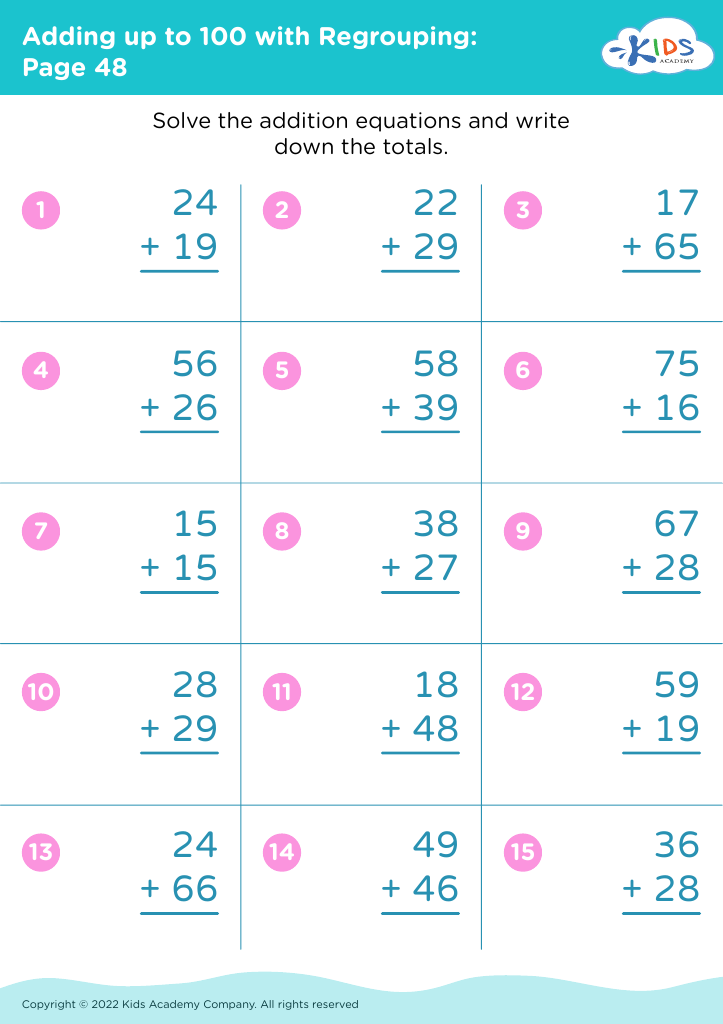
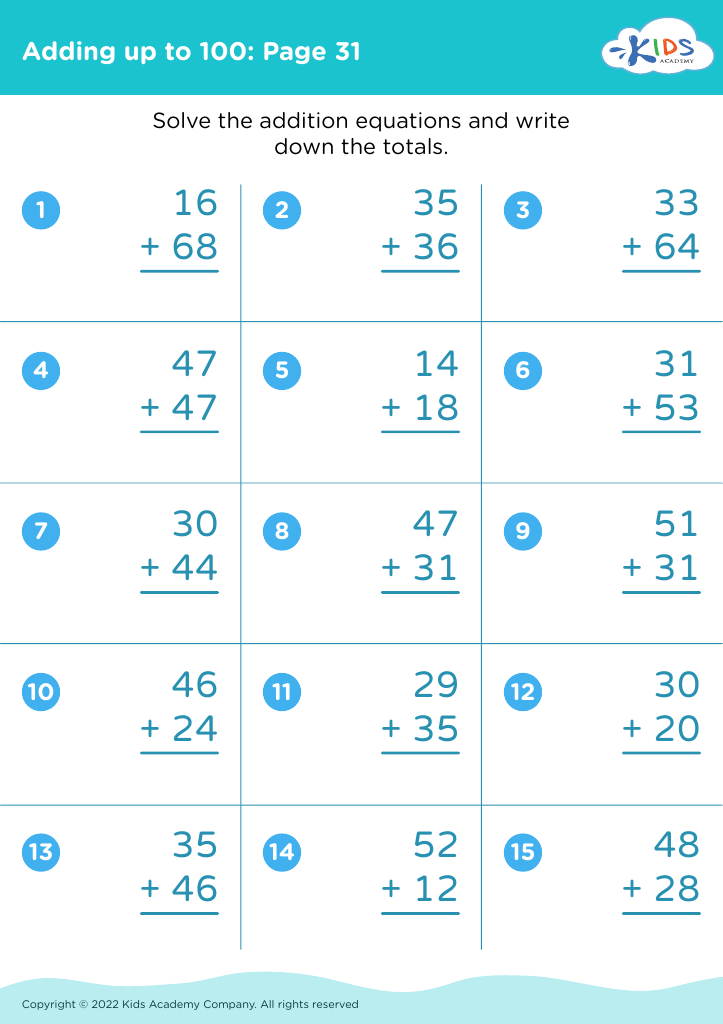
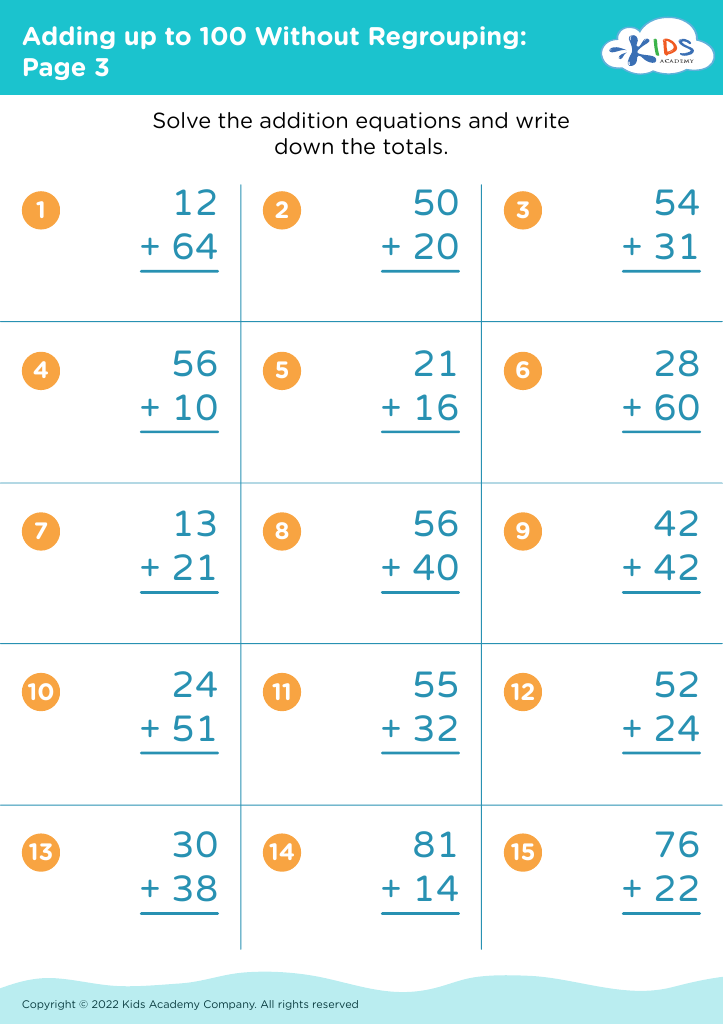
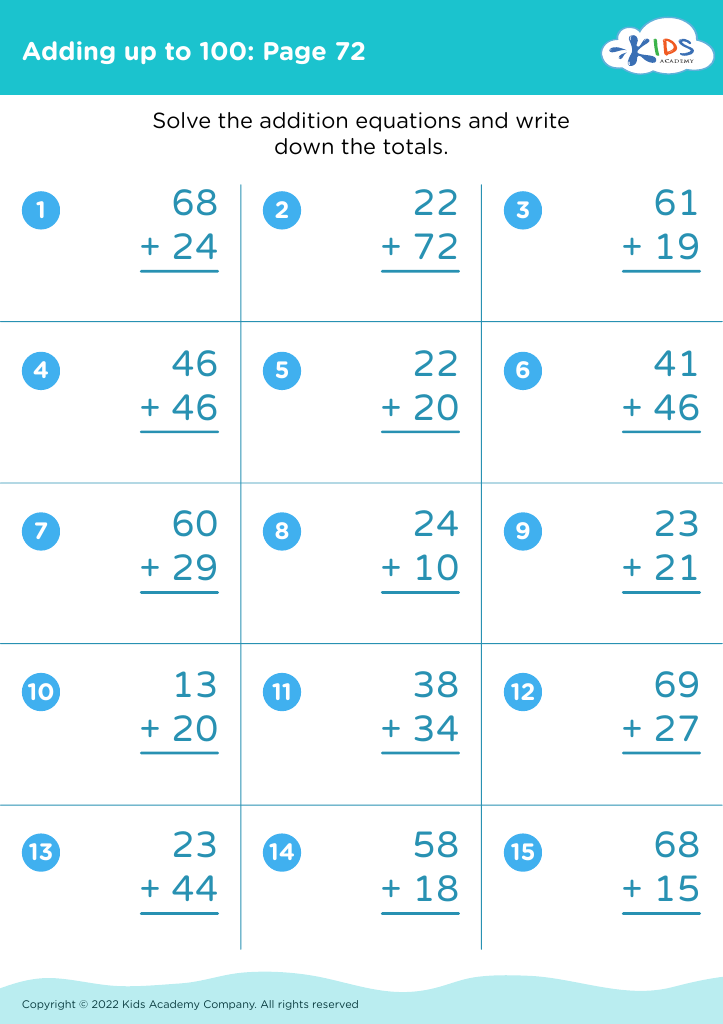
Discover our engaging "Develop Number Recognition: Adding Up to 100 Worksheets" designed specifically for children ages 5-8! These worksheets focus on enhancing number recognition skills through fun and interactive activities. Aligned with early math learning standards, they help young learners grasp the concept of numbers up to 100 while fostering their ability to recognize and write them confidently. With a variety of exercises including visual aids, tracing, and coloring, children will enjoy practicing essential math skills in a playful way. Ideal for home or classroom use, these worksheets are a perfect resource to support your child's learning journey in mathematics!





%20(1).jpg)

Number recognition and mathematical fluency in the range of 1 to 100 are foundational skills for children aged 5-8, making them essential for parents and teachers to prioritize. Developing number recognition enables children to identify, compare, and understand numbers visually, laying the groundwork for more complex mathematical concepts. A solid grasp of numbers fosters confidence and encourages children to engage with math throughout their academic careers.
As children learn to add up to 100, they enhance their problem-solving skills, learning to combine numbers in various ways. This understanding helps them make sense of everyday situations, such as shopping or managing time. Moreover, early mastery of addition promotes cognitive development, critical thinking, and perseverance.
Parental and teacher involvement in nurturing these skills can significantly impact a child's learning journey. By providing engaging activities and a supportive environment, adults help cultivate a positive attitude towards math, which has long-lasting effects on a child’s self-esteem and competency in the subject. Furthermore, early intervention can identify any learning challenges, allowing for timely support. Ultimately, fostering number recognition and basic addition skills equips children with essential tools for academic success and daily life.








