Developing math skills Adding up to 100 Worksheets for Ages 5-8
3 filtered results
-
From - To
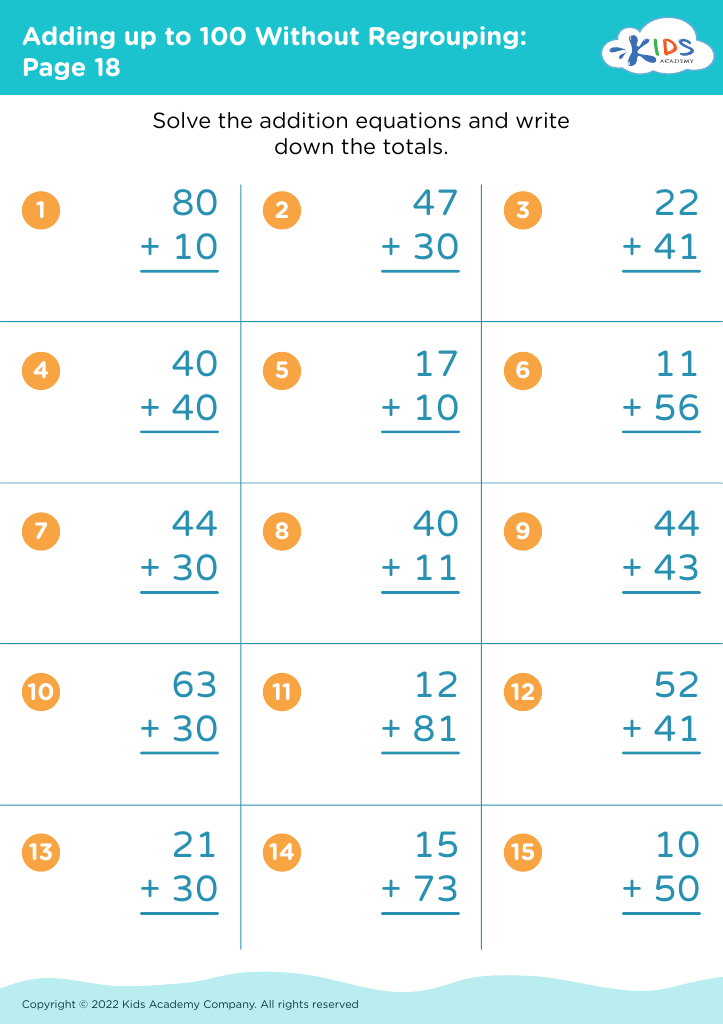
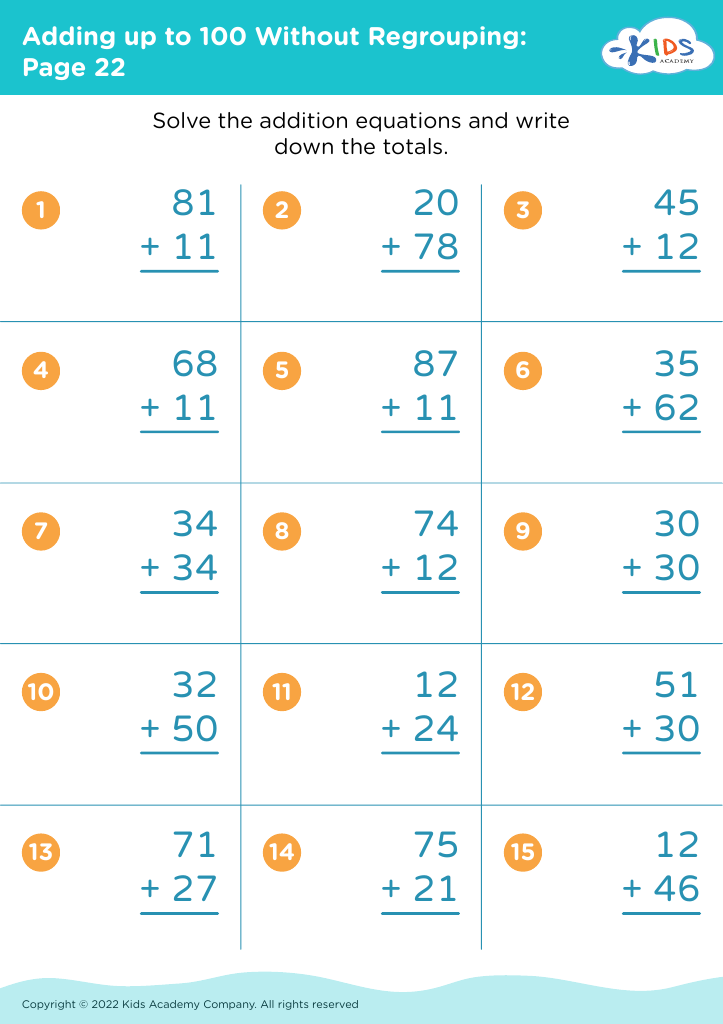
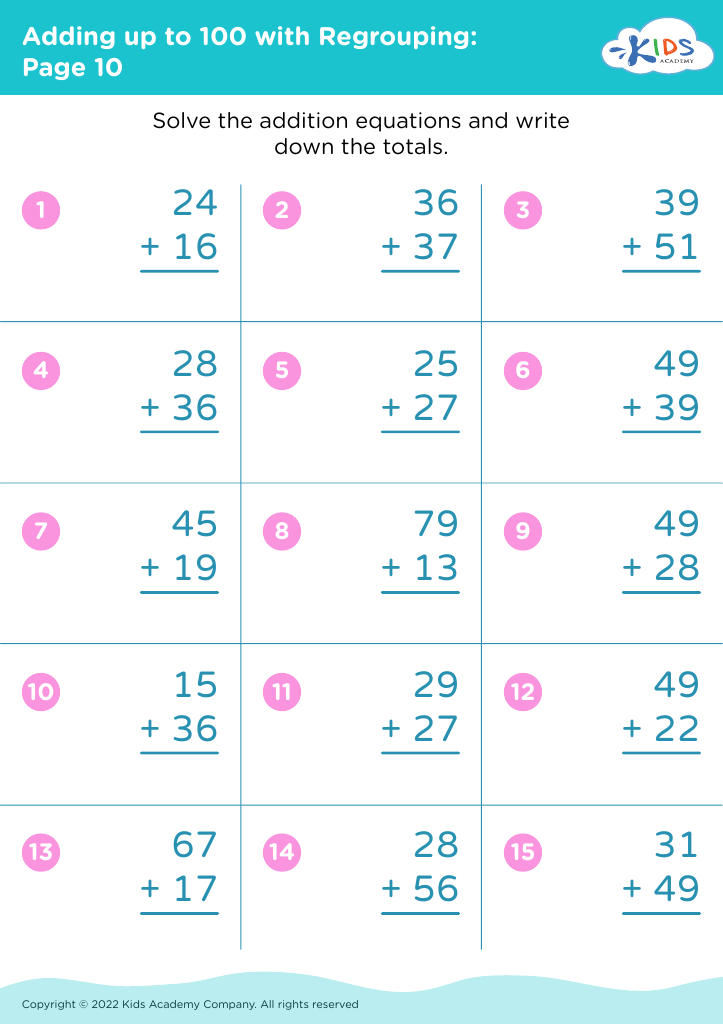
Boost your child's confidence and math abilities with our "Developing Math Skills: Adding up to 100 Worksheets" for ages 5-8. These engaging printable worksheets are designed to make learning fun and effective, focusing on key addition concepts up to 100. At Kids Academy, we incorporate colorful visuals and relatable scenarios that captivate young learners, helping them strengthen their problem-solving skills. Whether practiced at home or in the classroom, these worksheets are perfect for building a strong mathematical foundation, aligning with educational standards. Join us and watch your child’s math skills flourish as they gain mastery and enthusiasm in math.



%20(1).jpg)



Developing math skills that involve adding up to 100 for children ages 5-8 is crucial for several reasons. At this stage, children are in their formative years where cognitive development is highly active. Learning to add up to 100 builds a foundational understanding of basic arithmetic, which is essential for future math concepts such as multiplication, division, and problem-solving.
Firstly, mastering addition within 100 allows children to confidently tackle daily activities involving numbers, such as counting money, telling time, and measuring quantities. This practical application fosters independence and confidence in their abilities.
Secondly, developing these math skills enhances critical thinking. When children learn to add numbers, they also learn to break problems into smaller parts, strategize solutions, and check their work for accuracy. These critical thinking skills extend beyond math and are beneficial in all areas of learning and decision-making.
Moreover, early success in math builds a positive attitude towards the subject. It minimizes math anxiety and creates a solid platform for tackling more complex concepts in later grades. Teachers and parents can nurture a love for learning and resilience in facing academic challenges by offering consistent practice and positive reinforcement.
Therefore, investing time and effort to help children develop addition skills up to 100 empowers them not just in math, but in overall academic and life success.








