Enhance number recognition Adding up to 100 Worksheets for Ages 5-8
8 filtered results
-
From - To
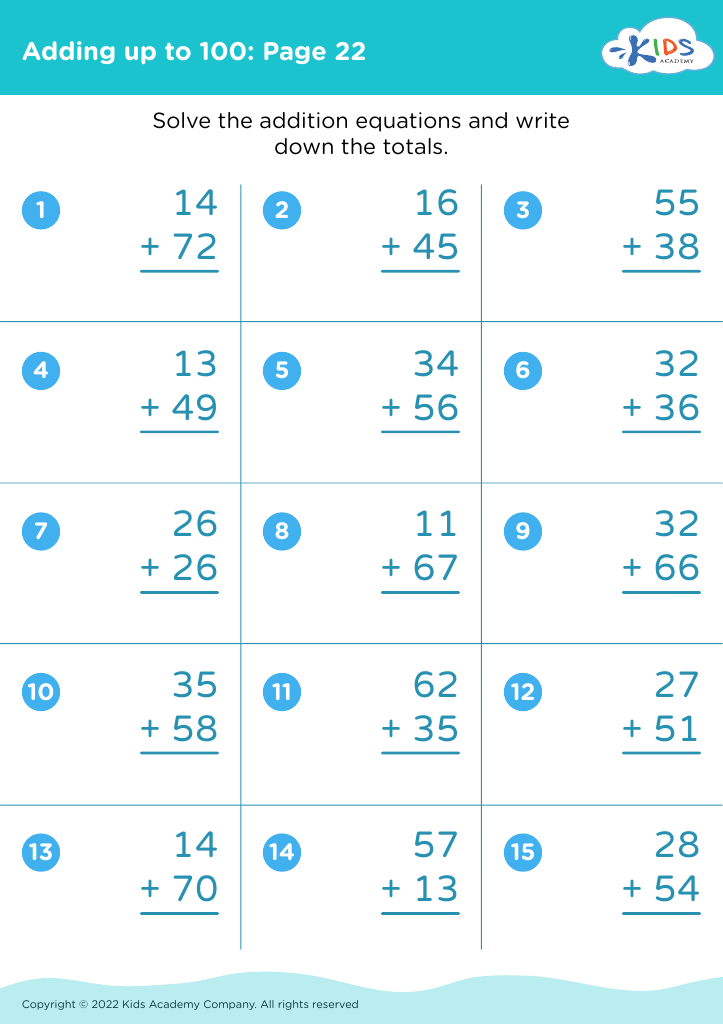
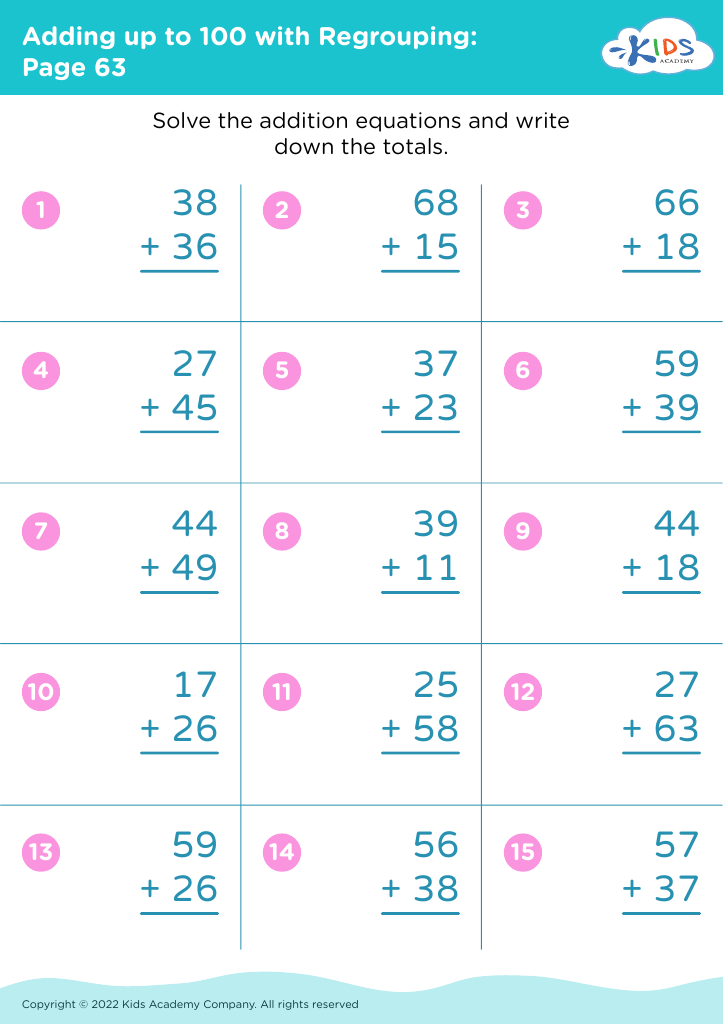
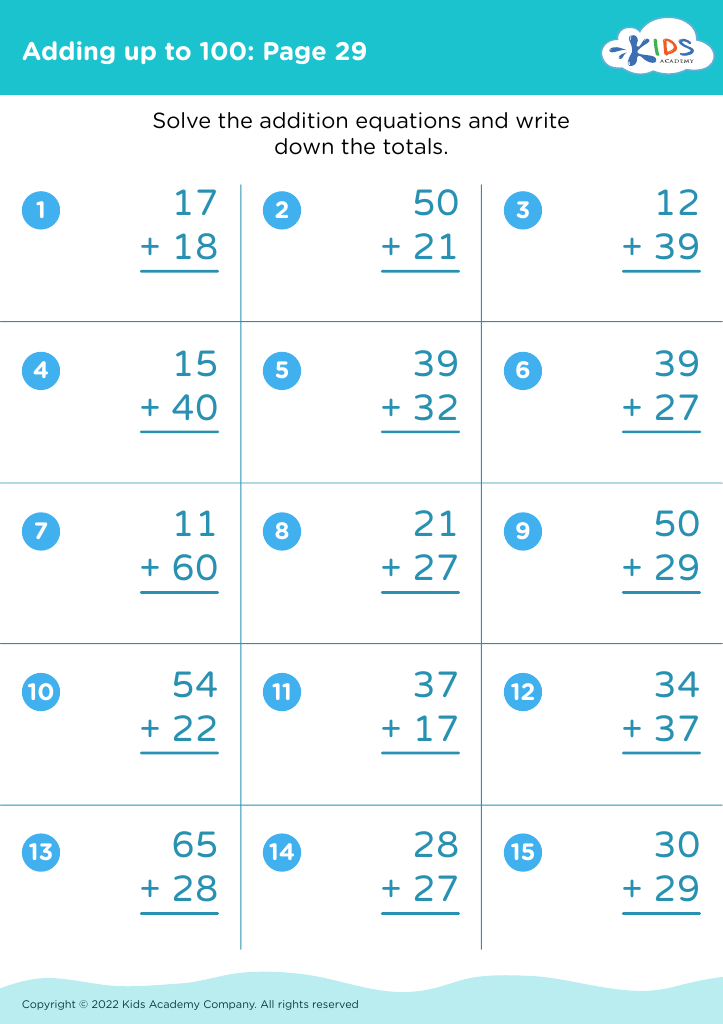
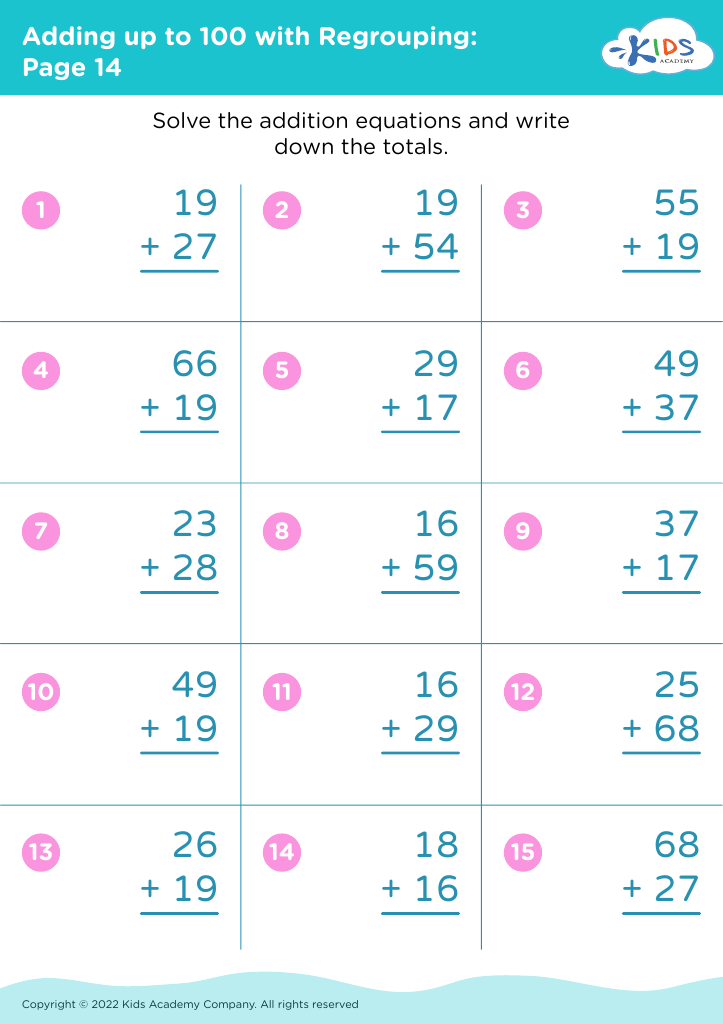
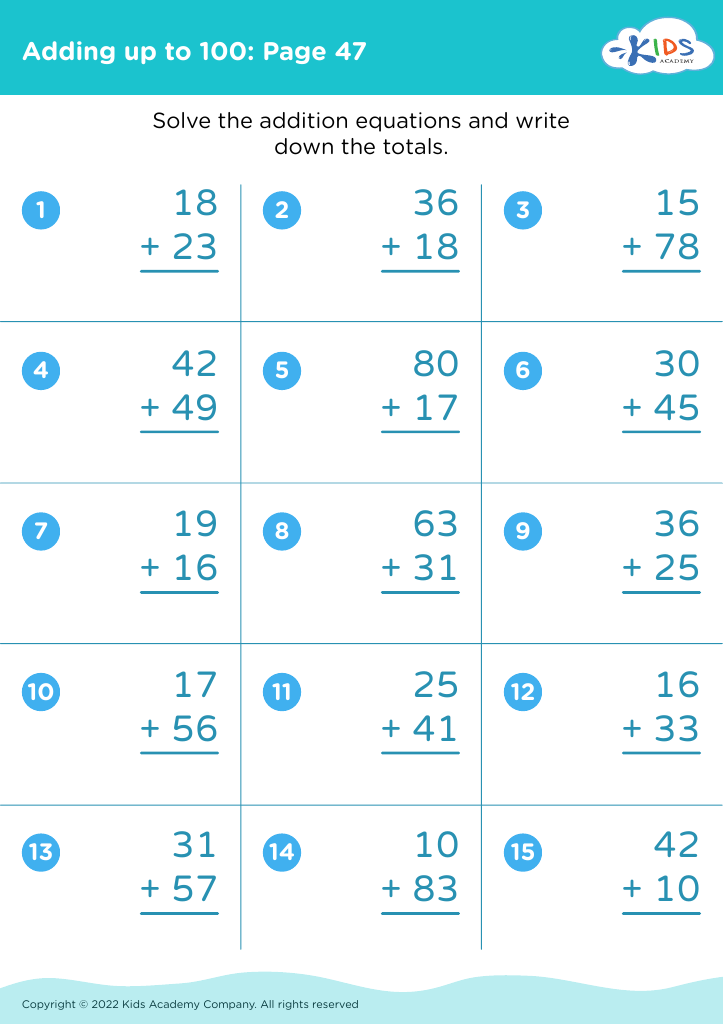
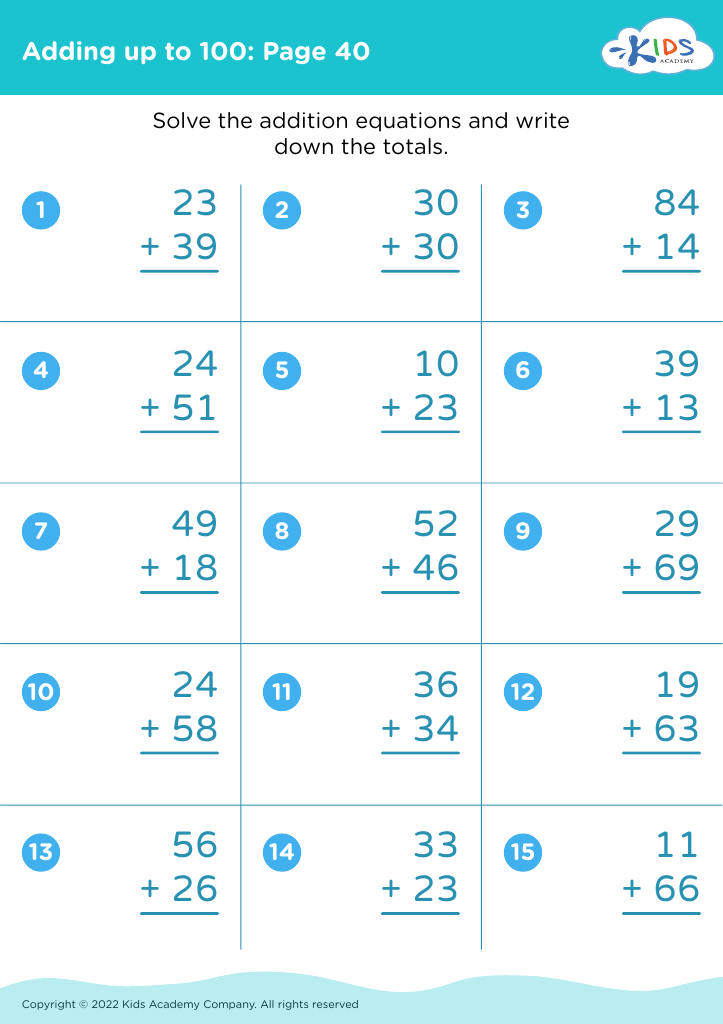
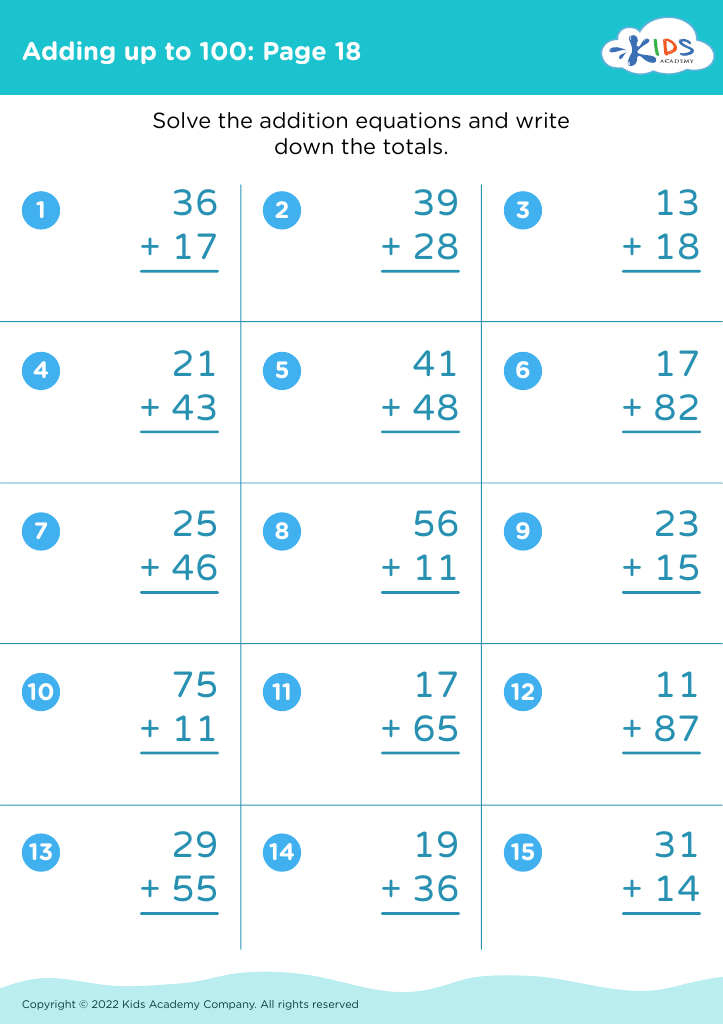
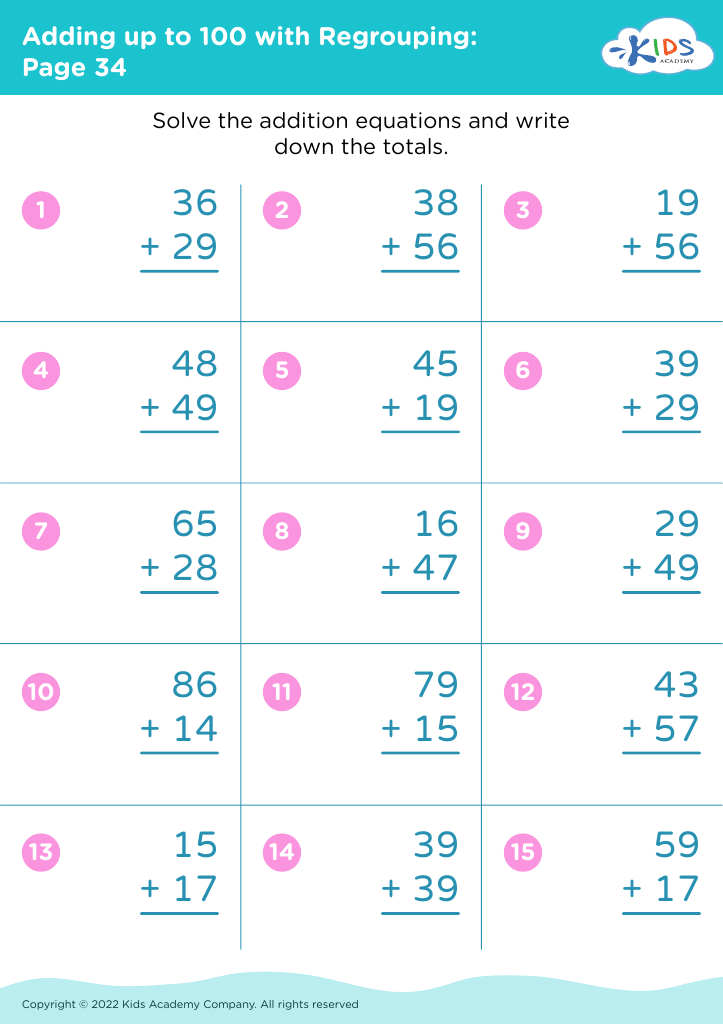
Discover a fun and engaging way to enhance number recognition for children aged 5-8 with our "Adding Up to 100 Worksheets." These specially designed worksheets provide a variety of exercises that focus on recognizing and understanding numbers while reinforcing essential math skills. With colorful designs and interactive activities, kids will enjoy practicing their counting, addition, and number identification. Each worksheet is crafted to foster early math proficiency, ensuring children build a solid foundation for future learning. Ideal for classroom use or at-home practice, our resources promote confidence and develop critical thinking in young learners. Explore our collection today for effective math practice!



%20(1).jpg)



Enhancing number recognition and addition skills in children aged 5-8 is crucial for their overall mathematical development. These foundational skills serve as the building blocks for more complex mathematical concepts in later grades. When parents and teachers prioritize number recognition, young learners become more comfortable with numbers, which fosters confidence in their math abilities. Recognizing numbers accurately enables children to perform addition up to 100 more efficiently, and this skill is vital for everyday tasks such as telling time, managing money, and understanding simple measurements.
Moreover, helping children master these skills at an early age notably contributes to their cognitive development, promoting logical thinking and problem-solving abilities. Understanding how to add numbers improves their ability to approach challenges with a growth mindset. Lastly, engaging in number games and activities that enhance these skills can create a fun and supportive learning environment. When parents and teachers collaborate in facilitating these learning experiences, they not only support students in achieving academic success but also strengthen their enthusiasm for learning. Thus, investing time in reinforcing number recognition and addition up to 100 sets young learners on a path towards lifelong numerical literacy and confidence.








