Enhance problem-solving skills Adding up to 100 Worksheets for Ages 5-8
3 filtered results
-
From - To
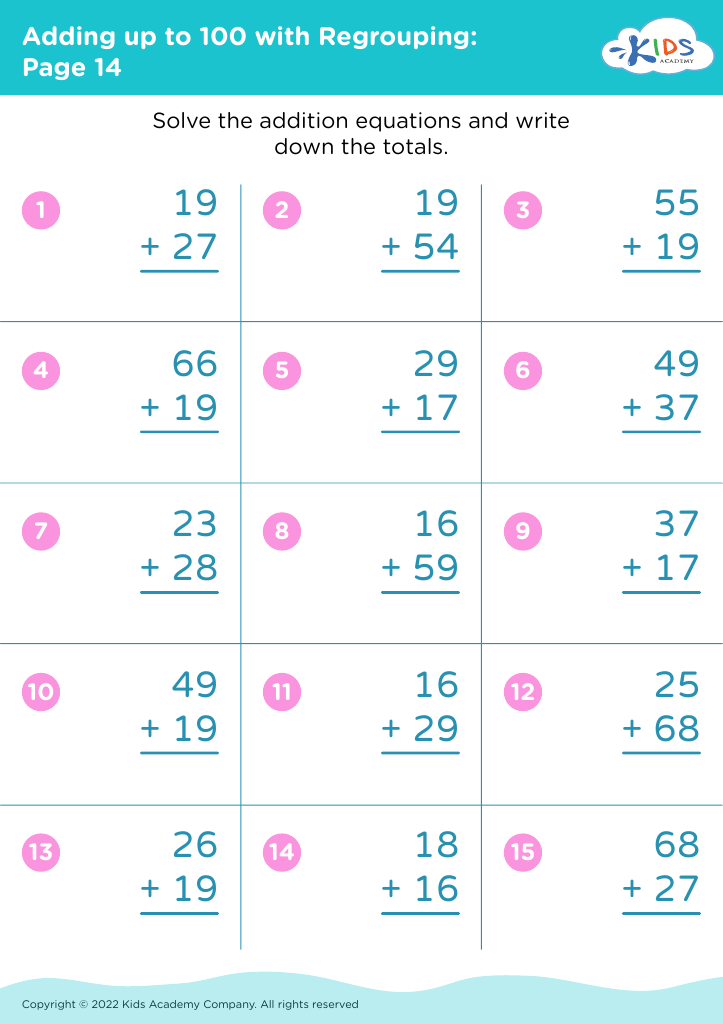
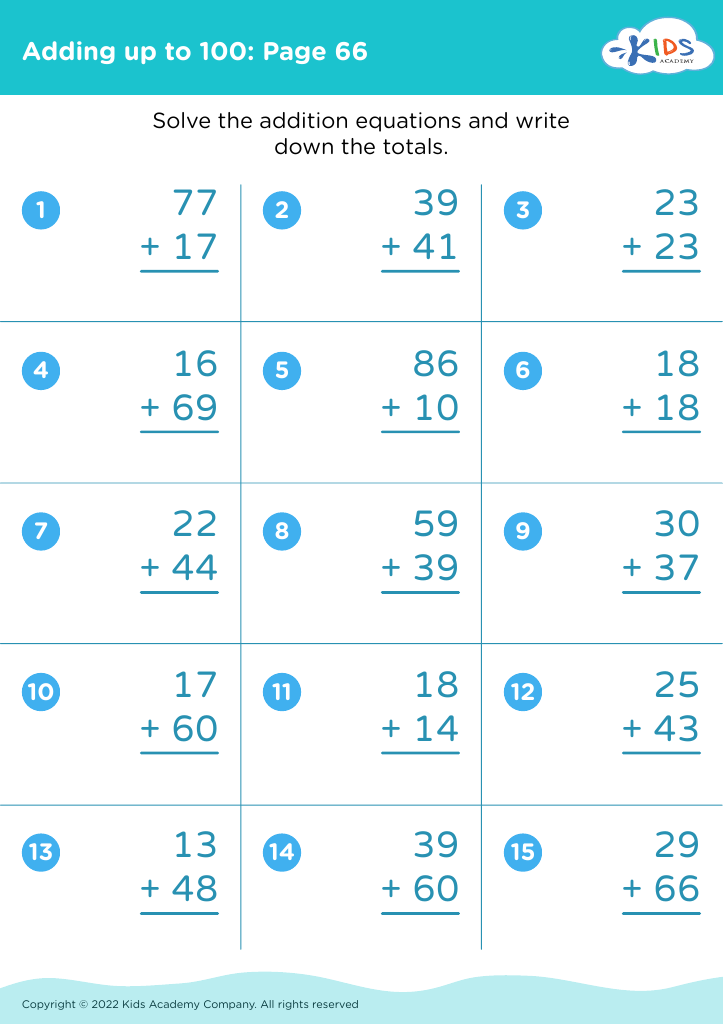
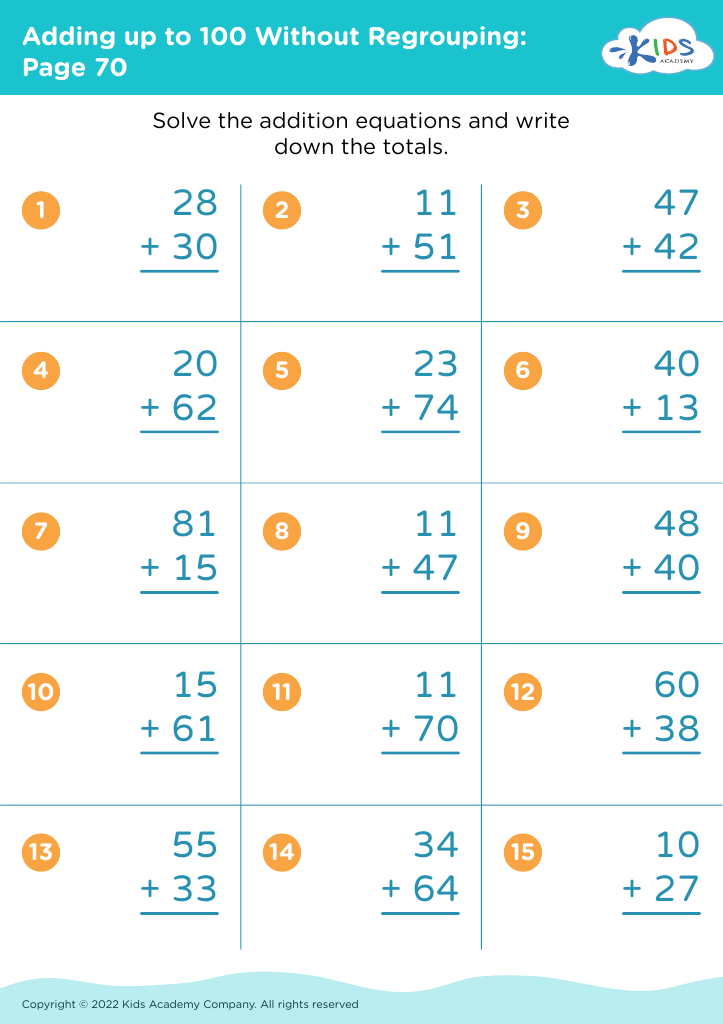
Enhance your child's problem-solving skills with our engaging "Adding Up to 100 Worksheets" designed for ages 5-8! These interactive worksheets foster critical thinking and mathematical understanding as children practice addition strategies. Each worksheet is thoughtfully crafted to challenge young learners while keeping them entertained. With over 100 worksheets, kids will enjoy diverse problems that help strengthen their ability to solve math challenges independently. Ideal for classroom use or at-home learning, these vibrant printables encourage exploration of numbers in a fun and approachable way. Give your child the tools they need to navigate early math concepts with confidence and enthusiasm!






%20(1).jpg)
Enhancing problem-solving skills in children aged 5-8 is crucial for their cognitive development and future success. At this age, children are naturally curious and eager to explore, making it an ideal time to foster their analytical thinking. Engaging them in activities that focus on adding up to 100 encourages critical thinking and helps them learn to break down complex problems into manageable steps.
These skills not only bolster mathematical understanding but also develop resilience and perseverance as children encounter and overcome challenges. Learning to approach problems systematically nurtures creativity, enabling children to think outside the box and explore various solutions. As they practice addition and problem-solving, they gain confidence, which is essential for their overall growth and learning.
Furthermore, strong problem-solving abilities can positively impact students’ performance across subjects, including reading and science, as they learn to apply their skills in unfamiliar contexts. Parents and teachers who prioritize these skills lay a foundation for their children's academic and personal success. By making math fun and engaging—such as by incorporating games or real-life scenarios—they motivate children to embrace challenges, setting the stage for lifelong learning and adaptability in an increasingly complex world.








