Enhancing problem-solving skills Adding up to 100 Worksheets for Ages 5-8
3 filtered results
-
From - To
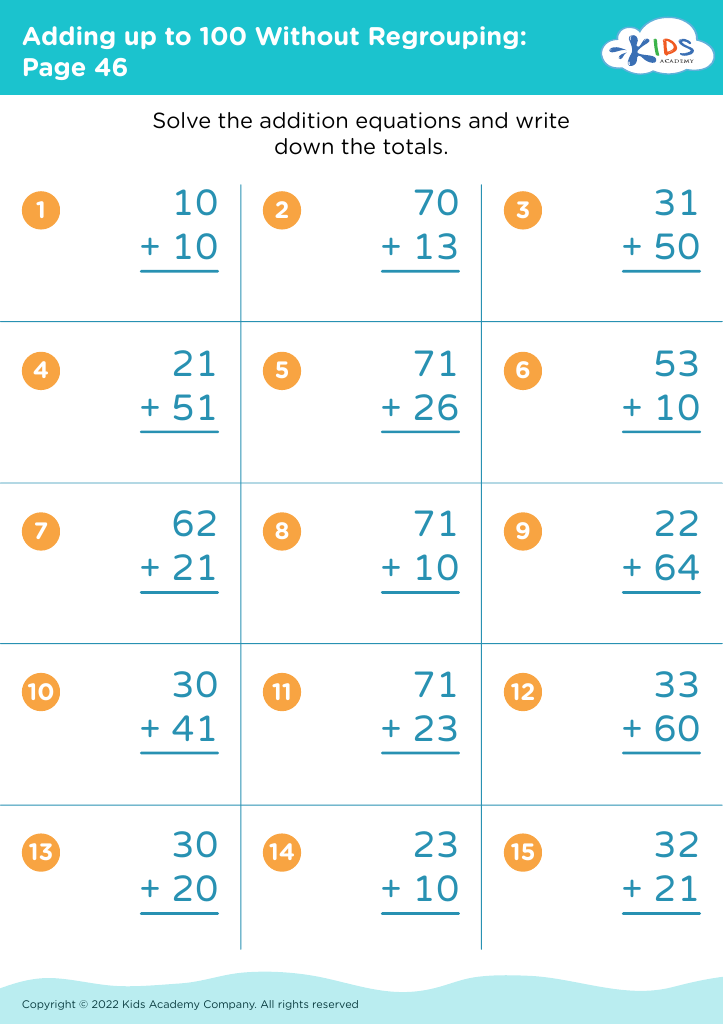
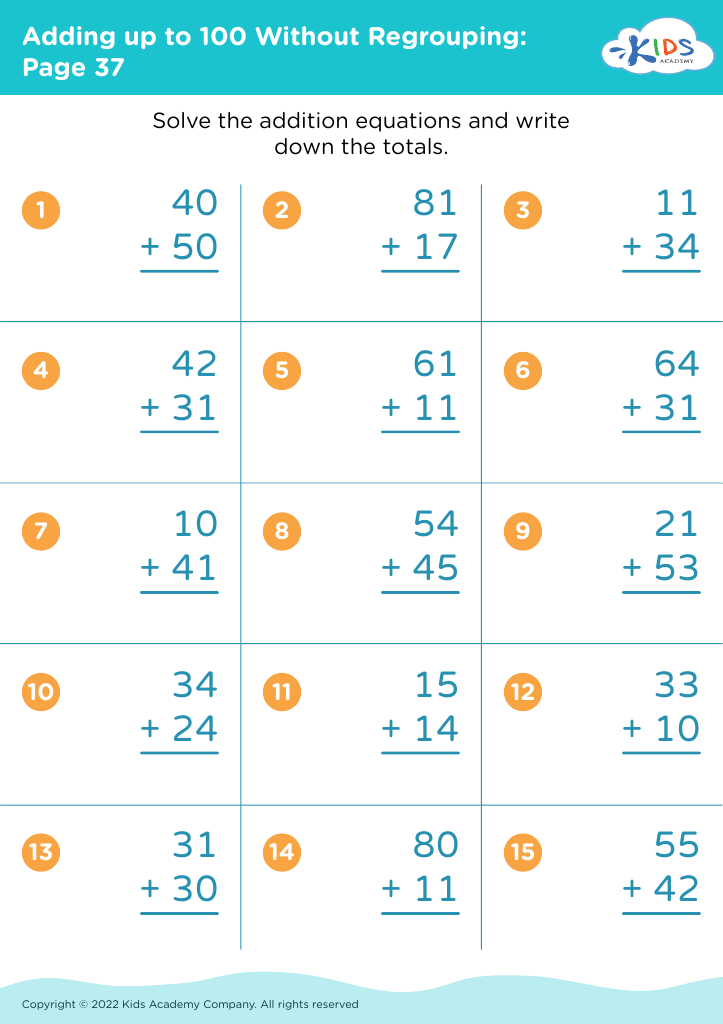
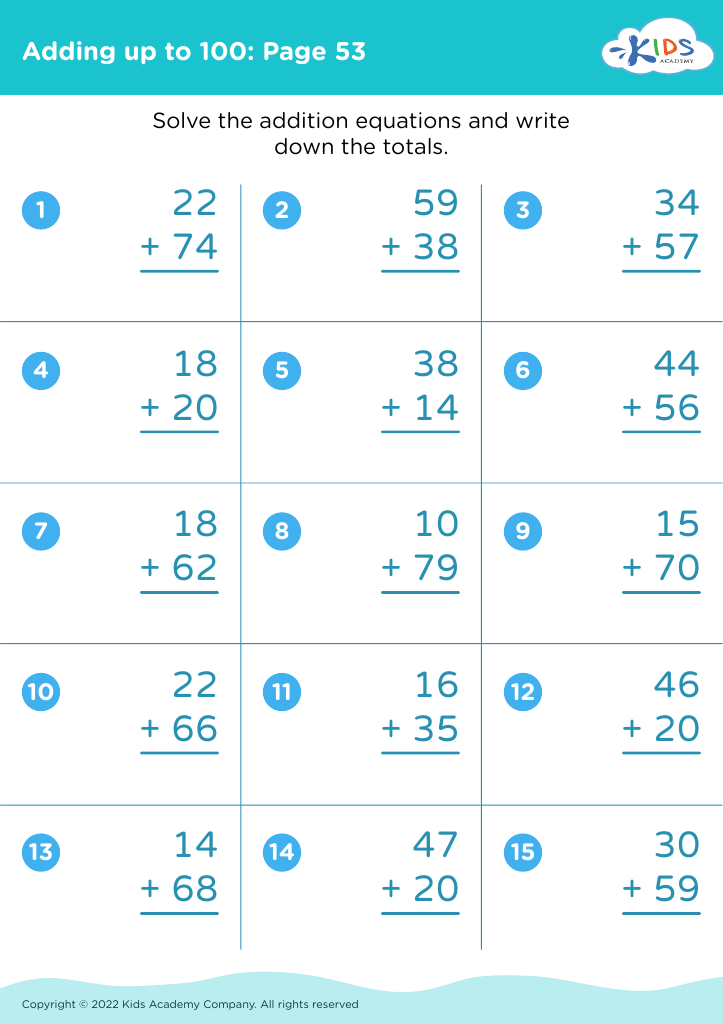
Boost your child's problem-solving skills with our "Adding Up to 100 Worksheets," specially designed for kids ages 5-8! These engaging worksheets help young learners master addition while developing critical thinking abilities. As they tackle fun and interactive problems, children will enhance their cognitive skills and gain confidence in mathematics. Our curriculum supports foundational math knowledge and encourages students to approach challenges with a solution-oriented mindset. With a variety of exercises, your child will enjoy practicing addition in a delightful and supportive way. Dive into our collection today and watch your child's problem-solving skills flourish as they learn to add their way to 100!


%20(1).jpg)




Enhancing problem-solving skills, particularly in the context of adding up to 100, is crucial for children aged 5-8, as it serves as a foundation for their future learning and development. At this stage, children are highly receptive to new concepts, making it the ideal time to instill a strong understanding of numbers and arithmetic. By focusing on problem-solving, parents and teachers can foster critical thinking skills, encouraging kids to approach mathematical challenges creatively and independently.
Learning to add up to 100 aids in developing number sense, enabling children to comprehend larger numbers and the relationships between them. This skill is not only important for academic success in mathematics but is also essential for everyday decision-making, distinguishing between values, budgeting, and understanding concepts of quantity and measurement in real-life contexts.
Moreover, as children navigate these problem-solving exercises, they build resilience and perseverance, learning that mistakes are a natural part of the learning process. Ultimately, nurturing these skills prepares young learners for more complex challenges in the future while enhancing their confidence in math, a subject that lays the groundwork for their educational journey and lifelong learning.








