Following instructions Adding up to 100 Worksheets for Ages 5-8
4 filtered results
-
From - To
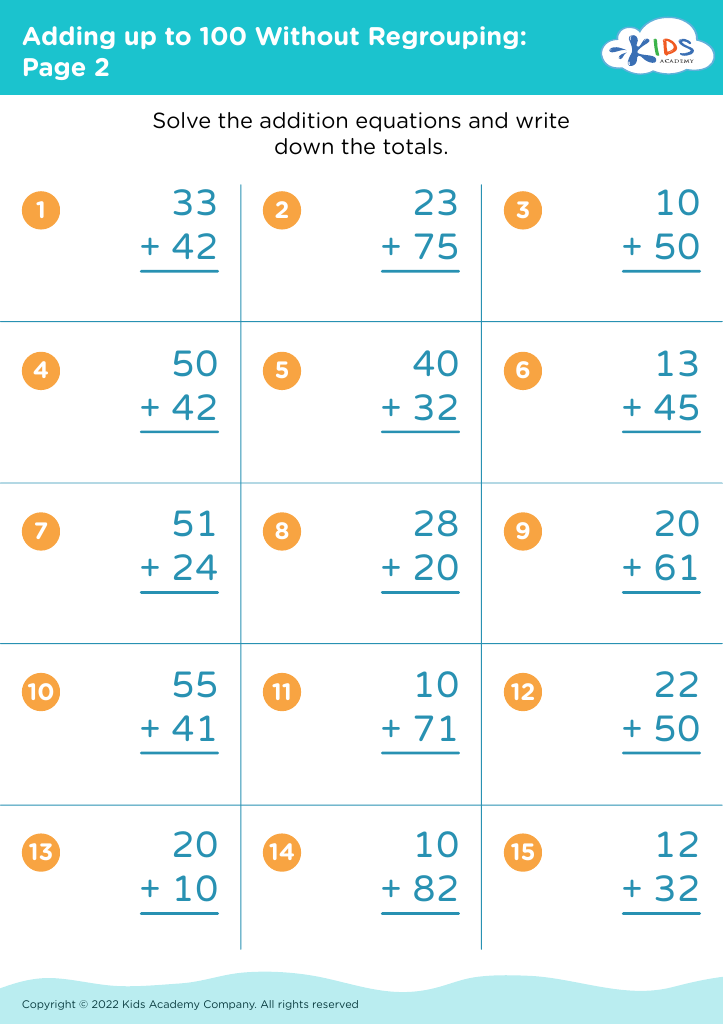
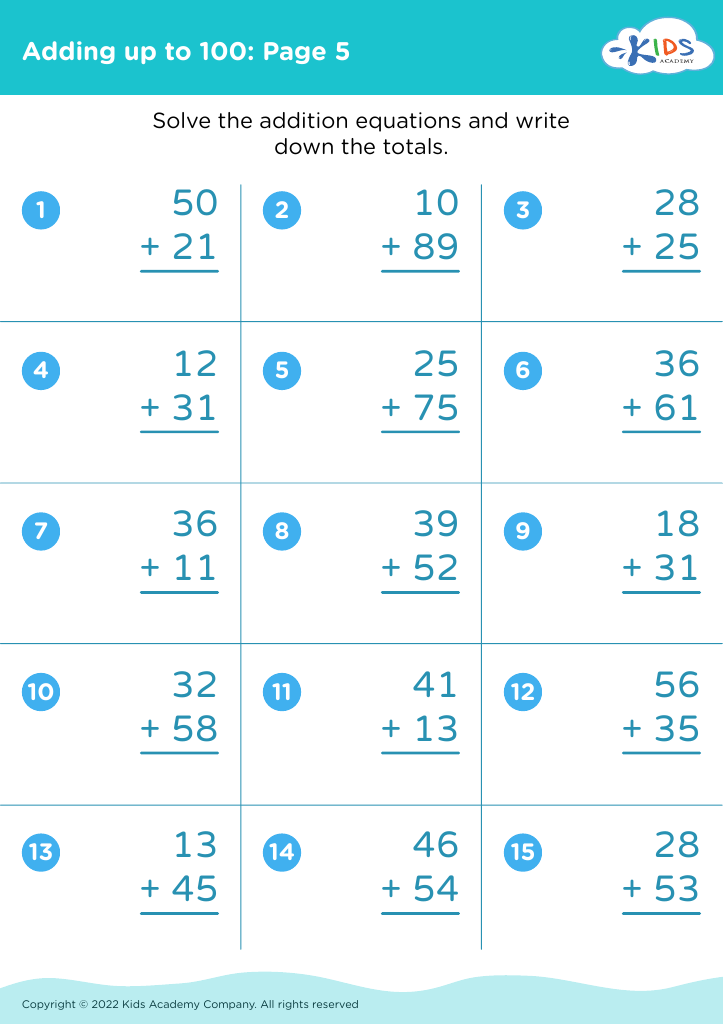
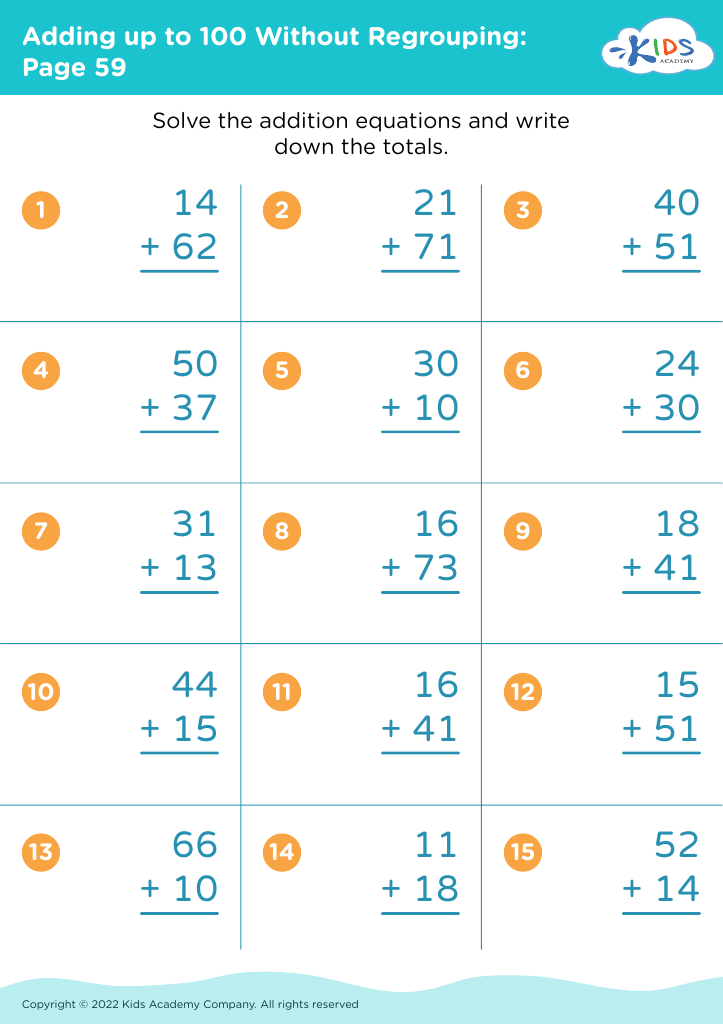
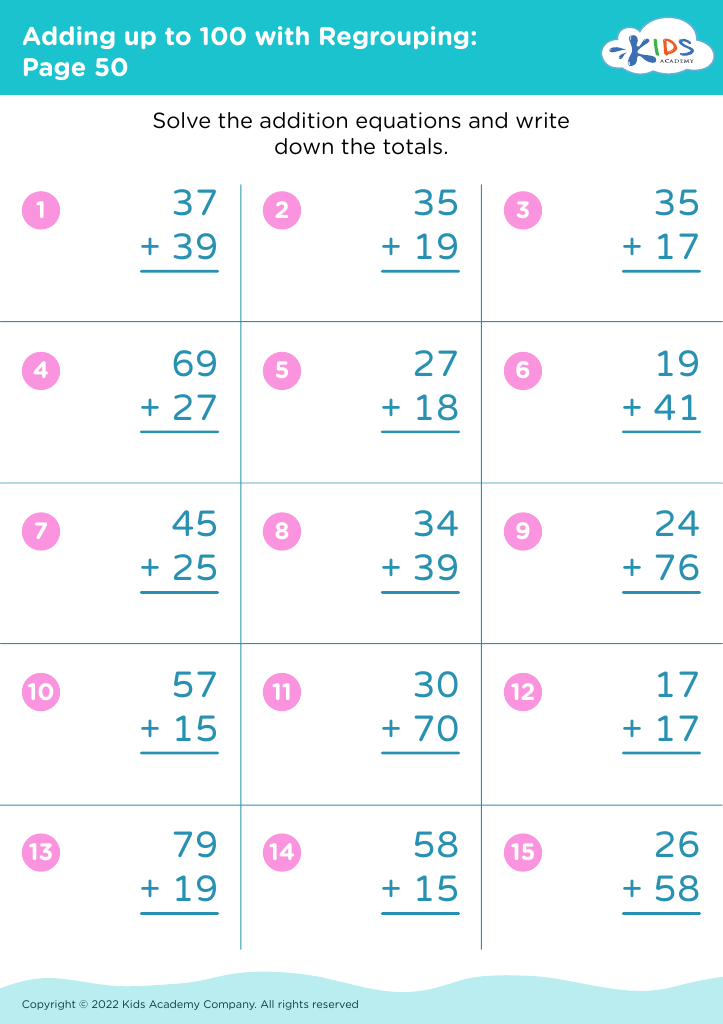
Enhance your child's math skills with our "Following Instructions Adding up to 100 Worksheets for Ages 5-8"! Perfectly designed to engage young learners, these fun and educational worksheets guide children through the process of adding numbers up to 100. By incorporating clear, step-by-step instructions, students build essential math foundations while improving their ability to follow directions. Ideal for both classroom and home use, our worksheets boost confidence and make learning math an enjoyable experience for kids. Start your child’s journey to math mastery today with Kids Academy’s expert-crafted resources!


%20(1).jpg)




Parents and teachers should care deeply about teaching children aged 5-8 to follow instructions and add up to 100 for several fundamental reasons that influence their long-term development.
Firstly, following instructions is an essential life skill that underpins a child’s ability to learn other key academic and social skills. By learning to listen and act on guidance, children develop better concentration, discipline, and the cognitive ability to process information sequentially. This skill sets a solid foundation for their future educational pursuits and helps them integrate into various social settings, from classrooms to peer interactions, enhancing cooperation and camaraderie.
Equally important is teaching them basic arithmetic, especially addition up to 100. Mastery in this area fosters their numerical literacy, promoting problem-solving and logical-thinking skills essential for academic success in math-related subjects. Early acquaintance with numbers enhances their confidence and reduces math anxiety, often determined at an early age.
Together, these skills nurture a structured approach to tackling challenges, improving both academic and interpersonal competencies. They are not just preparatory steps for more complex subjects to come but also essential tools that help children navigate everyday tasks efficiently. Encouraging these skills builds a strong educational foundation, contributing to a child’s holistic development and well-rounded future capabilities.








