Hand-eye Coordination Adding up to 100 Worksheets for Ages 5-8
3 filtered results
-
From - To
Enhance your child's hand-eye coordination while mastering basic math skills with our "Hand-eye Coordination Adding up to 100 Worksheets" designed for children aged 5-8. These engaging, interactive worksheets seamlessly blend physical activity with learning as kids practice addition through fun exercises and vibrant visuals. By tackling exercises that require hand-eye coordination, such as color-by-number challenges and connect-the-dots, children will not only strengthen their math abilities but also improve their fine motor skills. Perfect for home or classroom use, these worksheets provide a creative way to keep young learners motivated and excited about math. Download now to make learning delightful!
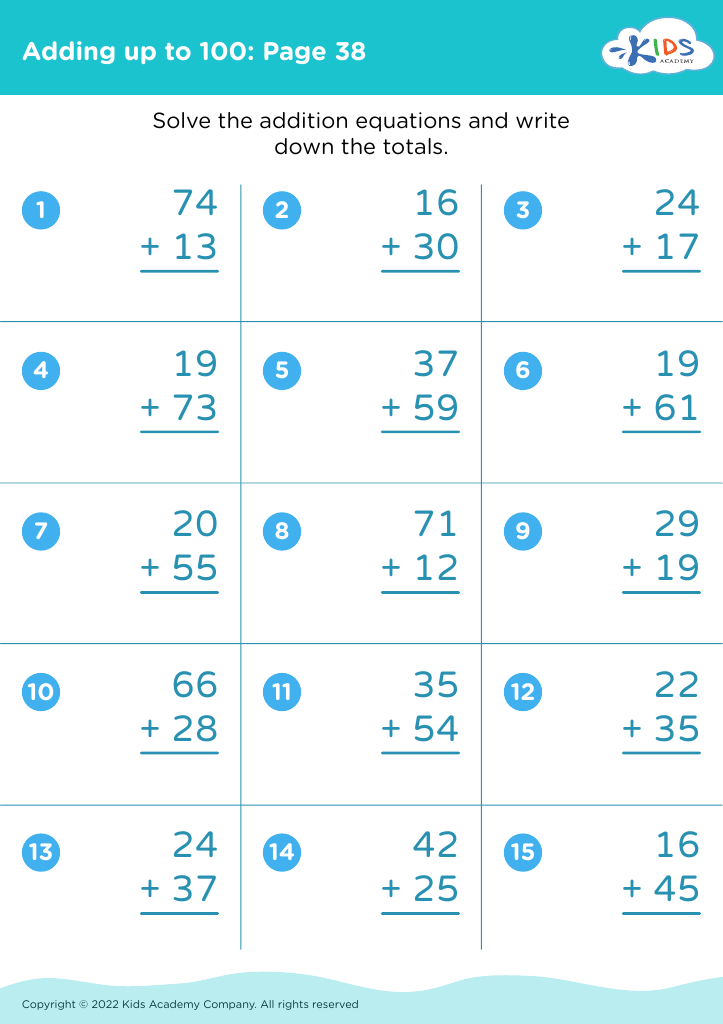
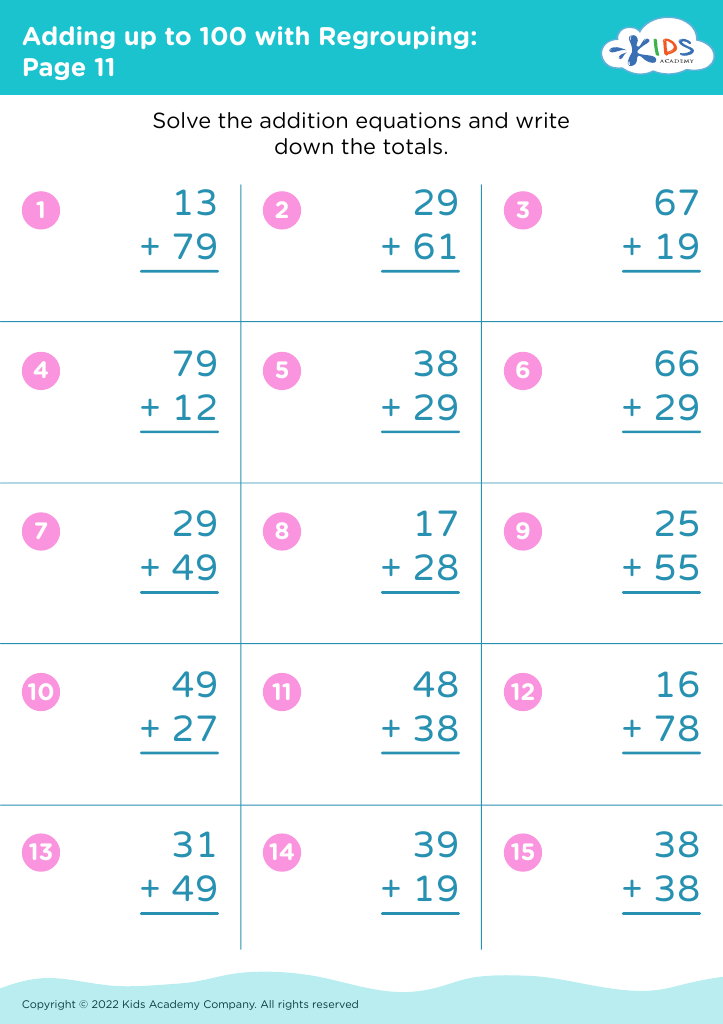
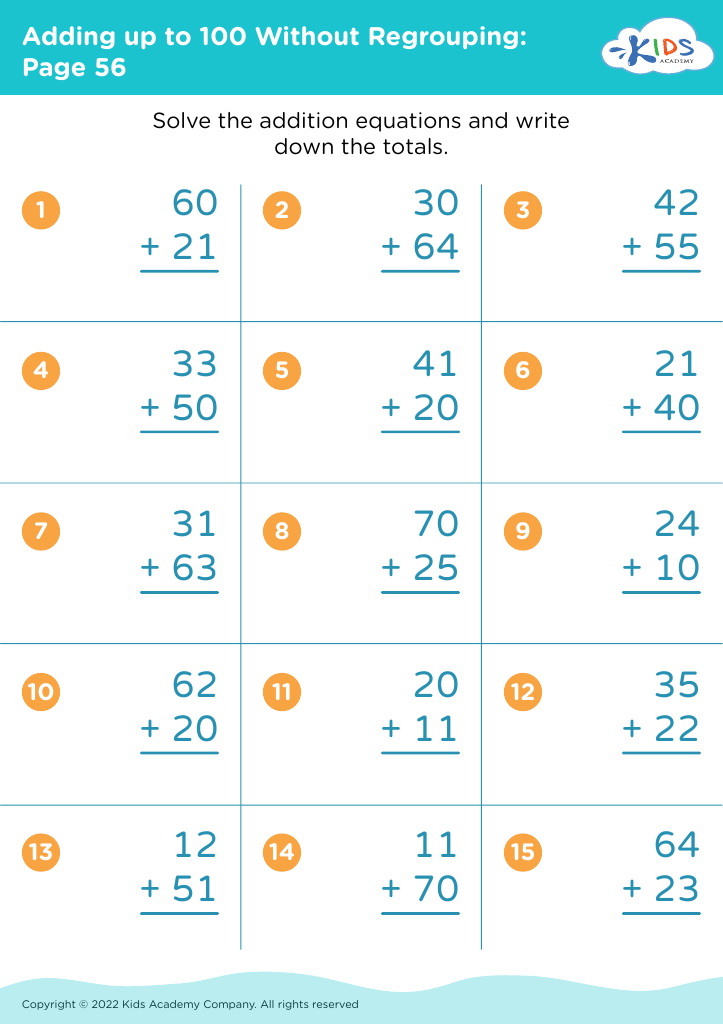



%20(1).jpg)



Hand-eye coordination is a crucial skill for children aged 5-8, significantly impacting their cognitive, physical, and social development. For parents and teachers, fostering this skill is essential because it lays the foundation for various academic and everyday tasks.
At this age, children are developing basic motor skills required for writing, drawing, and participating in sports. An ability to coordinate hand and eye movements enhances their fine motor skills, allowing them to effectively use tools like scissors or crayons, which are vital for classroom activities. Moreover, improved hand-eye coordination can boost their confidence, enabling them to engage in learning without the fear of struggling with basic tasks.
In terms of academic achievement, hand-eye coordination plays a role in children's ability to add numbers fluently and manipulate visual information. When paired with games and activities that involve counting or matching to reach a total of 100, children not only strengthen this coordination but also improve their mathematical skills.
Additionally, these activities promote social interaction, as children often collaborate or compete in games, which can enhance teamwork and communication skills. In essence, nurturing hand-eye coordination through engaging activities is an investment in a child's overall development.








