Identifying equivalent fractions Adding up to 100 Worksheets for Ages 5-8
5 filtered results
-
From - To
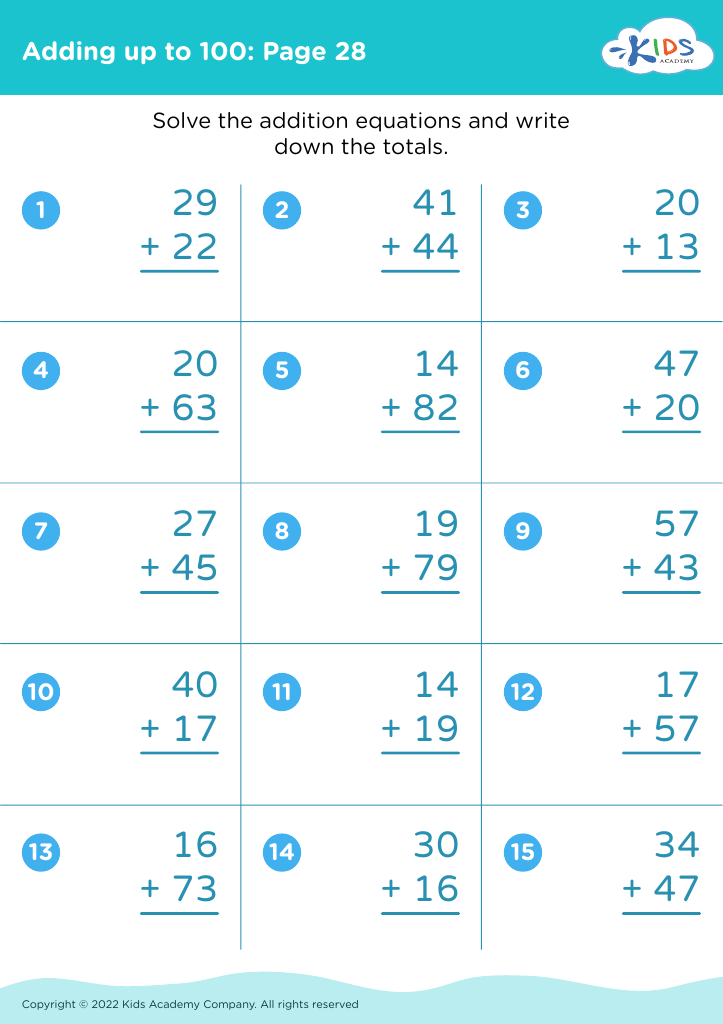
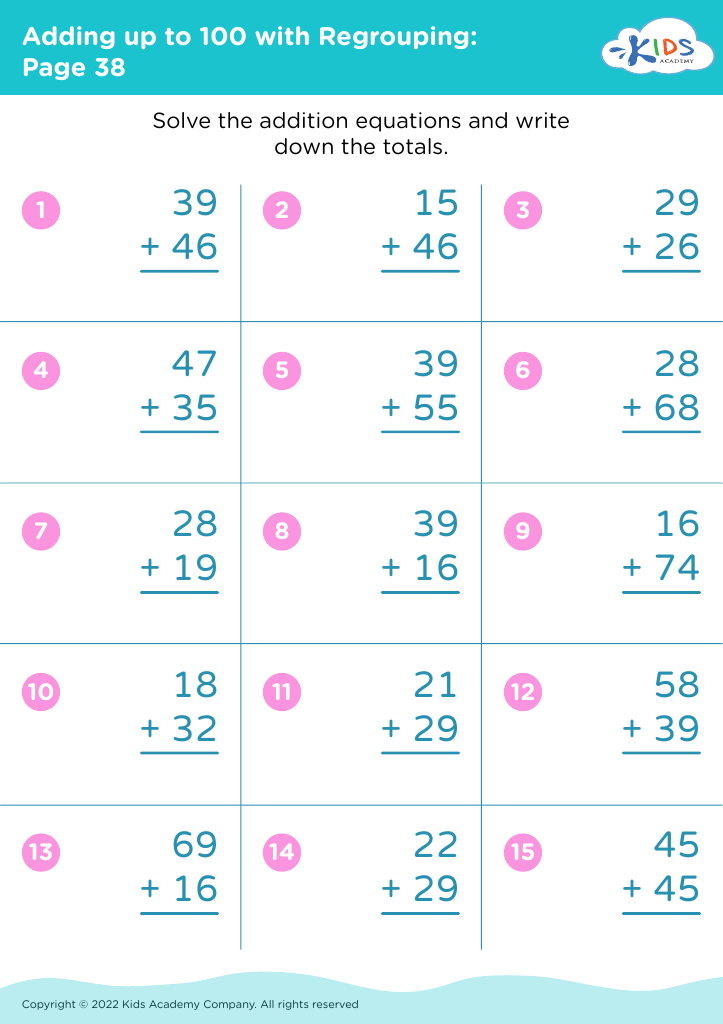
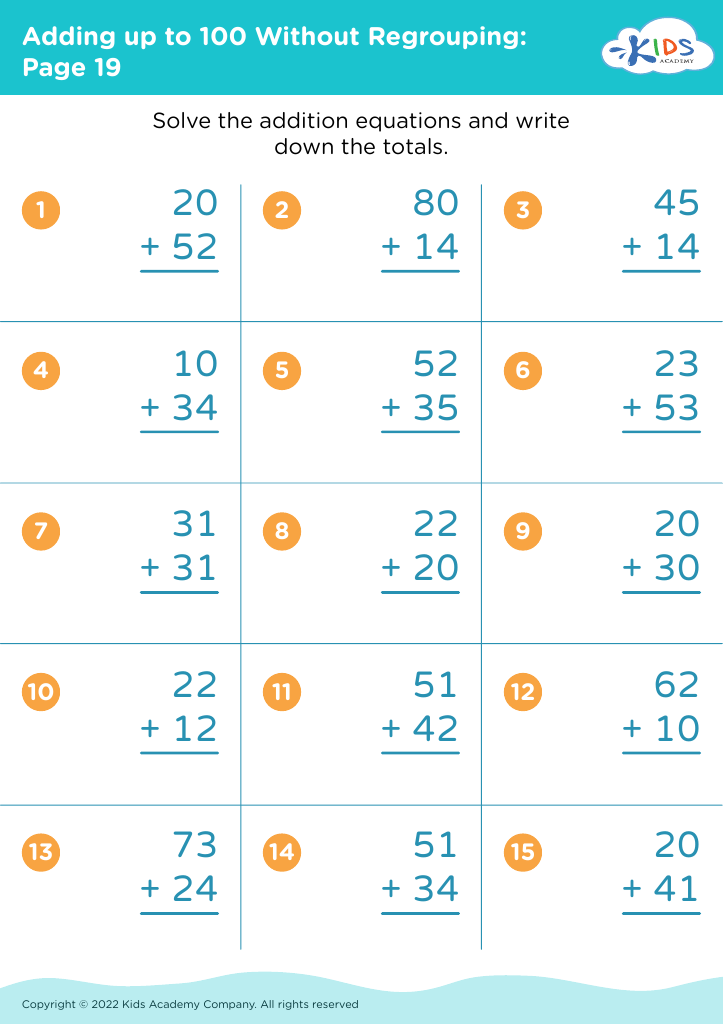
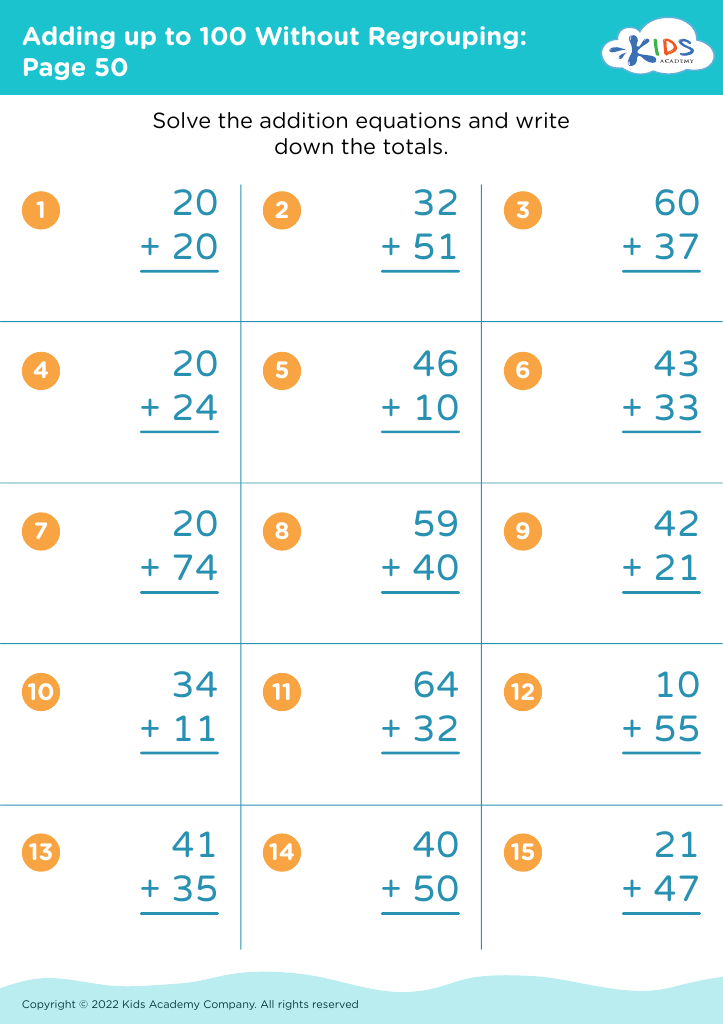
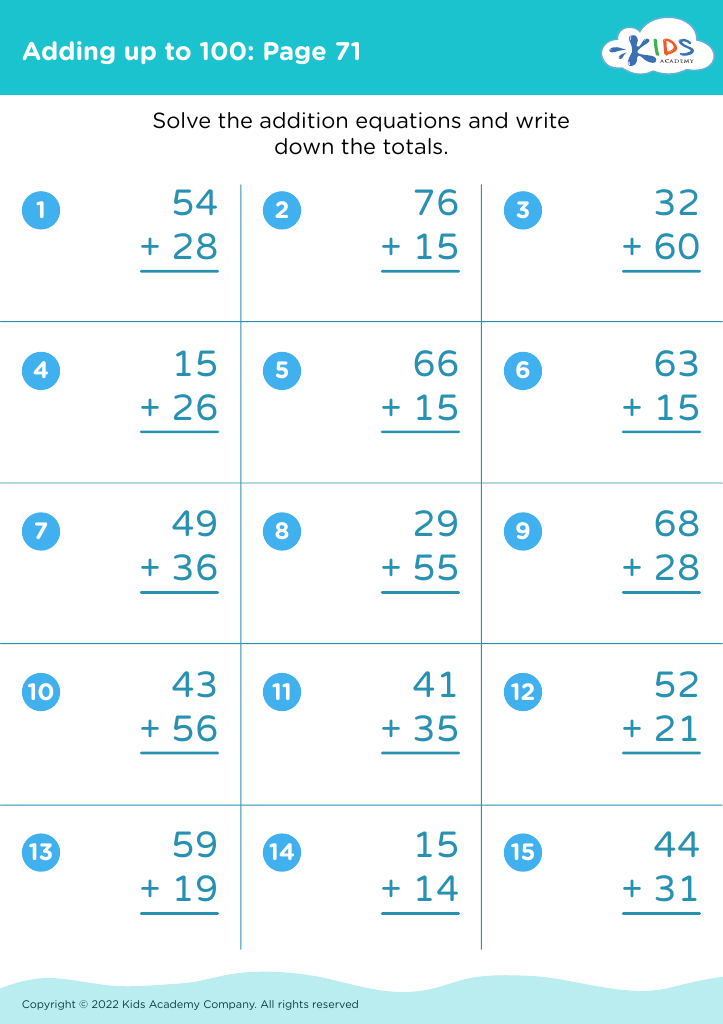
Explore our engaging "Identifying Equivalent Fractions Adding Up to 100" worksheets designed for children ages 5-8! These interactive resources help young learners grasp the concept of equivalent fractions in a fun and accessible way. Your child will practice identifying and creating equivalent fractions that sum up to 100, enhancing both their fractional knowledge and addition skills. The colorful, child-friendly designs will keep them motivated and excited about learning! Perfect for home or classroom use, these worksheets foster critical thinking and promote a strong foundational understanding of mathematics. Start your child's math journey with our valuable and educational worksheets today!


%20(1).jpg)




Identifying equivalent fractions is crucial for children aged 5-8 as it lays the foundation for mathematical understanding. Knowing how to recognize fractions that represent the same value helps young learners develop a strong sense of number relationships. This skill is particularly beneficial when working with concepts like adding up to 100, as it reinforces their understanding of part-to-whole relationships, enhancing their ability to reason mathematically.
For parents and teachers, encouraging children to explore equivalent fractions fosters critical thinking and problem-solving skills. It allows students to visualize numbers in different forms, leading to better comprehension of both basic arithmetic and more complex math in later grades. By grasping equivalent fractions, children can learn the concept of simplifying numbers and recognizing patterns, which are essential skills in higher-level math.
Moreover, integrating these concepts in early education builds confidence in math, promoting a positive attitude toward learning. When children see fractional relationships in everyday contexts, their engagement and enthusiasm for math increase. Thus, by prioritizing the understanding of equivalent fractions and their relevance to reaching sums like 100, adults can help create a solid mathematical foundation, enriching children's overall educational experience.








