Improve reading comprehension Adding up to 100 Worksheets for Ages 5-8
4 filtered results
-
From - To
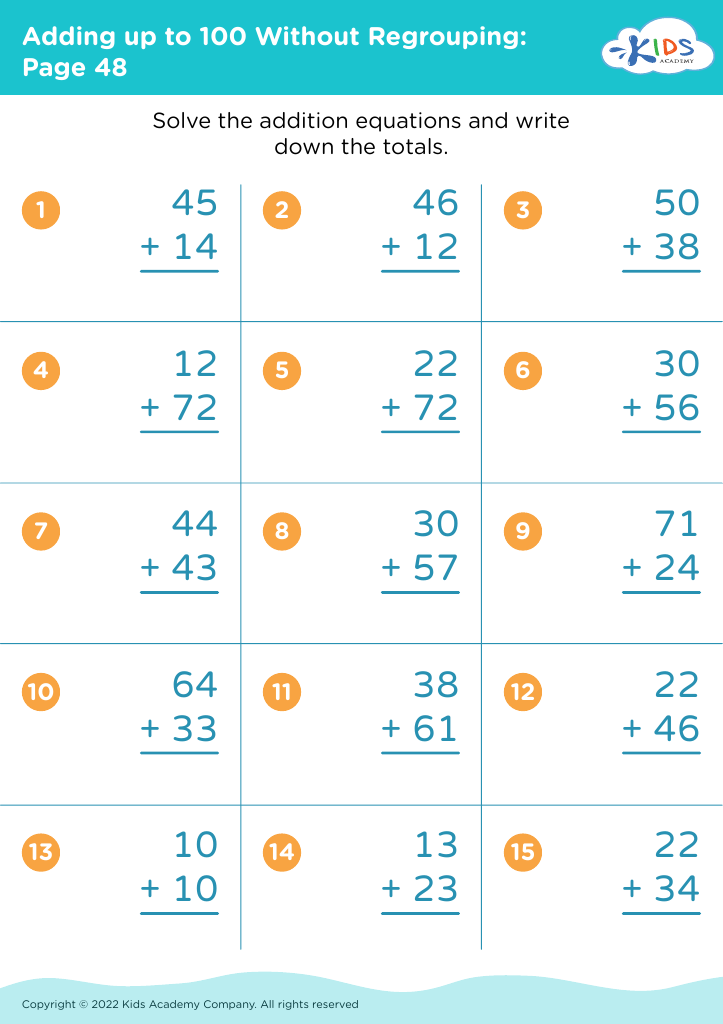
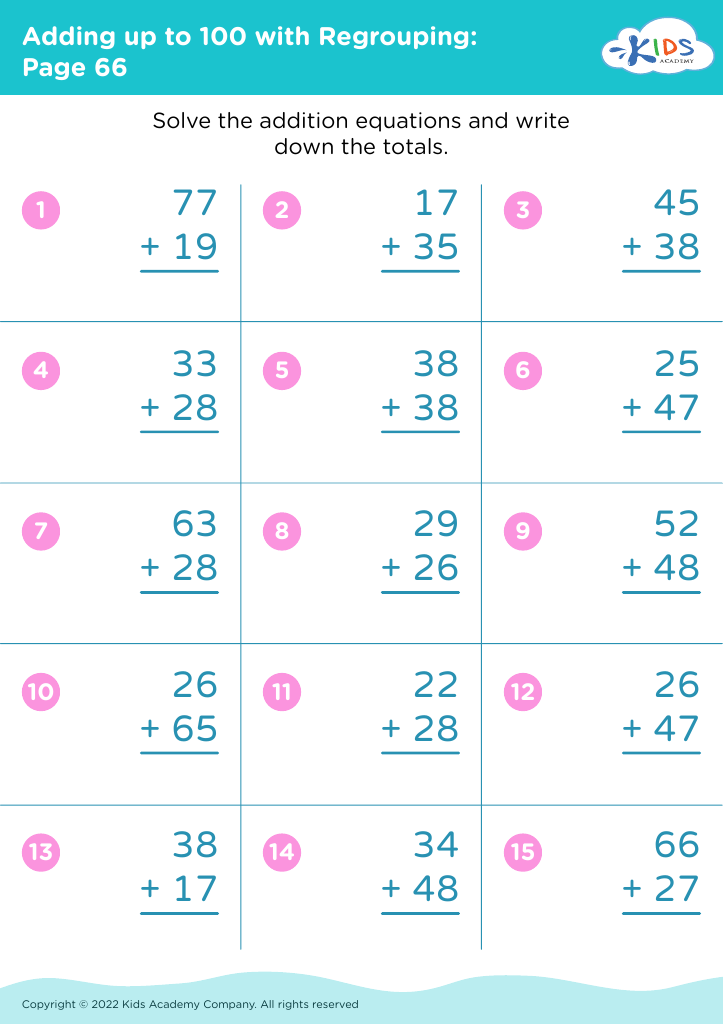
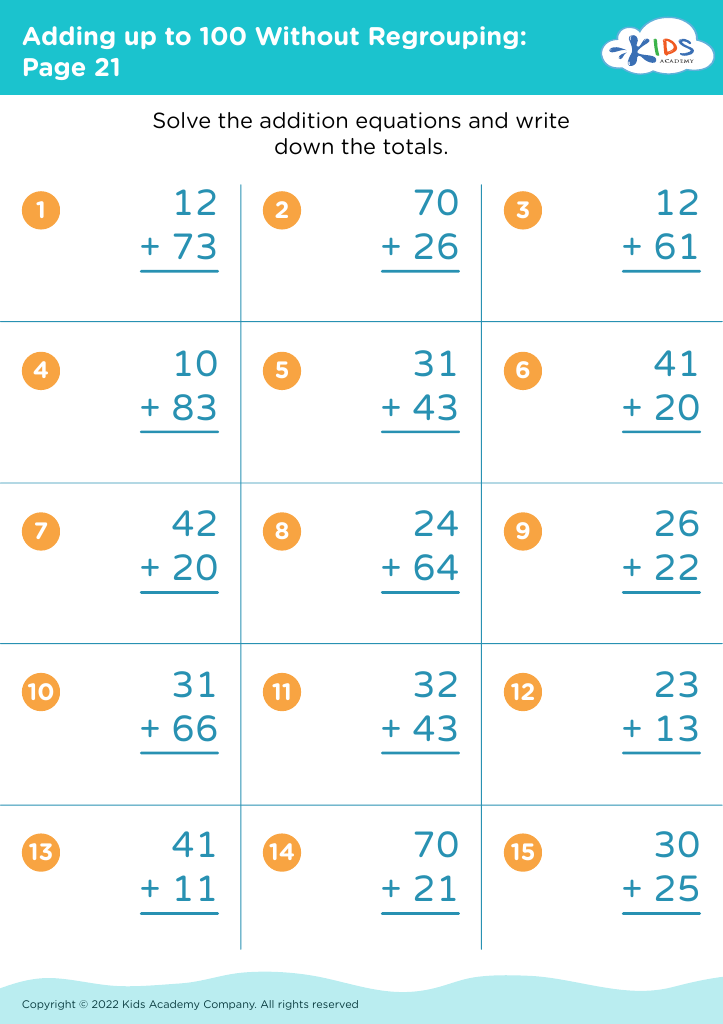
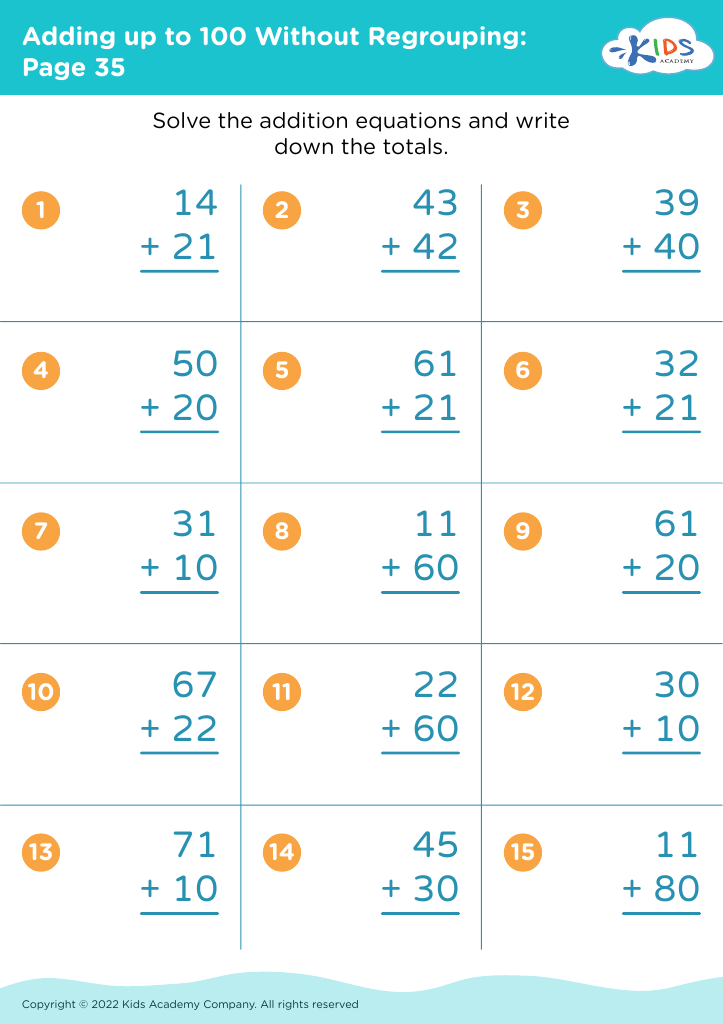
Enhance your child's reading comprehension skills with our "Improve Reading Comprehension: Adding up to 100 Worksheets" specifically designed for ages 5-8. This engaging collection of 100 worksheets combines math concepts and reading activities, making learning enjoyable and interactive. Each task fosters critical thinking as children decode instructions and answer questions, promoting vocabulary growth and comprehension. By integrating mathematical problems with reading practice, your child will strengthen their understanding and enhance their ability to interpret information accurately. Perfect for both classroom and home use, these worksheets are an essential resource to support your child's academic journey and build a strong foundational skill set.




%20(1).jpg)


Improving reading comprehension for children aged 5-8 is crucial for their academic success and overall development. At this age, children are transitioning from learning to read to reading to learn. Strong reading comprehension skills enable them to understand and engage with texts, which is vital for all subjects, including math and science.
For parents and teachers, fostering these skills means encouraging curiosity and critical thinking. Engaged readers are more likely to explore new ideas and express themselves confidently. By supporting comprehension, caregivers can nurture a child's love for reading, transforming it from a chore into an enjoyable activity. This pivotal age is when foundational literacy skills are solidified, and failing to provide adequate support can lead to struggles in later grades.
Additionally, proficient reading comprehension improves a child’s vocabulary and enhances their ability to communicate effectively. It nurtures empathy, as they learn to understand characters’ motives, emotions, and diverse experiences. When parents and teachers prioritize these skills, they lay the groundwork for lifelong learning and better social interactions. Ultimately, improving reading comprehension isn’t just about academics; it's about empowering children to connect with the world around them.








