Improving math skills Adding up to 100 Worksheets for Ages 5-8
5 filtered results
-
From - To
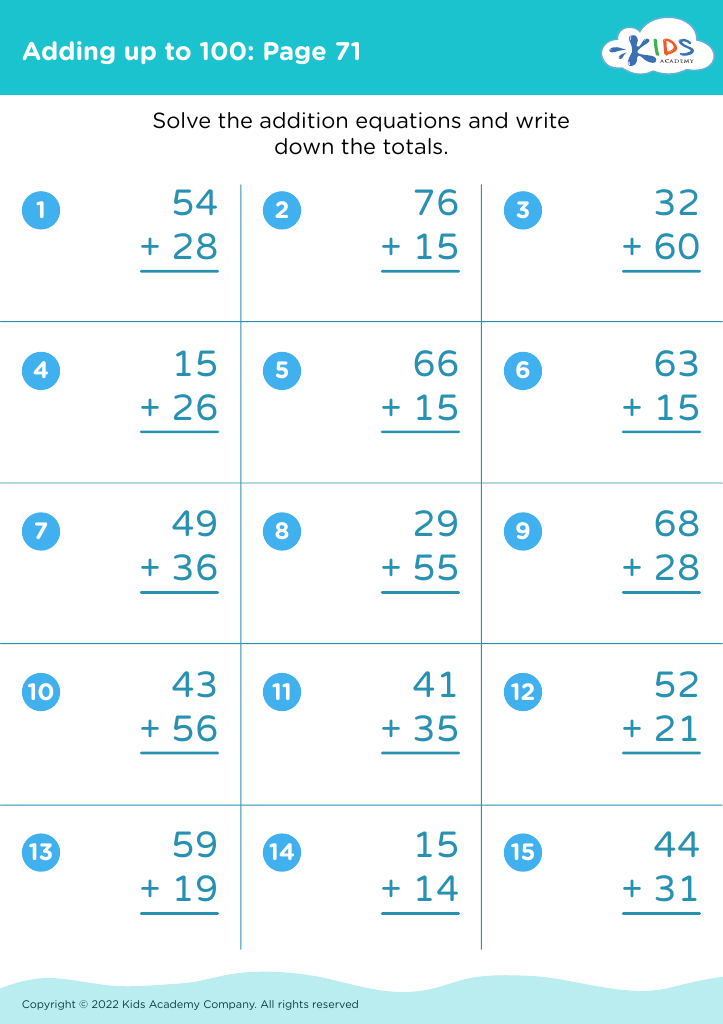
Enhance your child's math proficiency with our "Improving Math Skills: Adding up to 100 Worksheets" designed for ages 5-8. These engaging worksheets strengthen foundational arithmetic, focusing on addition up to 100, ensuring children grasp essential math concepts through fun, interactive activities. Tailored for young learners, each worksheet combines colorful visuals and relatable scenarios to maintain interest and motivation. Perfect for classroom use or at-home practice, these printables help develop critical thinking and problem-solving skills in a structured yet enjoyable format. Empower your child to master addition and build a solid math foundation with our expertly crafted resources!
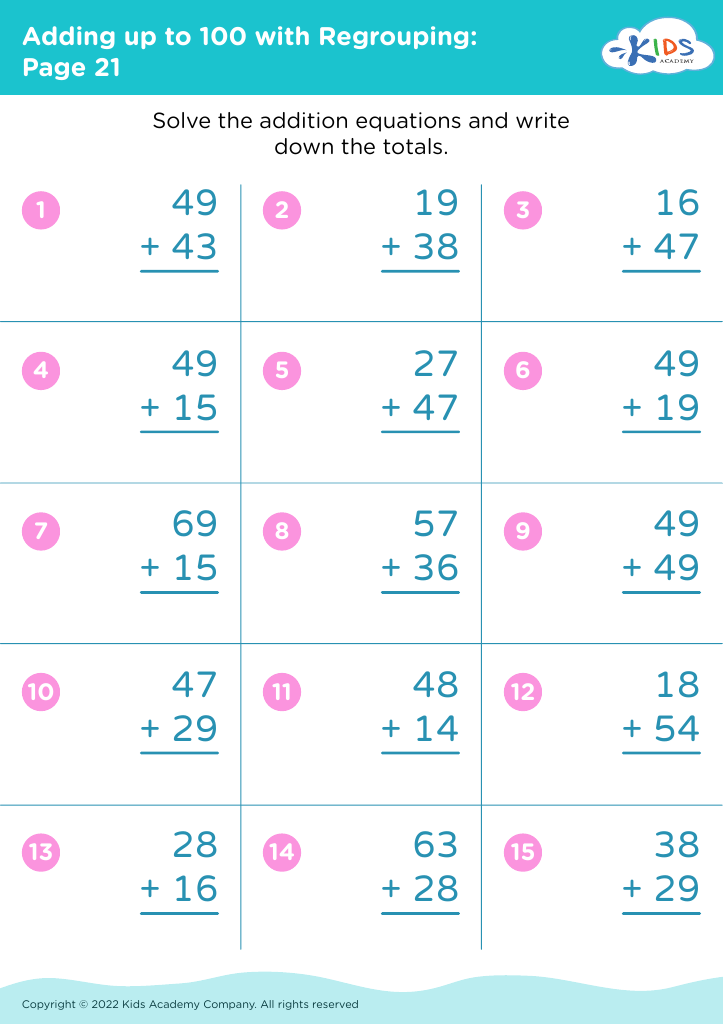
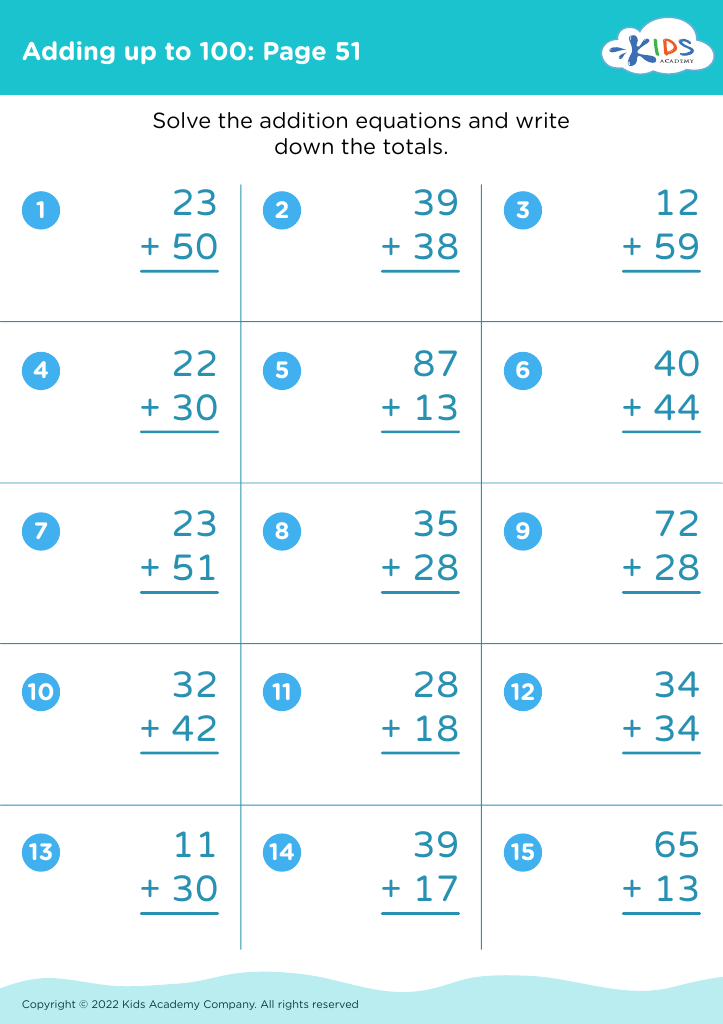
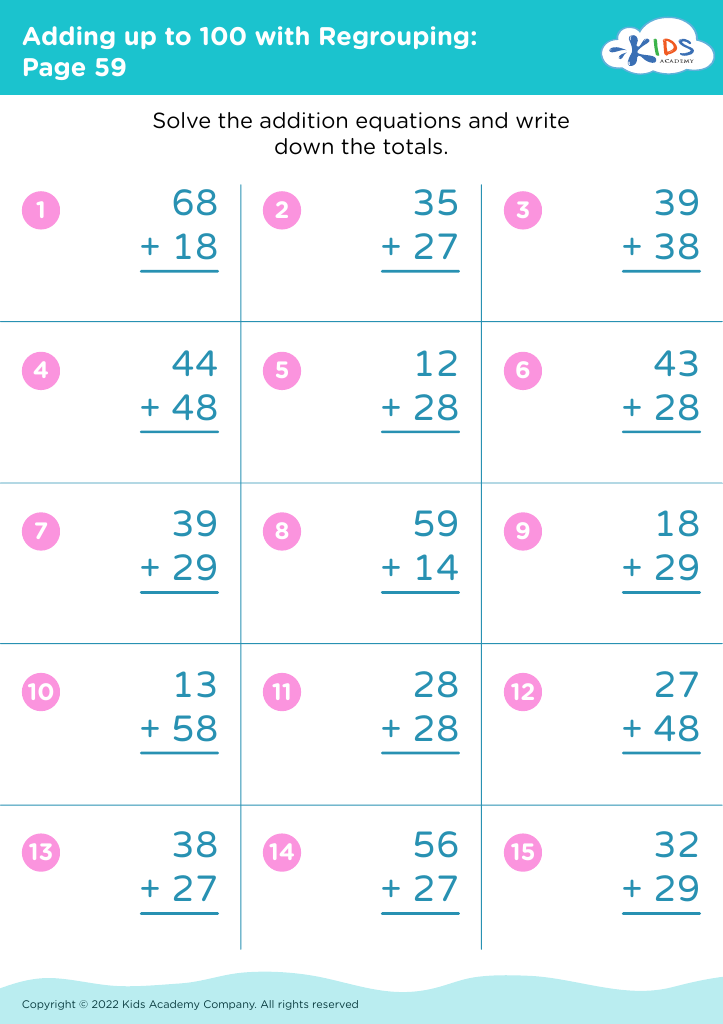
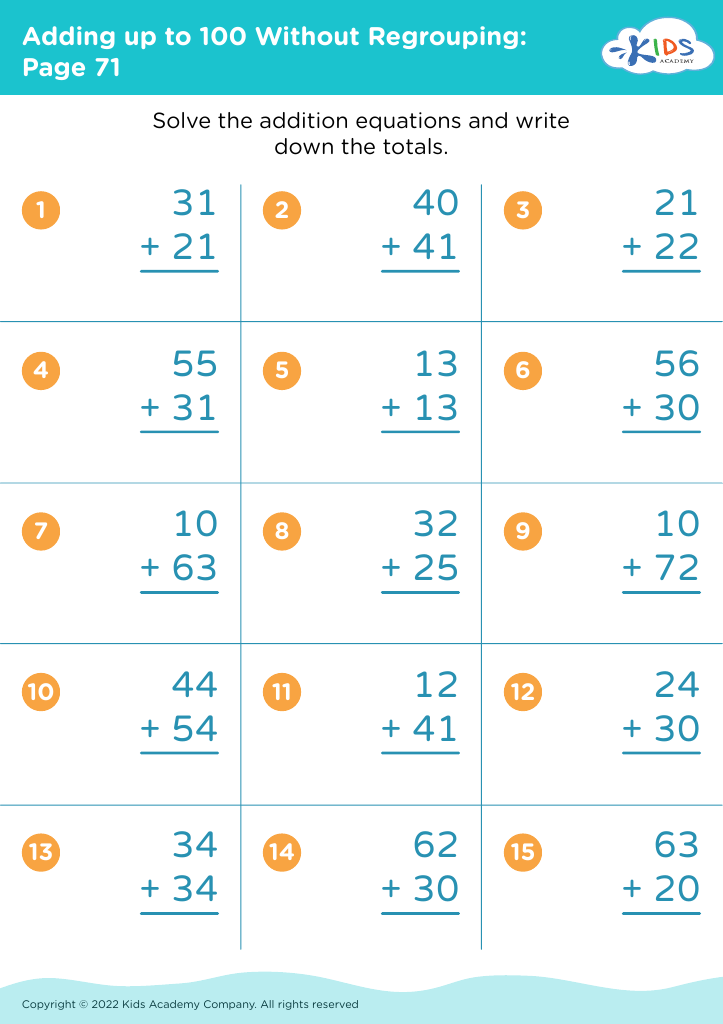






%20(1).jpg)
Improving math skills in young children, specifically adding up to 100, is crucial for several reasons. First, it builds a solid foundation for future mathematical concepts. At ages 5-8, children are naturally curious and highly receptive; introducing basic arithmetic during this period sets the stage for more complex operations like multiplication, division, and problem-solving.
Second, math skills are not isolated; they are interconnected with logical thinking, pattern recognition, and cognitive development. As children learn to add numbers up to 100, they enhance their ability to classify, sequence, and understand spatial relationships, skills that are beneficial beyond mathematics.
Moreover, competence in basic math fosters confidence. When children develop numerical fluency, they become more willing to tackle math challenges, reduce their anxiety about learning new topics, and grow positively towards their academic self-esteem.
Parental and teacher involvement is pivotal; their encouragement can transform math from a daunting task to an engaging activity. Simple practices, such as using everyday objects, interactive games, or story problems, make math relatable and enjoyable. Therefore, for lifelong benefits in academic and practical life, investing time and resources in improving early math skills, like adding up to 100, is essential.








