Mathematical reasoning Adding up to 100 Worksheets for Ages 5-8
3 filtered results
-
From - To
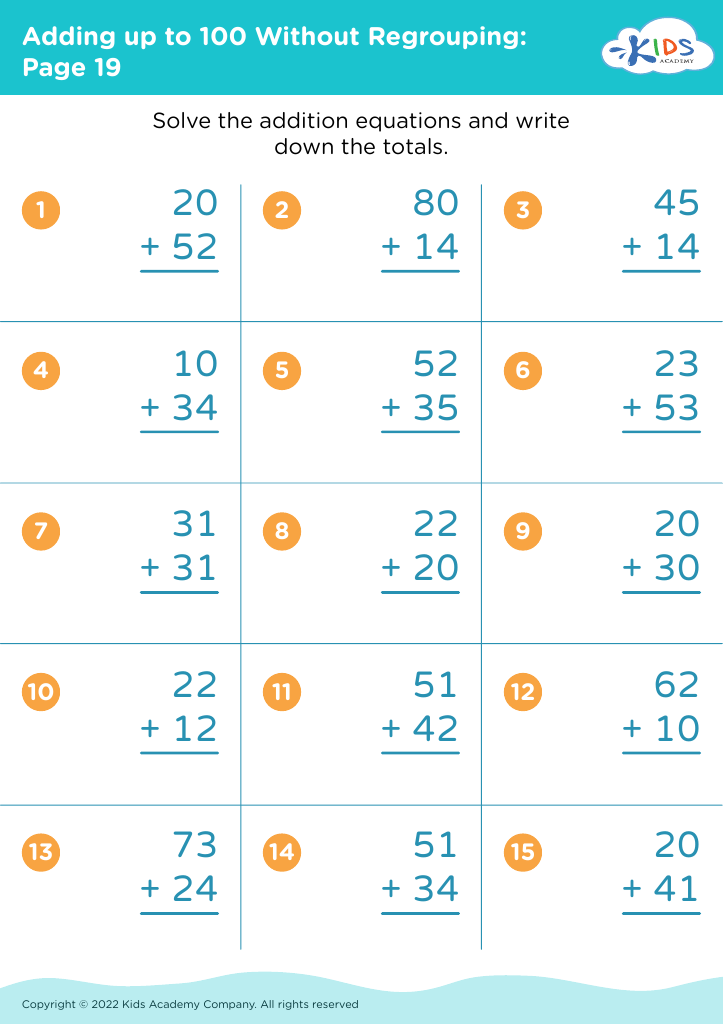
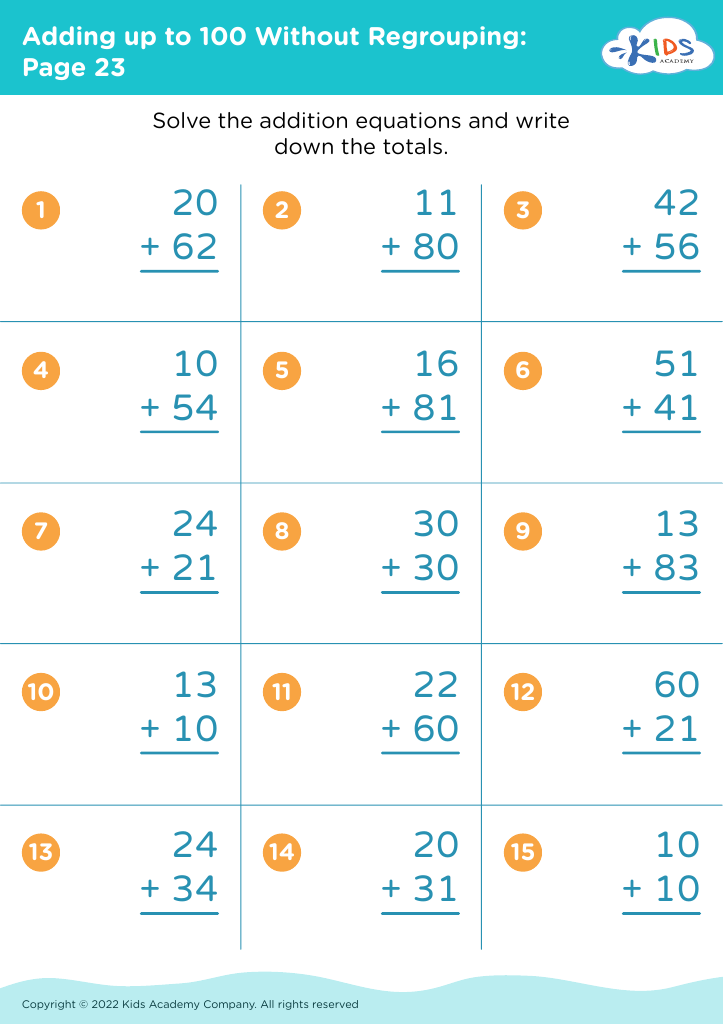
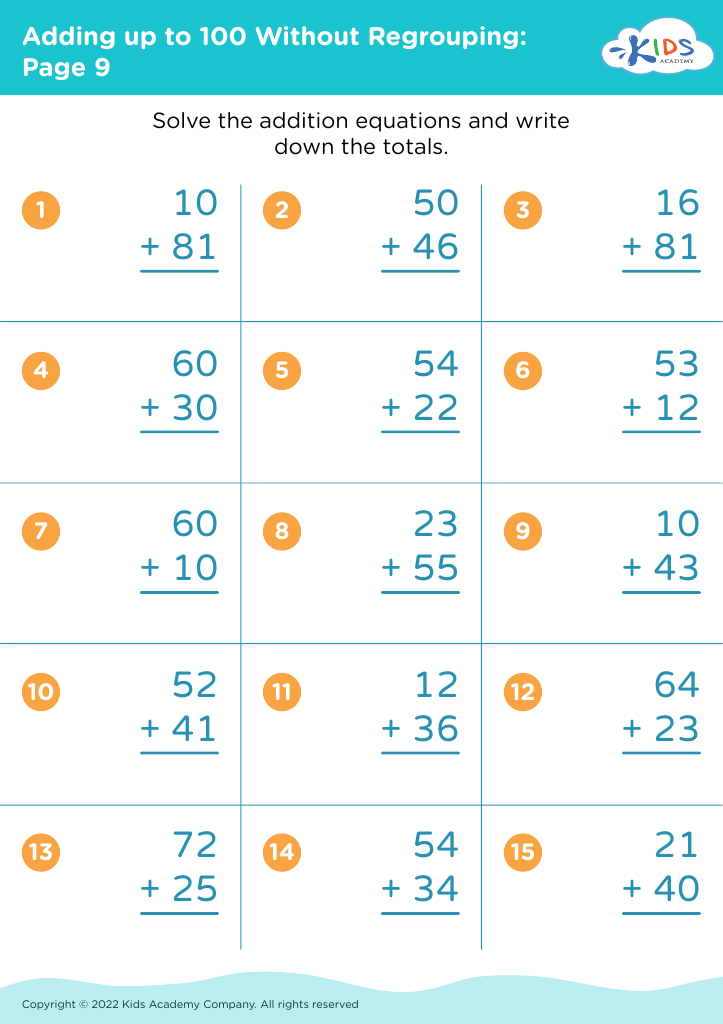
Unlock your child's potential with our “Mathematical Reasoning Adding up to 100 Worksheets” designed for ages 5-8. These engaging, educational activities help young learners enhance their addition skills and build strong mathematical foundations. Each worksheet fosters critical thinking and problem-solving abilities by challenging students to solve addition problems up to 100 in a fun and interactive way. Perfect for both classroom and home use, our expertly crafted worksheets ensure that learning becomes an enjoyable adventure. Empower your child with the confidence and skills needed to succeed in math. Start exploring today to bolster their mathematical reasoning!



%20(1).jpg)



Mathematical reasoning, especially the concept of adding up to 100, is crucial for children aged 5-8 because it lays the foundational blocks for their future mathematical understanding and cognitive skills. At this age, children are highly receptive to learning patterns, problem-solving strategies, and number relationships, which are core elements of mathematical reasoning. Developing this skill early aids children in comprehending more complex math concepts later in their academic journey, such as multiplications, fractions, and algebra.
Moreover, focusing on addition up to 100 enhances numerical fluency and boosts confidence. As children gradually grasp how numbers interact, they begin to make logical decisions and create strategies to solve problems, not only in maths but in daily life scenarios too. This fosters a sense of accomplishment and positive attitudes towards learning.
For teachers and parents, nurturing these skills through engaging activities can solidify a child's interest in math. Games, puzzles, and practical examples help children see the relevance of math in the real world, ultimately promoting perseverance and critical thinking. Overall, building a firm foundation in mathematical reasoning during these early years propels children toward future academic success and supports their overall intellectual development.








