Problem-solving practice Adding up to 100 Worksheets for Ages 5-8
5 filtered results
-
From - To
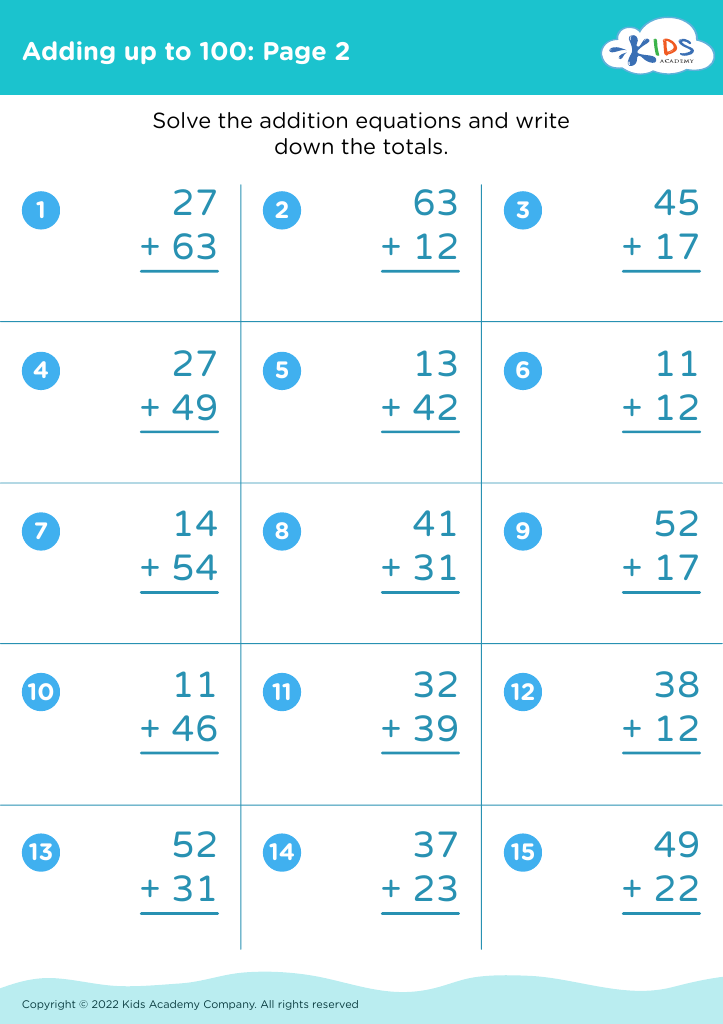
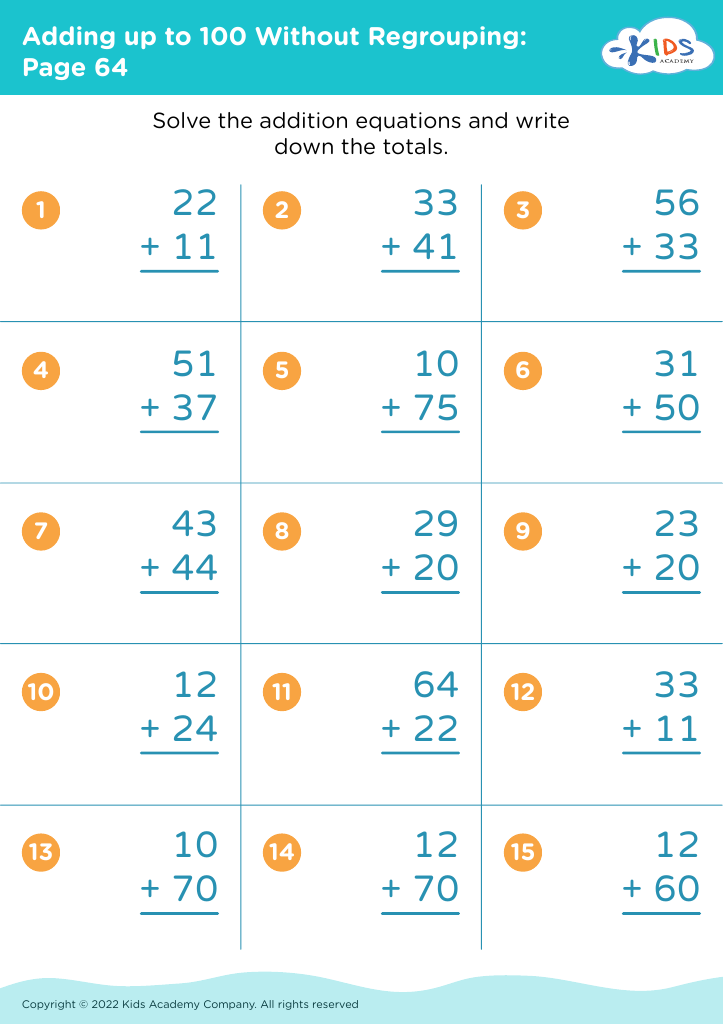
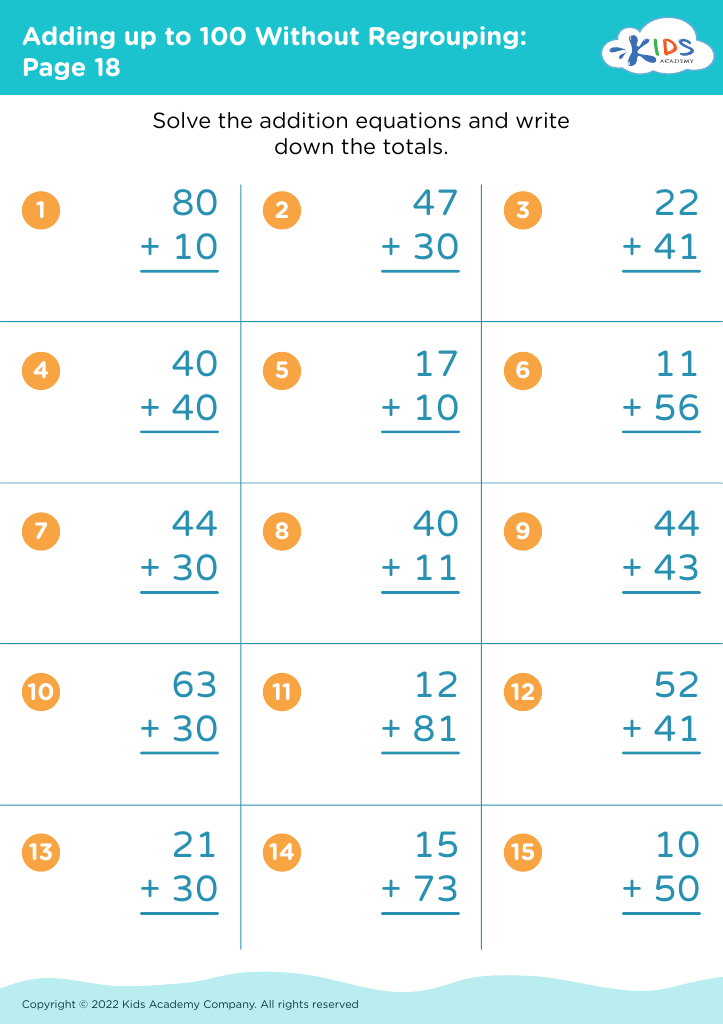
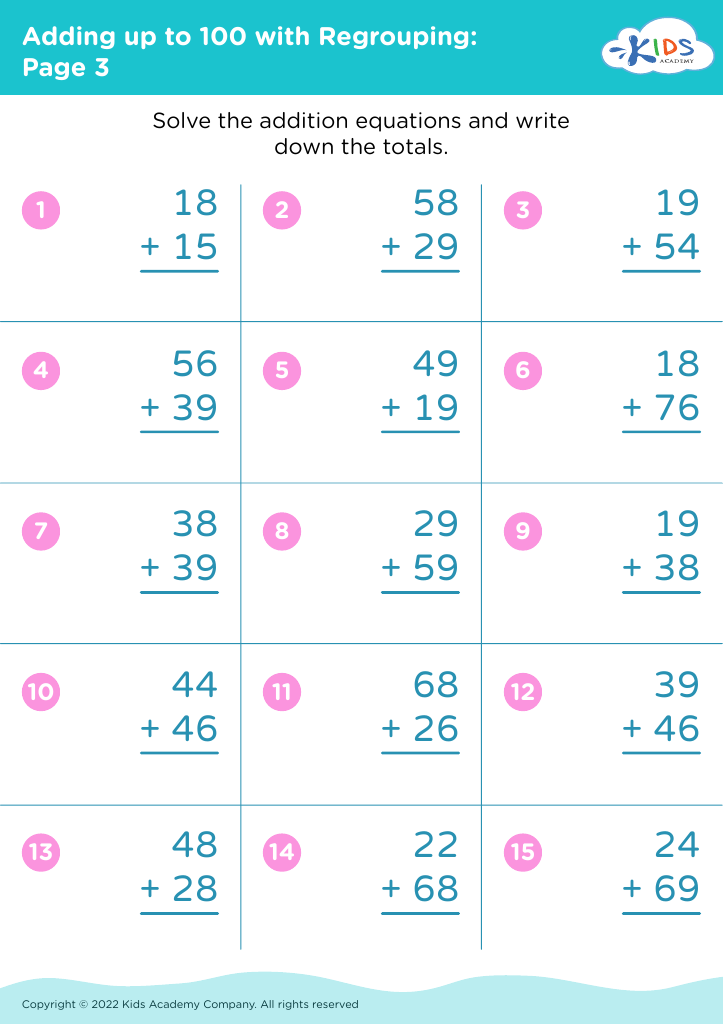
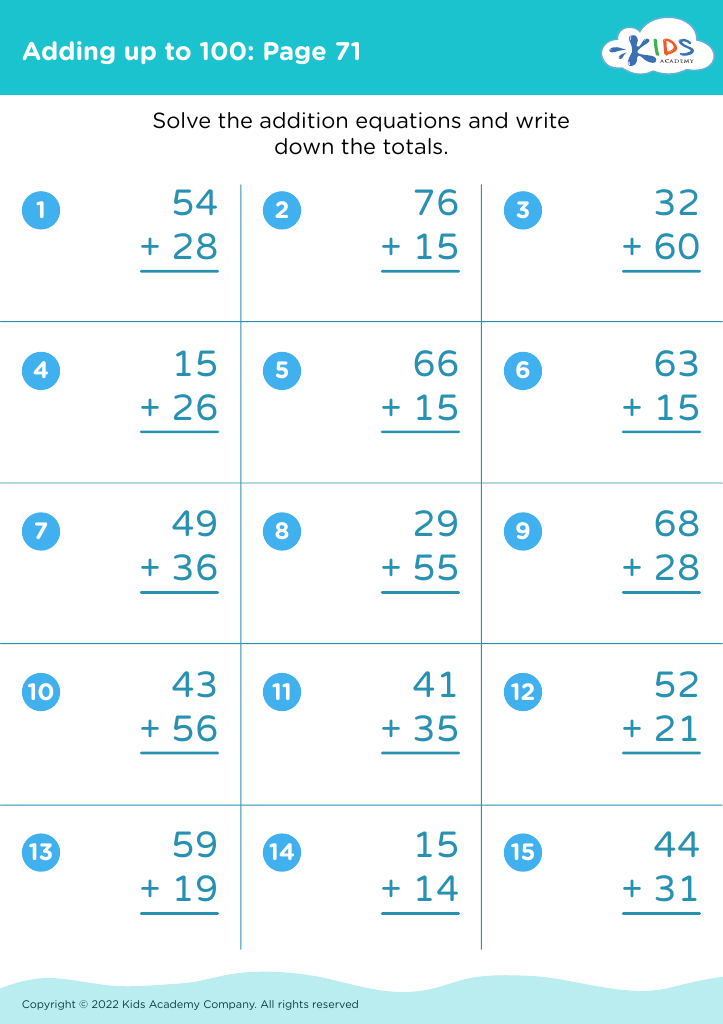
Enhance your child’s math skills with our "Problem-Solving Practice: Adding Up to 100 Worksheets" designed for ages 5-8. These engaging worksheets provide a fun and interactive way for young learners to develop essential problem-solving abilities while practicing addition. Each worksheet features colorful illustrations and relatable scenarios that capture children's attention and encourage critical thinking. As they work through various exercises, children will gain confidence in their math skills, tackle real-world problems, and build a strong foundation for future learning. Perfect for classroom use or at-home practice, these worksheets are a valuable resource for fostering a love of math at an early age.




%20(1).jpg)


Parents and teachers should prioritize problem-solving practice that involves adding up to 100 for children aged 5-8 because it lays a crucial foundation for their mathematical understanding and cognitive development. During these formative years, children are highly receptive to learning concepts that will benefit them as they progress in school and in life.
Engaging in problem-solving with numbers up to 100 helps children develop strong number sense—they learn how numbers relate to each other, which aids in mental math and enhances their ability to tackle more complex mathematical problems in the future. This practice also fosters critical thinking as children learn to analyze, strategize, and approach a variety of math-related challenges.
Moreover, problem-solving activities promote perseverance and resilience. Children experience trial and error, and the satisfaction of finding solutions boosts their confidence. Reinforcing these skills can ignite an interest in mathematics, making learning enjoyable rather than daunting.
Finally, involving parents in math-related activities strengthens family bonds and demonstrates that learning is a shared journey. This support not only encourages a positive attitude towards math but also instills a lifelong love for learning and inquiry in young minds. Ultimately, these skills are significant for academic success and everyday problem-solving.








