Shape identification Adding up to 100 Worksheets for Ages 5-8
3 filtered results
-
From - To
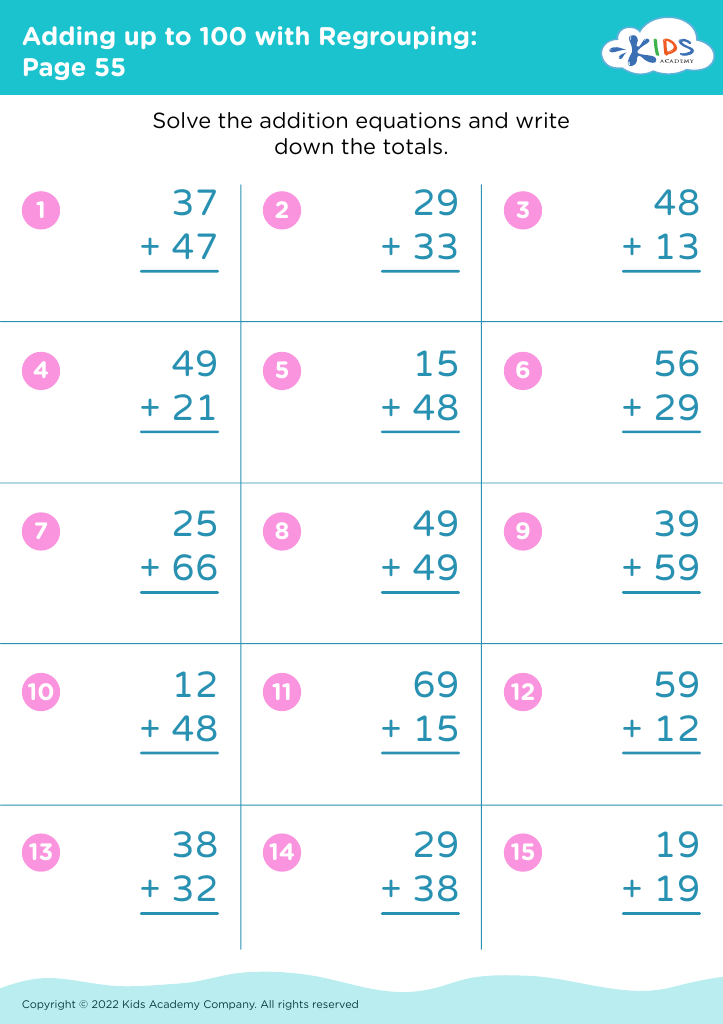
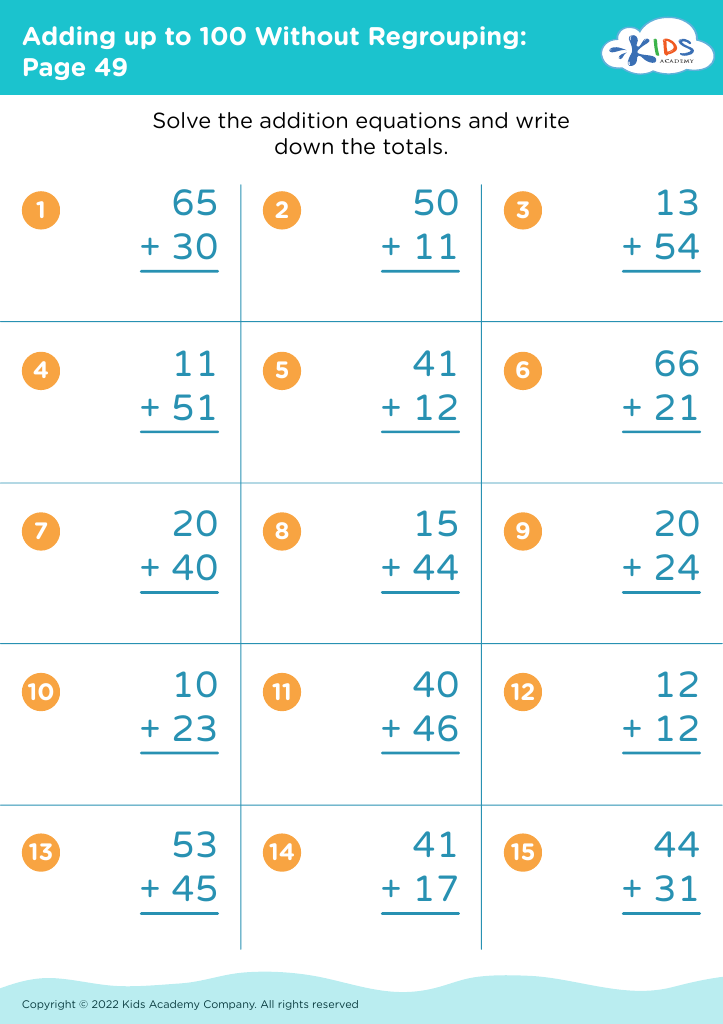
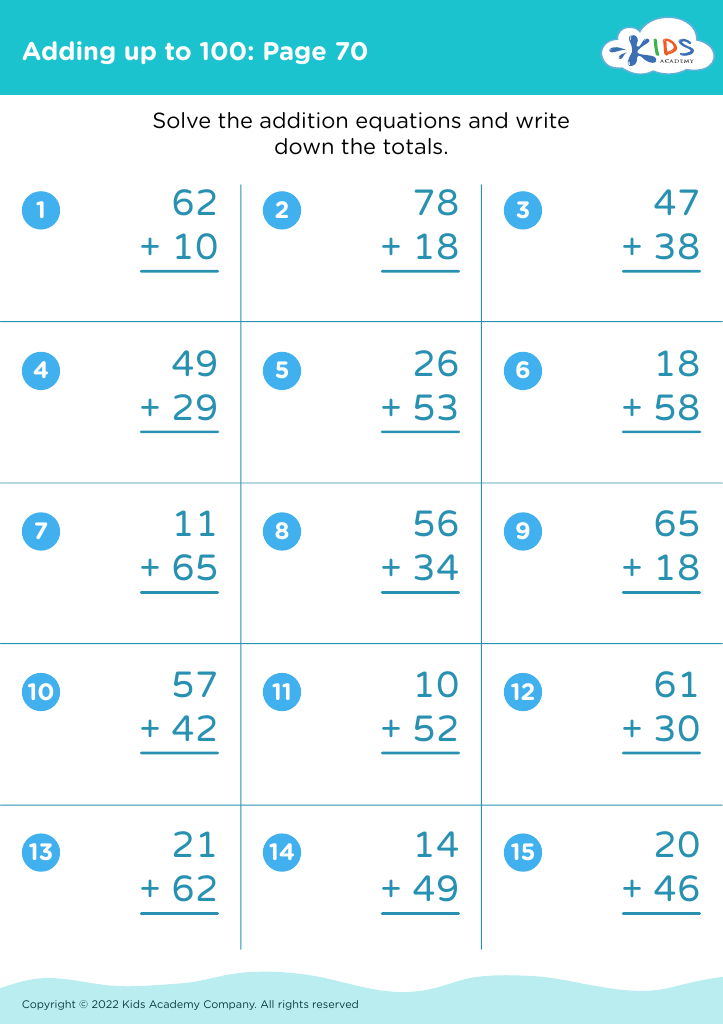
Discover an engaging way to enhance shape identification and addition skills with our "Shape Identification Adding Up to 100 Worksheets" designed for children ages 5-8. These interactive worksheets combine fun shape activities with fundamental math concepts, encouraging young learners to identify various shapes while performing addition tasks that sum to 100. Tailored specifically for early grade students, our printable resources promote critical thinking and problem-solving in a playful manner. Perfect for classroom use or at-home learning, these worksheets make learning shapes and addition exciting and accessible. Empower your child's learning journey with our imaginative and educational printables today!




%20(1).jpg)


Shape identification and number concepts, such as adding up to 100, are fundamental skills for children aged 5-8 and are crucial for their cognitive and academic development. Understanding shapes equips kids with the ability to recognize and categorize objects, which enhances their spatial awareness and problem-solving skills. Recognizing and manipulating shapes helps build the groundwork for future math concepts, such as geometry and measurement.
Additionally, adding up to 100 fosters basic arithmetic skills and number sense. Early mathematics lays the foundation for complex calculations and higher-order thinking. Engaging with numbers encourages logical reasoning and pattern recognition, skills that are invaluable in almost every aspect of life.
Parents and teachers should care because these skills are not only important academically but also for daily problem-solving and decision-making. Moreover, mastering these fundamental concepts boosts children's confidence, motivating them to explore further learning. Interactive activities, games, and discussions about shapes and numbers make learning enjoyable, promoting a positive attitude towards education. By investing in these foundational skills, parents and educators actively contribute to their child's overall success and development in both academic and life contexts.








