Understand fractions Adding up to 100 Worksheets for Ages 5-8
5 filtered results
-
From - To
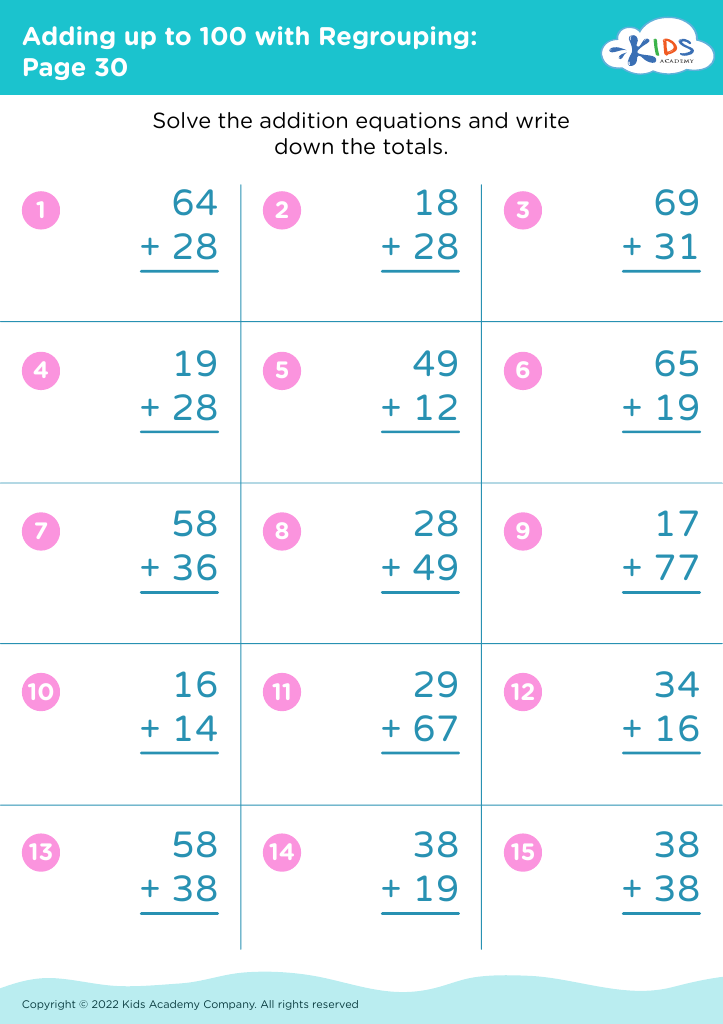
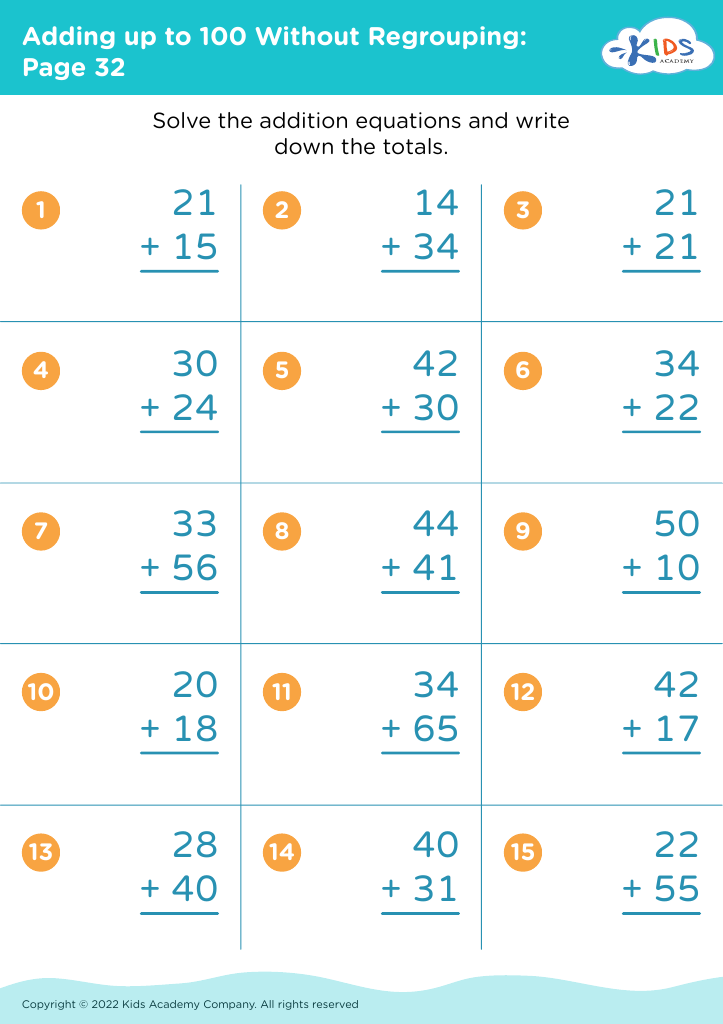
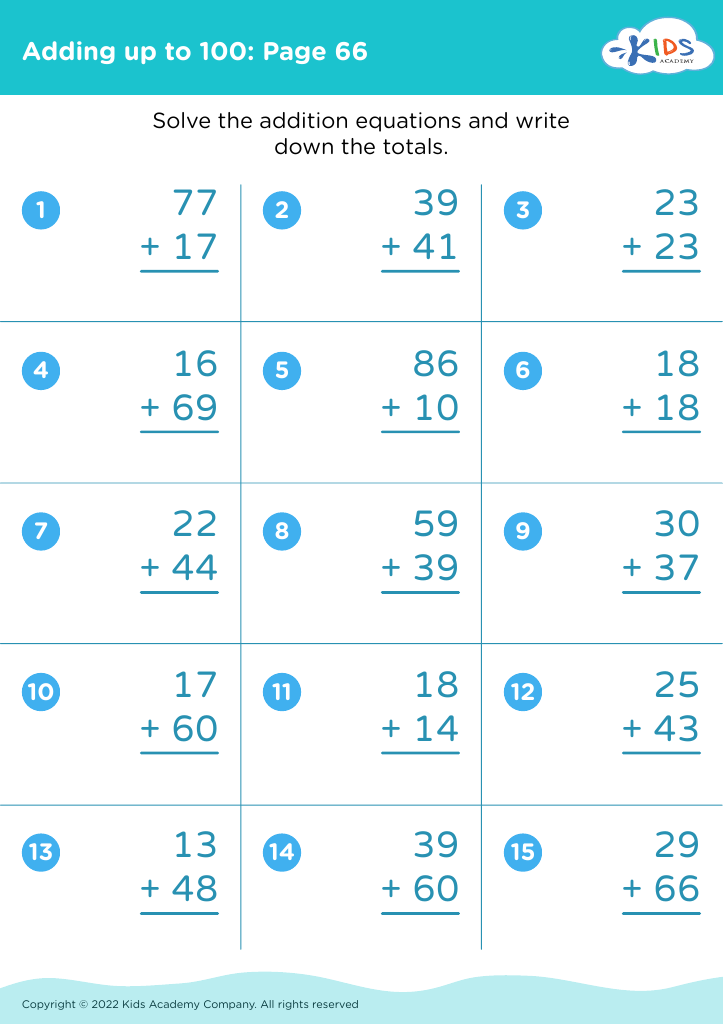
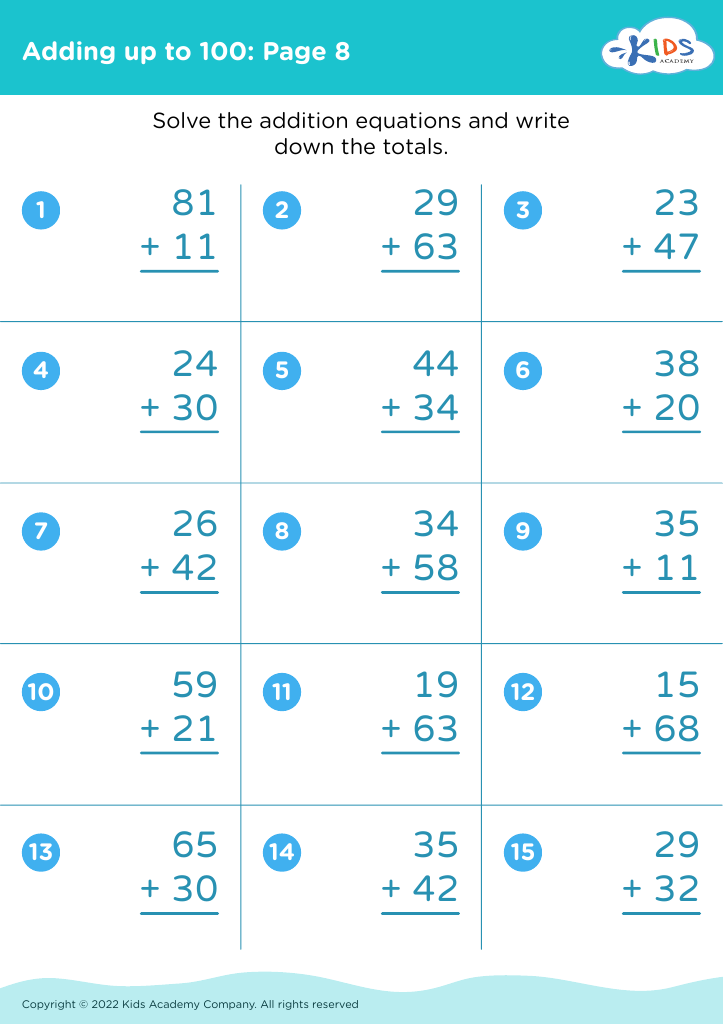
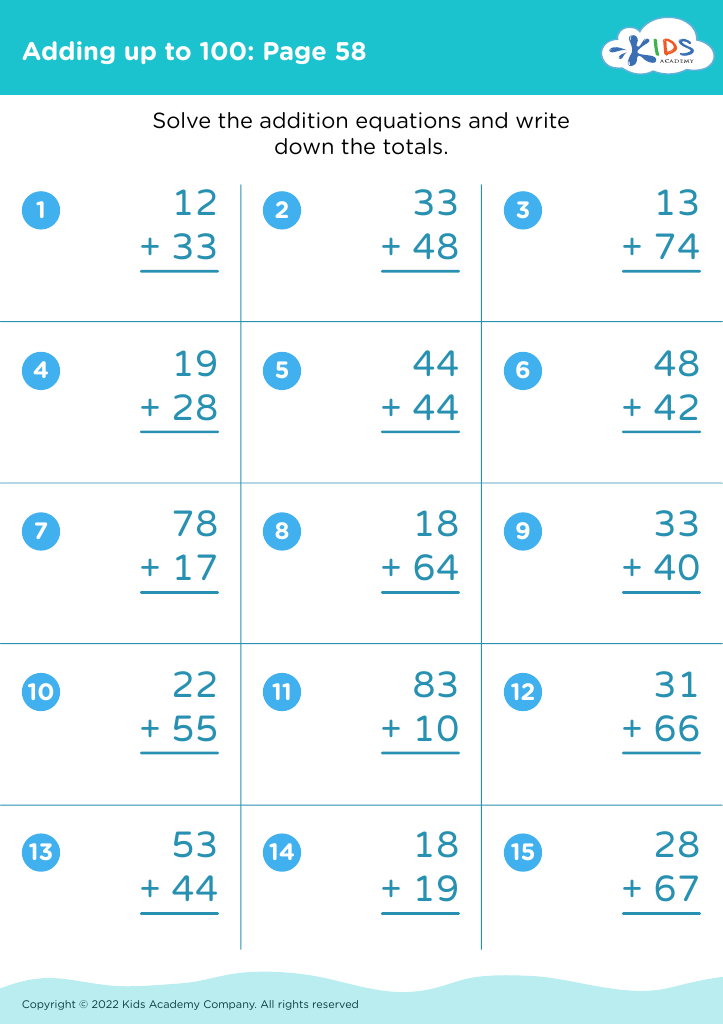
Welcome to our "Understand Fractions Adding Up to 100" worksheets for children ages 5-8! These engaging and educational resources are designed to help young learners grasp the concept of fractions in a fun and easy way. Our worksheets focus on breaking down fractions visually and practically while ensuring that kids understand how they contribute to a whole, specifically up to 100. With a variety of exercises, including coloring, matching, and simple add-and-subtract tasks, children will develop their mathematical skills and confidence. Perfect for home or classroom use, these worksheets are ideal for fostering a solid foundation in fractions. Start learning today!



%20(1).jpg)



Understanding fractions and their relationship to adding up to 100 is crucial for children aged 5-8 for several reasons. Firstly, mathematical literacy in fractions lays the foundation for more advanced math concepts in later years. Young learners begin to grasp essential ideas of part-whole relationships, which are vital for their overall numeracy skills.
Moreover, teaching fractions in conjunction with the concept of adding up to 100 makes math tangible and relevant. It allows children to visualize everyday situations, such as sharing food or dividing time, making the subject more engaging. This connections enhances their cognitive abilities and critical thinking skills, nurturing a positive attitude toward learning math.
Engaging with fractions fosters problem-solving skills as students learn to manipulate numbers and understand equivalencies. Working with fractions helps build perseverance, as children encounter challenges in their learning journey.
For parents and teachers, supporting children in understanding fractions lays the groundwork for their academic success and mastery in math. In today's world, early comprehension of these concepts also aids in developing the analytical skills required in various future contexts, from personal finance to STEM careers. Prioritizing this foundational knowledge benefits both the individual child's pathway and the wider educational landscape.








