Understanding Sequences Adding up to 100 Worksheets for Ages 5-8
5 filtered results
-
From - To
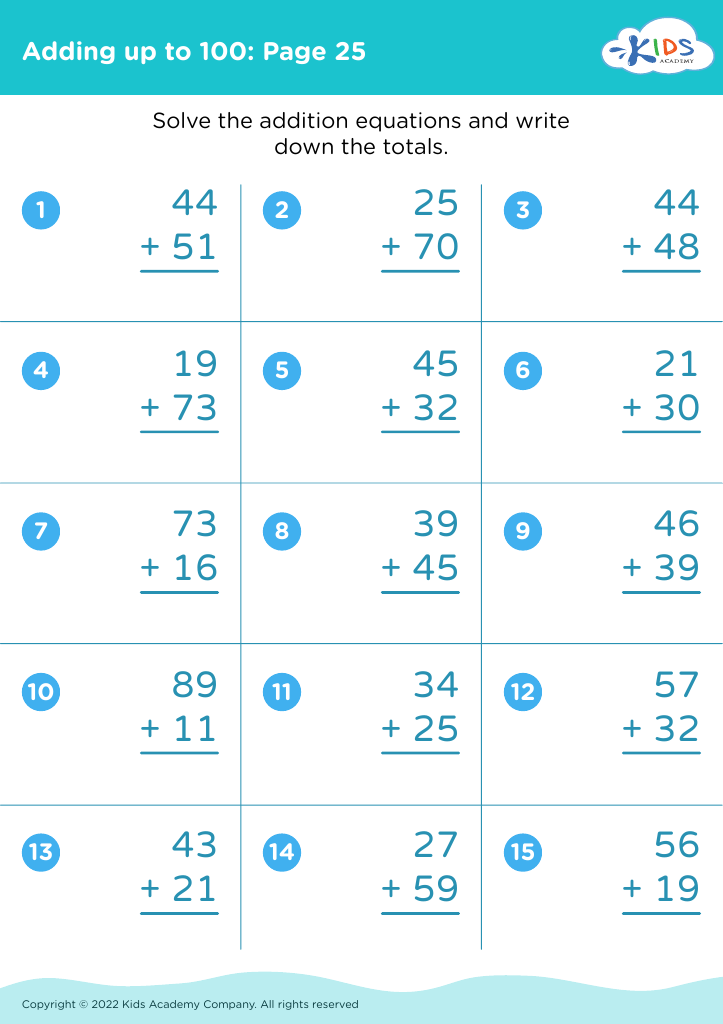
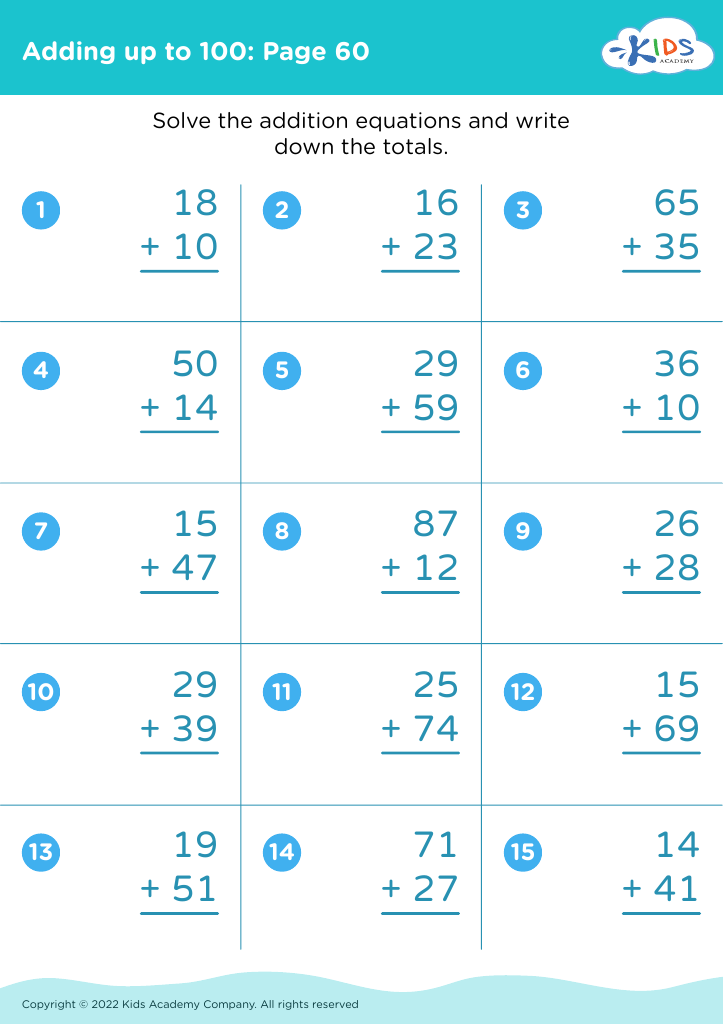
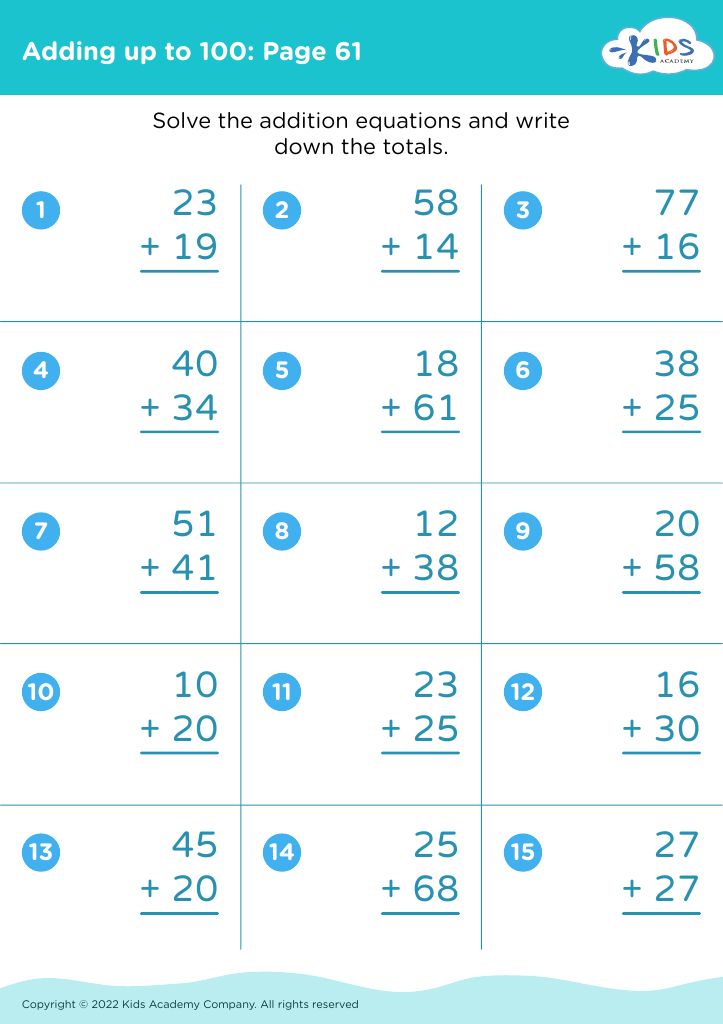
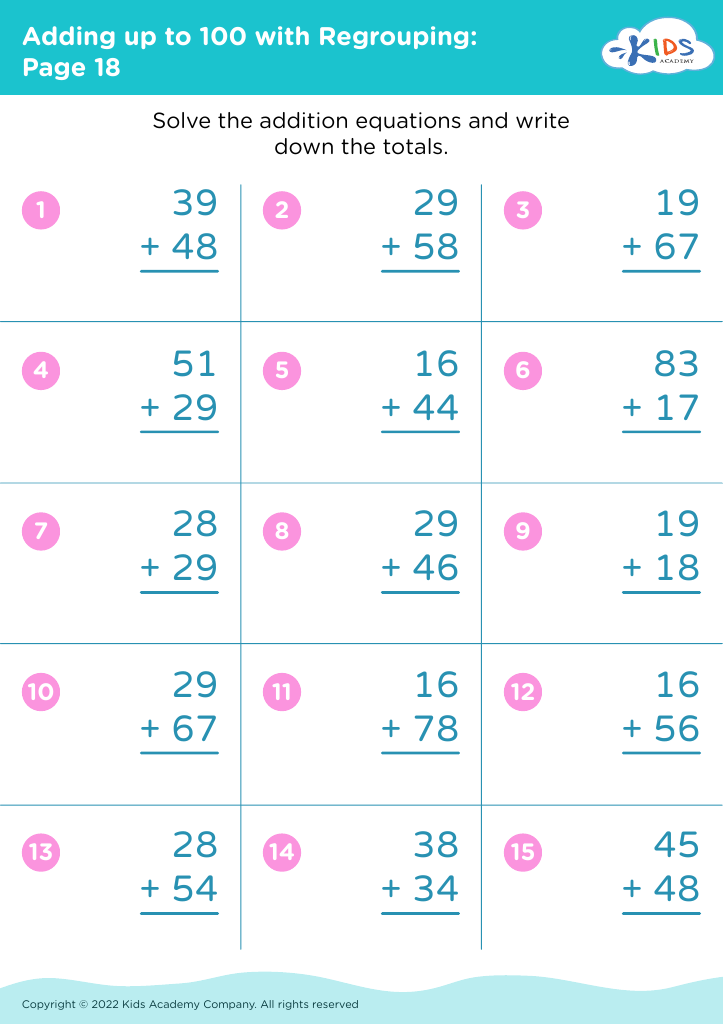
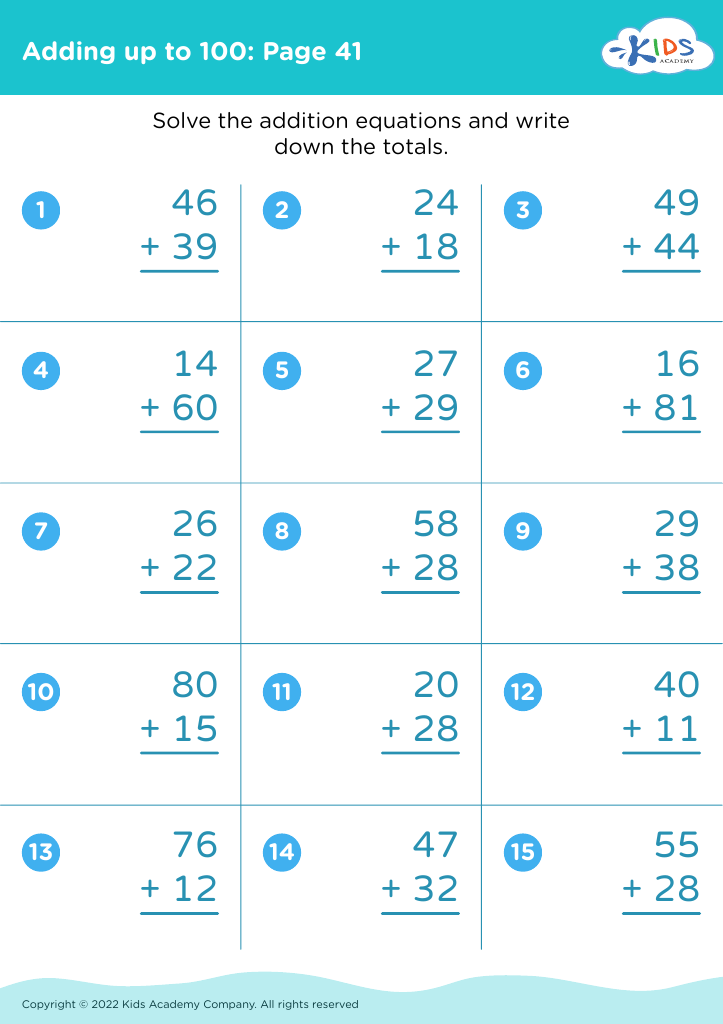
Unlock your child's potential with our "Understanding Sequences Adding up to 100 Worksheets for Ages 5-8"! Perfectly designed to enhance early math skills, these engaging worksheets guide young learners through fun, structured exercises on numerical sequences and addition up to 100. Through pattern recognition, problem-solving, and critical thinking, kids build a robust foundation in math. Ideal for both classroom use and home practice, our worksheets include colorful illustrations and clear instructions to make learning enjoyable. Empower your child to develop a love for mathematics while achieving essential milestones. Visit Kids Academy for more resources today!


%20(1).jpg)




Understanding sequences and practicing adding up to 100 is crucial for children aged 5-8 because it lays the foundation for essential math skills and enhances cognitive development. Sequences help children grasp the concept of order and predictability, which are key components in math and everyday problem-solving. When kids learn to add numbers up to 100, they develop numerical fluency, which is the ability to immediately recognize numbers, comprehend their values, and perform basic operations without hesitation.
Engaging with sequences also encourages pattern recognition. Recognizing and predicting patterns boosts children's ability to understand more complex math concepts in later grades, such as multiplication and division. Moreover, early practice with addition up to 100 helps solidify their understanding of place value, which is core to all math operations.
Exposure to sequences and adding numbers up to a particular limit encourages children to think logically and apply reasoning skills, which are beneficial in both academic settings and real-life scenarios. For instance, understanding sequences can make it easier for kids to figure out patterns in their environment, like seasons, days of the week, or organizational structures.
Lastly, mastering these skills enhances confidence and enthusiasm toward math, creating a positive cycle of learning and curiosity. It's an investment in their future academic successes and cognitive growth, building a strong mathematical foundation from an early age.








