
Vocabulary enhancement Adding up to 100 Worksheets for Ages 5-8
3 filtered results
Difficulty Level
Grade
Age
-
From - To
Subject
Activity
Standards
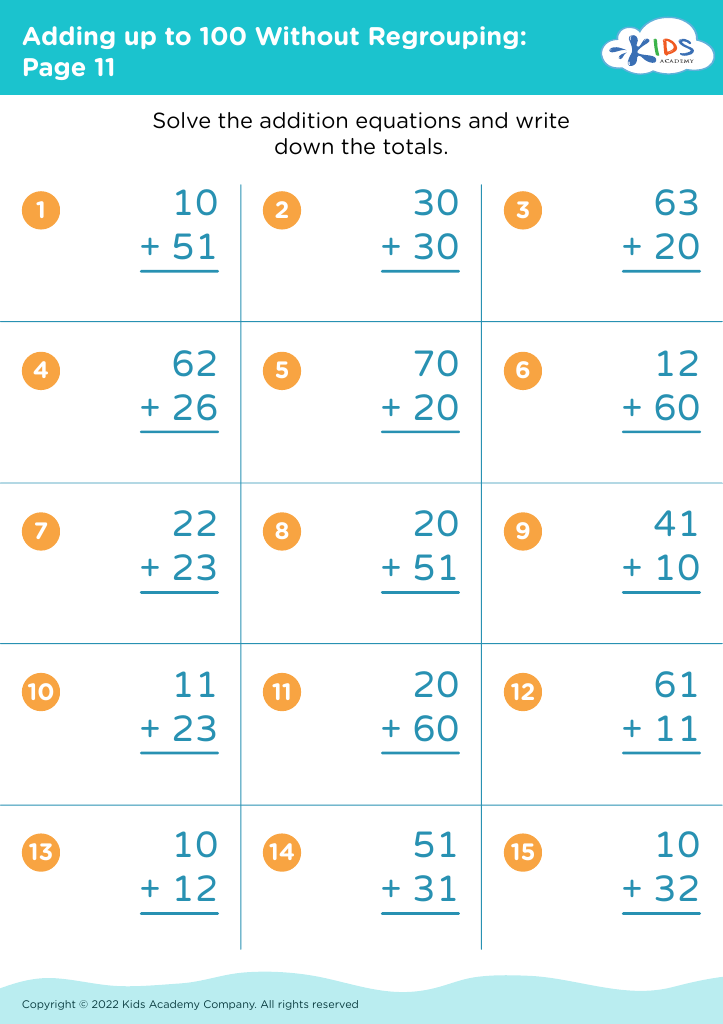
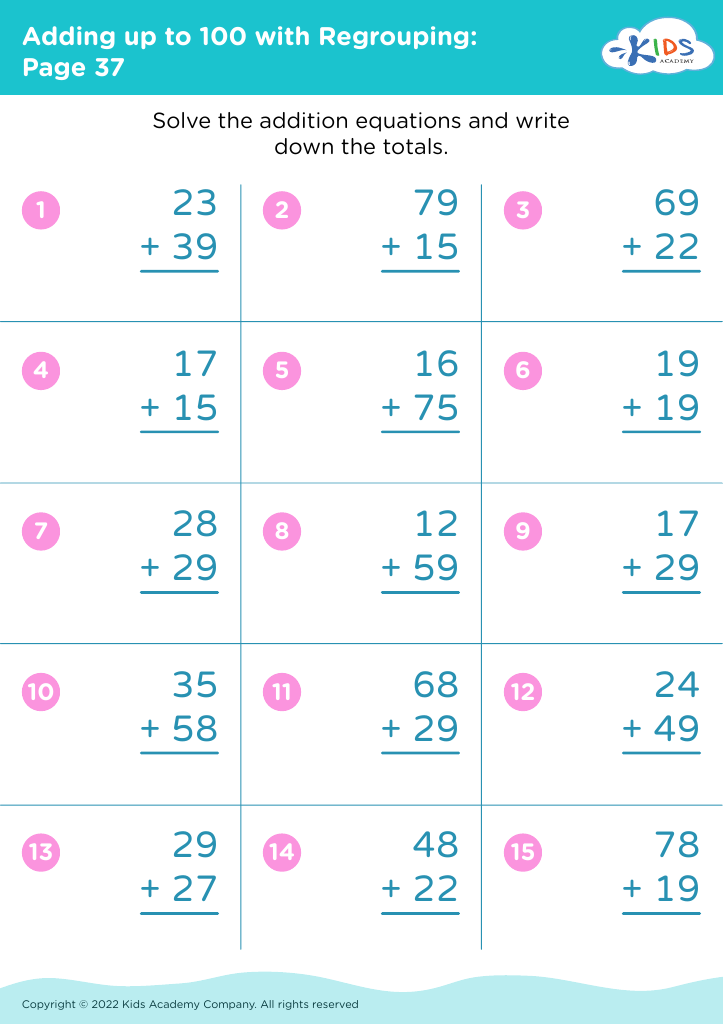
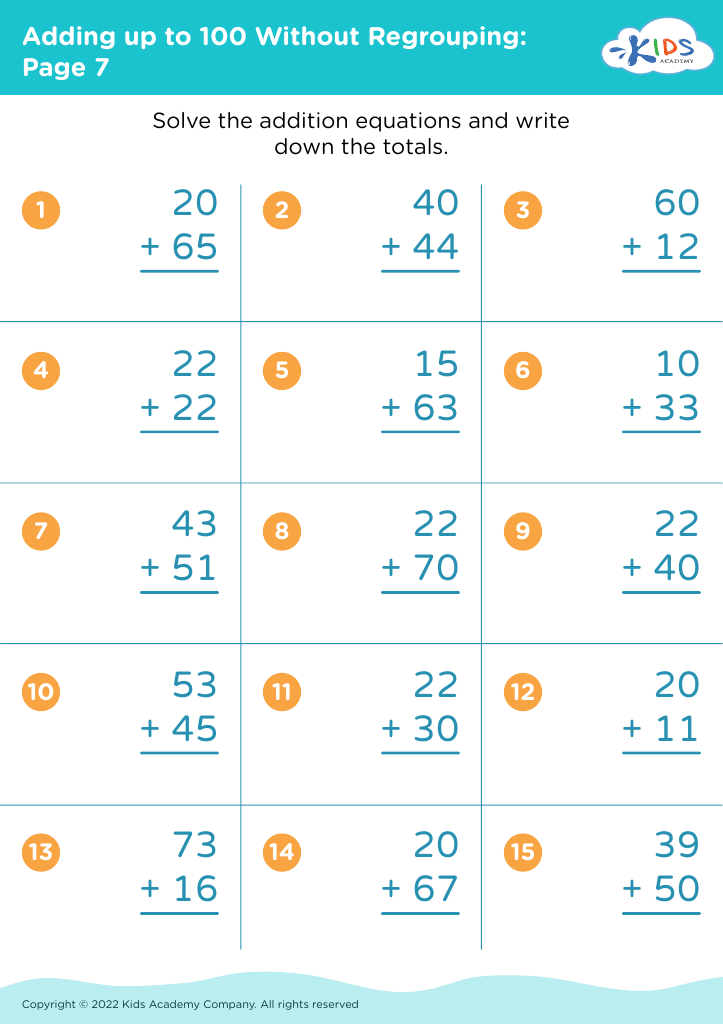
Unlock your child's potential with our "Vocabulary Enhancement: Adding Up to 100 Worksheets" designed specifically for ages 5-8! This enriching resource features 100 engaging worksheets that seamlessly blend math skills with vocabulary development. Kids will explore essential terms while practicing their addition skills, enhancing both their mathematical understanding and language abilities. Perfect for classroom use or at-home learning, these worksheets promote critical thinking and boost confidence in young learners. With colorful illustrations and kid-friendly activities, children will enjoy mastering numbers and vocabulary simultaneously. Download now and watch your child's skills soar as they learn through fun and interactive lessons!
Favorites
With answer key
Interactive
Join Kids Academy for Free
Who is primarily going to use this learning content?





%20(1).jpg)

Vocabulary enhancement is crucial for children aged 5-8 as it lays the foundation for reading, writing, and effective communication. As language skills develop during these formative years, a rich vocabulary helps children express their thoughts more articulately and understand complex concepts they encounter in everyday situations.
For parents and teachers, fostering vocabulary growth stimulates cognitive development. It enhances children's comprehension abilities, preparing them for more advanced learning in later grades. A diverse vocabulary enables children to grasp new ideas, follow instructions accurately, and engage meaningfully in discussions.
Moreover, good vocabulary skills can positively impact self-esteem and confidence. Children who can articulate their ideas clearly are more likely to participate in class discussions and share their thoughts openly, fostering a love for learning.
Additionally, vocabulary enhancement can benefit children socially, helping them to connect and communicate effectively with peers. This social interaction plays a key role in building friendships and cooperative play, essential components of childhood development.
For these reasons, both parents and teachers should actively engage in activities that promote vocabulary growth, making learning fun through games, reading, and conversations, ultimately empowering children to excel academically and socially.








