

.jpg)





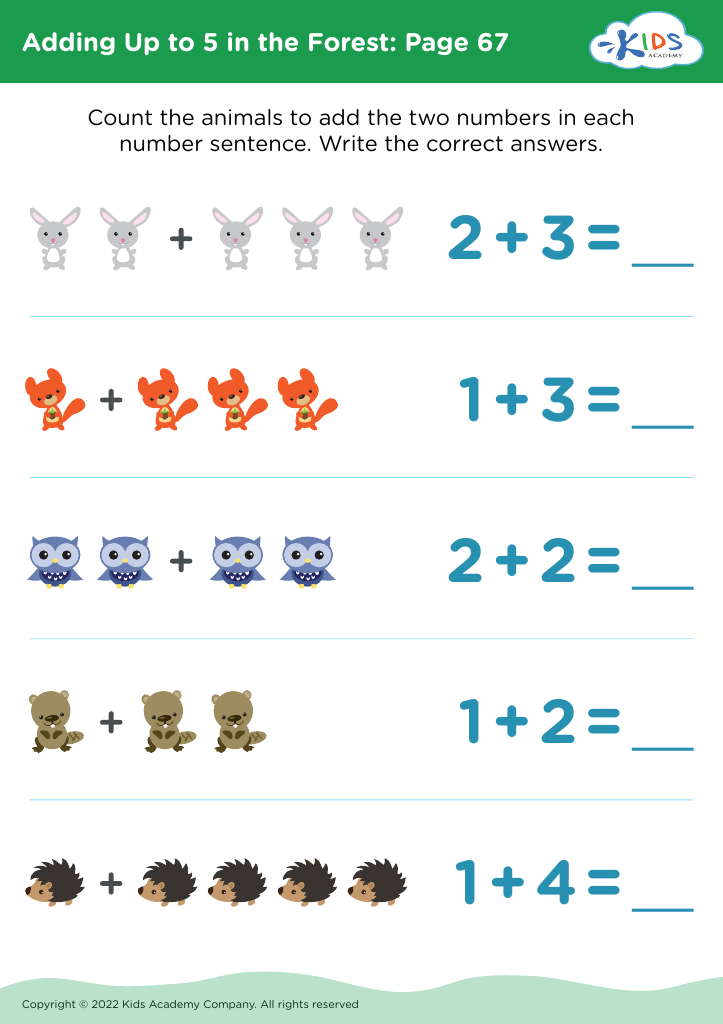
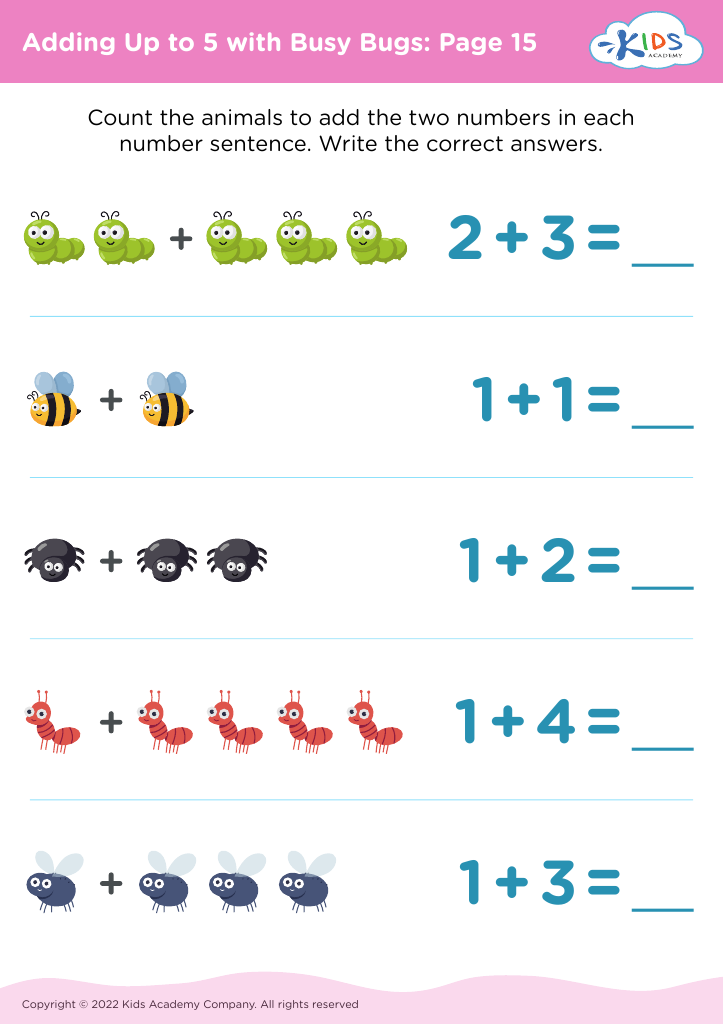
Addition Practice Adding Up to 5 is crucial for children aged 5-8 as it lays a foundational understanding of mathematics that shapes their future learning. During this developmental stage, children are not only building numerical skills but also sharpening their cognitive abilities, such as problem-solving and critical thinking. Mastery of small sums, like those up to 5, allows young learners to gain confidence. This confidence motivates them to tackle more complex math concepts as they progress.
Furthermore, incorporating addition practice in daily routines helps reinforce these skills. Engaging activities can make learning fun and enjoyable, fostering a positive attitude towards mathematics. Parents and teachers play a vital role in creating an environment where children feel supported in their learning journey.
Additionally, early proficiency in basic addition can greatly enhance a child’s ability to handle day-to-day activities, such as shopping or sharing. This reinforces the relevance of math in real-life contexts, helping children recognize its importance. Ultimately, a solid grasp of basic addition not only contributes to academic success but also cultivates a lifelong interest in learning, ensuring children are better equipped for future challenges in mathematics and other subjects.








