Basic Math understanding Adding Up to 5 Worksheets for Ages 5-8
7 filtered results
-
From - To
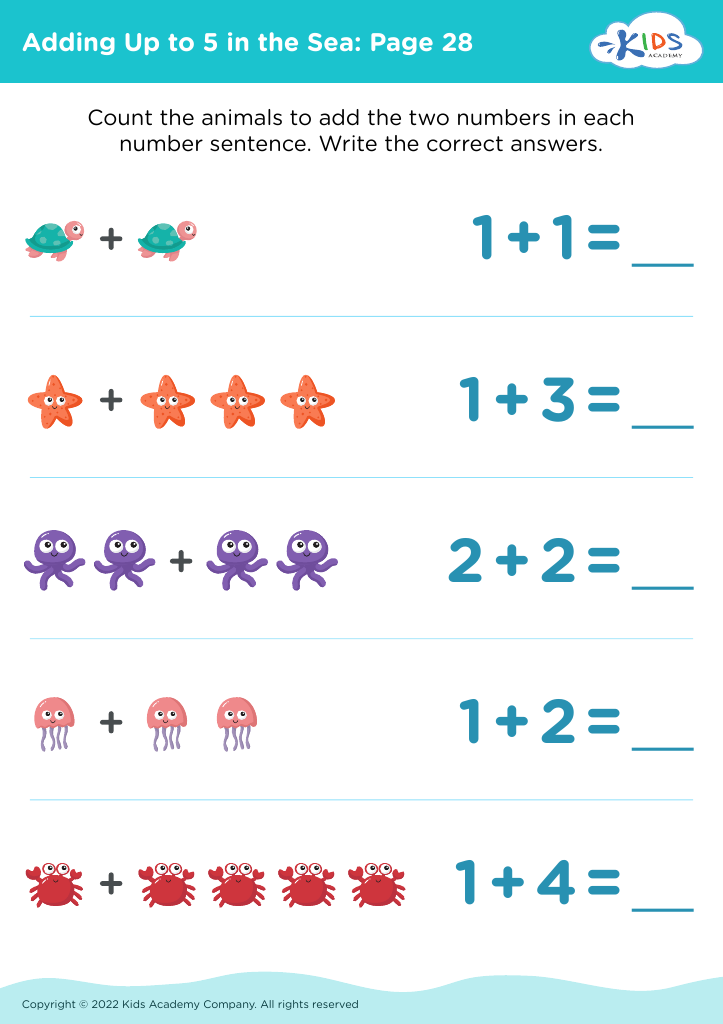
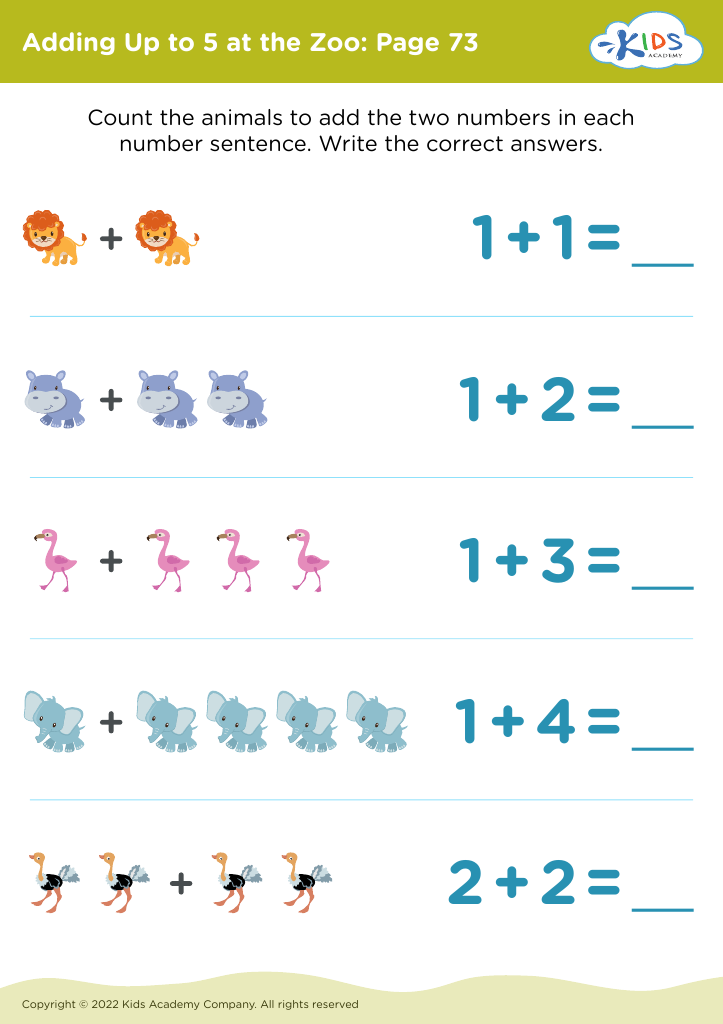
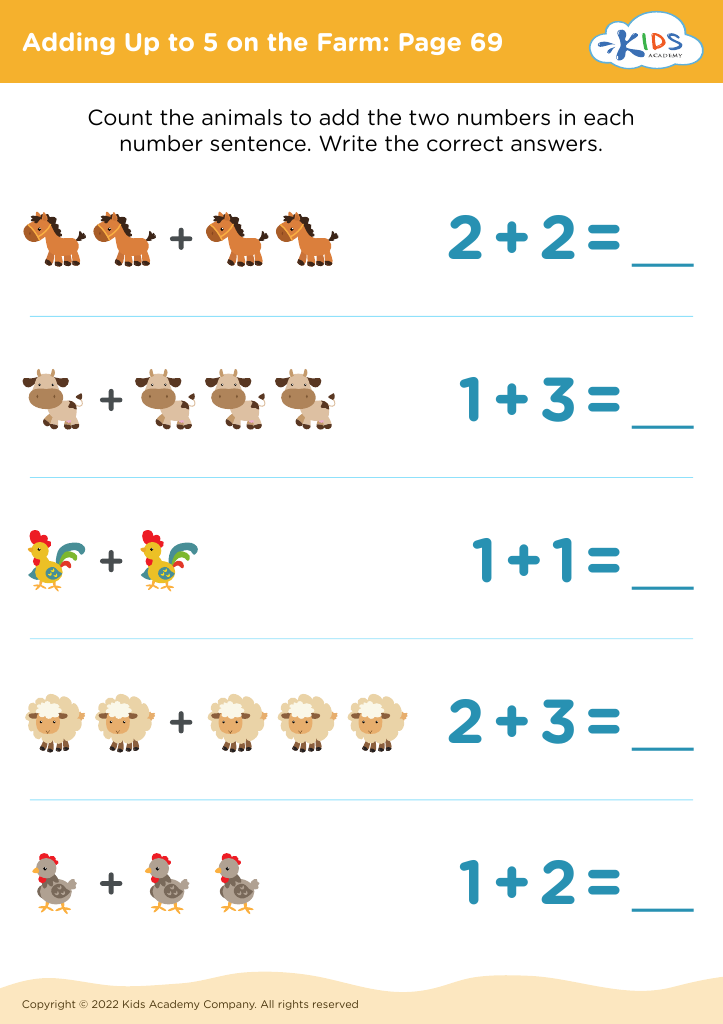
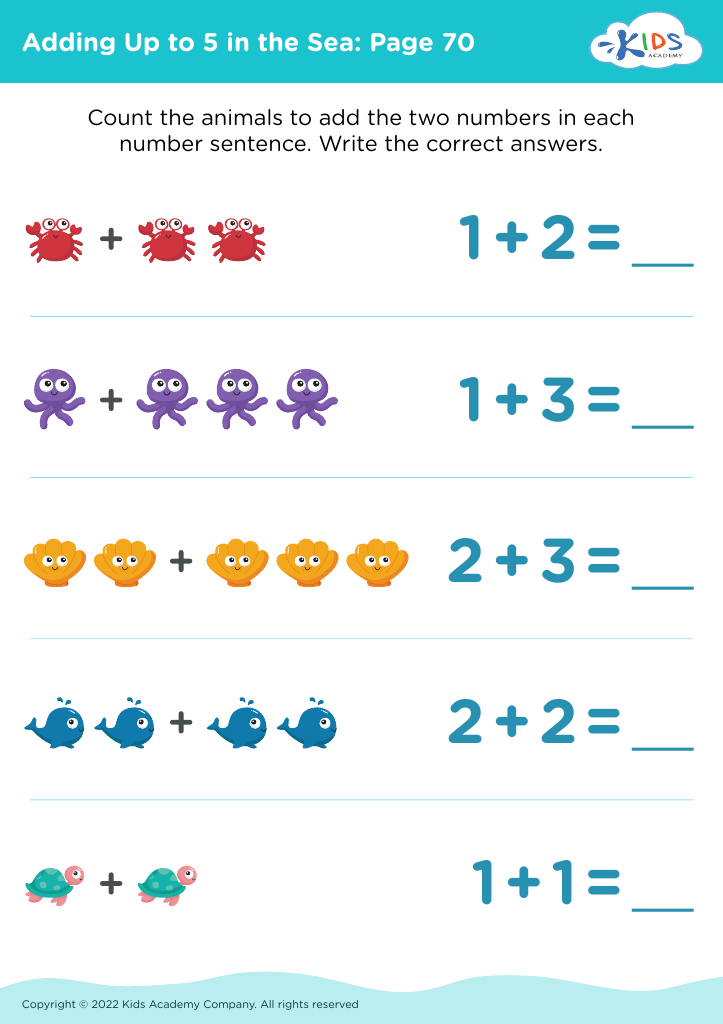
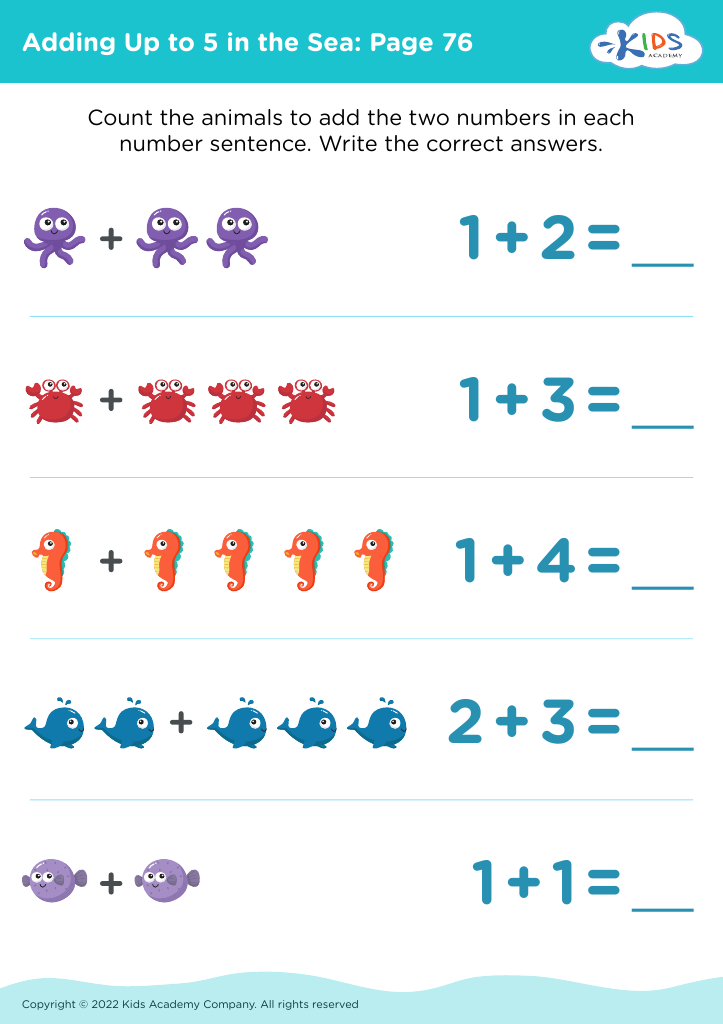
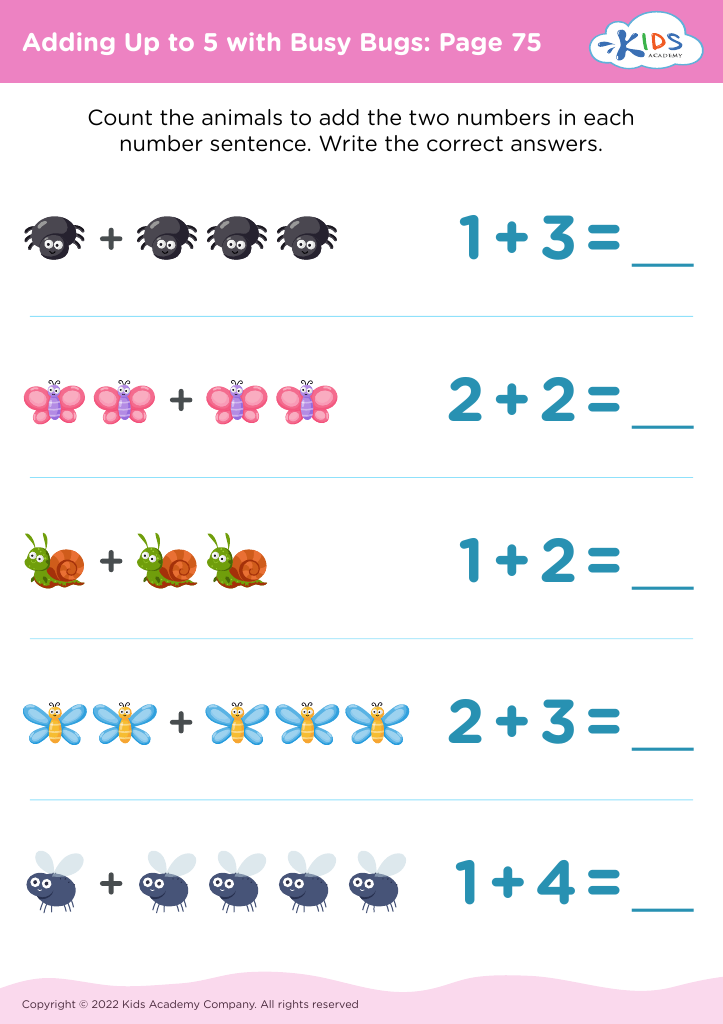
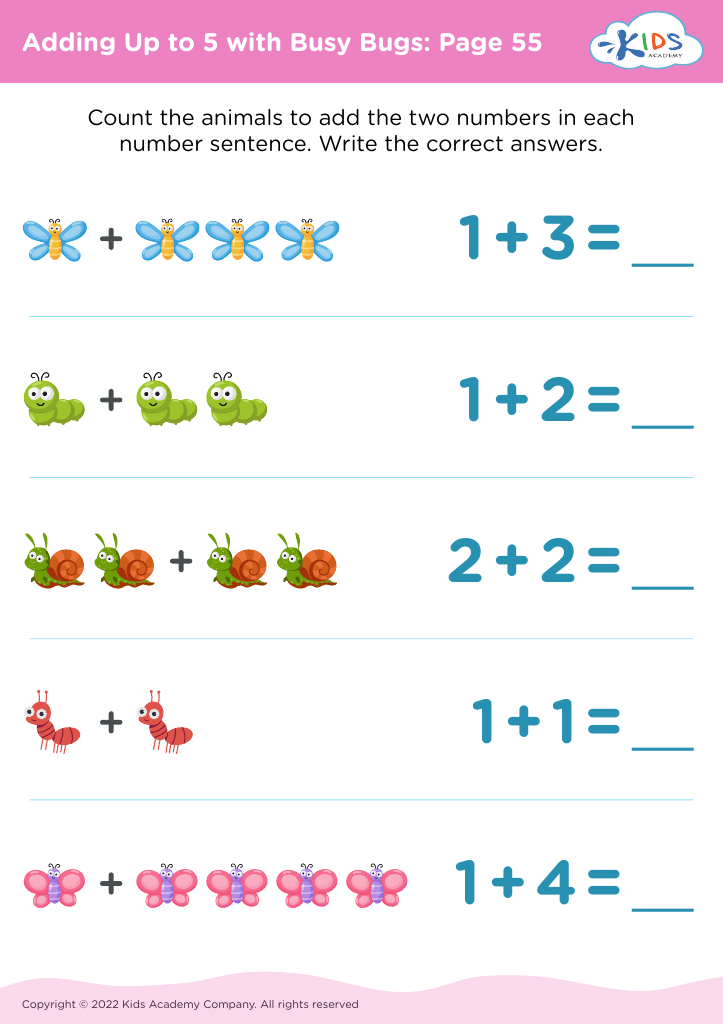
Discover our engaging "Basic Math Understanding: Adding Up to 5 Worksheets" designed specifically for children ages 5-8. These worksheets provide a fun and interactive way for young learners to master the fundamentals of addition through various exercises and colorful illustrations. With a focus on adding numbers up to 5, students will practice addition concepts while building confidence in their math skills. Ideal for home or classroom use, these printables encourage critical thinking, help reinforce early math concepts, and support cognitive development. Start your child's journey in math with our captivating worksheets that make learning enjoyable and effective!


.jpg)





Understanding basic math concepts, such as adding up to 5, is crucial for students aged 5-8 as it forms the foundation for future mathematical learning. First, this skill supports cognitive development. Children learn to recognize numbers and develop sequential thinking skills, enhancing their ability to solve problems. Additionally, mastering addition boosts confidence and encourages a positive attitude towards math.
For parents and teachers, focusing on early math skills fosters a supportive learning environment. It allows them to identify and address any learning challenges early, ensuring that no child falls behind. Comprehensive knowledge of basic math nurtures critical thinking skills essential across various subjects, as mathematics intersects with science, art, and even social studies.
Moreover, real-life applications of addition provide practical learning experiences. Children can grasp vital concepts like sharing, grouping, and comparison, which are invaluable in everyday situations. Engaging children in everyday activities, such as counting toys or snacks, helps solidify their understanding and demonstrates the relevance of math in daily life.
In conclusion, caring about and promoting basic math understanding in early childhood not only equips children with vital skills for academic success but also instills a lifelong appreciation for learning and problem-solving.








