Counting proficiency Adding Up to 5 Worksheets for Ages 5-8
9 filtered results
-
From - To
Unlock your child's mathematical potential with our "Counting Proficiency: Adding Up to 5" worksheets specifically designed for ages 5-8! These engaging and interactive activities help young learners develop essential counting, addition, and number recognition skills. Through a variety of colorful, fun-filled exercises, children practice adding numbers up to 5, laying a strong foundation for future math success. Each worksheet provides ample opportunities for hands-on learning, promoting not just proficiency, but also a love for mathematics. Perfect for home or classroom use, these worksheets cater to diverse learning styles, ensuring every child can thrive in their early math journey. Explore the world of counting today!
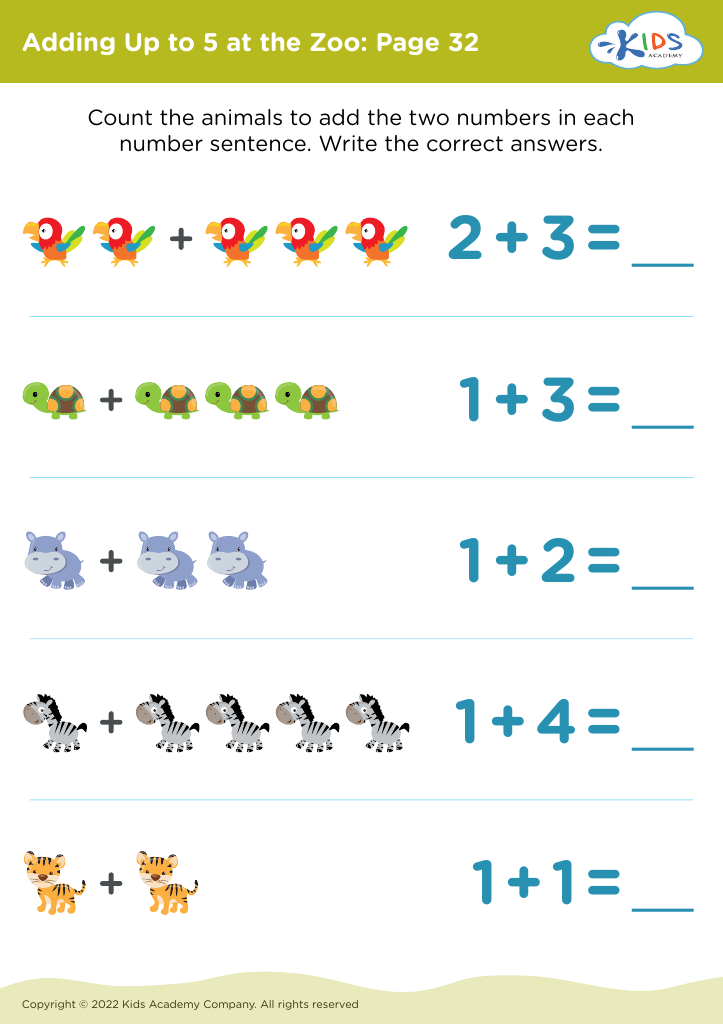
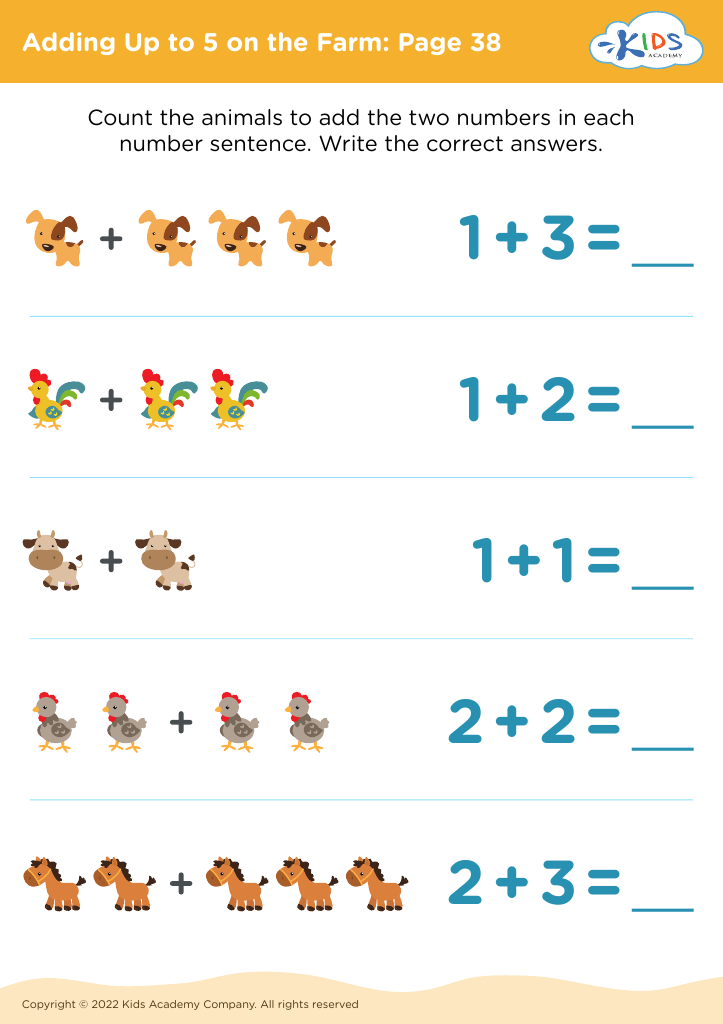
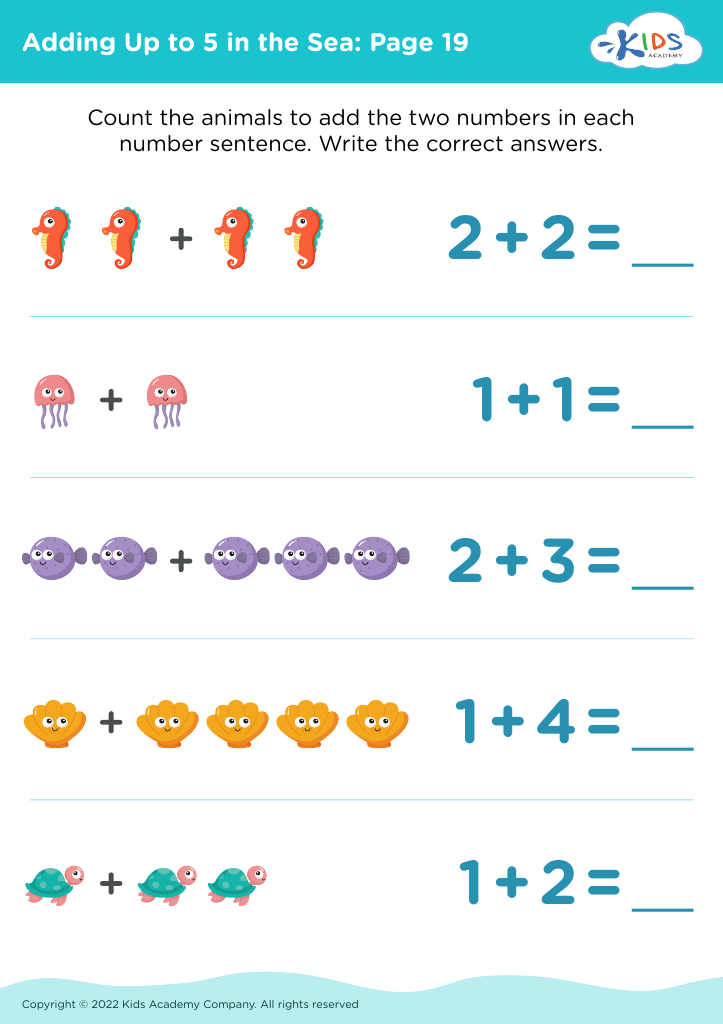
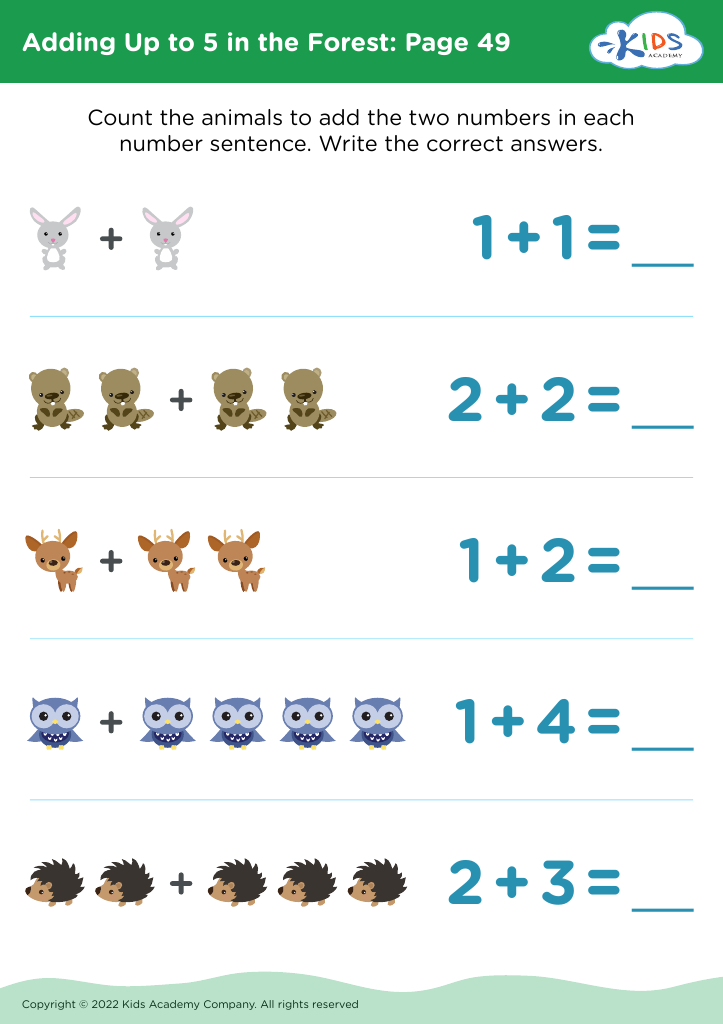
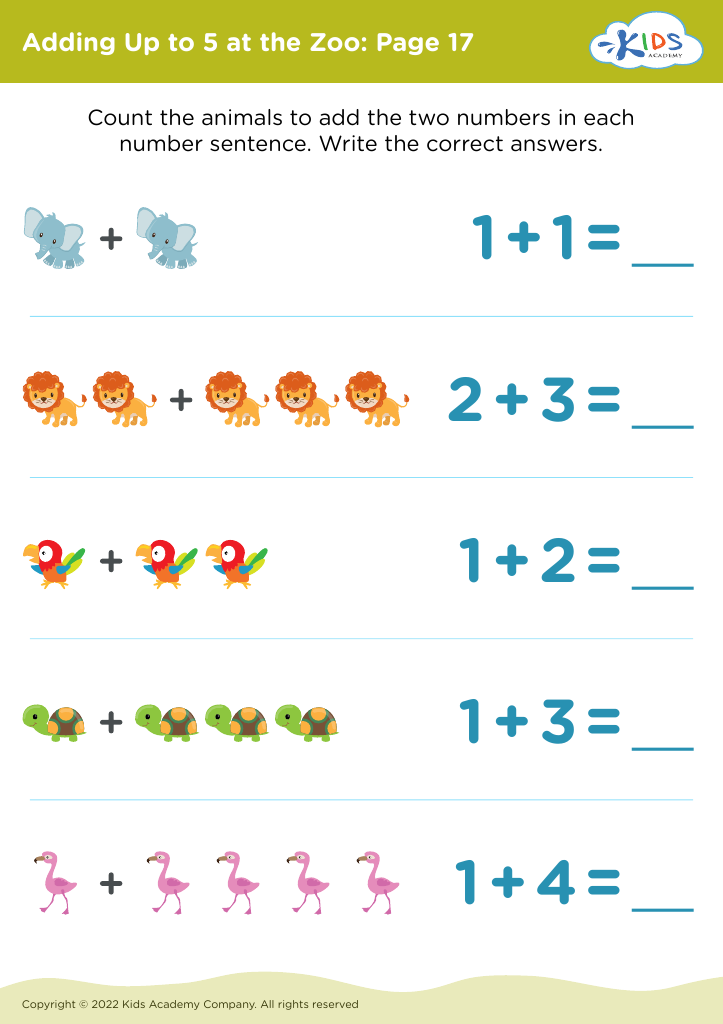
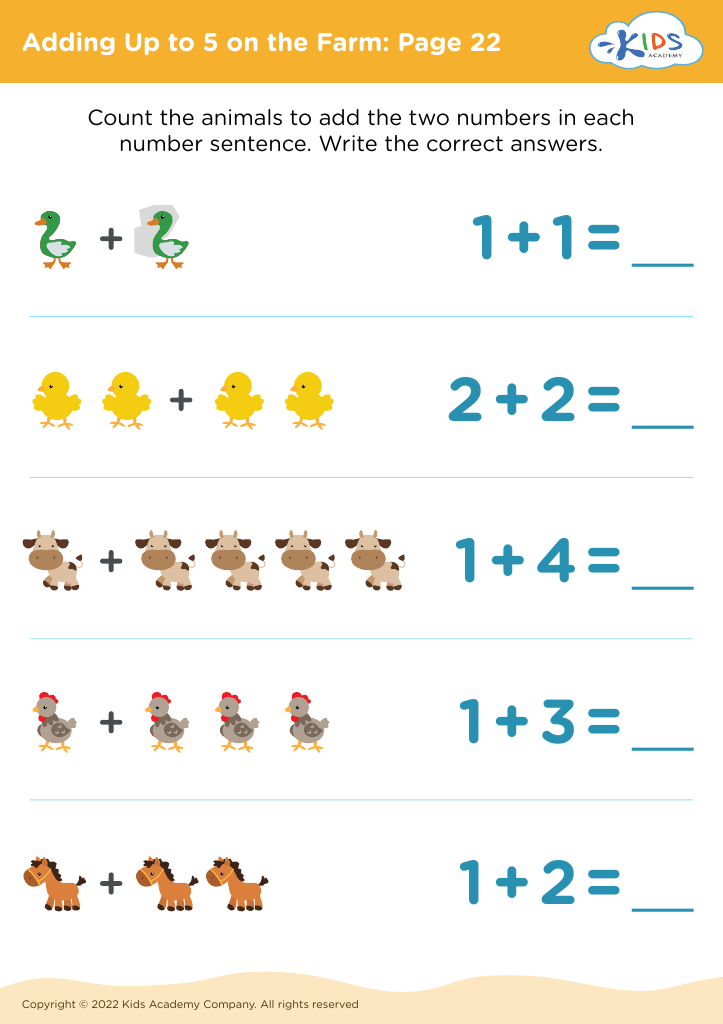
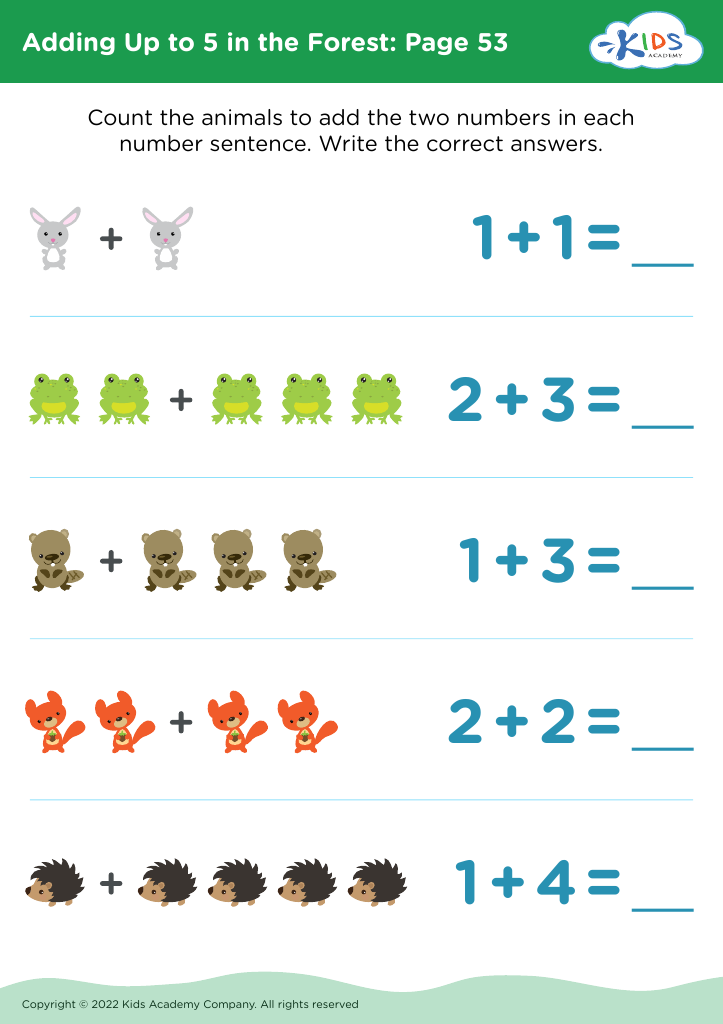
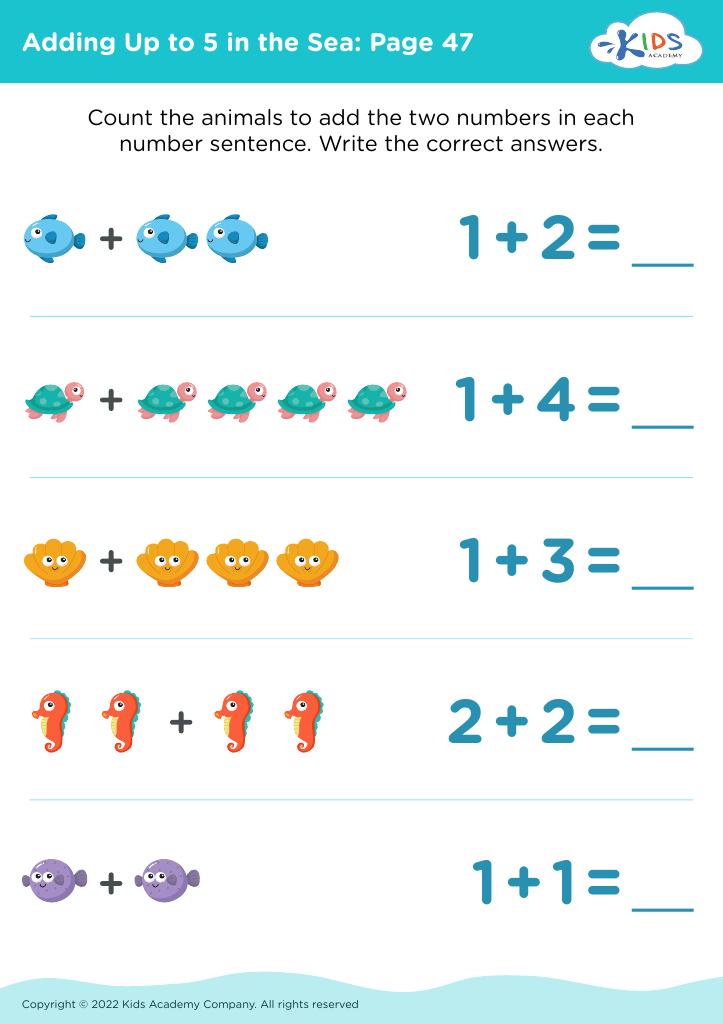
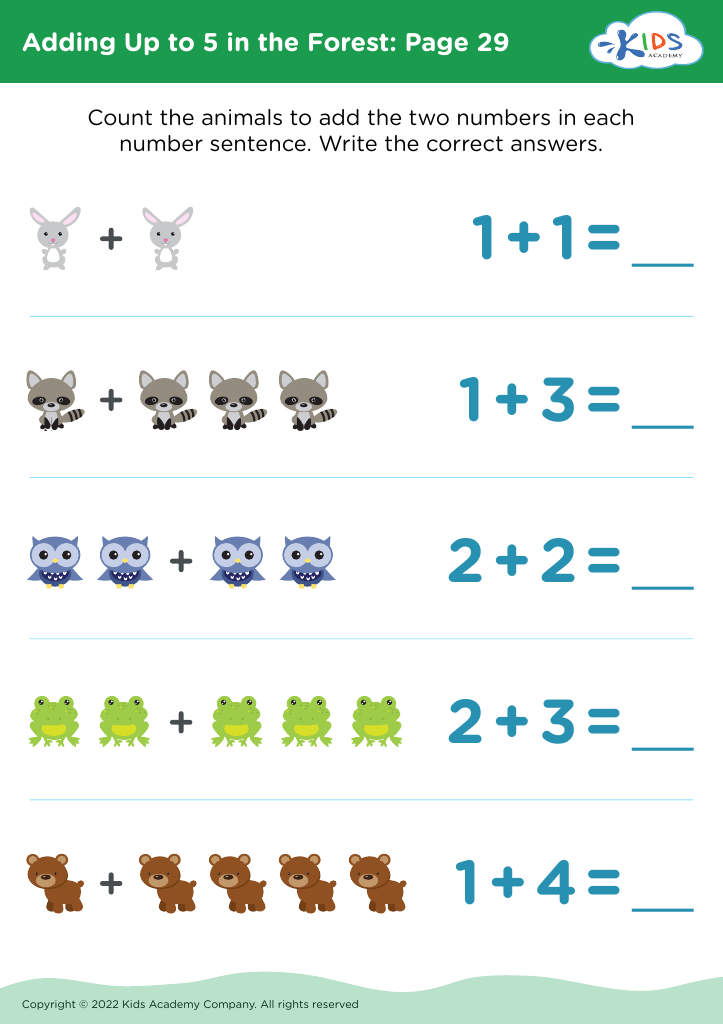








Counting proficiency, especially adding up to 5, is a foundational skill that significantly impacts a child's mathematical journey. For children aged 5 to 8, mastering this skill lays the groundwork for more complex arithmetic and logical reasoning. Proficient counting enhances cognitive development by helping children recognize patterns and develop problem-solving skills. When children can confidently add up to 5, they cultivate a sense of achievement and motivation that fuels their interest in mathematics.
Moreover, counting skills are crucial beyond academics—they promote essential life skills such as budgeting, time management, and even emotional intelligence through the understanding of quantities and sharing. Parents and teachers should prioritize this skill to ensure children can progress to more advanced mathematical concepts without struggling with foundational gaps.
Engaging young learners in counting activities, such as using everyday objects or interactive games, fosters a love for math while reinforcing these essential skills. Ultimately, investing time in helping children achieve proficiency in counting and adding up to 5 not only supports academic success but also prepares them for a future where numerical literacy is increasingly vital in various life contexts. Early intervention and attention to these skills can reshape a child's attitude toward mathematics, setting the stage for ongoing success.








