Developing Concentration Adding Up to 5 Worksheets for Ages 5-8
5 filtered results
-
From - To
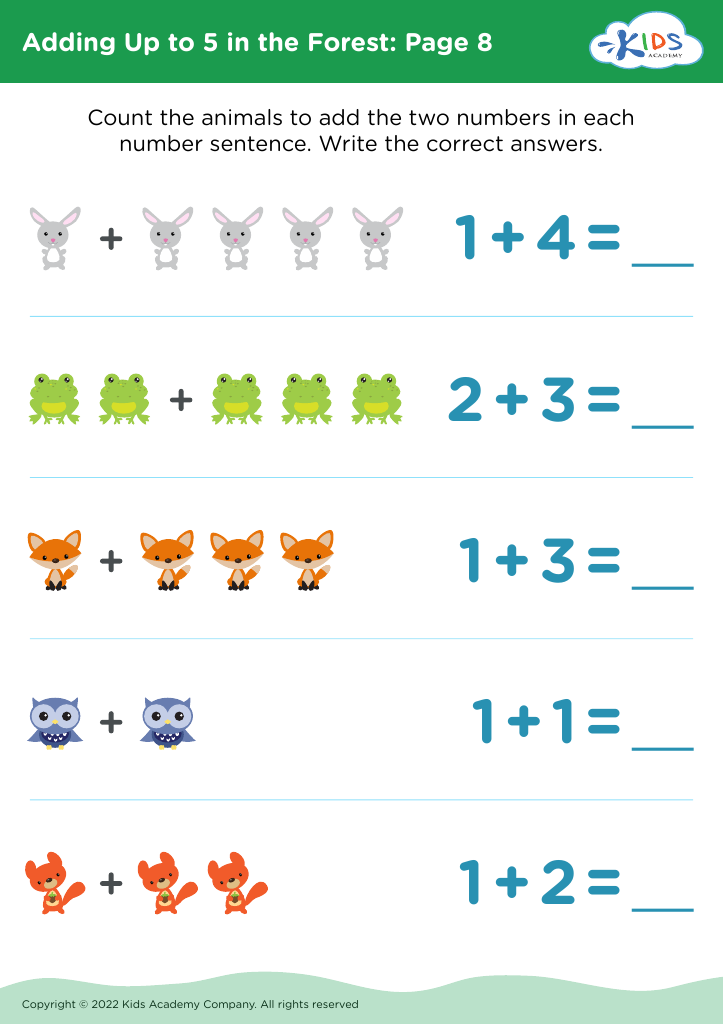
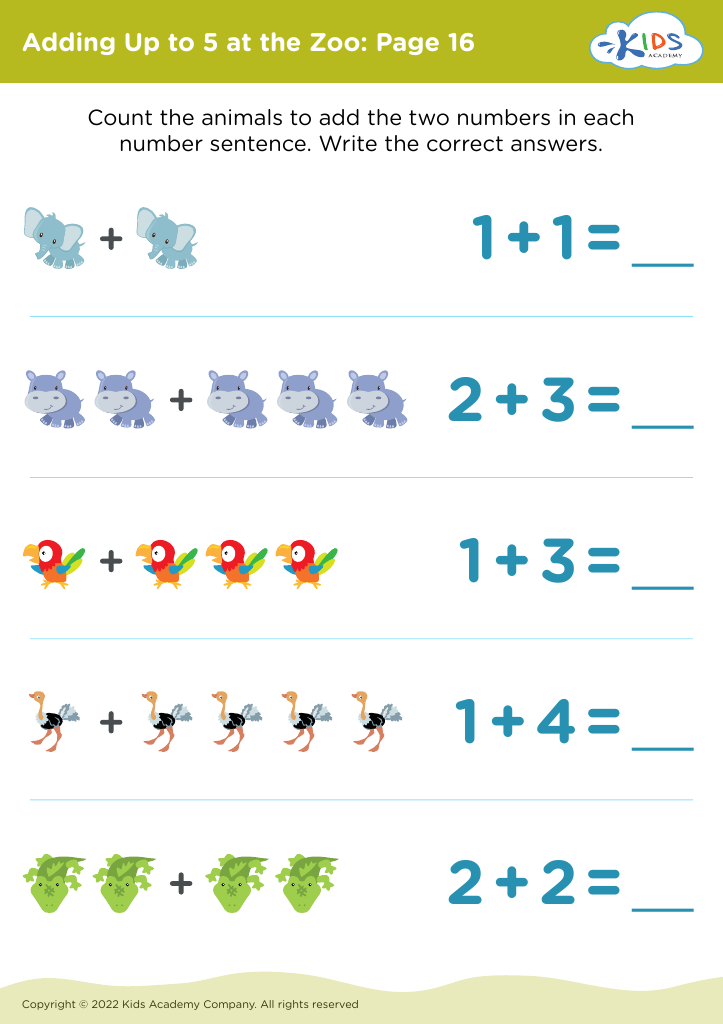
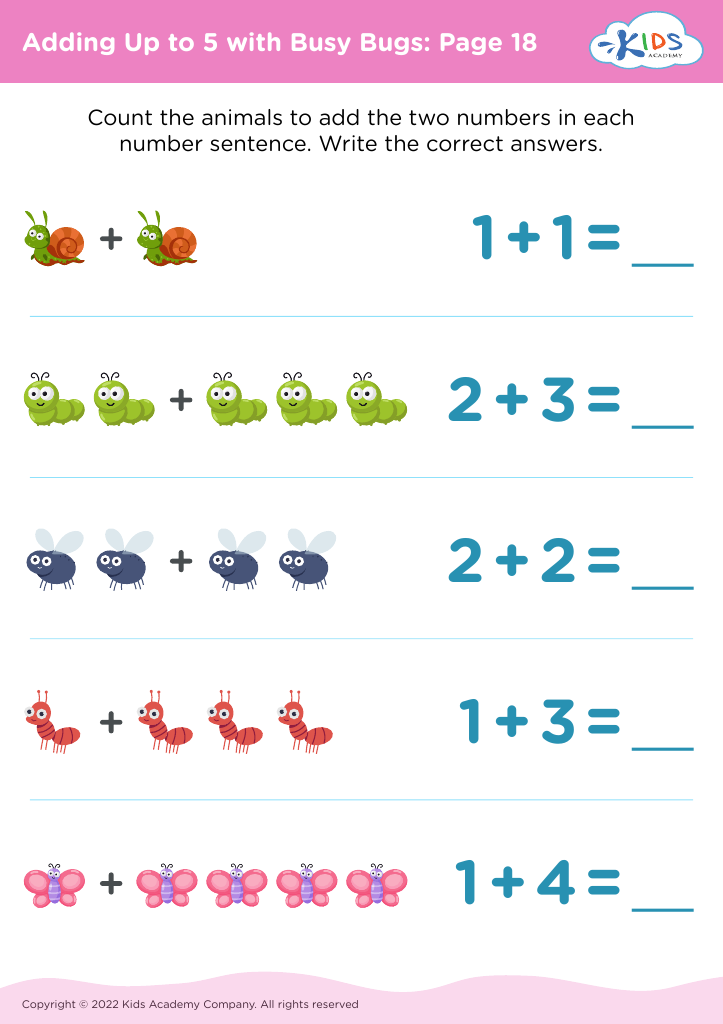
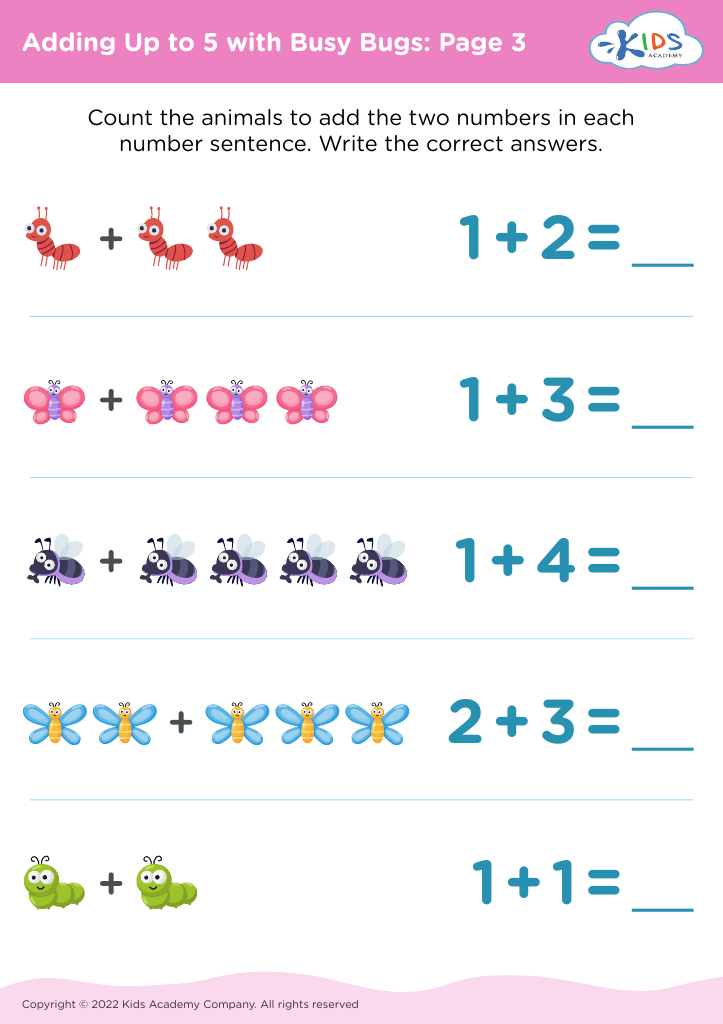
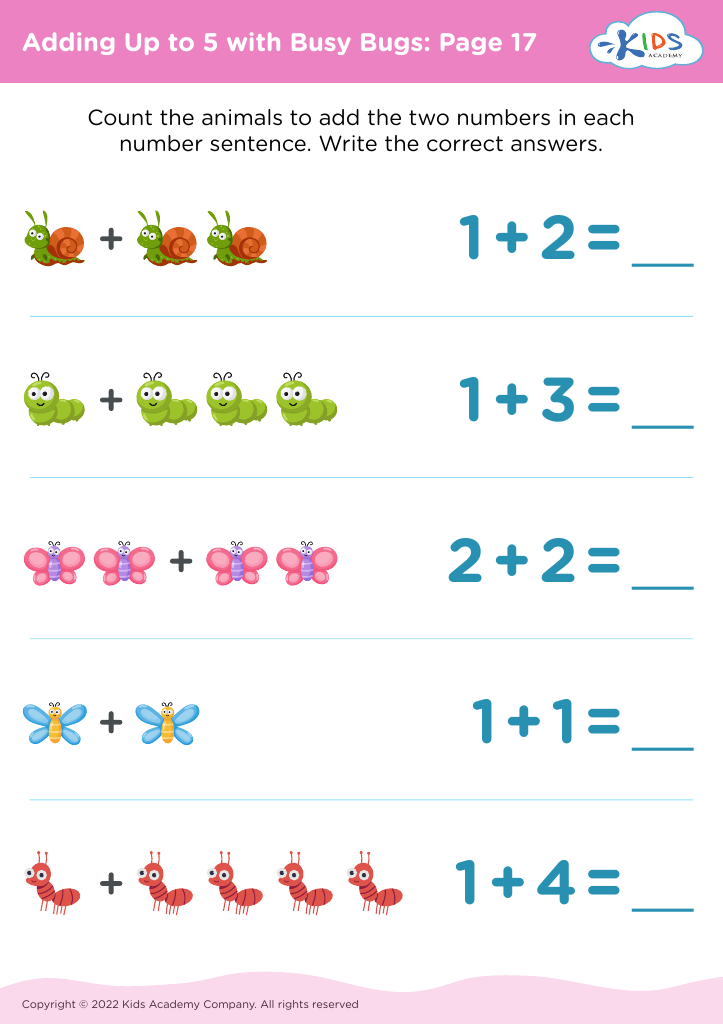
Boost your child's arithmetic skills and concentration with our "Developing Concentration Adding Up to 5 Worksheets for Ages 5-8". Designed specifically for young learners, these engaging worksheets enhance focus while fostering fundamental math abilities. Through fun, interactive exercises, children practice adding numbers up to 5, building a strong numeracy foundation. Ideal for use in classrooms or at home, these printables ensure a balanced approach to education by combining educational rigor with play. Empower your child to achieve more with concentrated effort and enjoy the rewards of effective learning. Perfect for parents and teachers aiming to support early math success!




.jpg)

%20(1).jpg)

Developing concentration when adding up to 5 is a fundamental skill for children aged 5-8, which lays the groundwork for more complex mathematical concepts. These early math skills not only boost cognitive development but also build confidence in young learners. For parents and teachers, fostering this ability prepares children for future academic success.
Focusing on simple addition helps children understand number relationships and develop problem-solving skills. Mastery of adding up to 5 allows them to tackle more challenging tasks, improving their overall mathematical fluency. This early achievement creates a positive feedback loop; as children feel successful, they are more likely to be engaged and persevere through difficult tasks.
Furthermore, learning to concentrate during these tasks enhances attention span and self-discipline, essential skills across all subjects and contexts. For instance, children who can concentrate well are better at following instructions, participating in group activities, and persisting through challenges, all crucial in a classroom environment.
Parents' and teachers' involvement in this developmental stage shows children that their education is valued, nurturing a lifelong love for learning. Simple, focused practice in adding values up to 5 helps establish these critical foundation stones, aiding in the child's holistic development and readiness for future academic endeavors.








