Fine motor skills (drawing lines) Adding Up to 5 Worksheets for Ages 5-8
3 filtered results
-
From - To
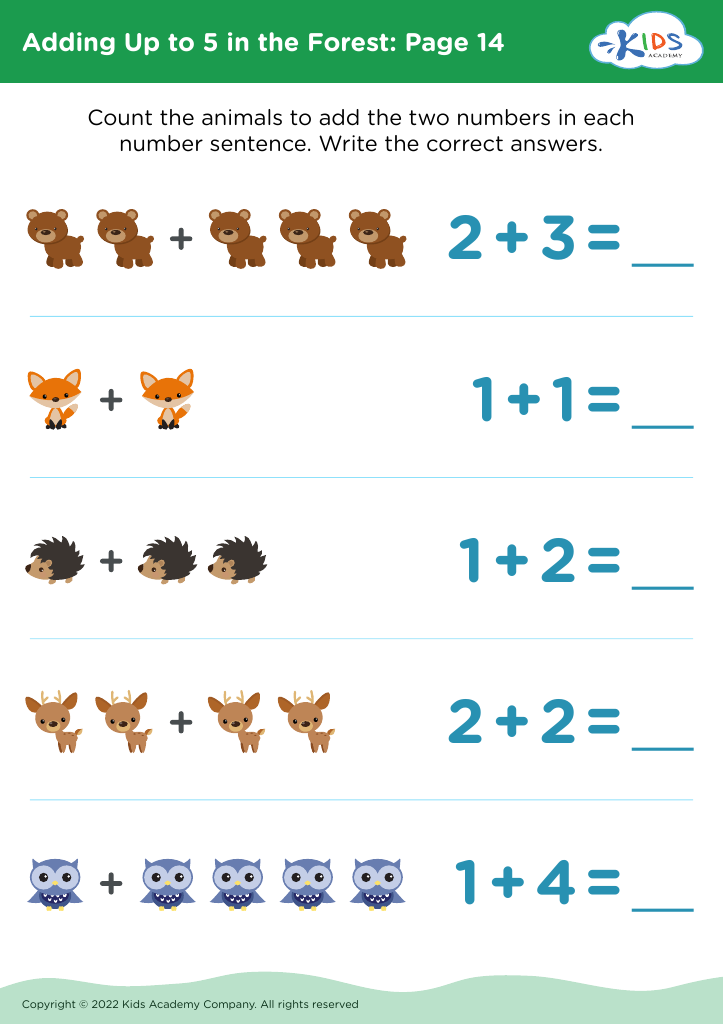
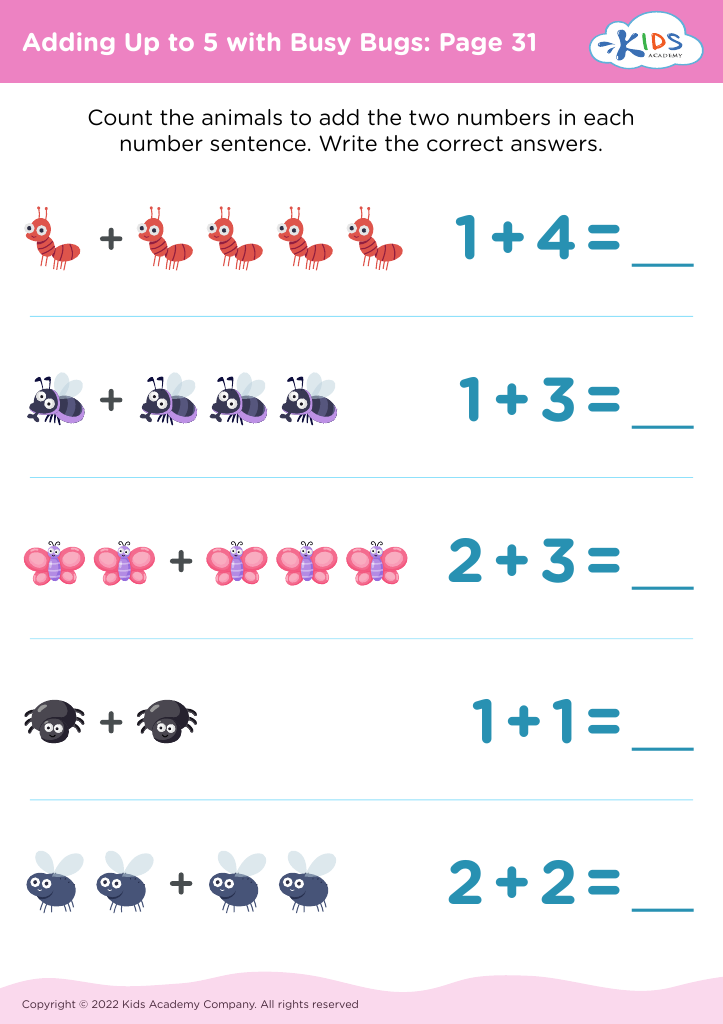
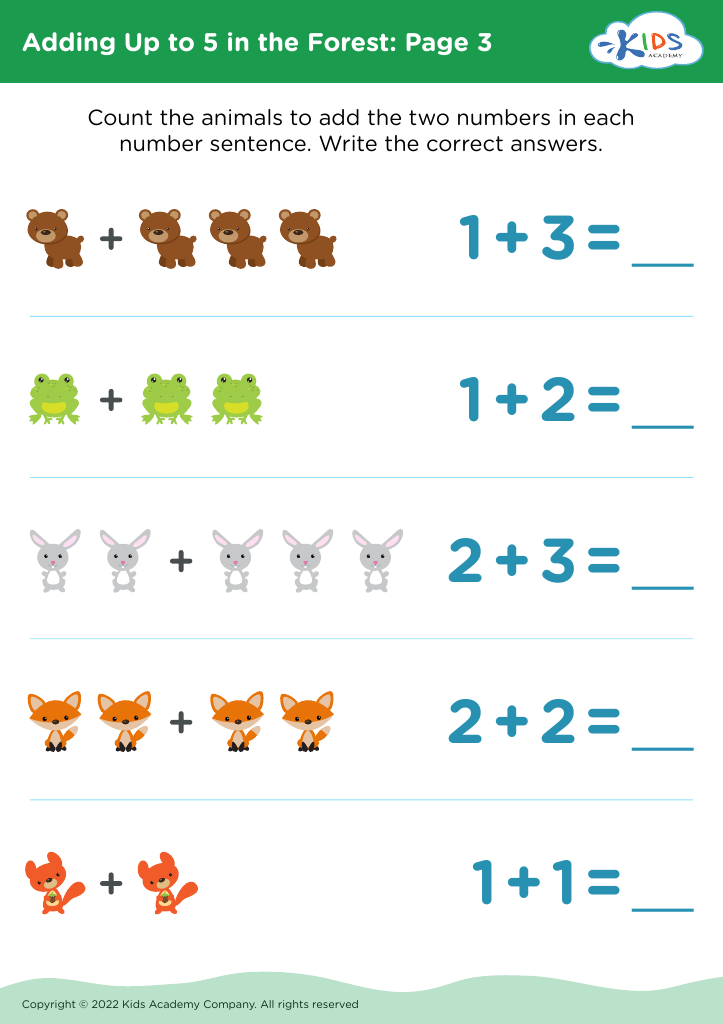
Enhance your child's fine motor skills while mastering the fundamentals of addition with our "Fine Motor Skills (Drawing Lines) - Adding Up to 5 Worksheets" designed for kids aged 5-8. These engaging worksheets combine essential early math concepts with fun drawing activities, helping young learners practice drawing lines and shapes while reinforcing their addition skills. Each worksheet offers colorful illustrations and interactive exercises that make learning enjoyable. Perfect for classroom use or at-home practice, these worksheets effectively develop coordination and control in young hands, fostering confidence as they explore the world of numbers. Get started today and watch your child's skills flourish!



.jpg)




Fine motor skills, such as drawing lines and managing small objects, are crucial for children aged 5-8 as they significantly impact their overall development and everyday functions. These skills are foundational for tasks like writing, gripping utensils, and manipulating small objects, thereby laying the groundwork for future academic success. Developing fine motor skills helps improve coordination, hand-eye movement, and precision, critical abilities for school activities as children progress in their education.
Moreover, the ability to add numbers up to 5 serves as an early introduction to mathematical concepts, enhancing logical thinking and problem-solving skills. Teaching children to perceive numbers conceptually rather than as isolated symbols promotes a deeper understanding of mathematics, establishing a strong academic foundation that can facilitate confidence in learning.
Both parents and teachers should be keenly involved in fostering these skills through activities like drawing, building with blocks, or engaging in simple counting games. This engagement not only aids cognitive and physical development but also strengthens the parent-child or teacher-student relationship through shared experiences. Prioritizing fine motor skills and early mathematics in children’s education is essential for cultivating well-rounded, capable learners who are prepared to tackle increasingly complex tasks ahead.








