Filters

349 filtered results

Clear all filters
Favorites
With answer key
Interactive

349 filtered results

Difficulty Level

Grade


Subject

    Check out this FREE Trial Lesson on Adding Up to 5 for age 5-8!

    Match Exactly the Same

    Favorites
    With answer key
    Interactive
    • 5-8
    • Number Recognition
    • Adding Up to 5
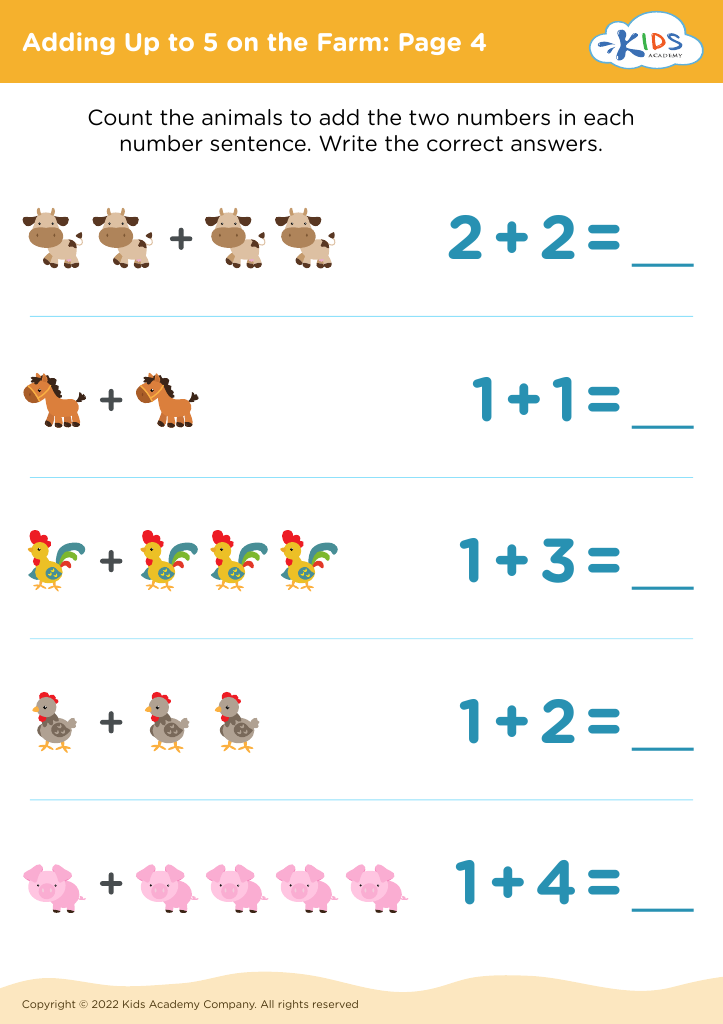
    Adding Up to 5 on the Farm: Page 4
    Adding Up to 5 on the Farm: Page 4
    Adding Up to 5 on the Farm: Page 4
    Worksheet
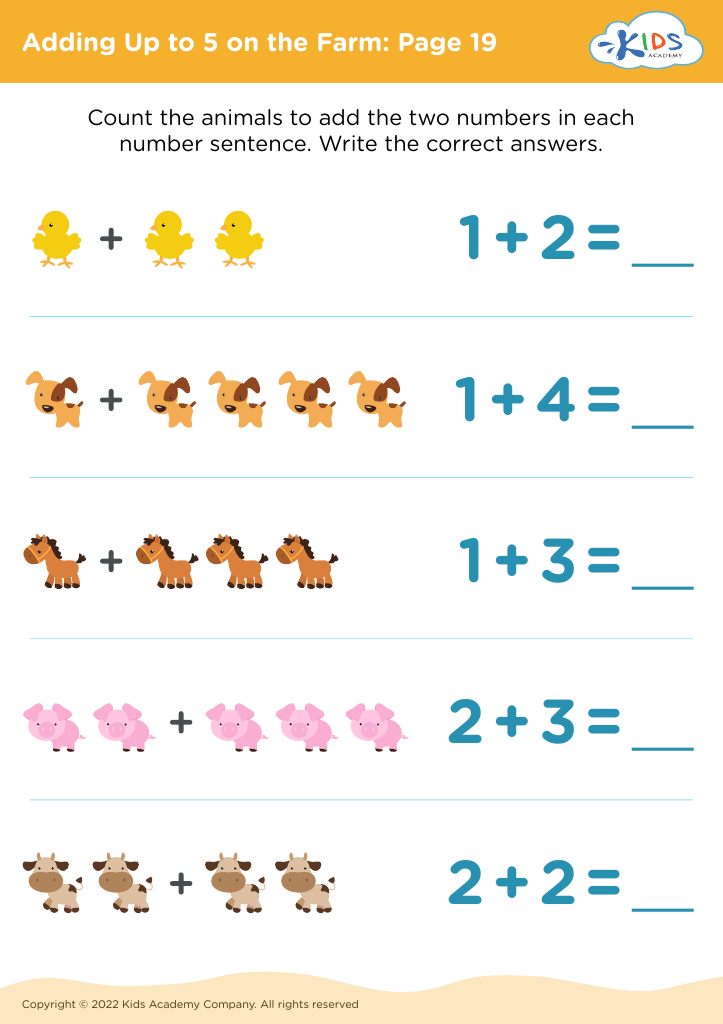
    Adding Up to 5 on the Farm: Page 19
    Adding Up to 5 on the Farm: Page 19
    Adding Up to 5 on the Farm: Page 19
    Worksheet
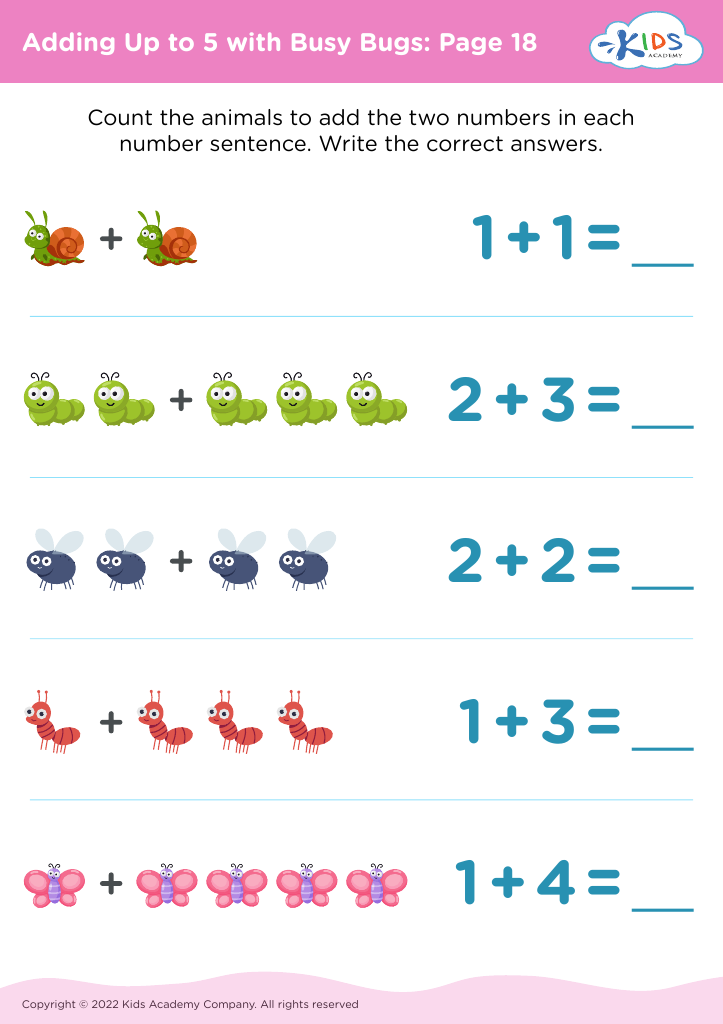
    Adding Up to 5 with Busy Bugs: Page 18
    Adding Up to 5 with Busy Bugs: Page 18
    Adding Up to 5 with Busy Bugs: Page 18
    Worksheet
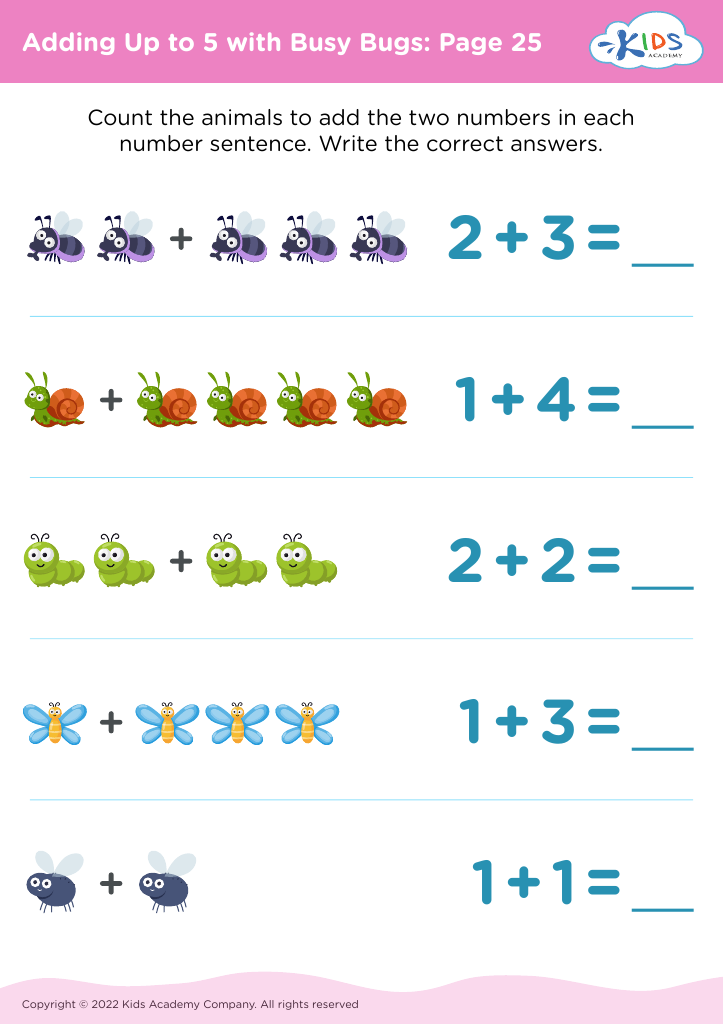
    Adding Up to 5 with Busy Bugs: Page 25
    Adding Up to 5 with Busy Bugs: Page 25
    Adding Up to 5 with Busy Bugs: Page 25
    Worksheet
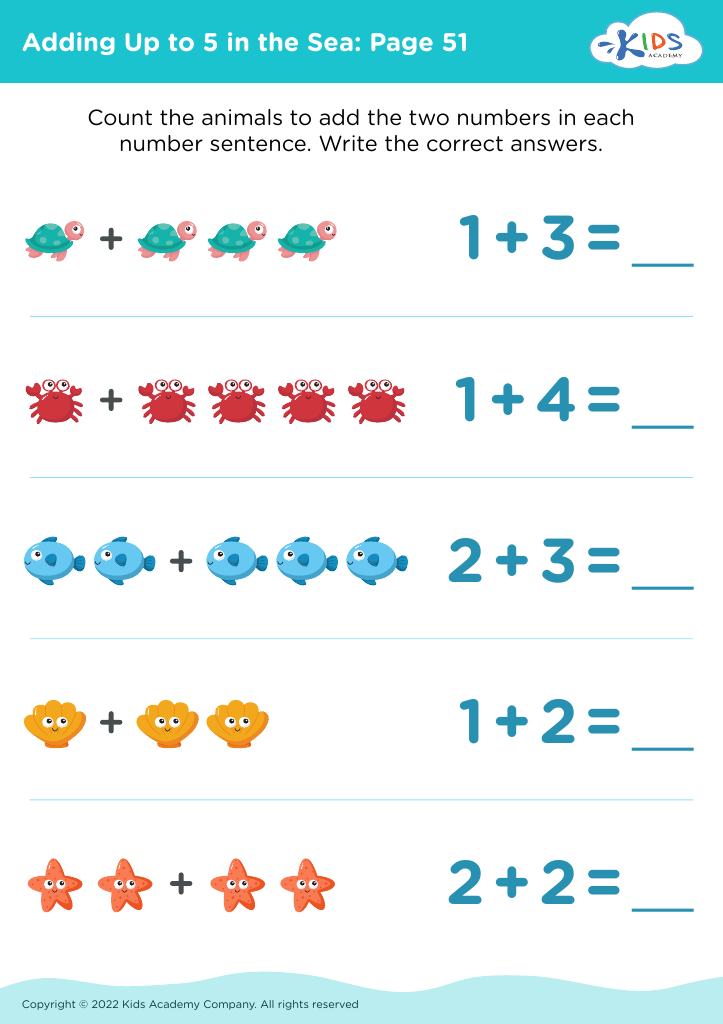
    Adding Up to 5 in the Sea: Page 51
    Adding Up to 5 in the Sea: Page 51
    Adding Up to 5 in the Sea: Page 51
    Worksheet
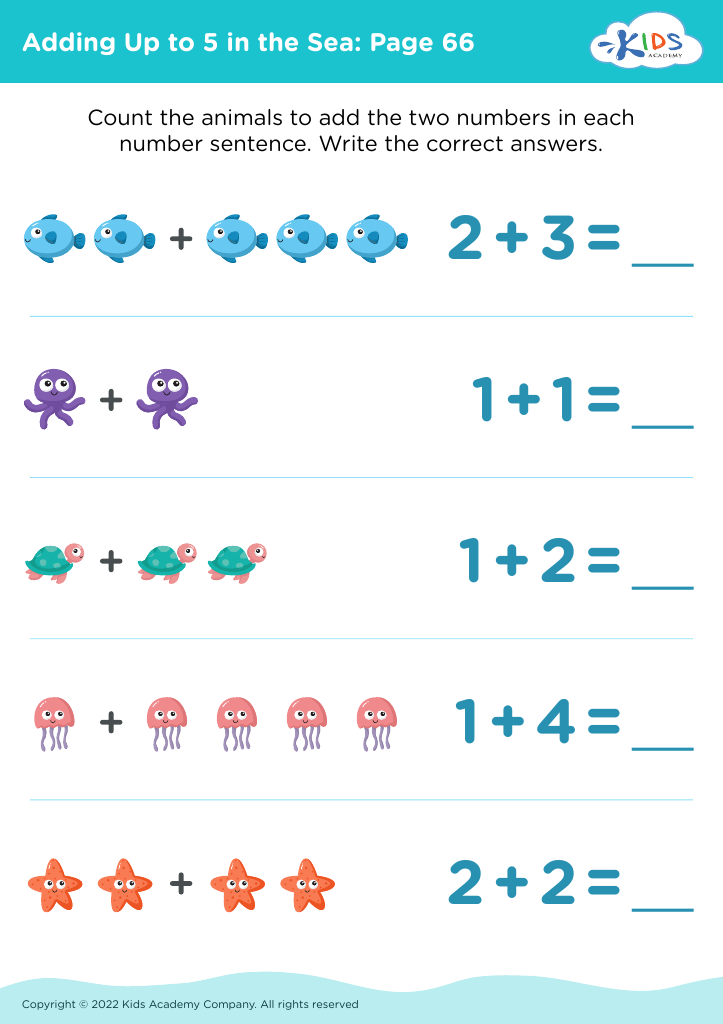
    Adding Up to 5 in the Sea: Page 66
    Adding Up to 5 in the Sea: Page 66
    Adding Up to 5 in the Sea: Page 66
    Worksheet
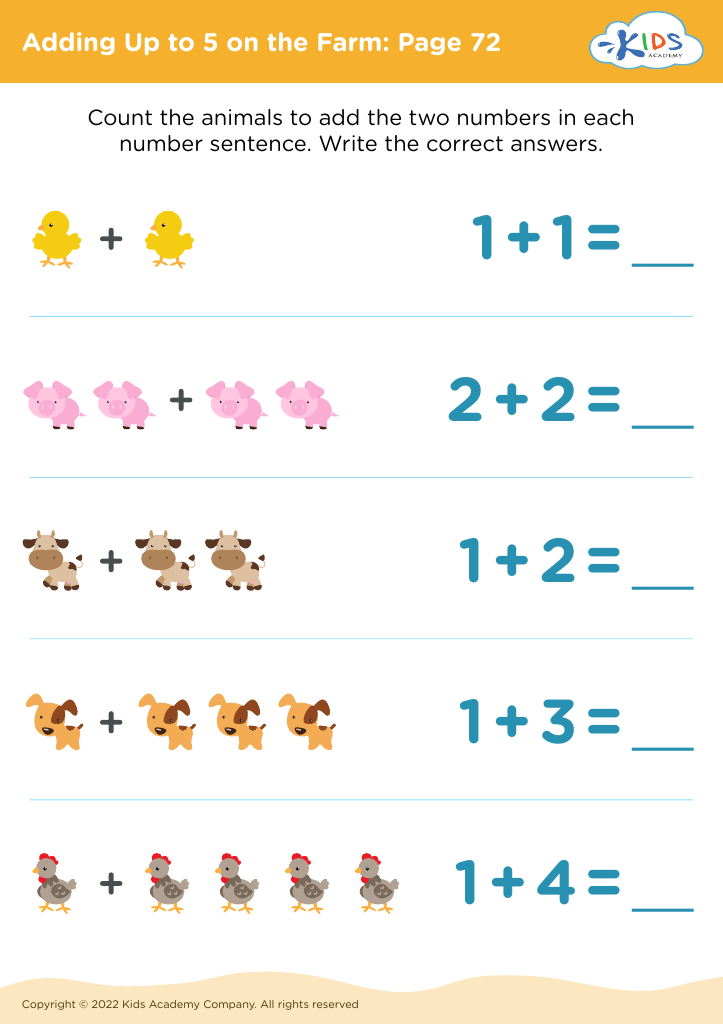
    Adding Up to 5 on the Farm: Page 72
    Adding Up to 5 on the Farm: Page 72
    Adding Up to 5 on the Farm: Page 72
    Worksheet
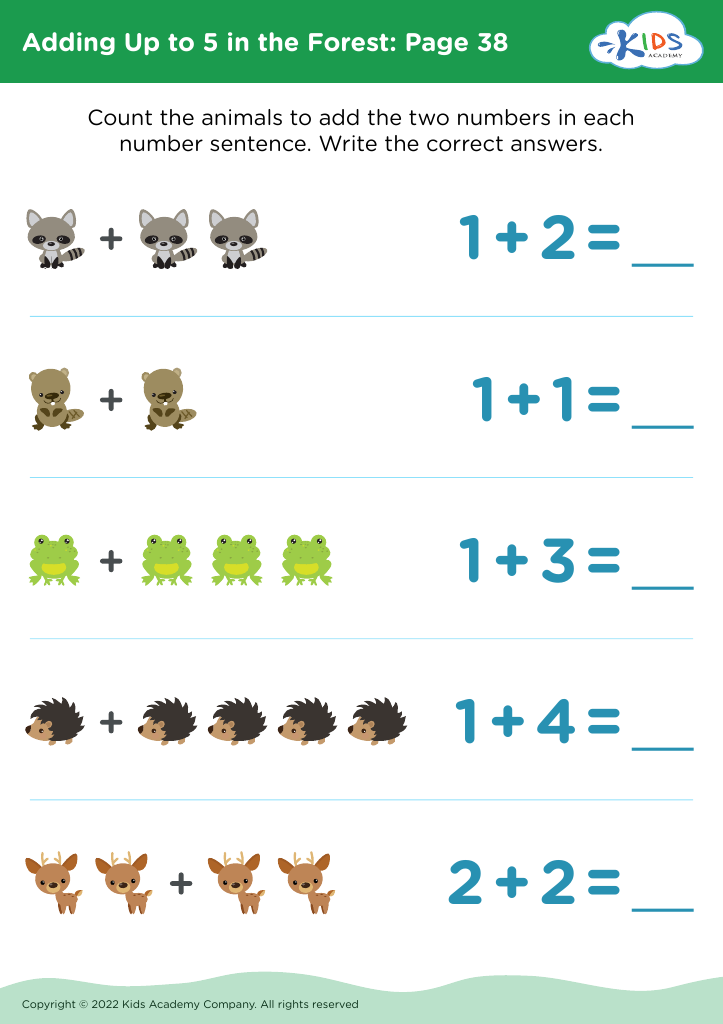
    Adding Up to 5 in the Forest: Page 38
    Adding Up to 5 in the Forest: Page 38
    Adding Up to 5 in the Forest: Page 38
    Worksheet
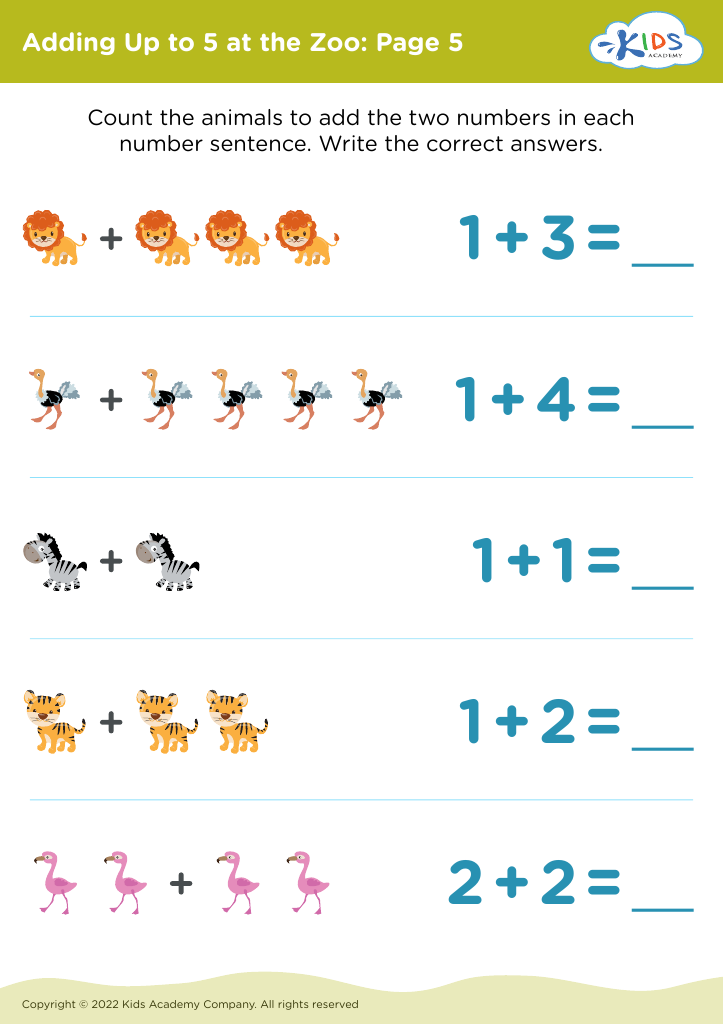
    Adding Up to 5 at the Zoo: Page 5
    Adding Up to 5 at the Zoo: Page 5

    Adding Up to 5 at the Zoo: Page 5

    Adding Up to 5 at the Zoo: Page 5
    Worksheet
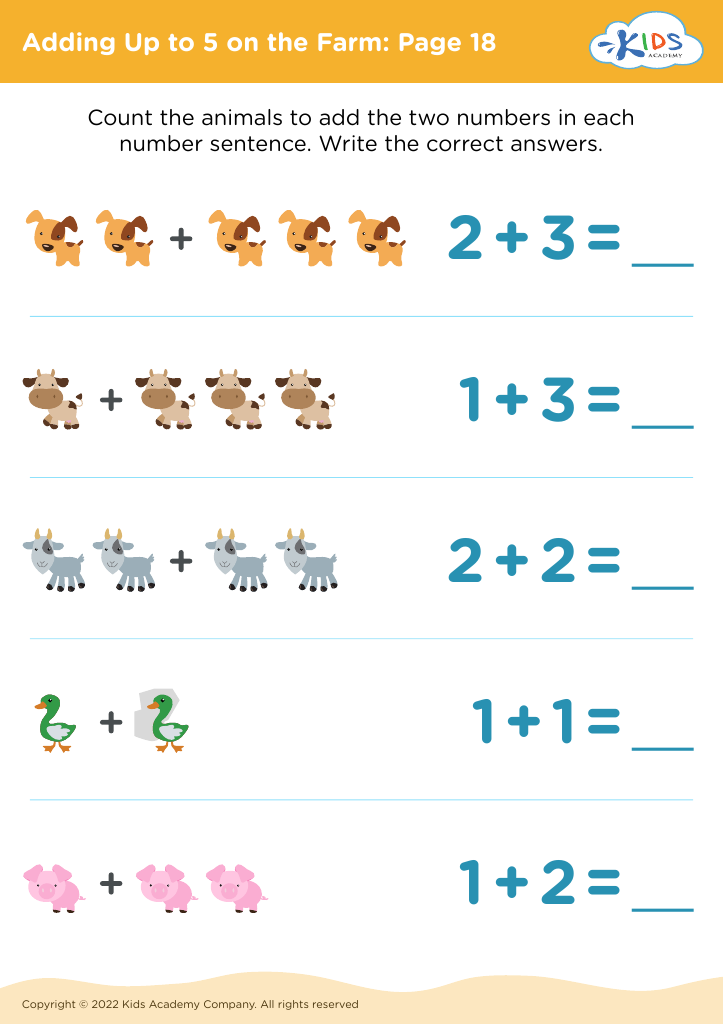
    Adding Up to 5 on the Farm: Page 18
    Adding Up to 5 on the Farm: Page 18
    Adding Up to 5 on the Farm: Page 18
    Worksheet
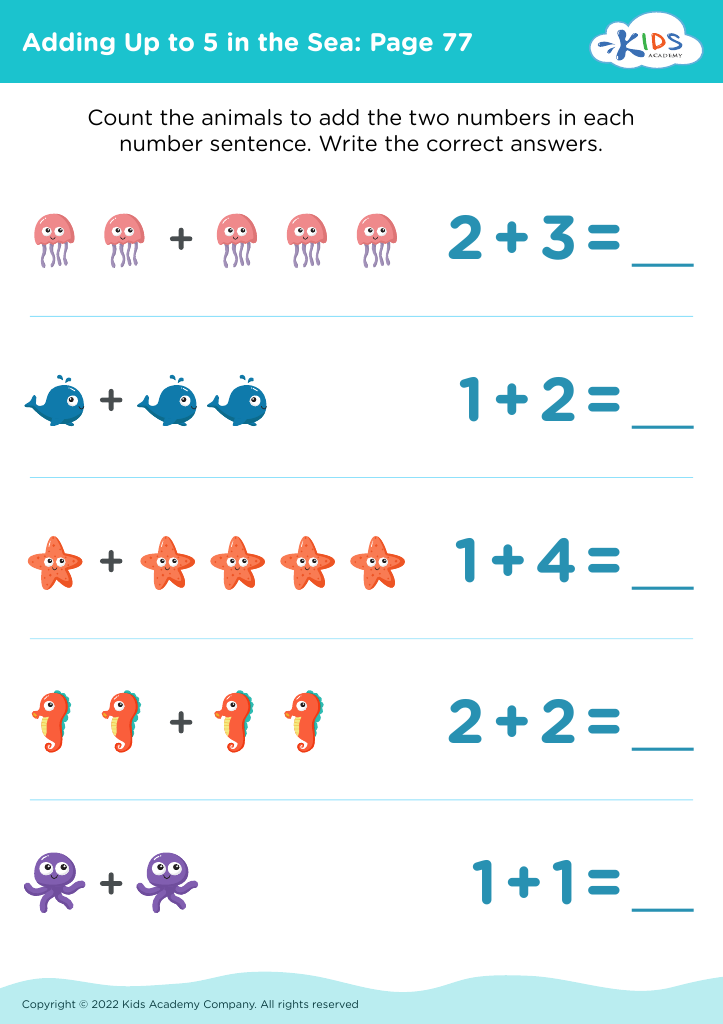
    Adding Up to 5 in the Sea: Page 77
    Adding Up to 5 in the Sea: Page 77
    Adding Up to 5 in the Sea: Page 77
    Worksheet
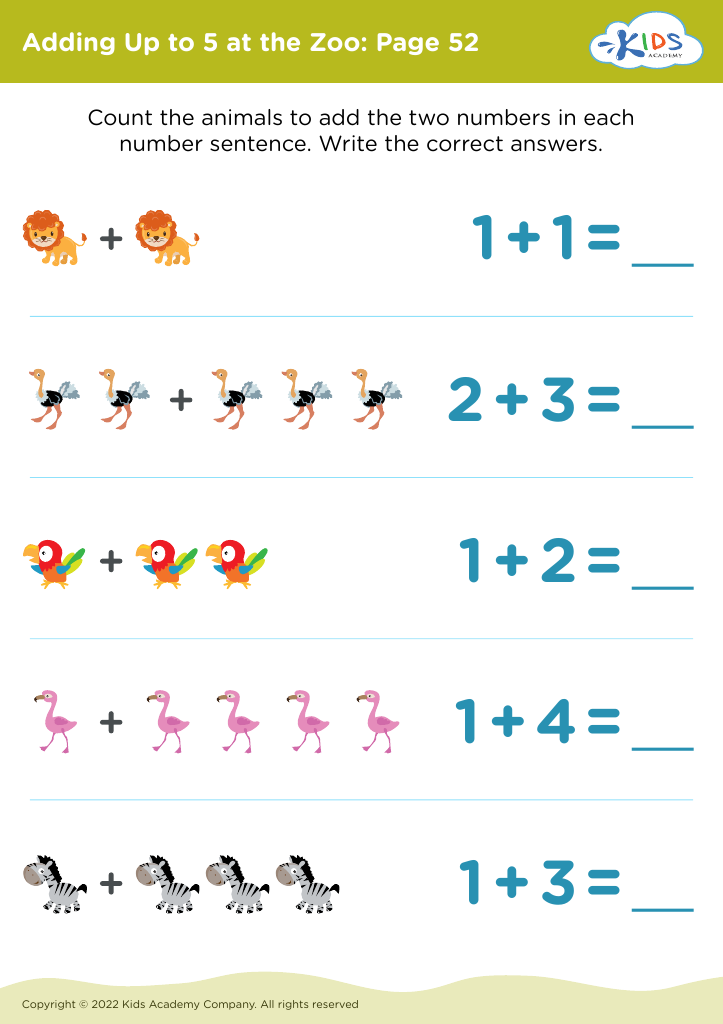
    Adding Up to 5 at the Zoo: Page 52
    Adding Up to 5 at the Zoo: Page 52
    Adding Up to 5 at the Zoo: Page 52
    Worksheet
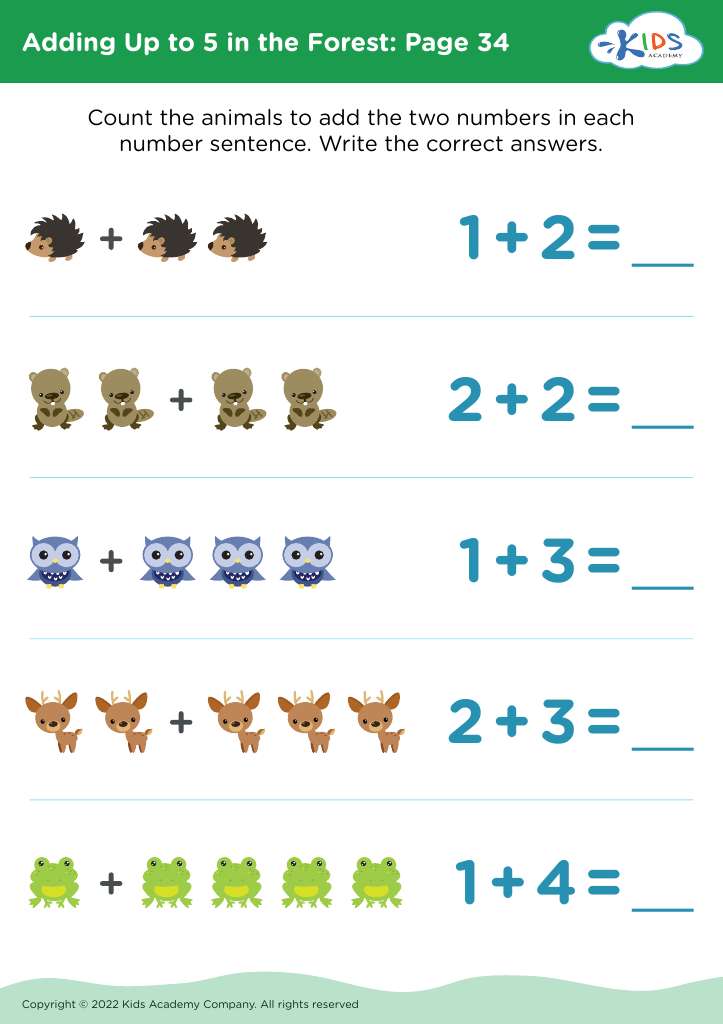
    Adding Up to 5 in the Forest: Page 34
    Adding Up to 5 in the Forest: Page 34
    Adding Up to 5 in the Forest: Page 34
    Worksheet
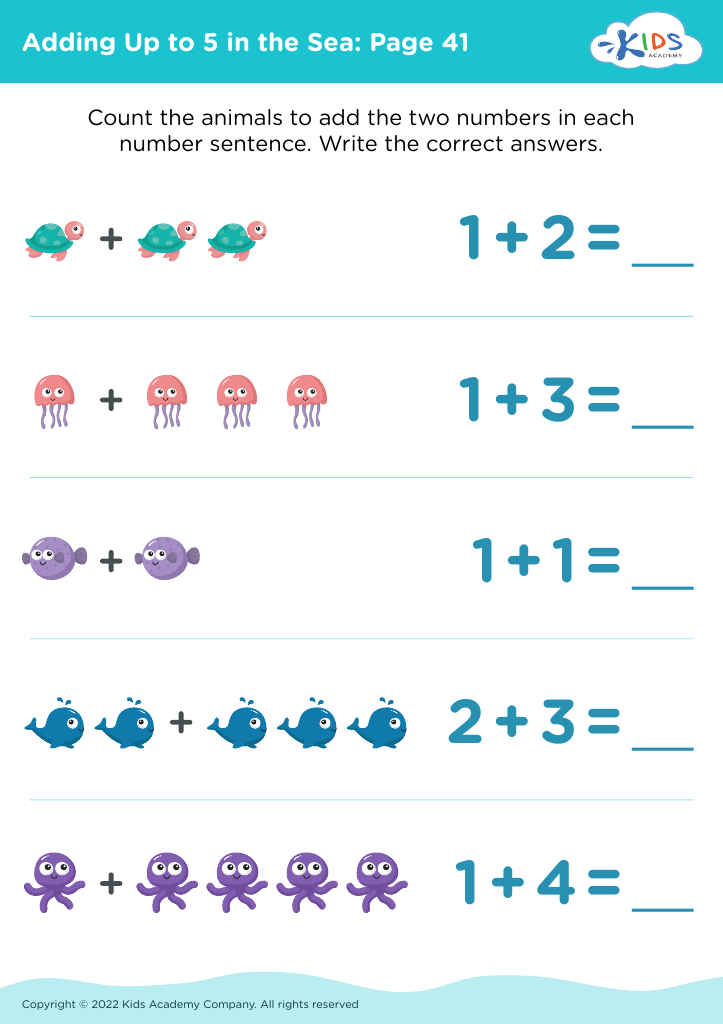
    Adding Up to 5 in the Sea: Page 41
    Adding Up to 5 in the Sea: Page 41
    Adding Up to 5 in the Sea: Page 41
    Worksheet
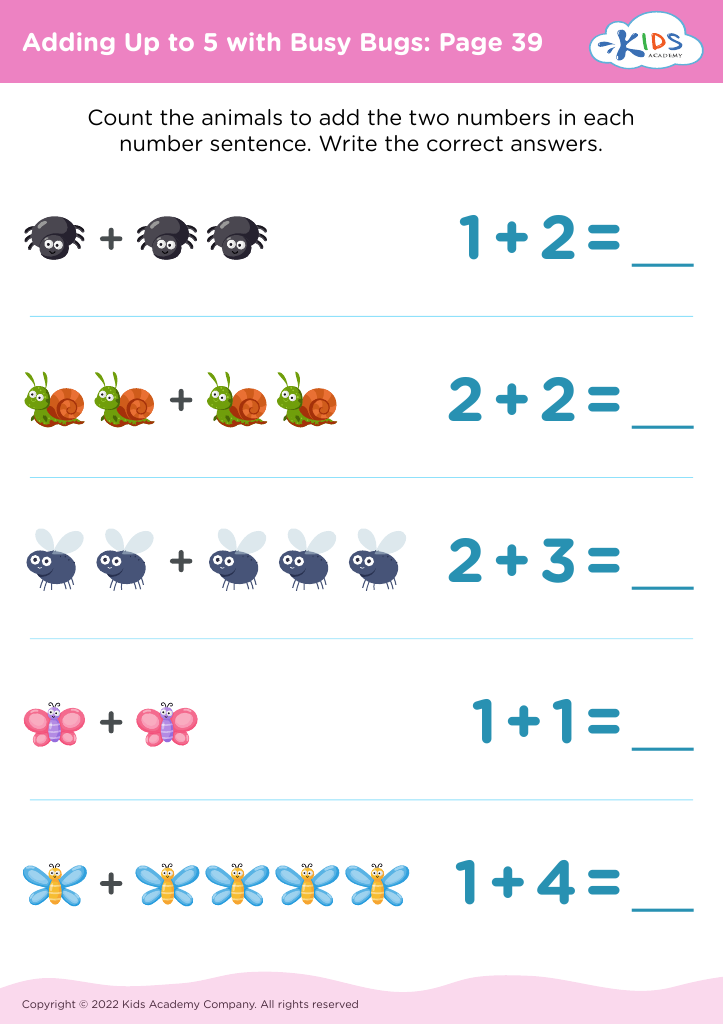
    Adding Up to 5 with Busy Bugs: Page 39
    Adding Up to 5 with Busy Bugs: Page 39
    Adding Up to 5 with Busy Bugs: Page 39
    Worksheet
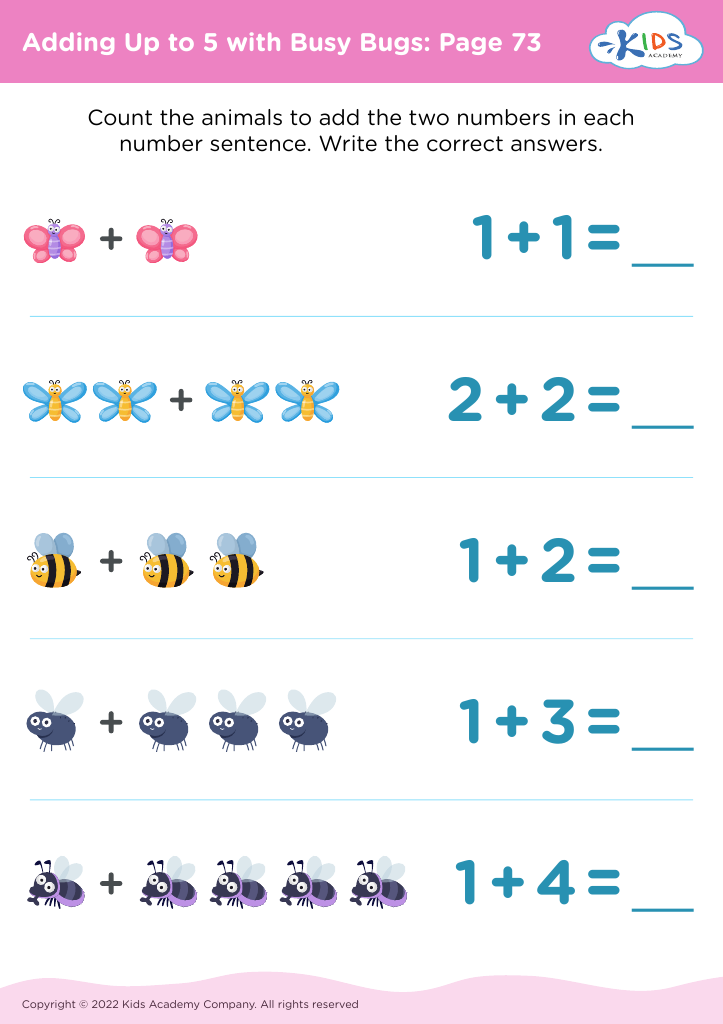
    Adding Up to 5 with Busy Bugs: Page 73
    Adding Up to 5 with Busy Bugs: Page 73
    Adding Up to 5 with Busy Bugs: Page 73
    Worksheet
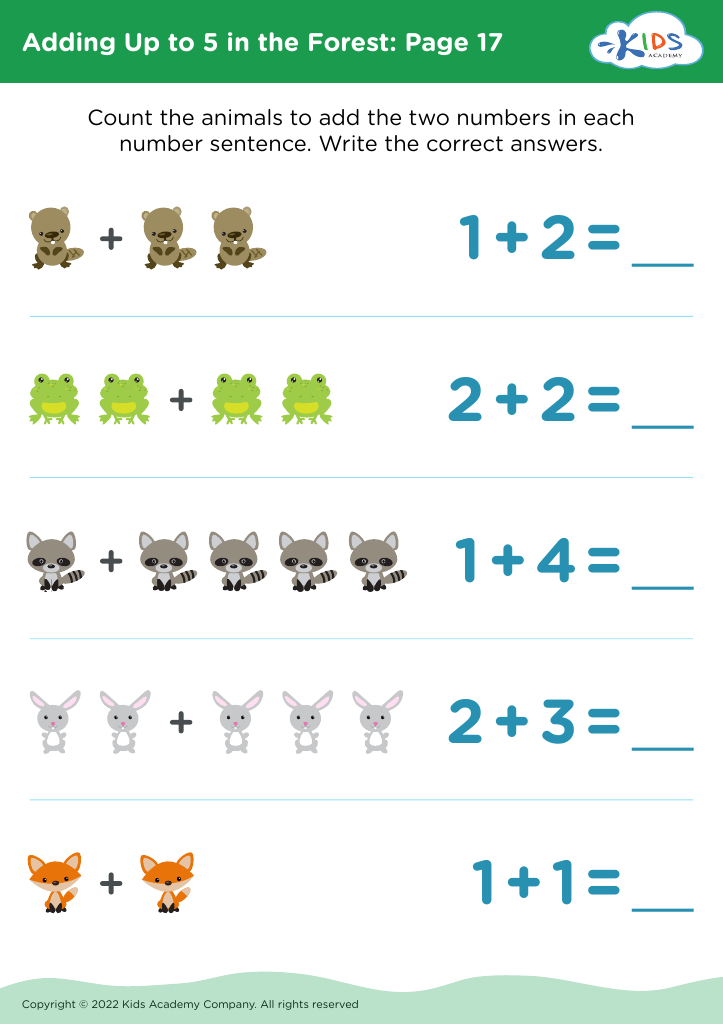
    Adding Up to 5 in the Forest: Page 17
    Adding Up to 5 in the Forest: Page 17
    Adding Up to 5 in the Forest: Page 17
    Worksheet
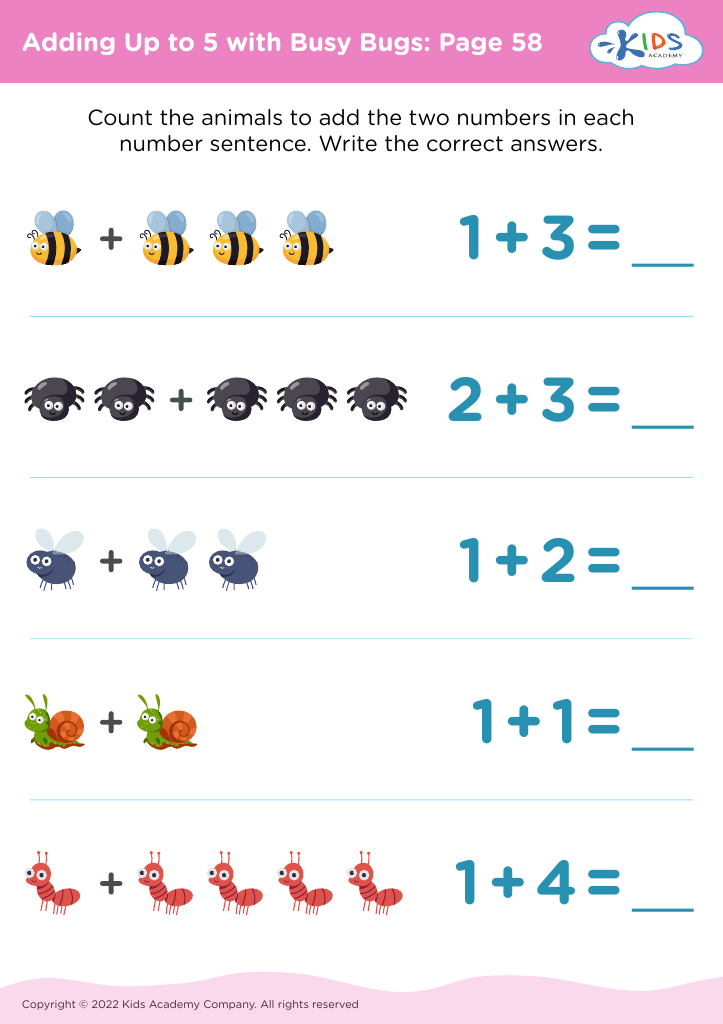
    Adding Up to 5 with Busy Bugs: Page 58
    Adding Up to 5 with Busy Bugs: Page 58
    Adding Up to 5 with Busy Bugs: Page 58
    Worksheet
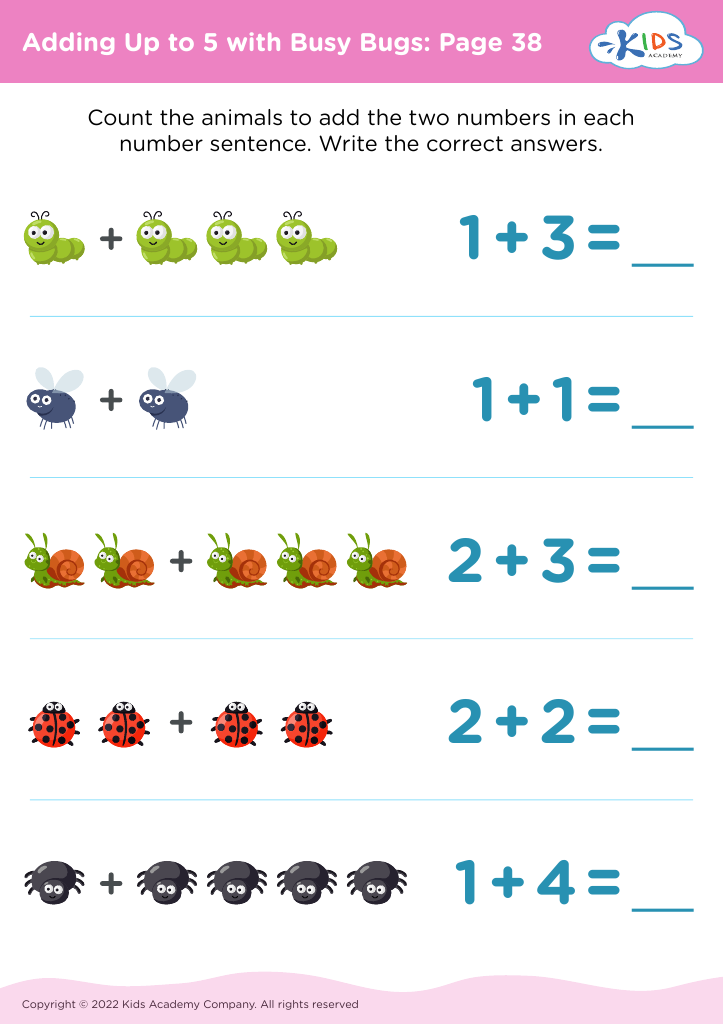
    Adding Up to 5 with Busy Bugs: Page 38
    Adding Up to 5 with Busy Bugs: Page 38
    Adding Up to 5 with Busy Bugs: Page 38
    Worksheet
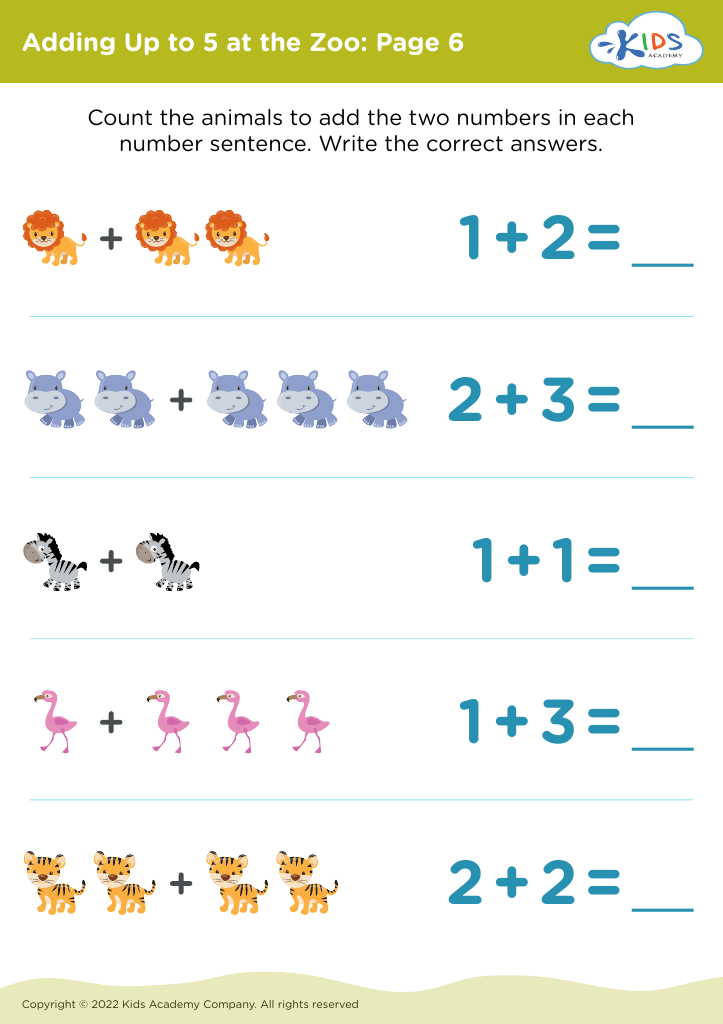
    Adding Up to 5 at the Zoo: Page 6
    Adding Up to 5 at the Zoo: Page 6

    Adding Up to 5 at the Zoo: Page 6

    Adding Up to 5 at the Zoo: Page 6
    Worksheet
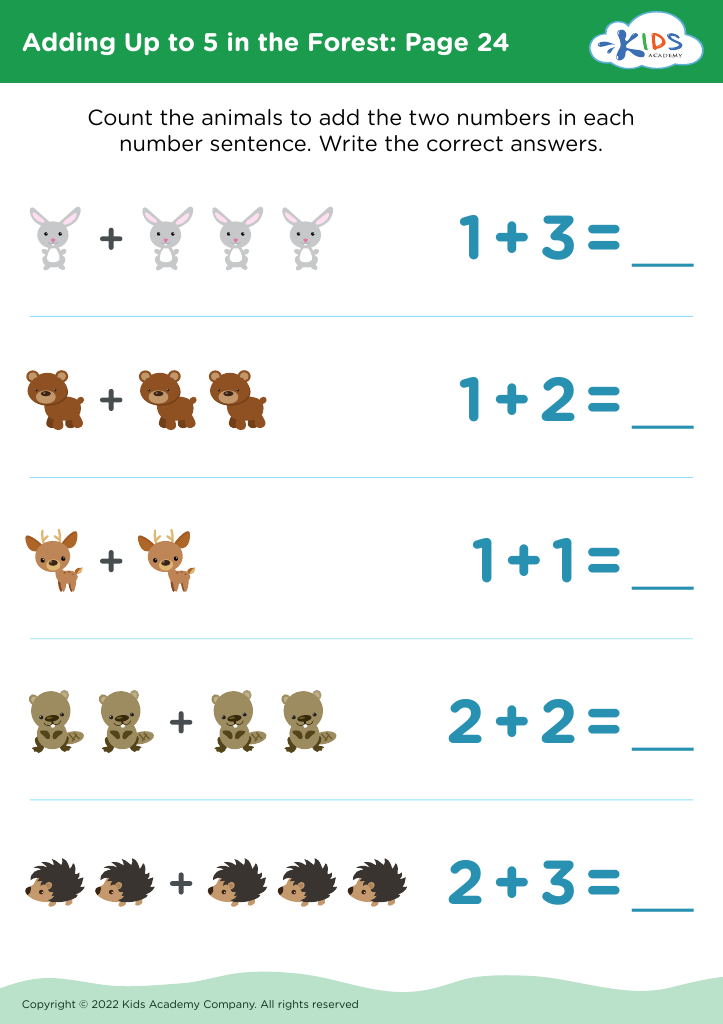
    Adding Up to 5 in the Forest: Page 24
    Adding Up to 5 in the Forest: Page 24
    Adding Up to 5 in the Forest: Page 24
    Worksheet
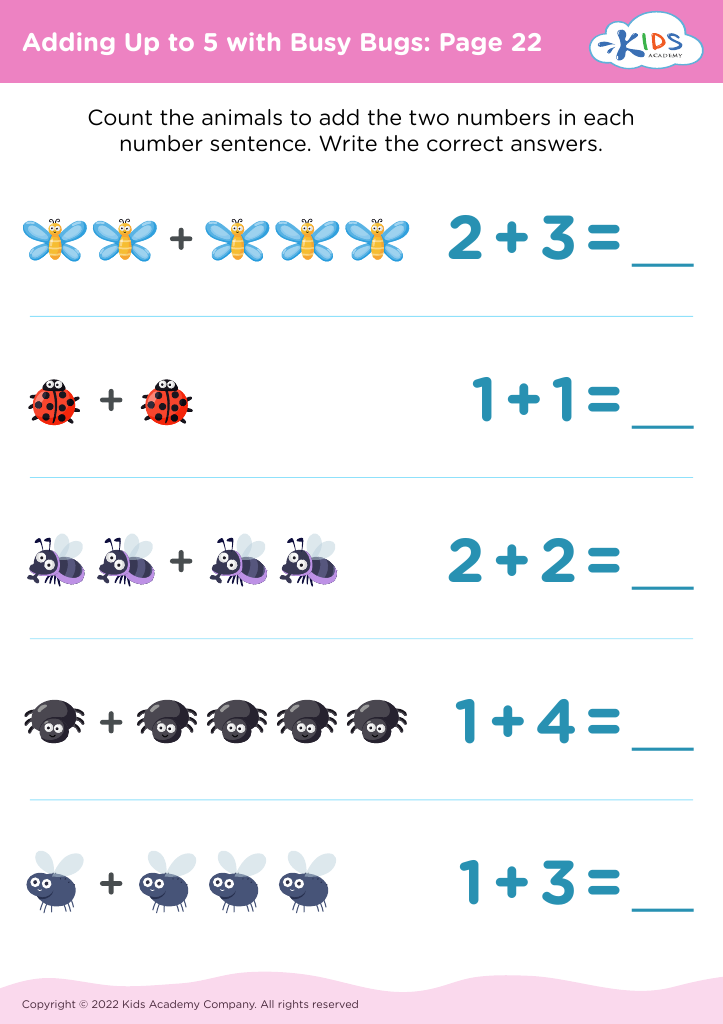
    Adding Up to 5 with Busy Bugs: Page 22
    Adding Up to 5 with Busy Bugs: Page 22
    Adding Up to 5 with Busy Bugs: Page 22
    Worksheet
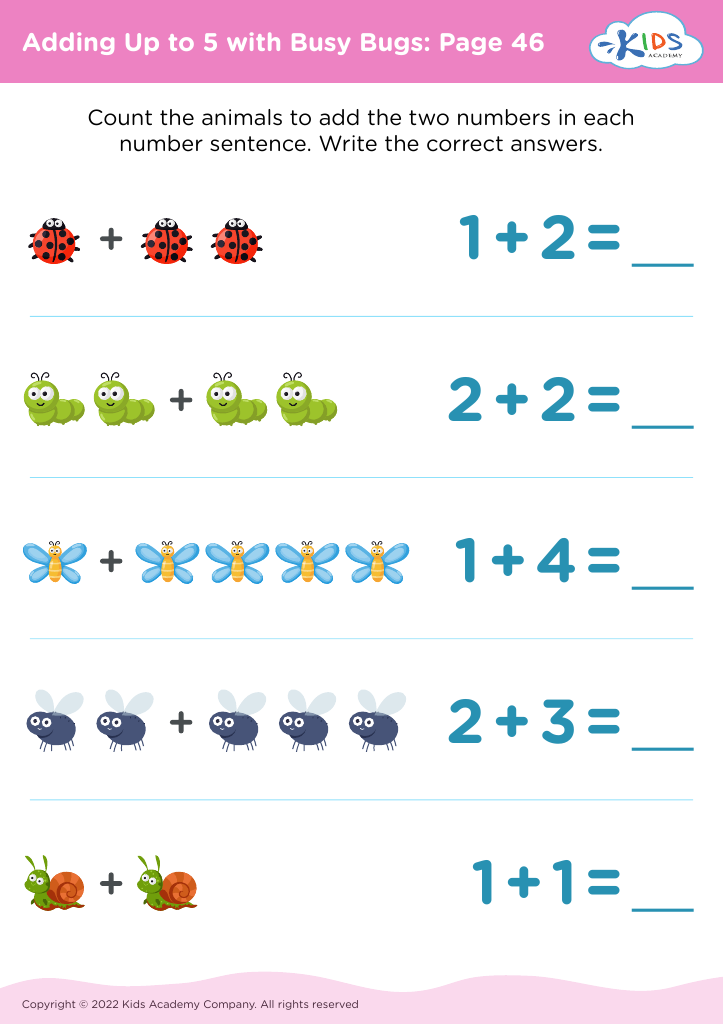
    Adding Up to 5 with Busy Bugs: Page 46
    Adding Up to 5 with Busy Bugs: Page 46
    Adding Up to 5 with Busy Bugs: Page 46
    Worksheet
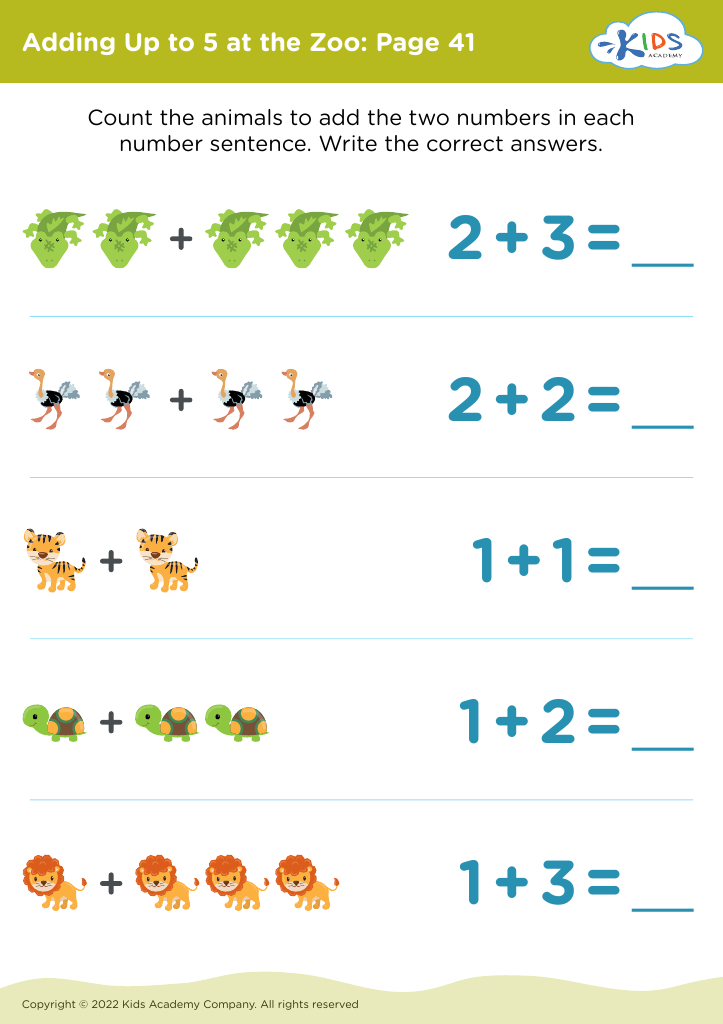
    Adding Up to 5 at the Zoo: Page 41
    Adding Up to 5 at the Zoo: Page 41
    Adding Up to 5 at the Zoo: Page 41
    Worksheet


    Number recognition and the ability to add up to 5 are crucial foundational skills for children aged 5-8. At this developmental stage, children are honing their understanding of numbers, which serves as a building block for more advanced mathematical concepts. By recognizing numbers and grasping simple addition, children enhance their cognitive abilities, improve problem-solving skills, and build confidence in their mathematical knowledge.

    Parents and teachers should prioritize number recognition and simple addition for several reasons. Firstly, these skills foster a child's ability to make sense of the world around them, aiding in the development of critical thinking. Secondly, early mastery of number recognition sets the stage for subsequent mathematical learning, including greater understanding of addition and subtraction, place value, and even patterns and sequencing.

    Moreover, engaging in activities that strengthen these skills can make learning fun and interactive, promoting a positive attitude toward math. This confidence can have long-lasting effects, encouraging children to tackle more complex math concepts without fear or anxiety. Ultimately, emphasizing number recognition and simple addition empowers young learners, ensuring they have the tools necessary for academic success and daily life skills.