Filters

36 filtered results

Clear all filters
Favorites
With answer key
Interactive

36 filtered results

Difficulty Level

Grade


Check out this FREE Trial Lesson on Adding Up to 5 for age 5-8!

T

Favorites
With answer key
Interactive
  • 5-8
  • Understanding Quantities
  • Adding Up to 5
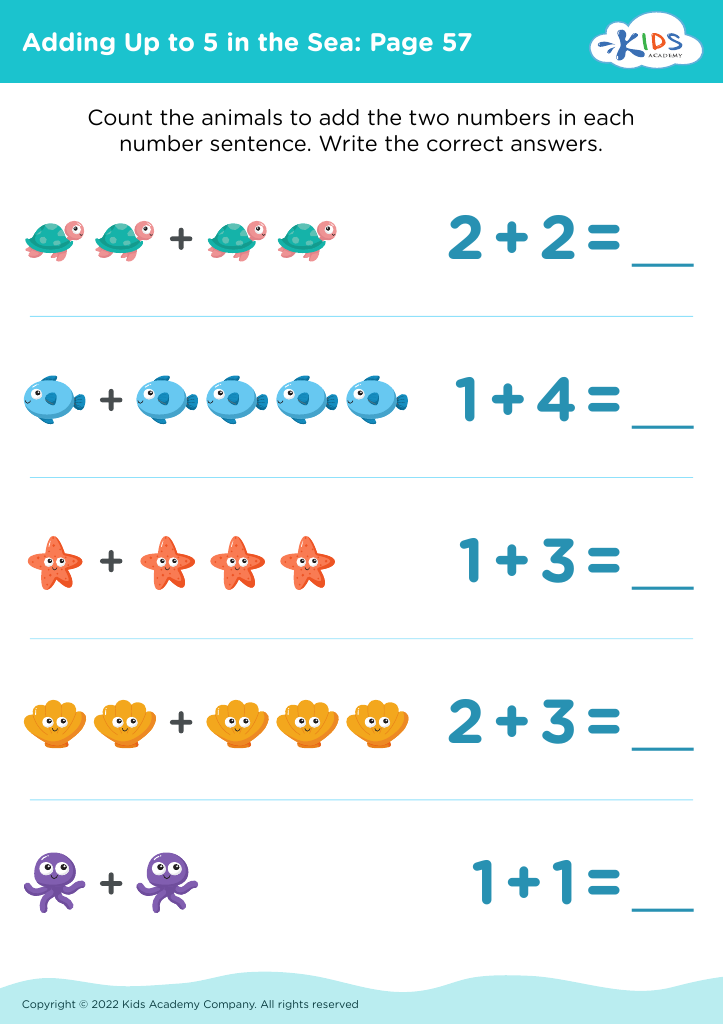
Adding Up to 5 in the Sea: Page 57
Worksheet
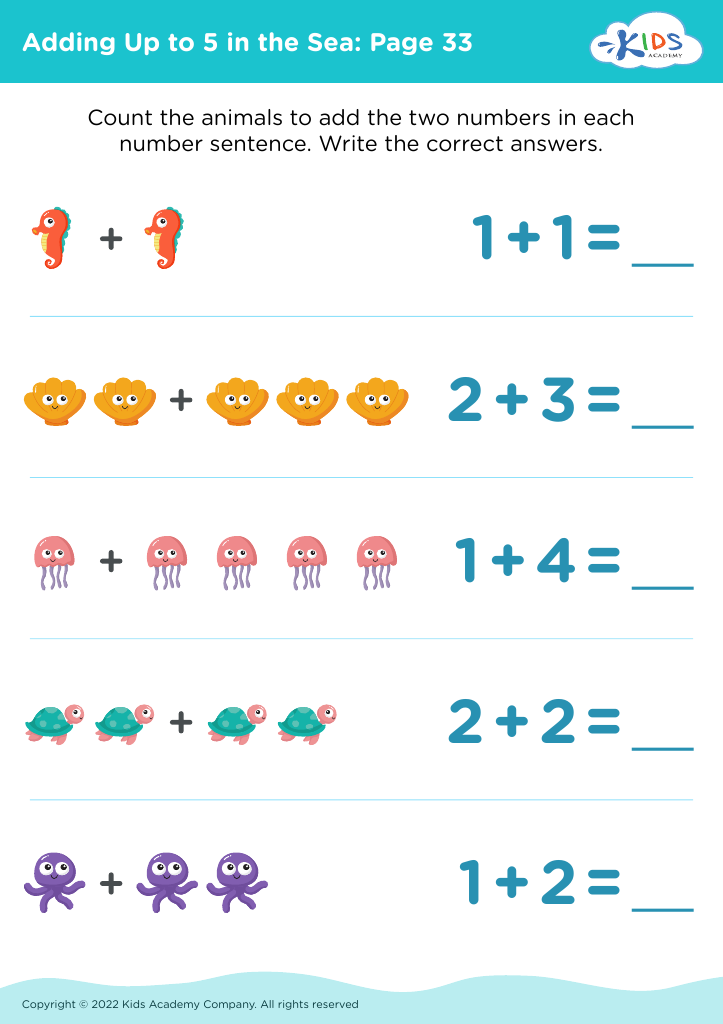
Adding Up to 5 in the Sea: Page 33
Worksheet
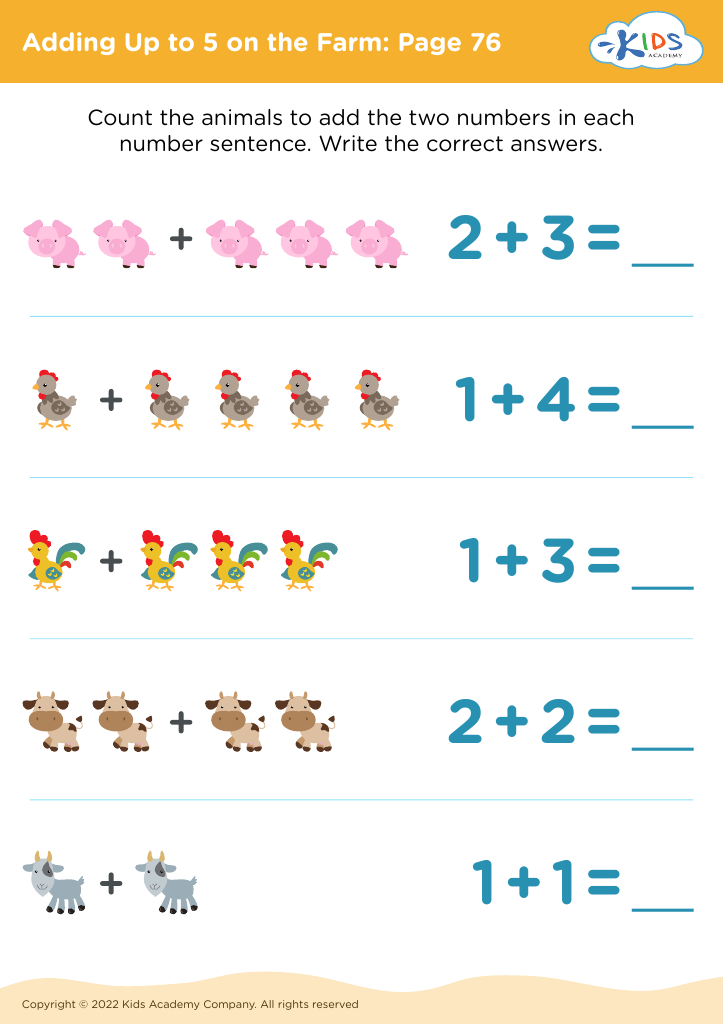
Adding Up to 5 on the Farm: Page 76
Worksheet
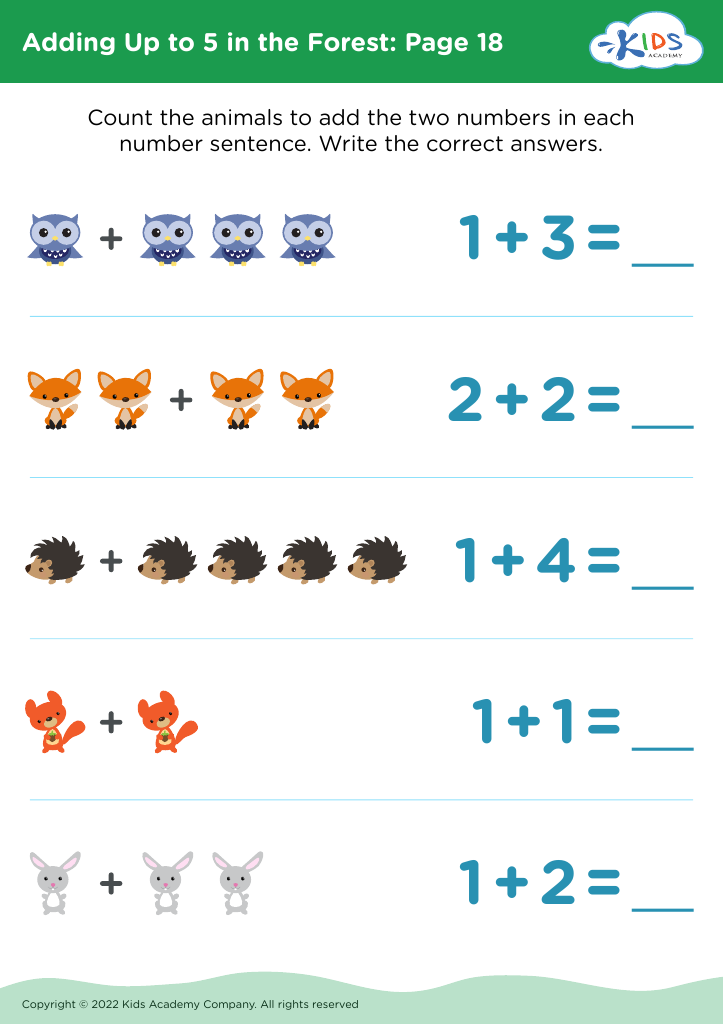
Adding Up to 5 in the Forest: Page 18
Worksheet
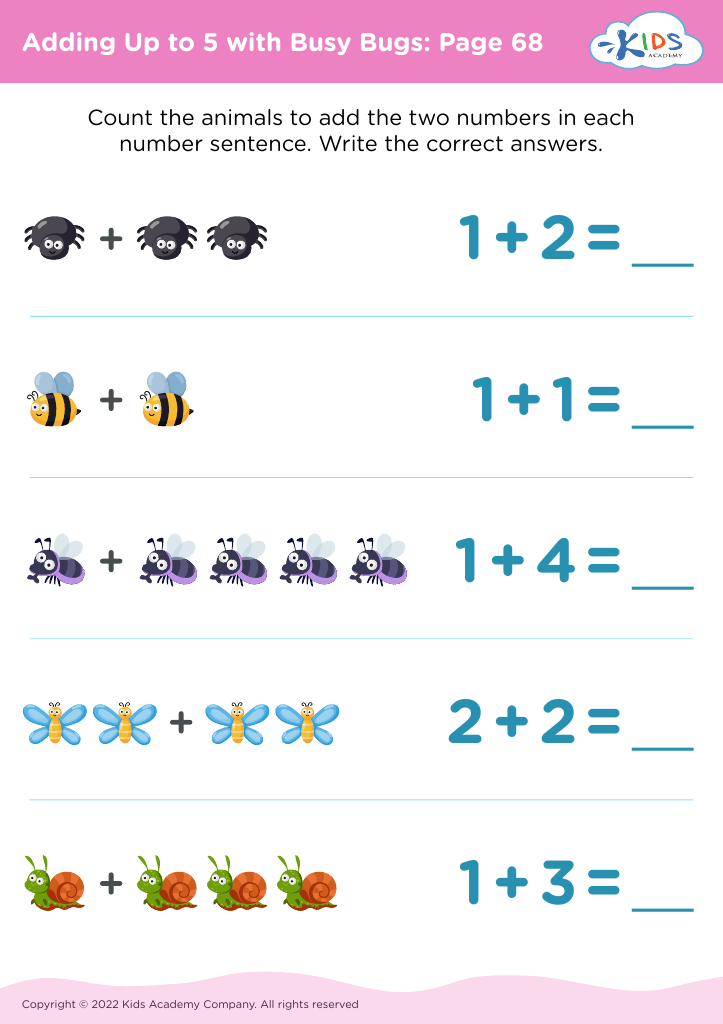
Adding Up to 5 with Busy Bugs: Page 68
Worksheet
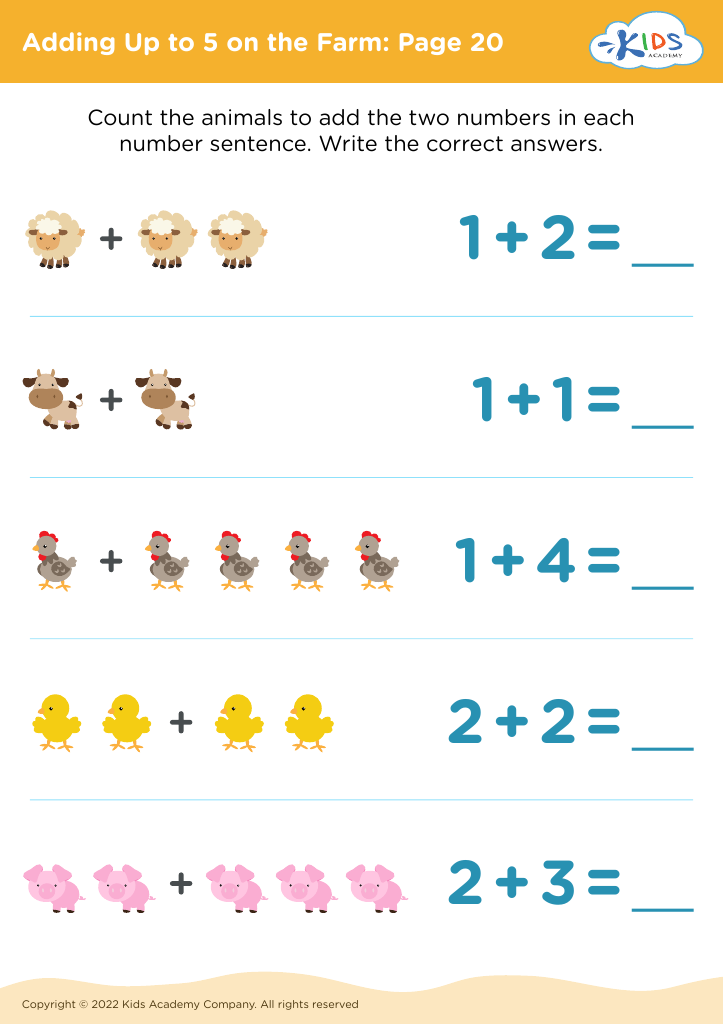
Adding Up to 5 on the Farm: Page 20
Worksheet
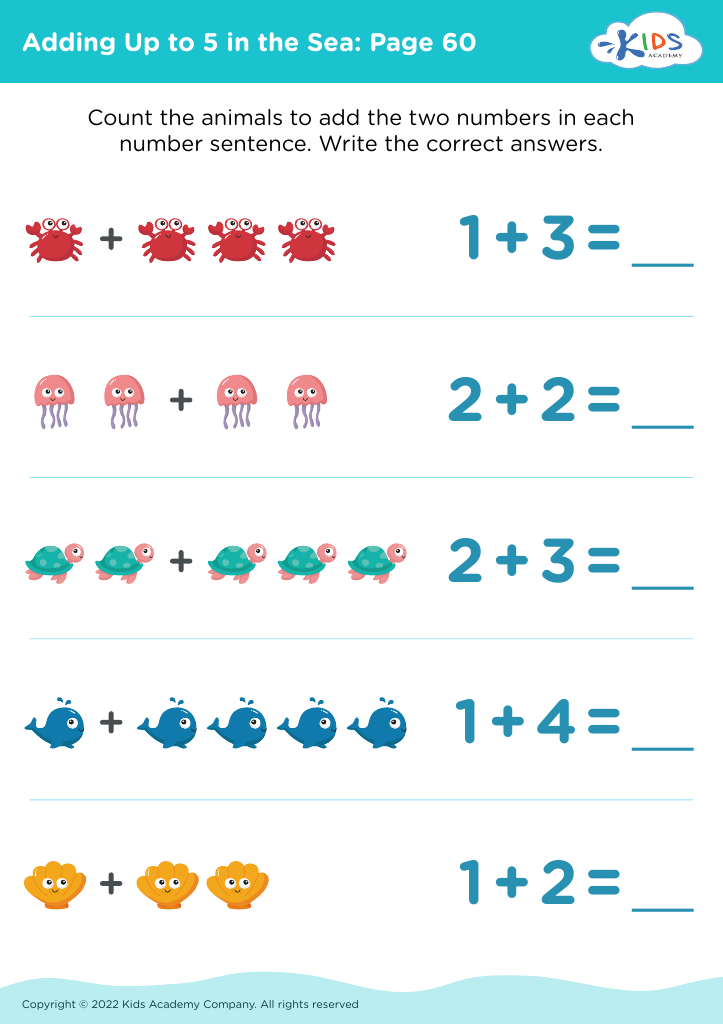
Adding Up to 5 in the Sea: Page 60
Worksheet
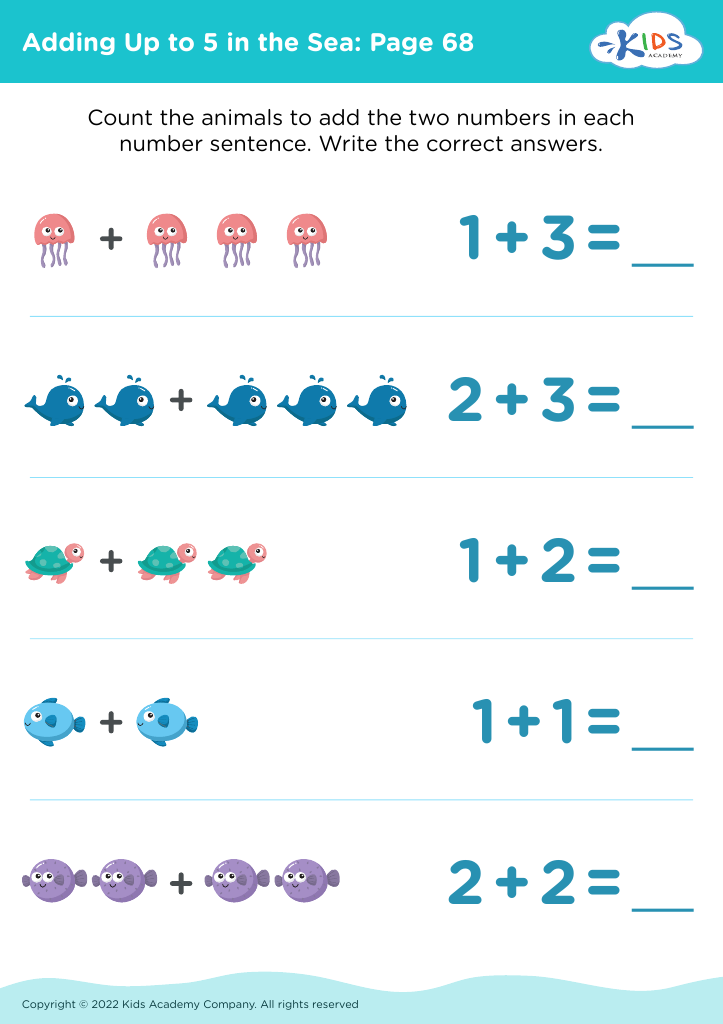
Adding Up to 5 in the Sea: Page 68
Worksheet
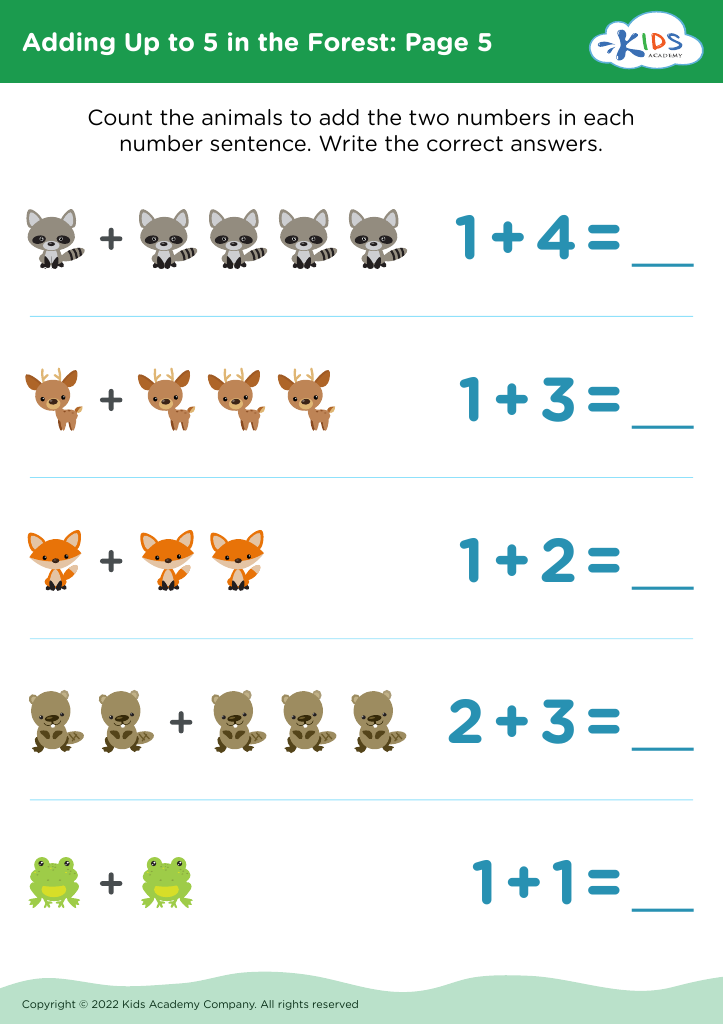
Adding Up to 5 in the Forest: Page 5
Worksheet
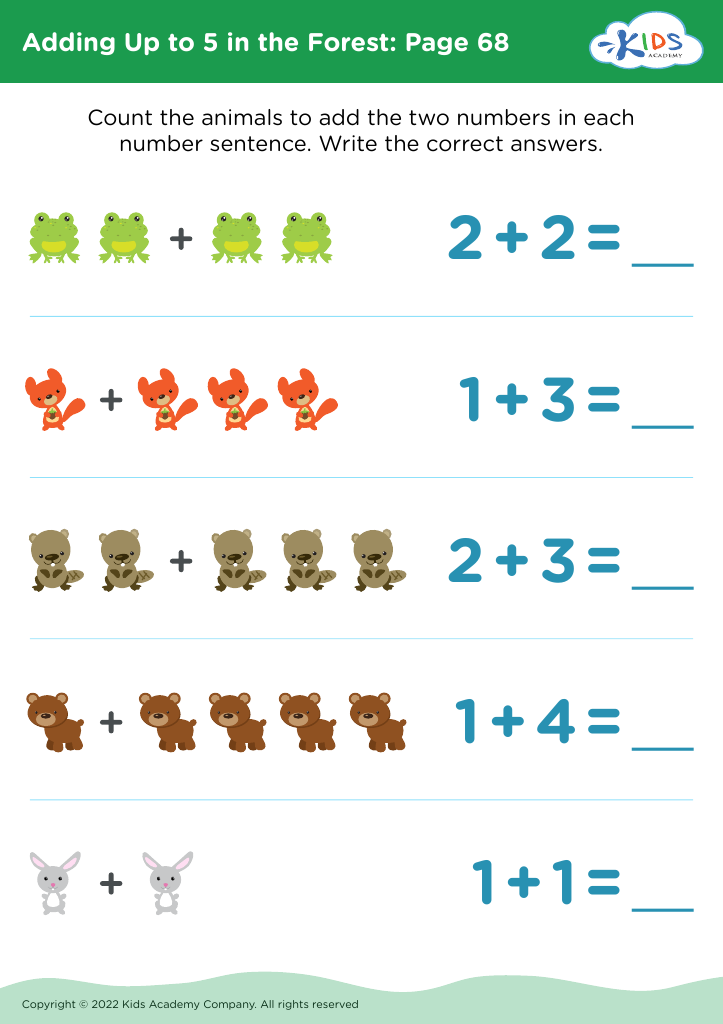
Adding Up to 5 in the Forest: Page 68
Worksheet
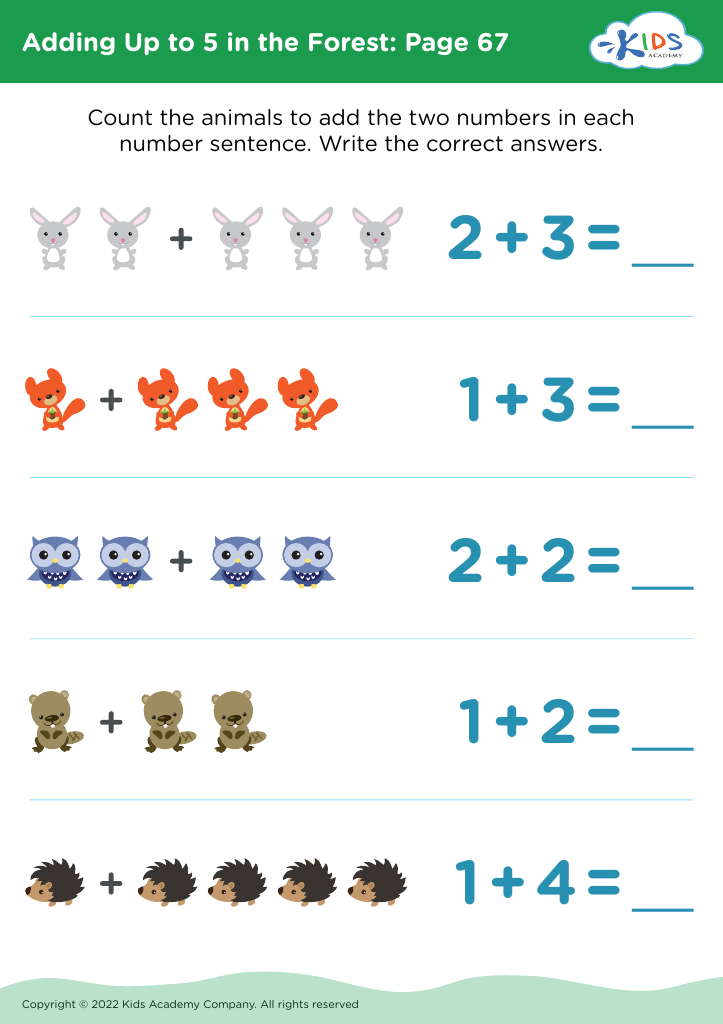
Adding Up to 5 in the Forest: Page 67
Worksheet
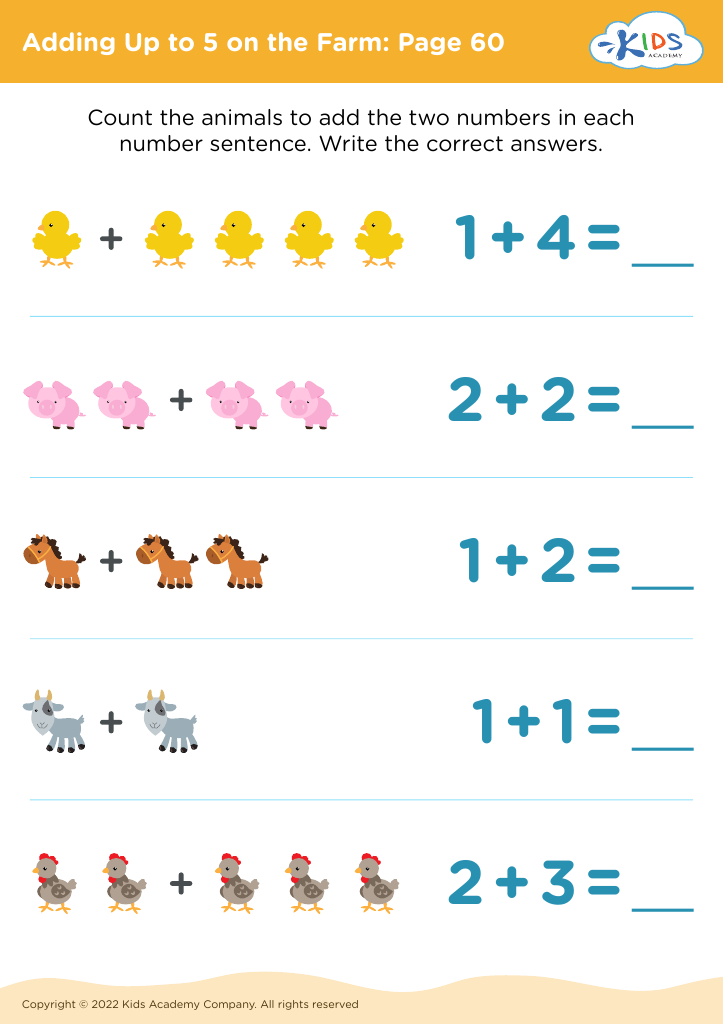
Adding Up to 5 on the Farm: Page 60
Worksheet


Understanding quantities adding up to 5 for children ages 5-8 is crucial because it lays the groundwork for more advanced mathematical concepts. At this young age, children are developing concrete operational thought processes as described by Jean Piaget, which means they are beginning to understand and manipulate numbers logically. Comprehension of how quantities add up to five offers several educational benefits.

Firstly, it helps youngsters grasp basic arithmetic skills. Knowing various combinations to make 5 enhances their addition and subtraction abilities, fostering a solid number sense foundation. For instance, if they know that 2 and 3 make 5, they can also deduce that 5 minus 3 is 2.

Secondly, this skill promotes problem-solving and critical thinking. When children can efficiently recognize number pairs that sum up to 5, they practice breaking down problems and finding solutions, skills relevant not just in math but across various subjects and life situations.

Additionally, mastering small quantities builds confidence. Early success with simple numbers fosters a positive attitude towards math, encouraging children to tackle tougher problems later. It also aligns with education standards and curriculum goals, ensuring children are on the right track academically.

In short, teaching quantities adding up to five is a fundamental step in early math education, setting the stage for future academic and everyday success.