Underwater animal identification Adding Up to 5 Worksheets for Ages 5-8
3 filtered results
-
From - To
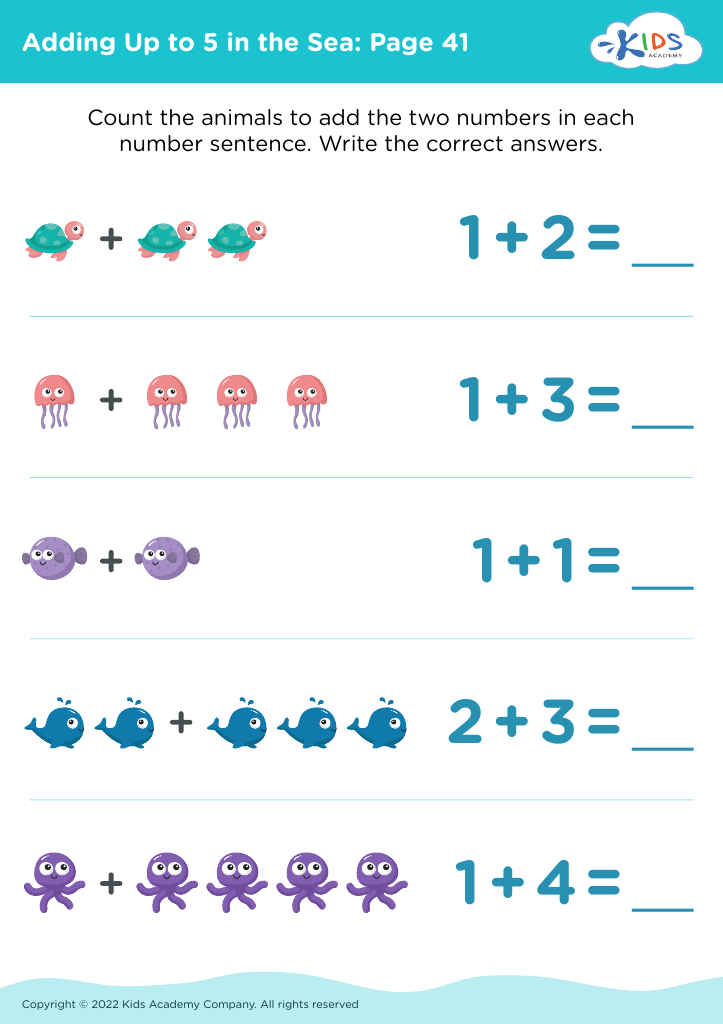
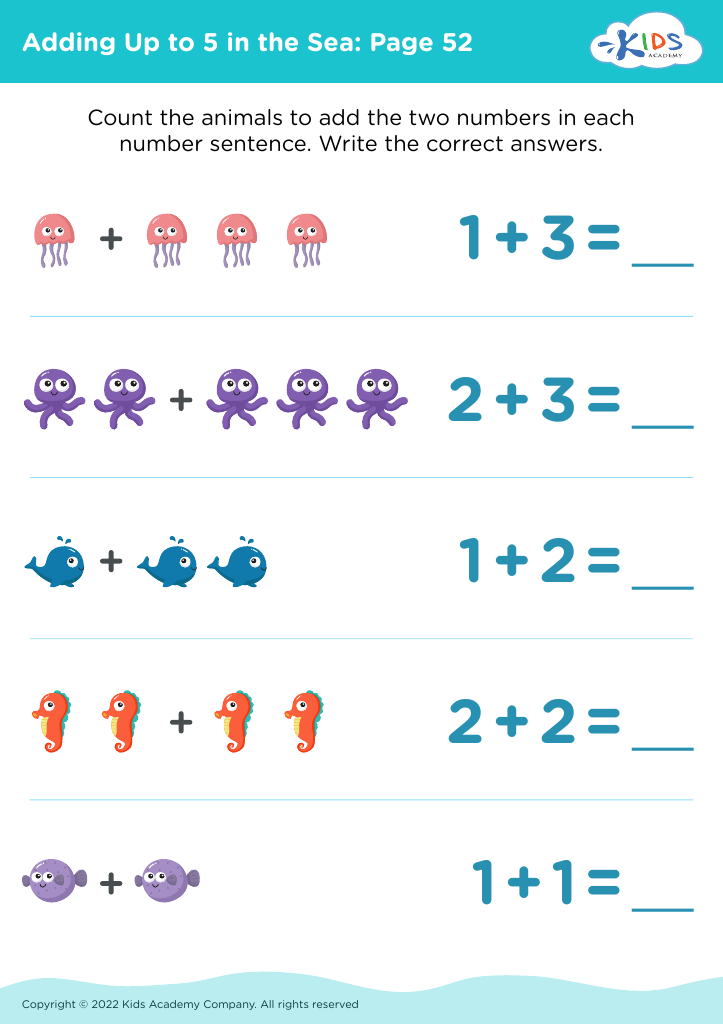
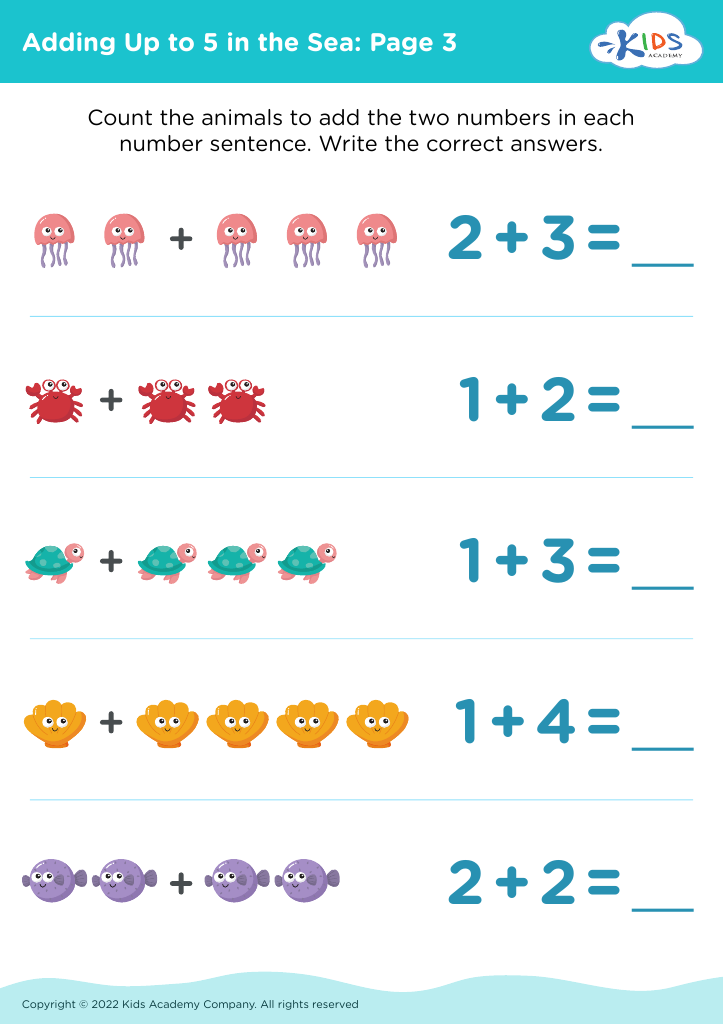
Dive into adventurous learning with our "Underwater Animal Identification Adding Up to 5 Worksheets" designed for ages 5-8! These engaging worksheets combine math practice with the captivating world of underwater creatures. Your child will develop essential addition skills by summing numbers up to 5, all while identifying fascinating marine animals. Each worksheet features colorful illustrations and fun activities that boost counting expertise and reinforce knowledge of underwater animal life. Perfect for young learners, these printables make learning enjoyable and effective. Explore the wonders beneath the sea while honing early math skills. Download now for free at Kids Academy and watch your child thrive!


.jpg)



%20(1).jpg)

Underwater animal identification Adding Up to 5 is an engaging way for young children to learn basic math skills while expanding their knowledge about marine life. For children ages 5-8, connecting abstract mathematical concepts to tangible and exciting subjects, like underwater animals, can make learning more enjoyable and meaningful.
Parents and teachers should care about this method because it leverages curiosity and interest in the natural world to facilitate foundational arithmetic skills. When children apply counting and addition to identify and categorize underwater creatures, they develop a deeper understanding of numbers and their relationships. This kind of applied learning can promote greater retention and a genuine interest in both math and the environment.
Additionally, integrating science and math in early education helps foster critical thinking and problem-solving abilities. Learning about underwater animals also broadens children’s awareness and appreciation of biodiversity, encouraging curiosity, and empathy towards marine life and issues like ocean conservation.
Finally, such interdisciplinary activities support holistic development, combining cognitive, social, and emotional growth. When learning is fun and diverse, children are more likely to stay engaged and motivated, setting a positive foundation for future educational pursuits. In summary, using underwater animal identification Adding Up to 5 effectively merges essential learning areas, enriching the educational experience for young children.








