Color Identification Adding up to 50 Worksheets for Ages 5-8
7 filtered results
-
From - To
Discover our engaging "Color Identification Adding up to 50 Worksheets" designed for children aged 5-8! These thoughtfully crafted worksheets integrate color recognition with foundational math skills, providing a fun and interactive way for young learners to practice addition while exploring vibrant colors. Each worksheet helps children sharpen their color identification abilities as they solve addition problems that total up to 50. Perfect for at-home reinforcement or classroom activities, our resources foster creativity, critical thinking, and early numeracy in an enjoyable manner. Download now to inspire your child's learning journey through colorful, hands-on educational experiences!
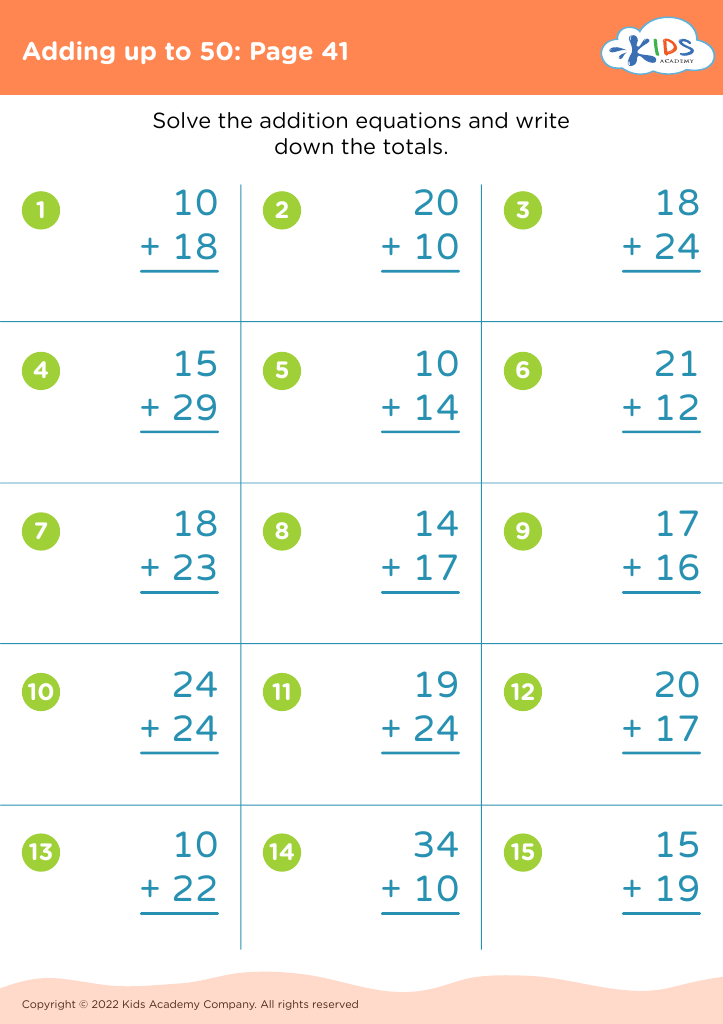
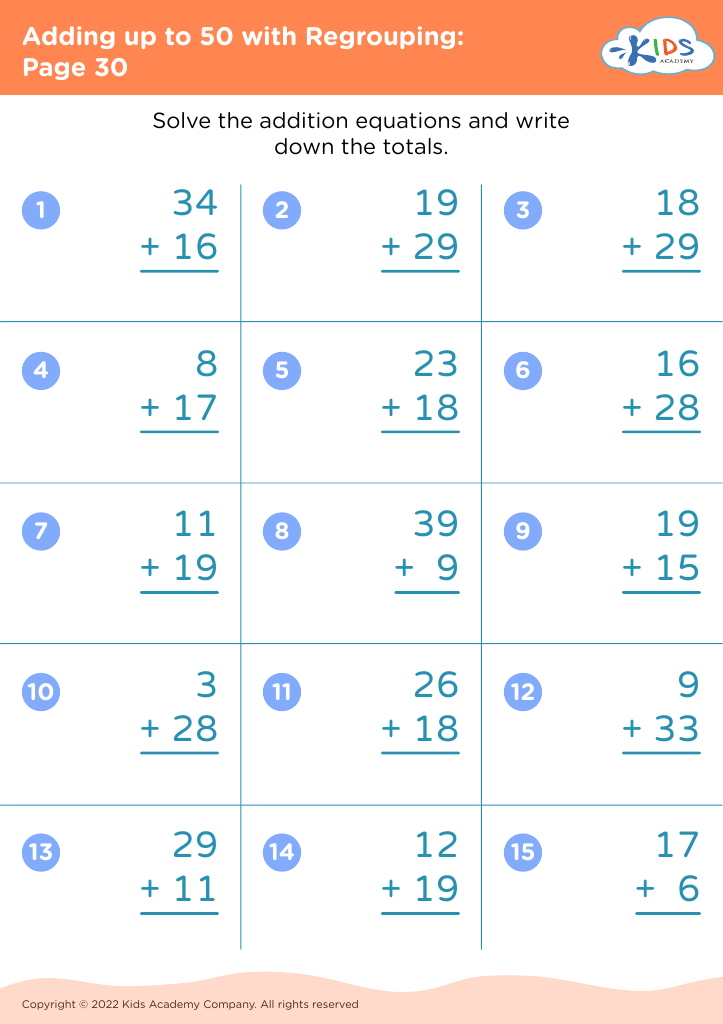
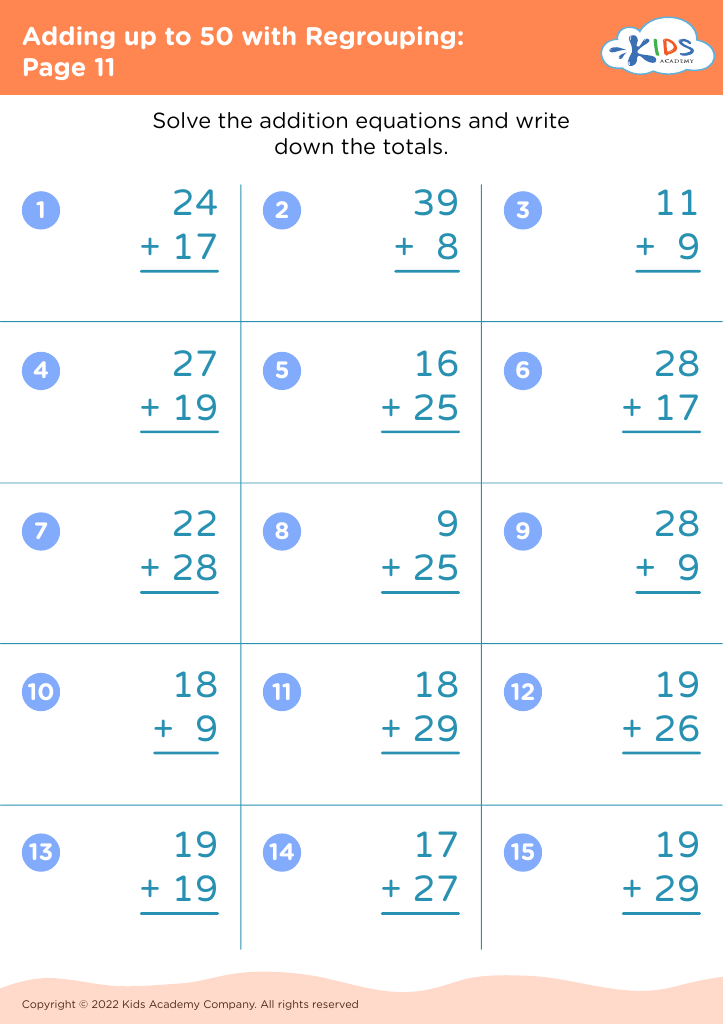
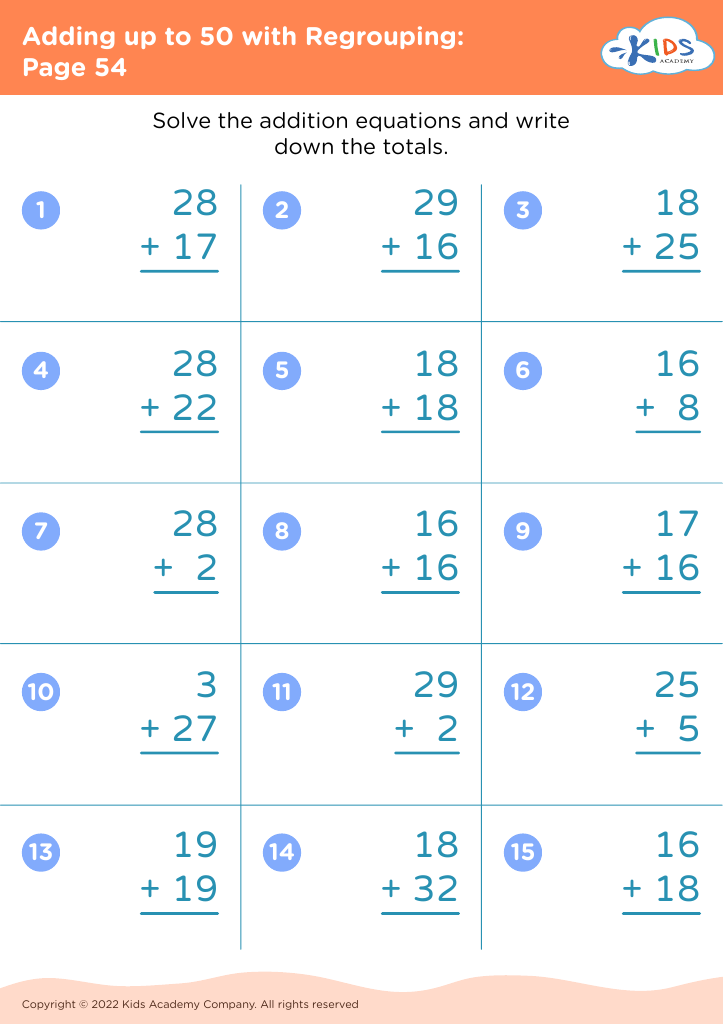
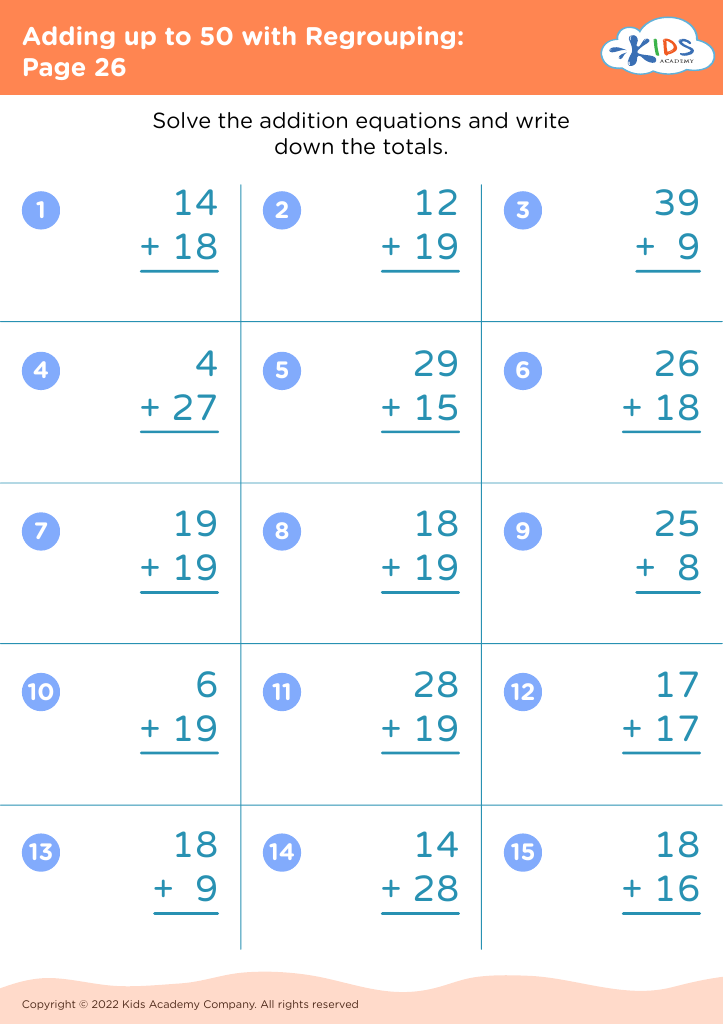
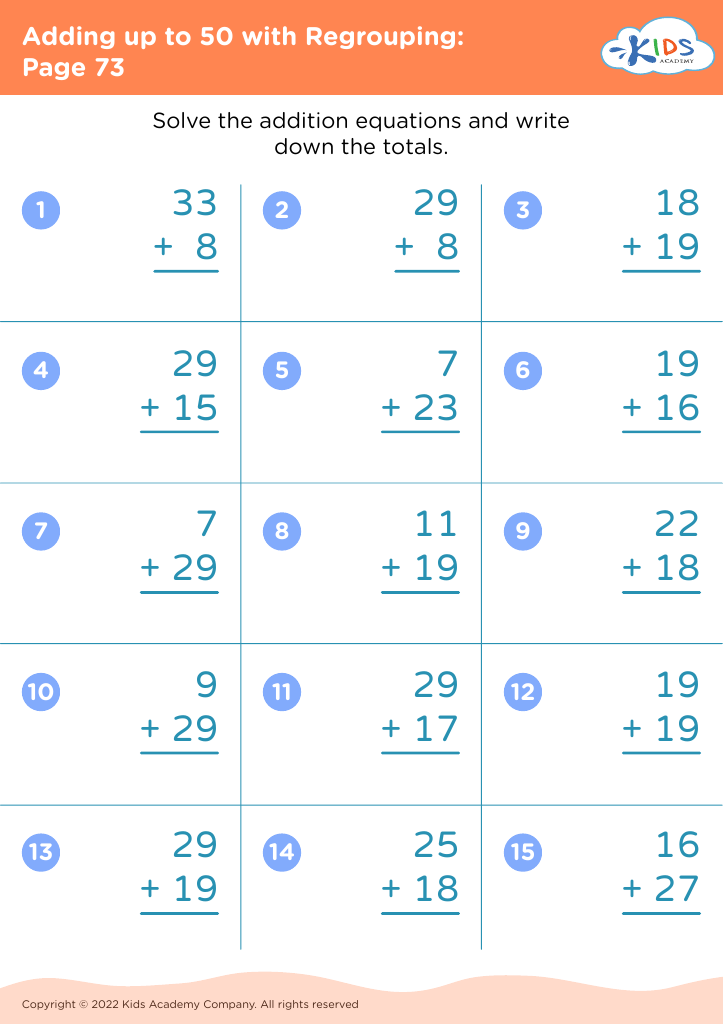
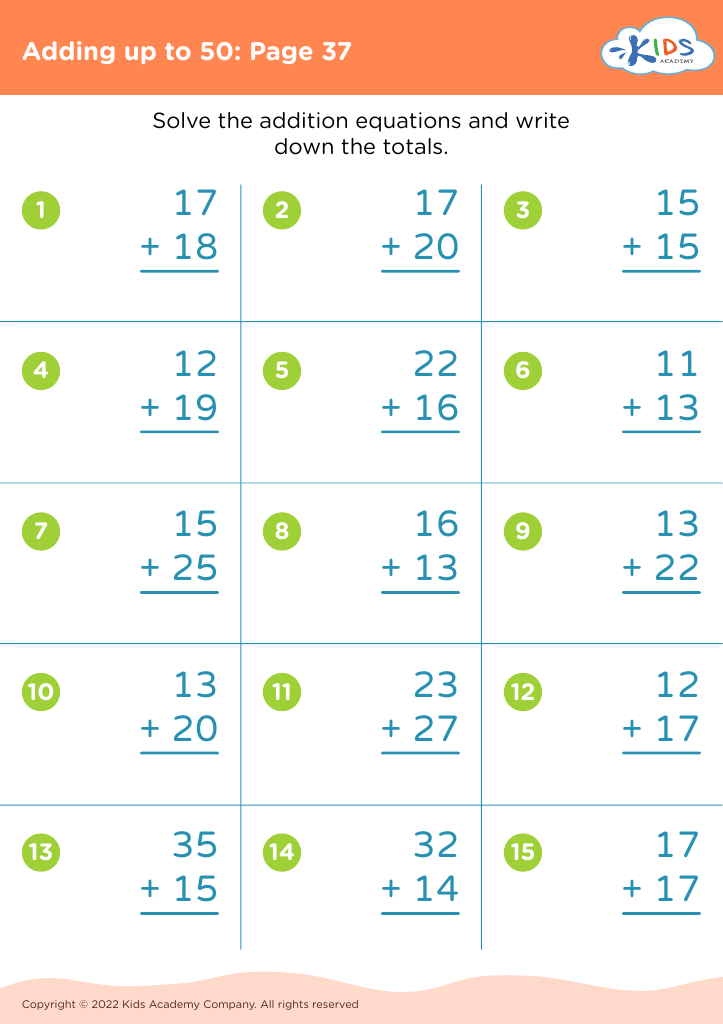




Color identification and the concept of adding up to 50 are fundamental skills for children ages 5-8, bridging early learning and cognitive development. Understanding colors enhances children's observational skills and helps them make sense of the world around them. It fosters creativity, imagination, and communication, enabling children to express themselves more effectively and contribute to their social interactions.
On the other hand, engaging with addition up to 50 builds foundational math skills vital for future academic success. This level of arithmetic encourages critical thinking and problem-solving abilities, essential in everyday life. By mastering these addition concepts, children learn to recognize patterns, quantify objects, and develop an early understanding of numerical relationships, setting the stage for more complex mathematical ideas.
Parents and teachers should care about these skills as they represent two crucial areas of development — cognitive and social-emotional. With a solid grasp of colors and basic addition, children gain confidence in their abilities, feel prepared to tackle new challenges, and establish a love for learning. Investing time in these areas not only benefits academic performance but also supports children's overall growth, development, and readiness for more advanced learning experiences in the future.








