Develop critical thinking Adding up to 50 Worksheets for Ages 5-8
3 filtered results
-
From - To
Enhance your child's math skills and develop critical thinking with our Adding up to 50 Worksheets for Ages 5-8. Perfectly crafted for young learners, these engaging worksheets help kids understand addition concepts and build confidence in their arithmetic abilities. Each worksheet is designed to challenge young minds while making learning enjoyable through fun activities and colorful visuals. Our resources not only support foundational math skills but also stimulate problem-solving and logical reasoning. Ideal for classroom and home use, these worksheets are a fantastic way to foster a love for math and critical thinking from an early age.
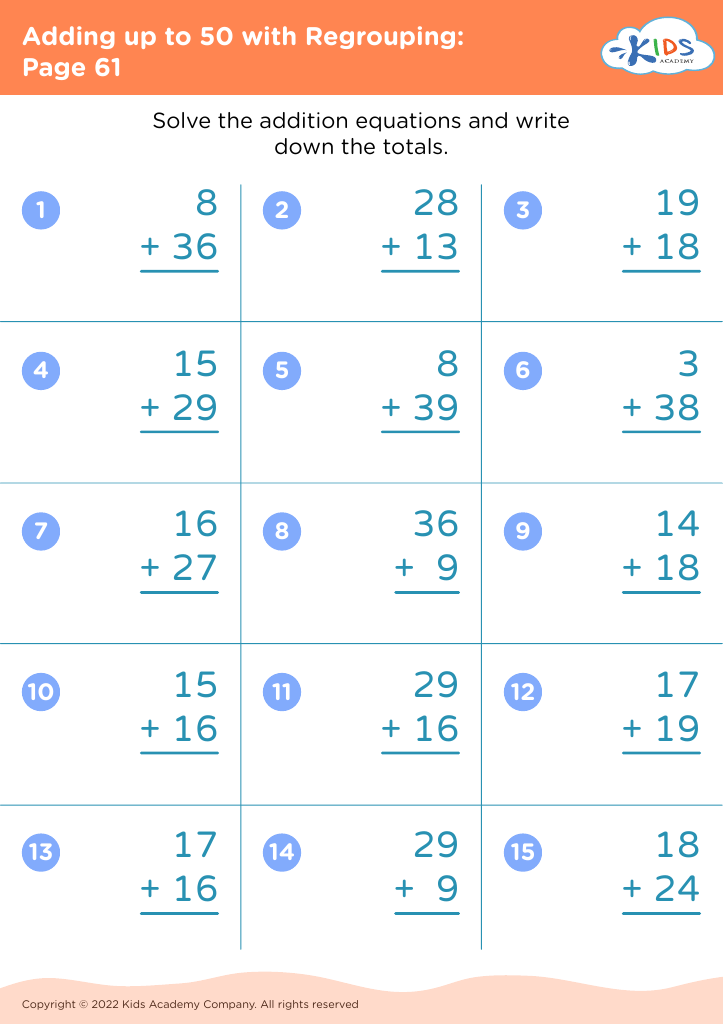
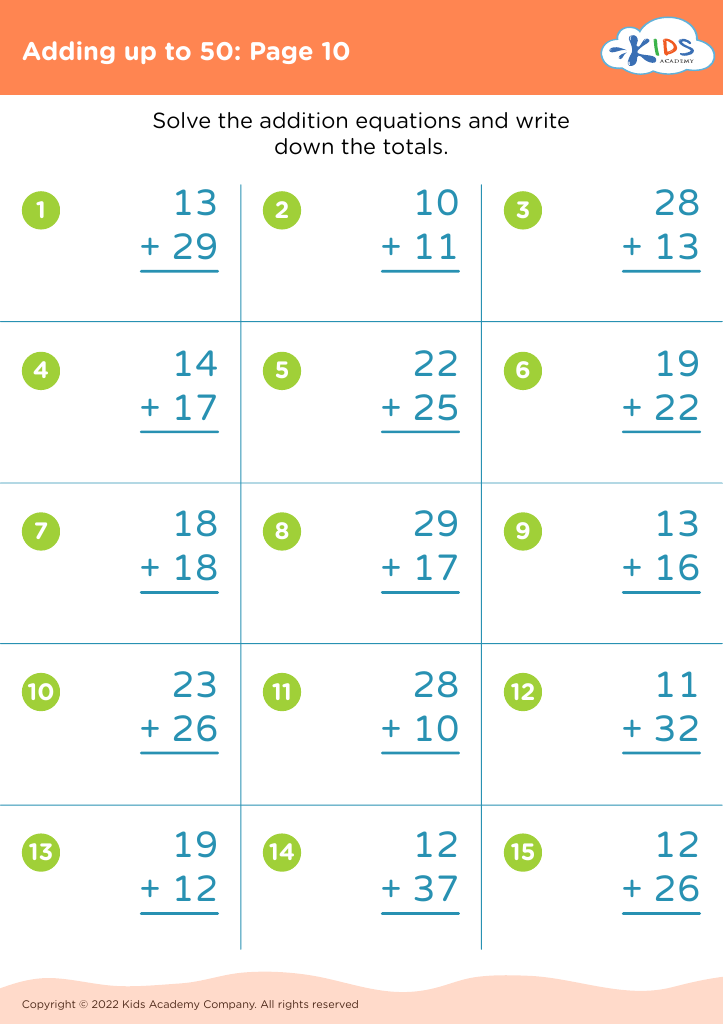
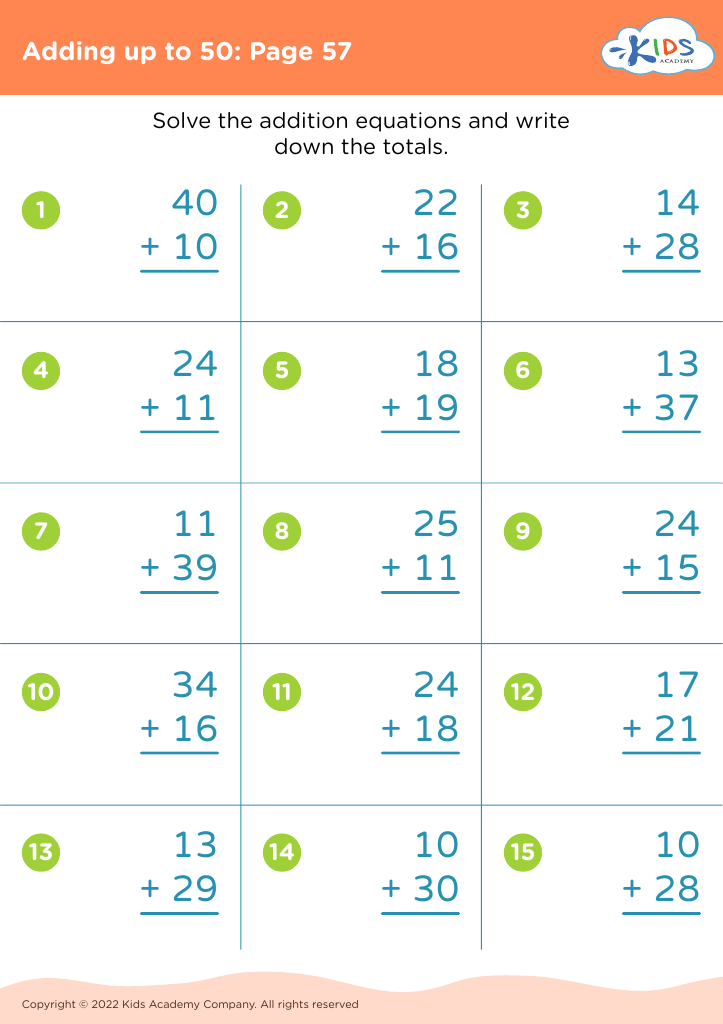




Parents and teachers should prioritize developing critical thinking skills in children aged 5-8, alongside essential math skills like adding up to 50, as it lays a crucial foundation for lifelong learning and problem-solving. Critical thinking fosters an open, inquisitive mindset, enabling children to analyze information, ask relevant questions, and make reasoned decisions even at a young age.
Combining critical thinking with learning foundational math enhances both areas. For example, when children engage in hands-on activities to add numbers up to 50, they're not just practicing arithmetic; they're also exercising logical thinking, pattern recognition, and focusing skills. This dual enhancement can substantially improve their academic performance and encourage a deeper understanding of concepts rather than just rote memorization.
Moreover, nurturing critical thinking at an early age cultivates resilience and flexibility, allowing children to approach challenges with confidence and creativity. It encourages them to ponder solutions rather than merely reacting, which is a valuable skill in every aspect of life. Children become more adept at communicating their thought processes, contributing to better social interactions and collaborative learning.
By integrating critical thinking in early education, especially through engaging math exercises, parents and teachers set the stage for well-rounded cognitive development, ensuring that children are better prepared for future academic and life challenges.








