Counting skills Adding with Busy Bugs Worksheets for Ages 5-8
24 filtered results
-
From - To
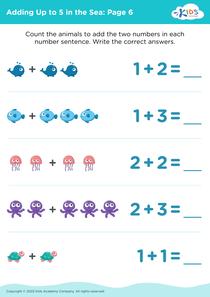
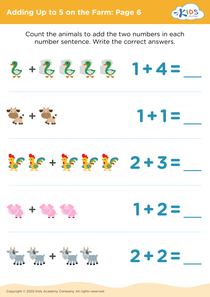
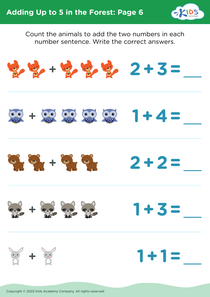
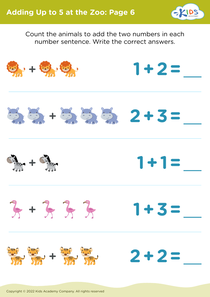
Enhance your child's counting skills with our "Adding with Busy Bugs" worksheets designed specifically for ages 5-8! These engaging, whimsical worksheets incorporate vibrant bug-themed illustrations to make learning addition fun and interactive. Perfect for young learners, the activities help children practice basic counting, recognize numbers, and develop their math confidence. Each worksheet gradually increases in difficulty, ensuring your child builds a solid foundation in addition while enjoying the colorful, playful bug theme. Ideal for both classroom and home learning, these resources are designed to spark curiosity and encourage a love for math. Start your child's educational journey with Busy Bugs today!
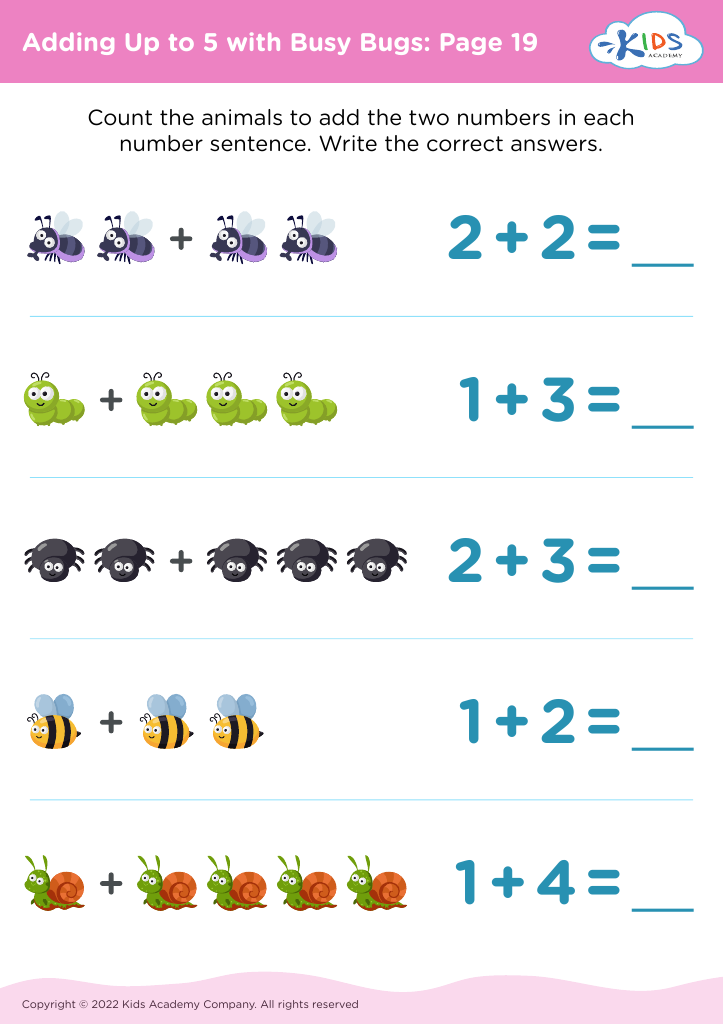
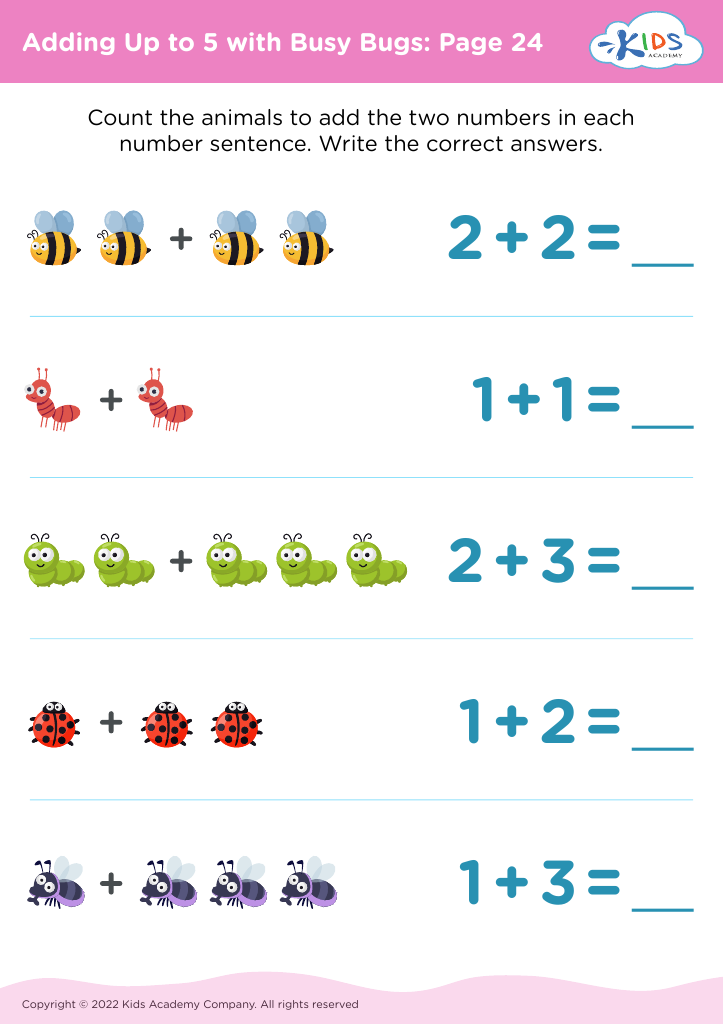
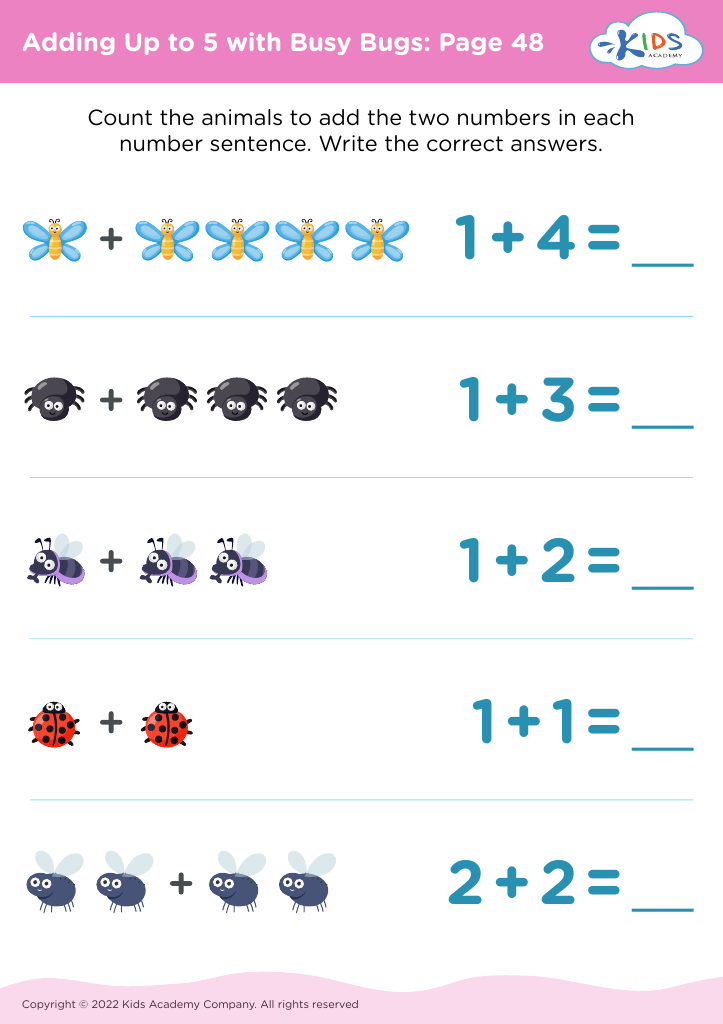
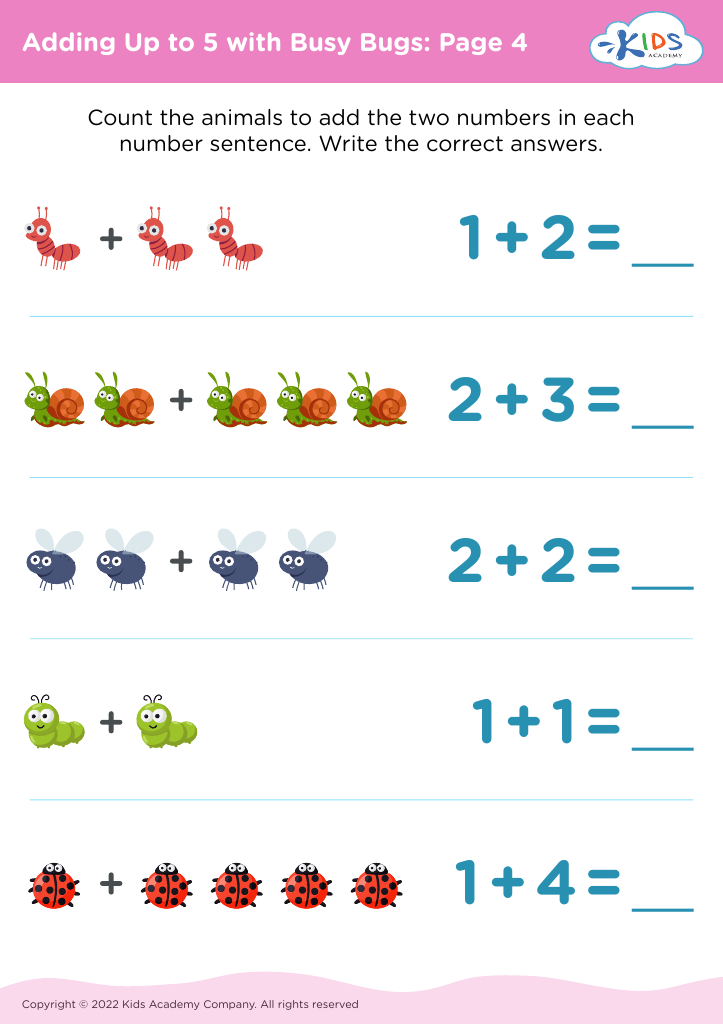
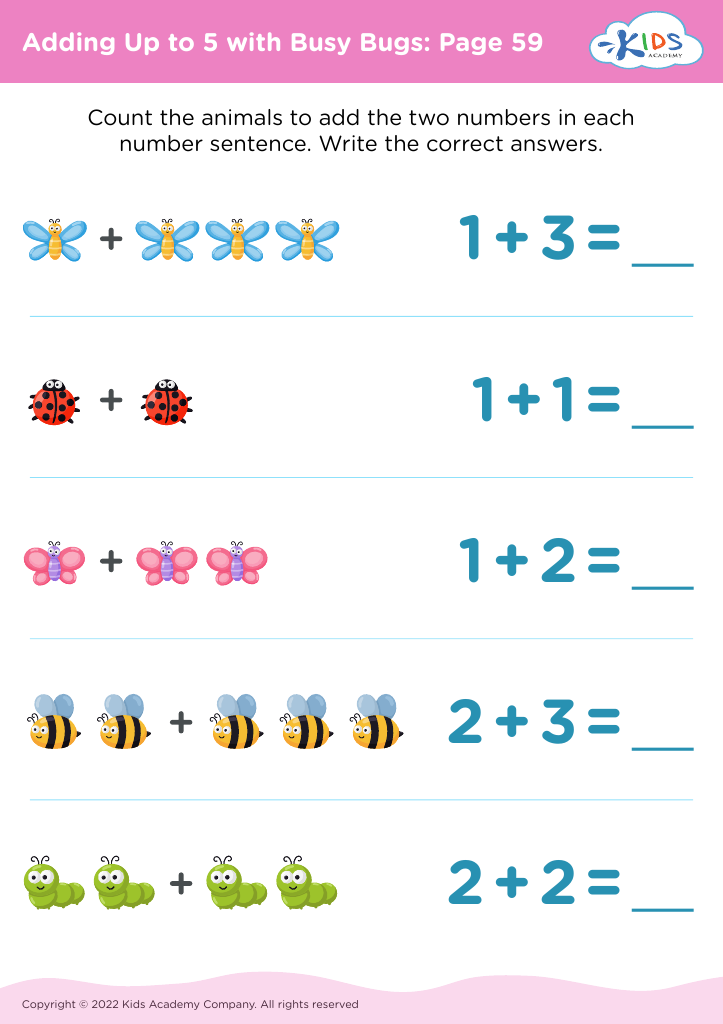
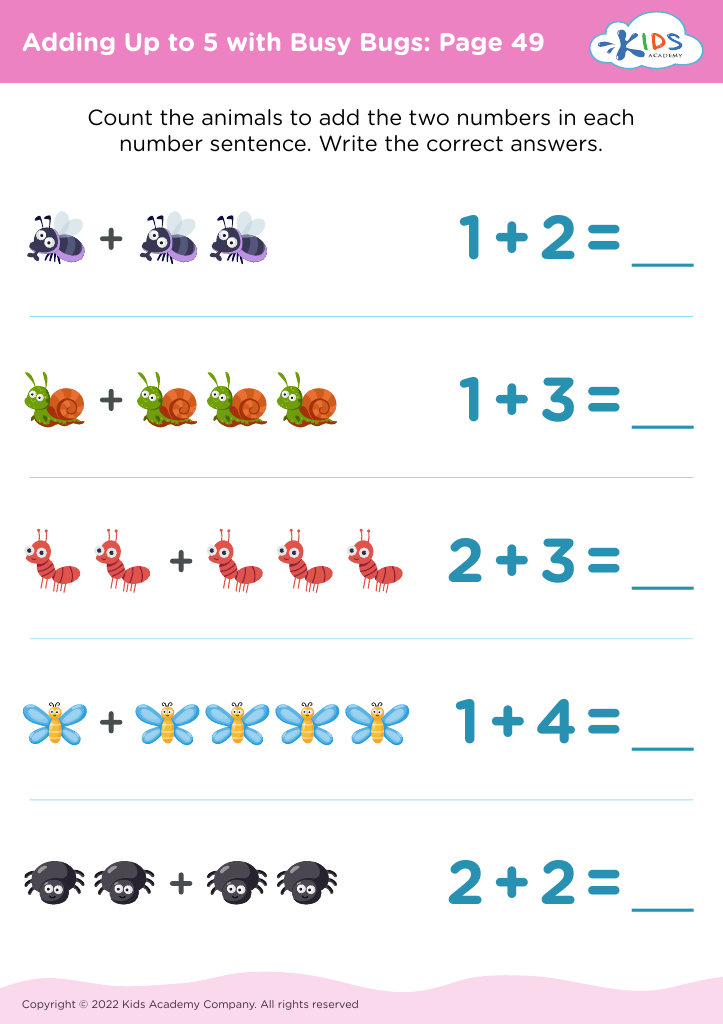
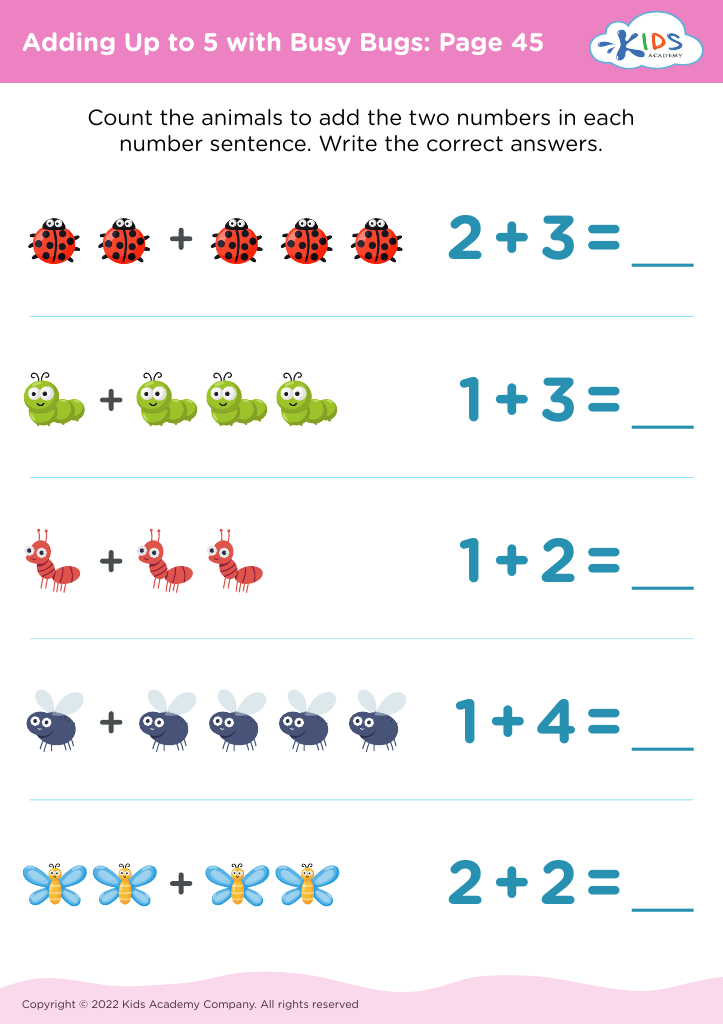
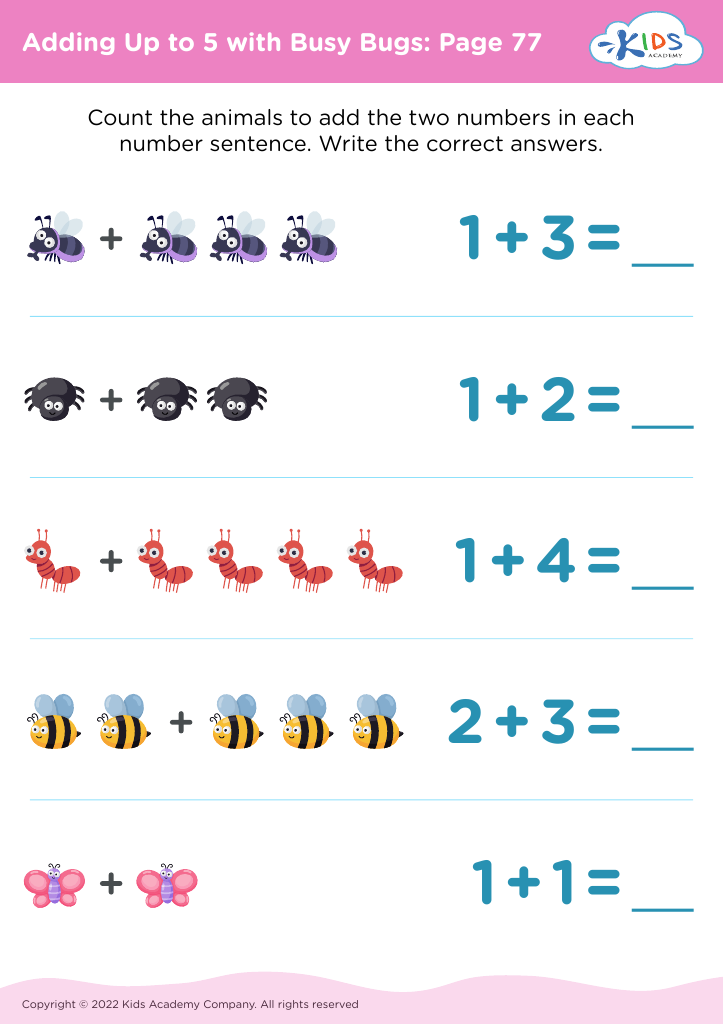
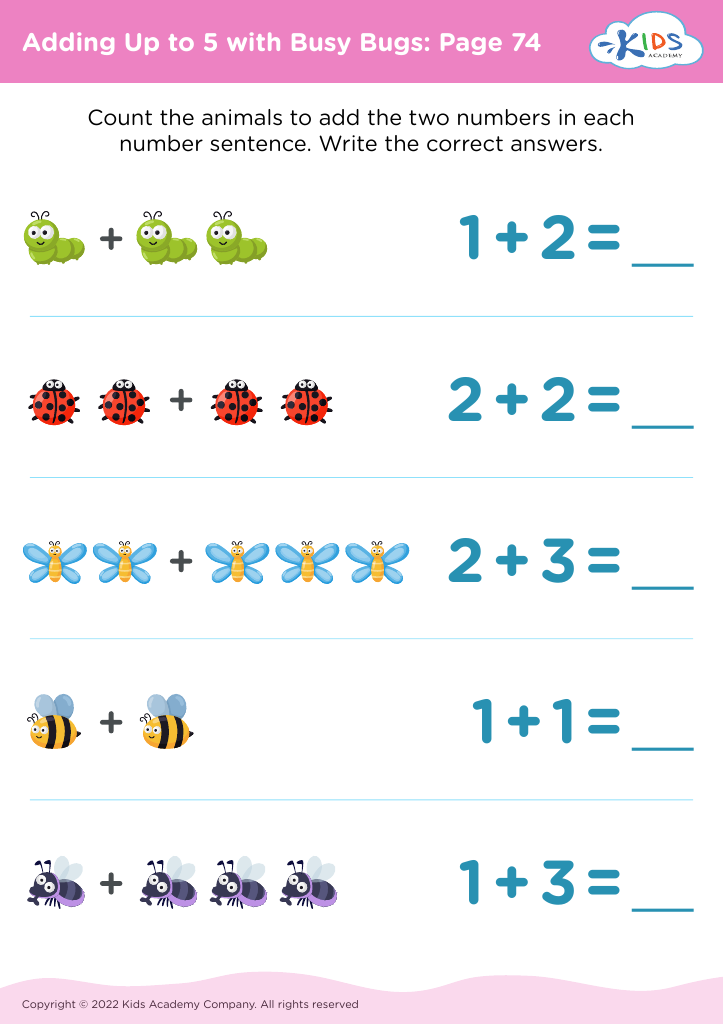
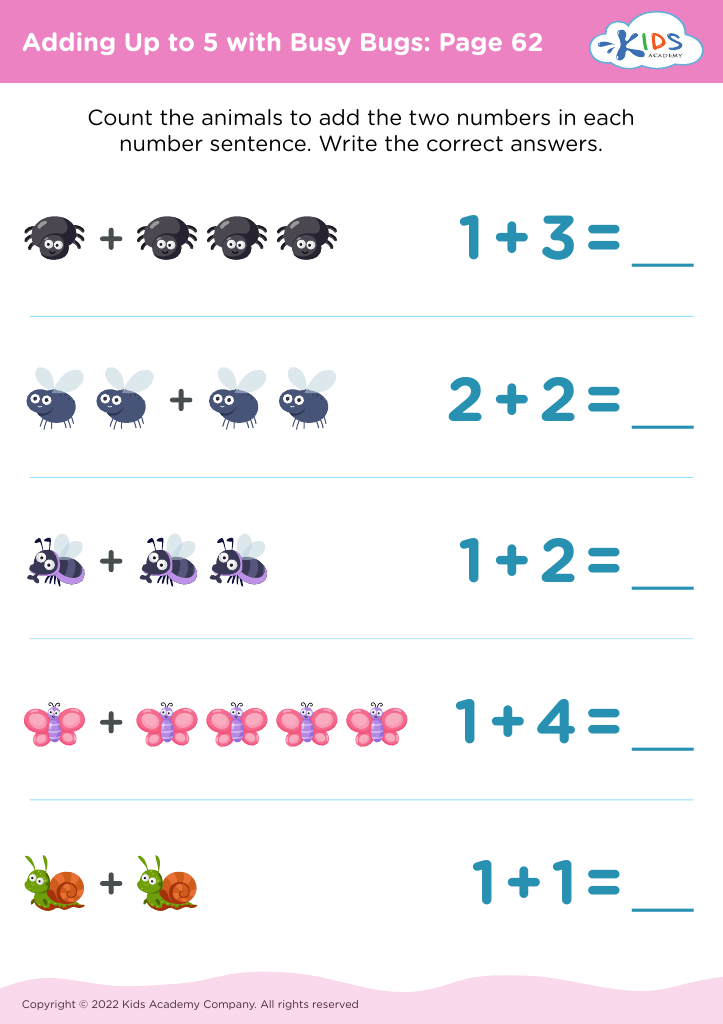
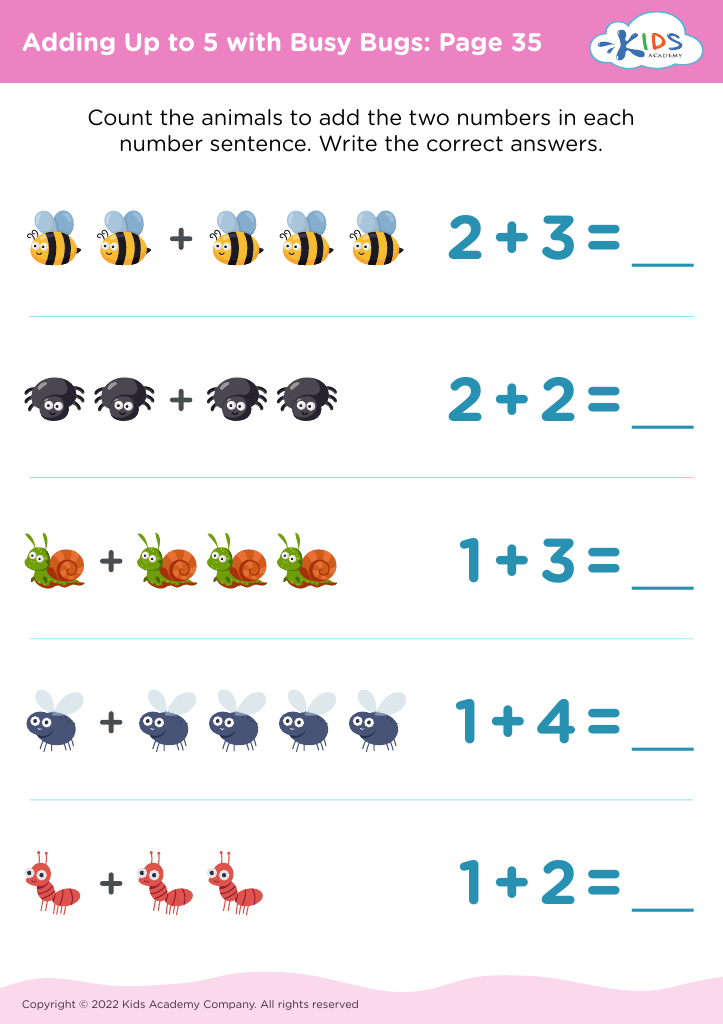
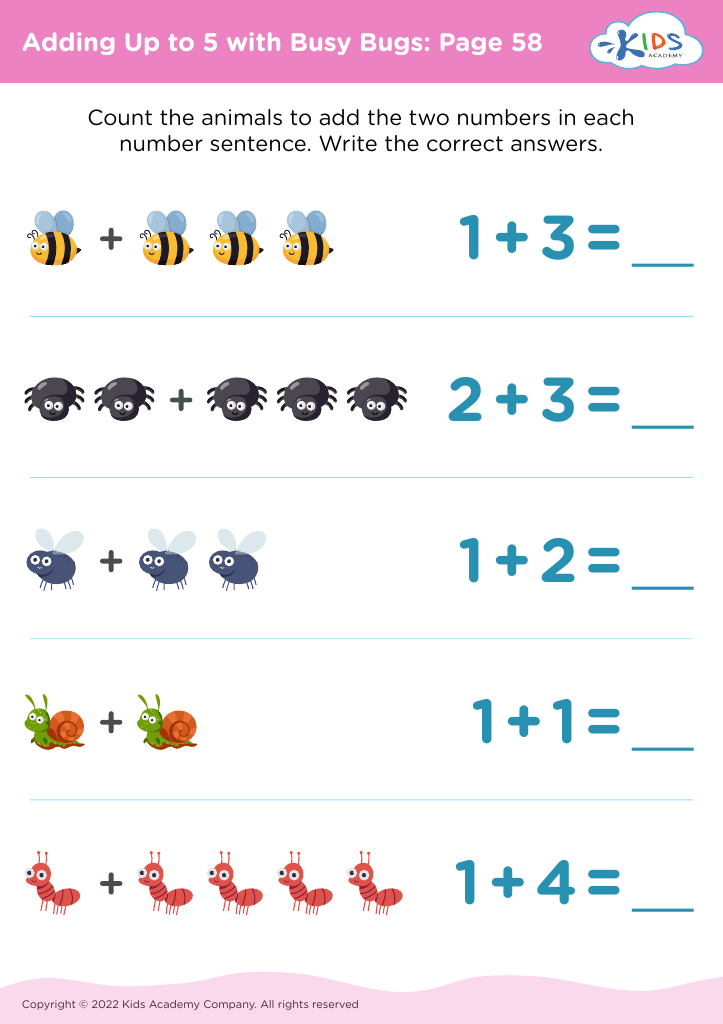
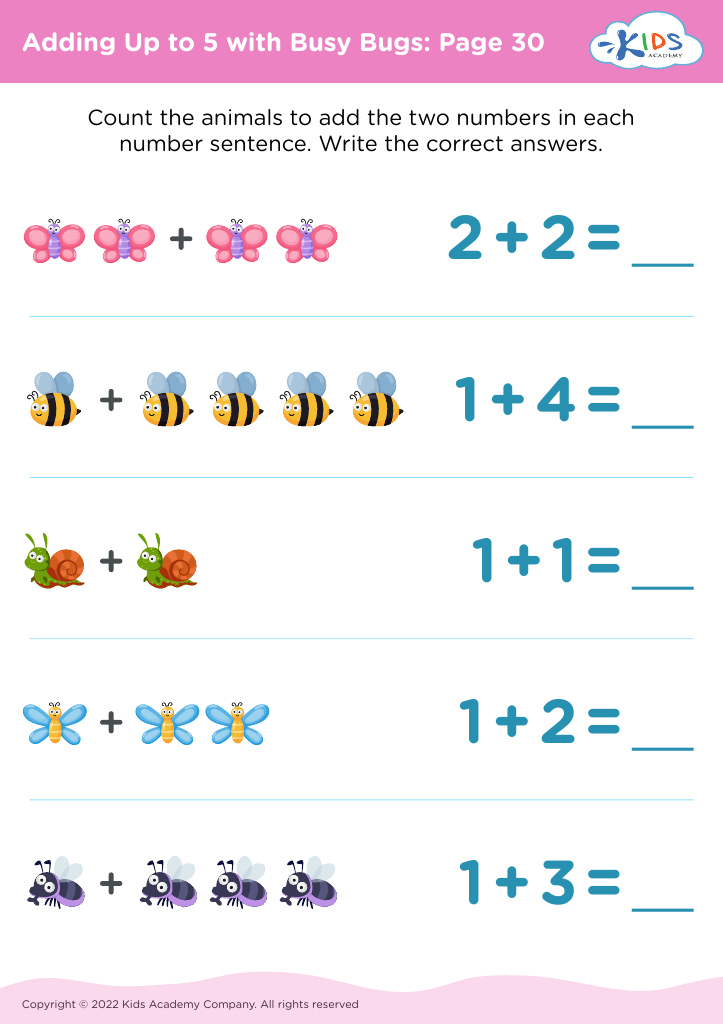
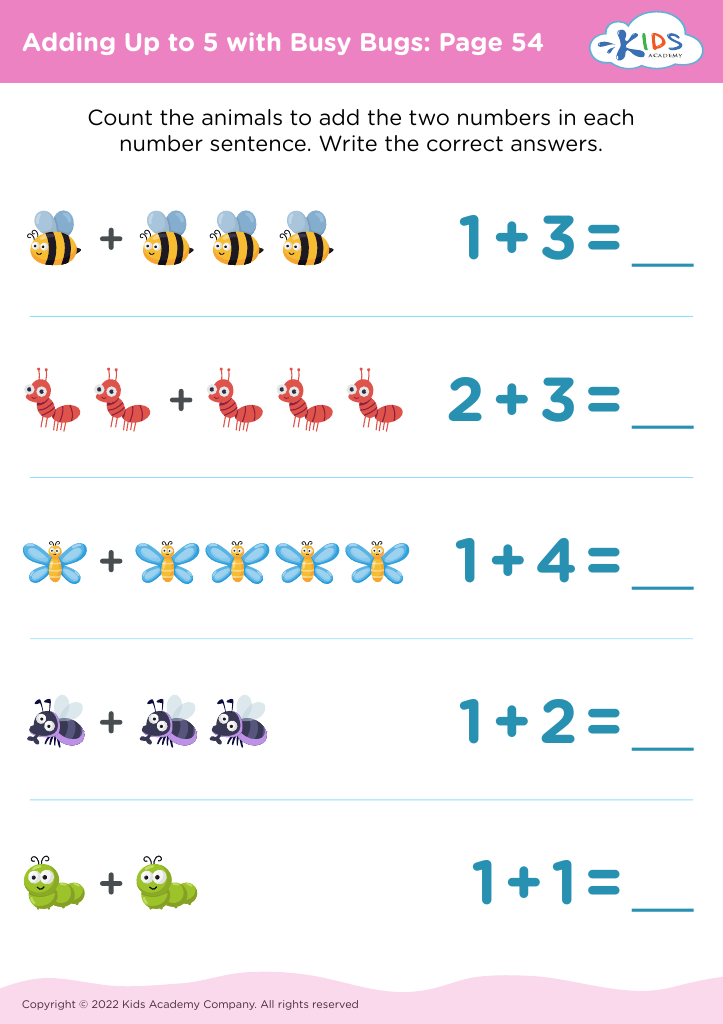
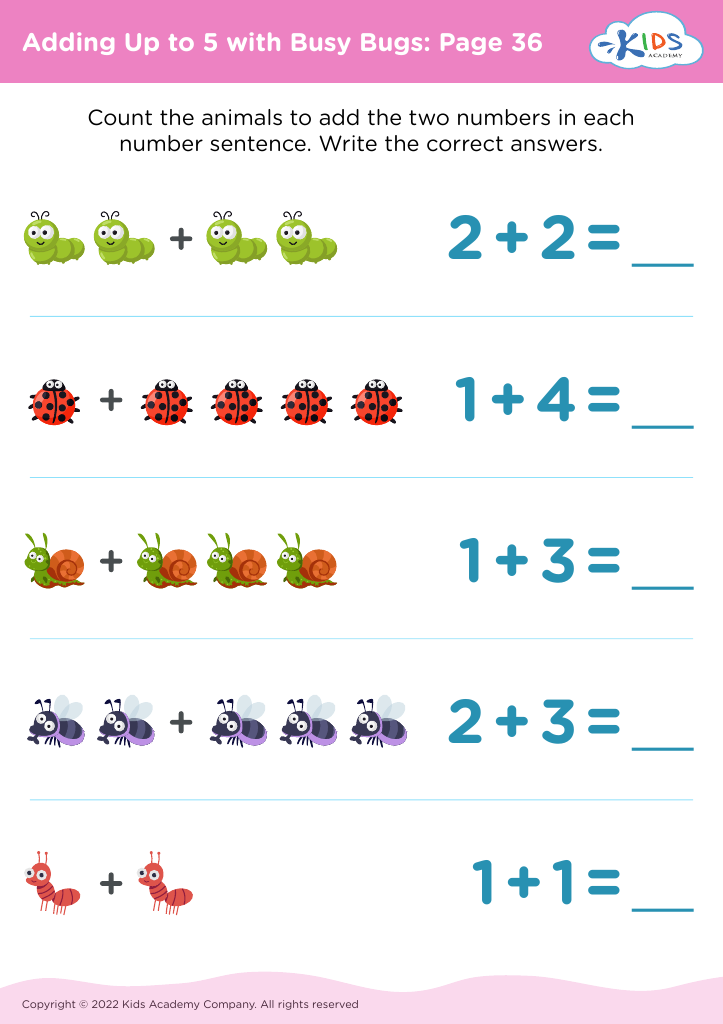
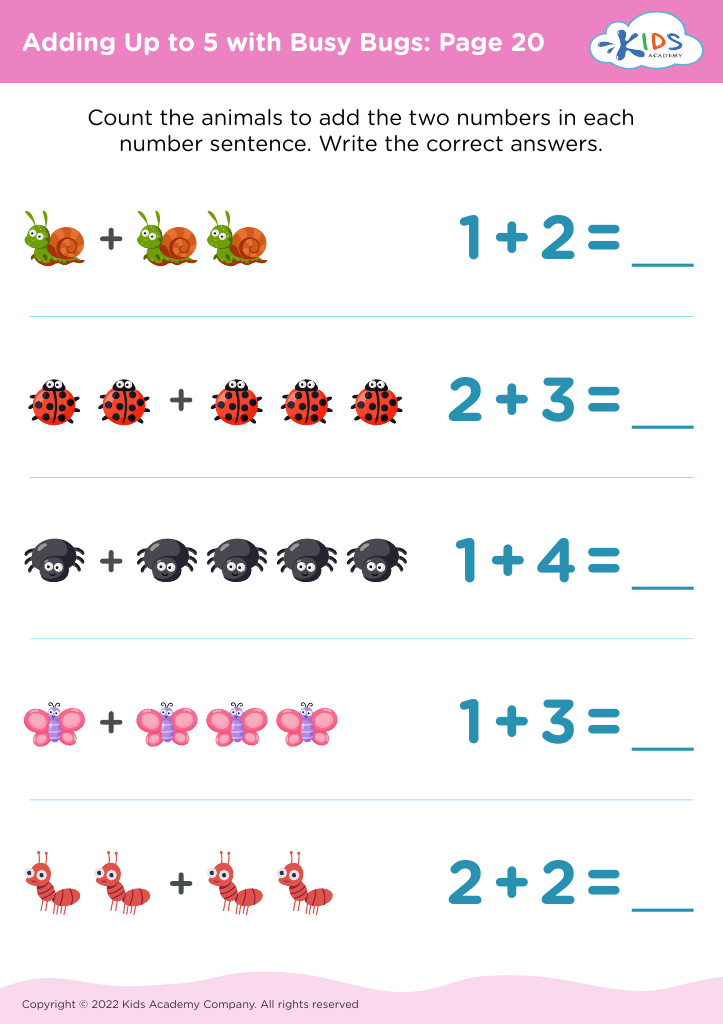
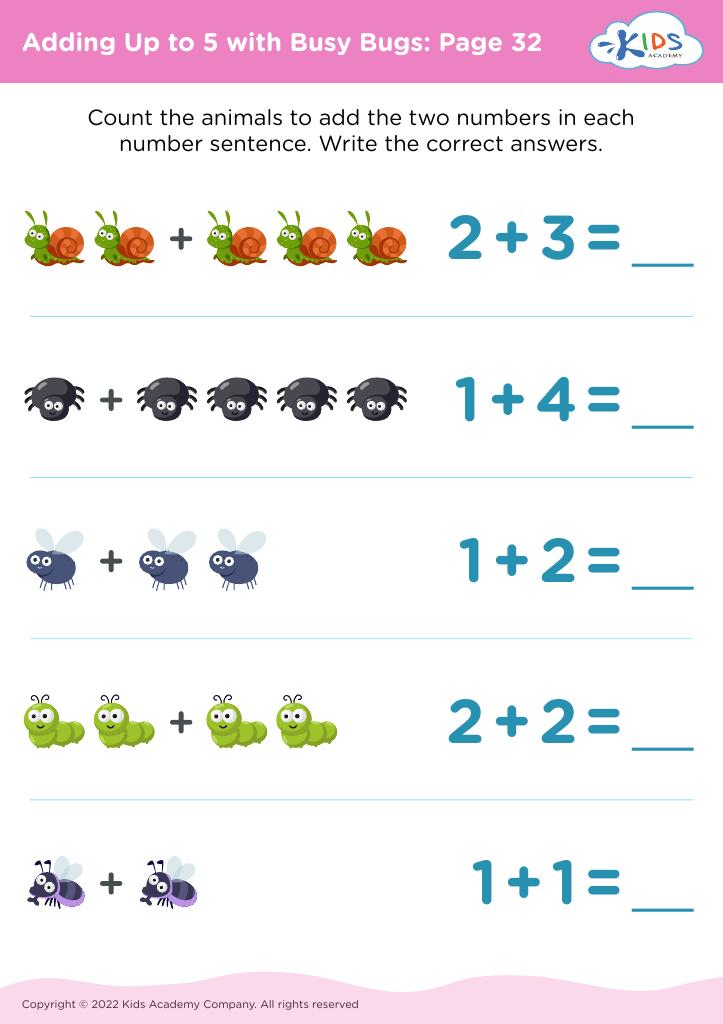
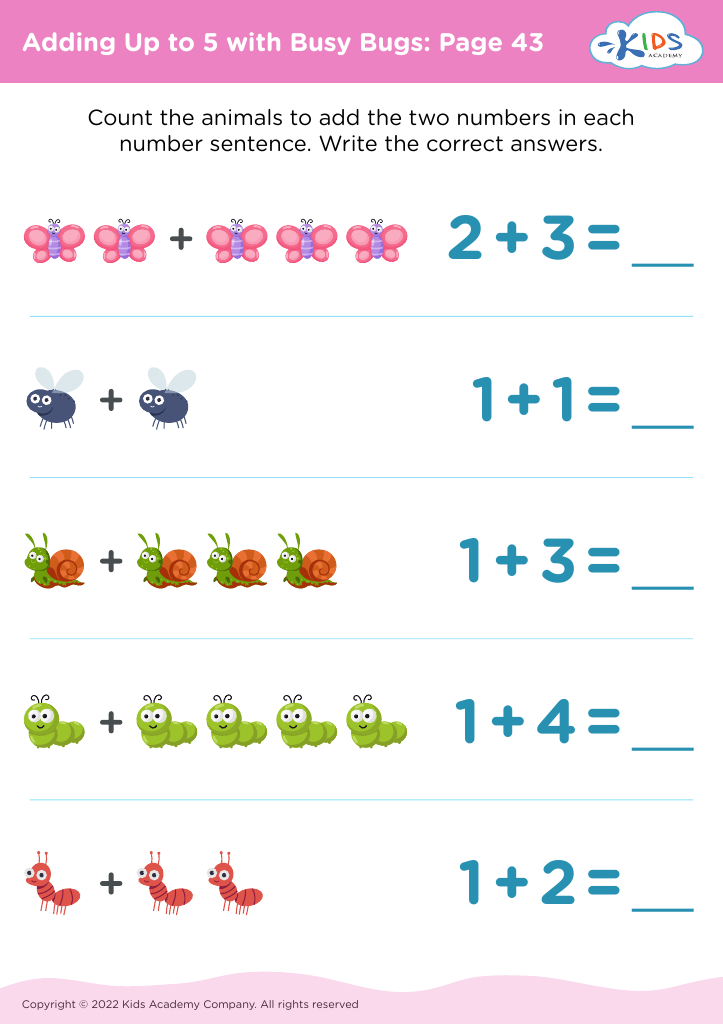
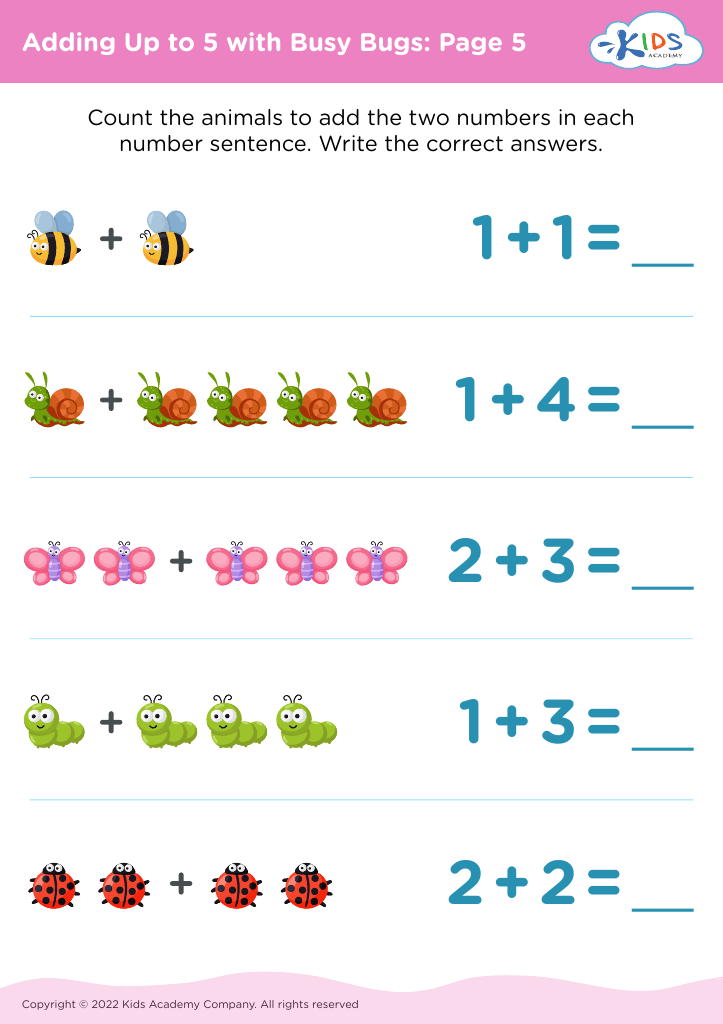
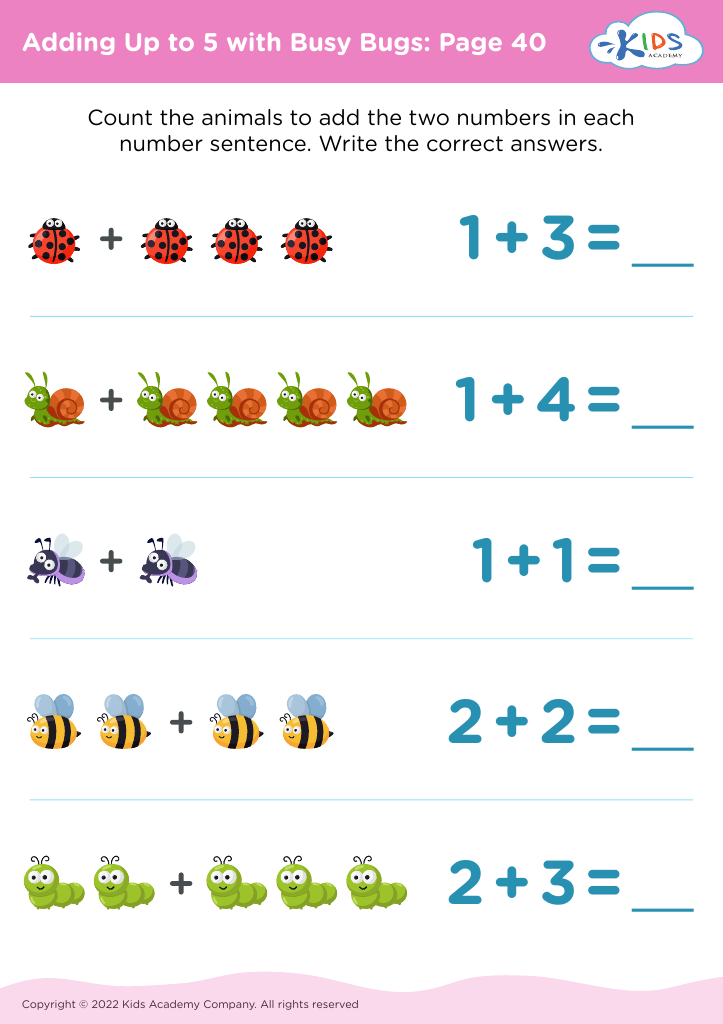
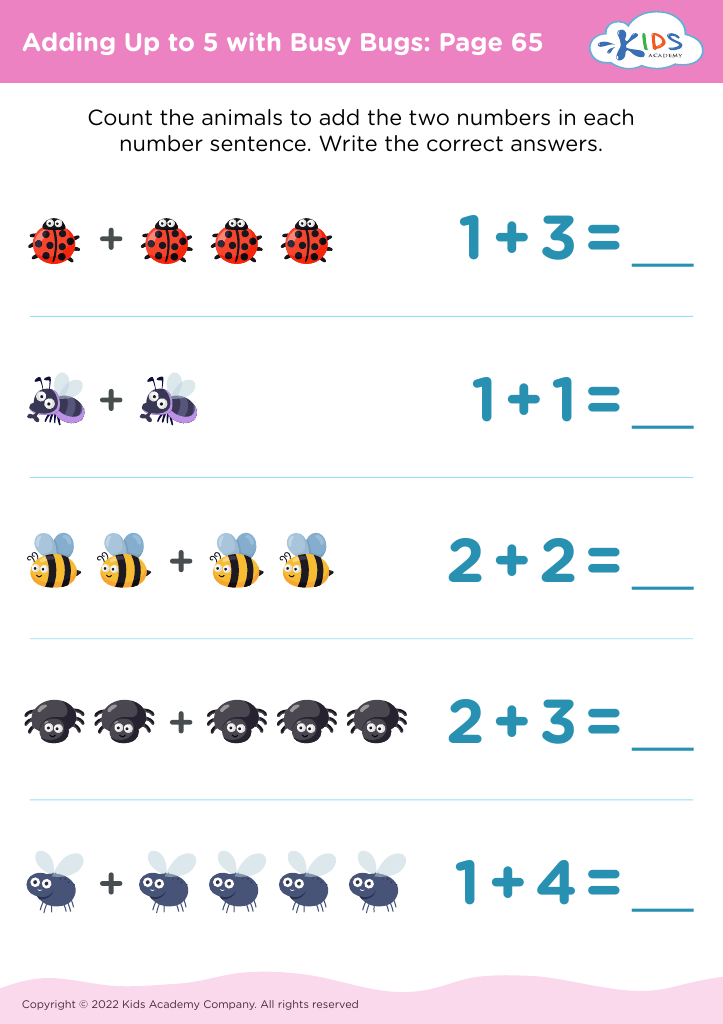
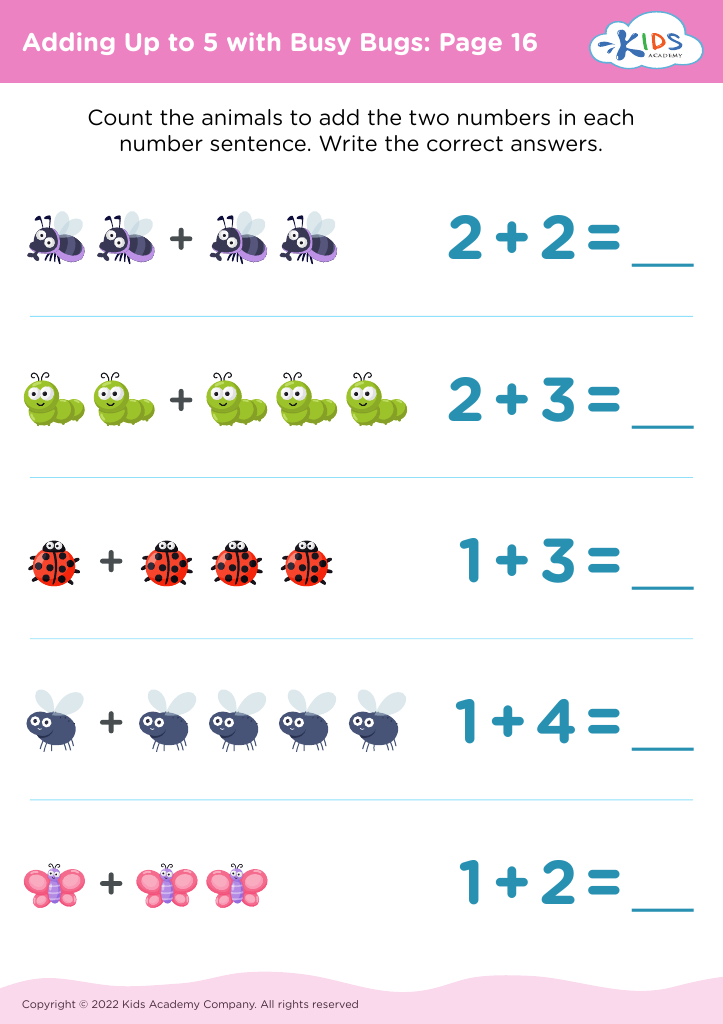
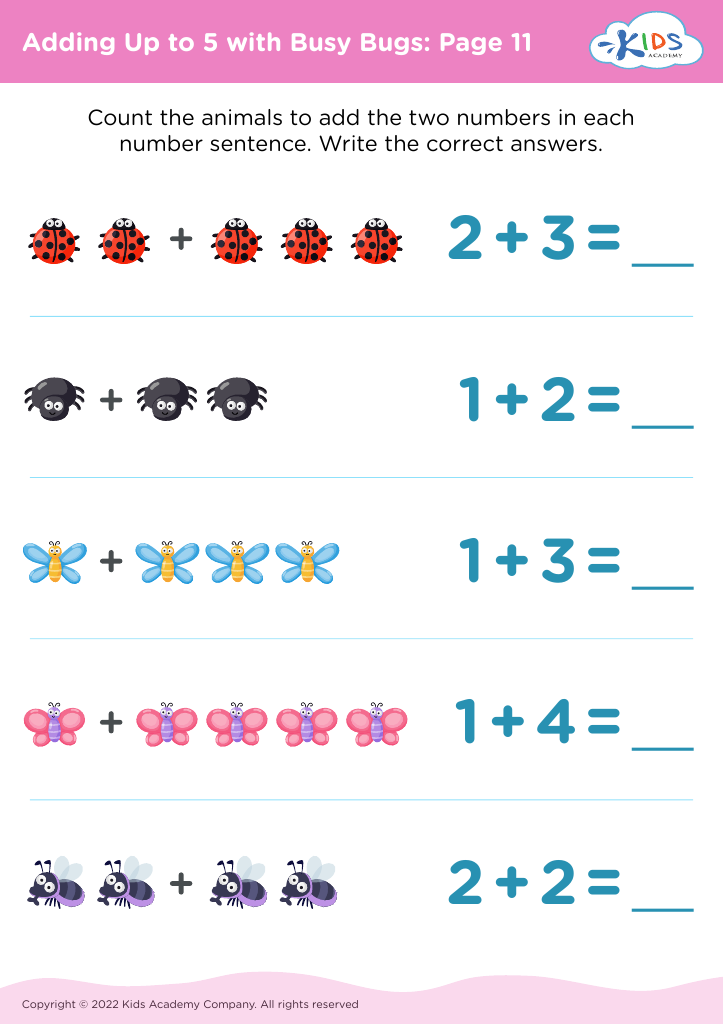
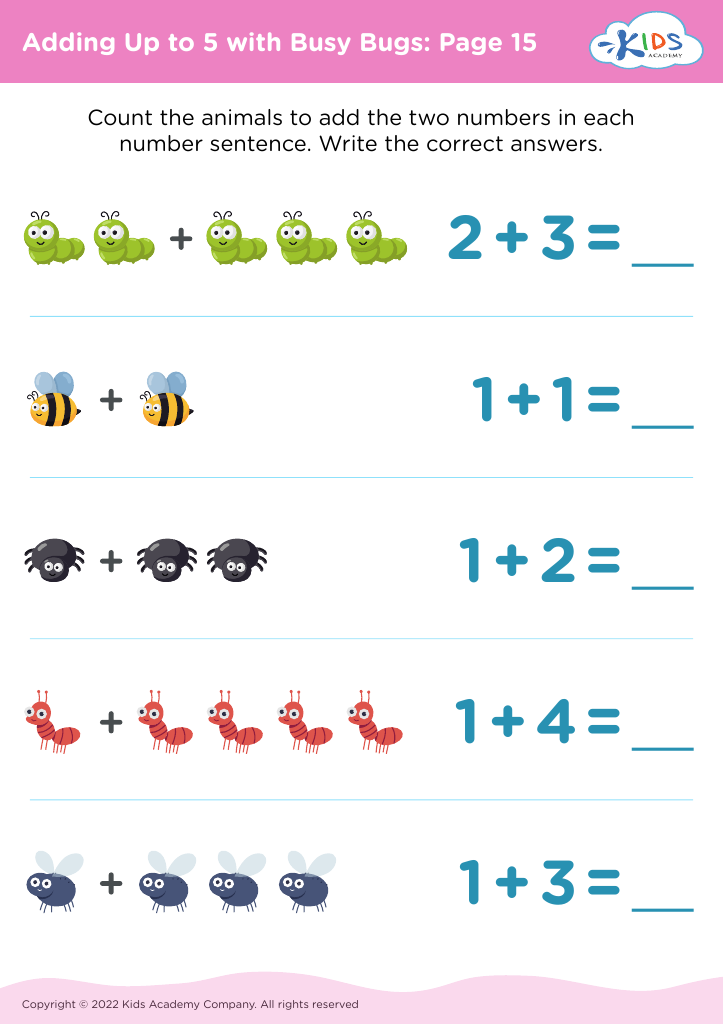



Counting skills are fundamental to a child's early math development, making it essential for parents and teachers to prioritize engaging methods like "Counting Skills: Adding with Busy Bugs." This age group, typically ages 5-8, is a crucial timeframe when children transition from basic counting to understanding addition concepts. Utilizing interactive and visually stimulating resources, such as the Busy Bugs program, fosters a positive and enjoyable learning experience, which is vital for maintaining a child's interest in mathematics.
Counting with Busy Bugs introduces children to natural learning patterns. It encourages them to connect numbers with tangible objects, building a solid foundation in quantitative reasoning. Moreover, it promotes fine motor skills and cognitive development as children manipulate and interact with the colorful, engaging bug characters that personify counting concepts—making addition less intimidating.
Parental and teacher involvement in this process further bolsters children's confidence, encouraging a collaborative and supportive learning environment. By emphasizing fun and interactive principles of early math education, such as through Busy Bugs, adults can help children develop essential skills that will not only serve them throughout their academic journey but also in everyday life. Ultimately, instilling a love for math at this young age sets the stage for lifelong learning and success.