Hand-eye Coordination Adding with Busy Bugs Worksheets for Ages 5-8
5 filtered results
-
From - To
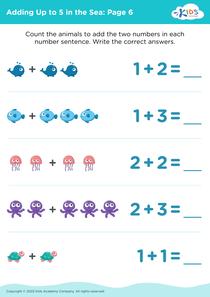
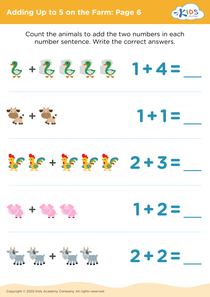
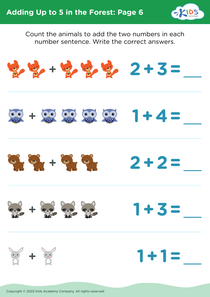
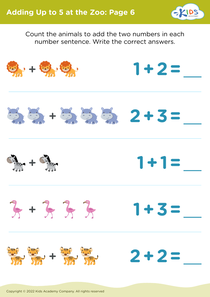
Discover engaging and educational fun with our Hand-eye Coordination Adding with Busy Bugs Worksheets, designed for children ages 5-8. These delightful printables combine colorful illustrations of busy bugs with activities that enhance math skills and fine motor coordination. Children will enjoy adding numbers while improving their hand-eye coordination, making learning both interactive and enjoyable. Perfect for early grade learners, these worksheets support cognitive development and mathematical proficiency in an entertaining way. Ideal for teachers, parents, and tutors seeking innovative resources to inspire and educate young learners. Download now and watch your child’s skills blossom!
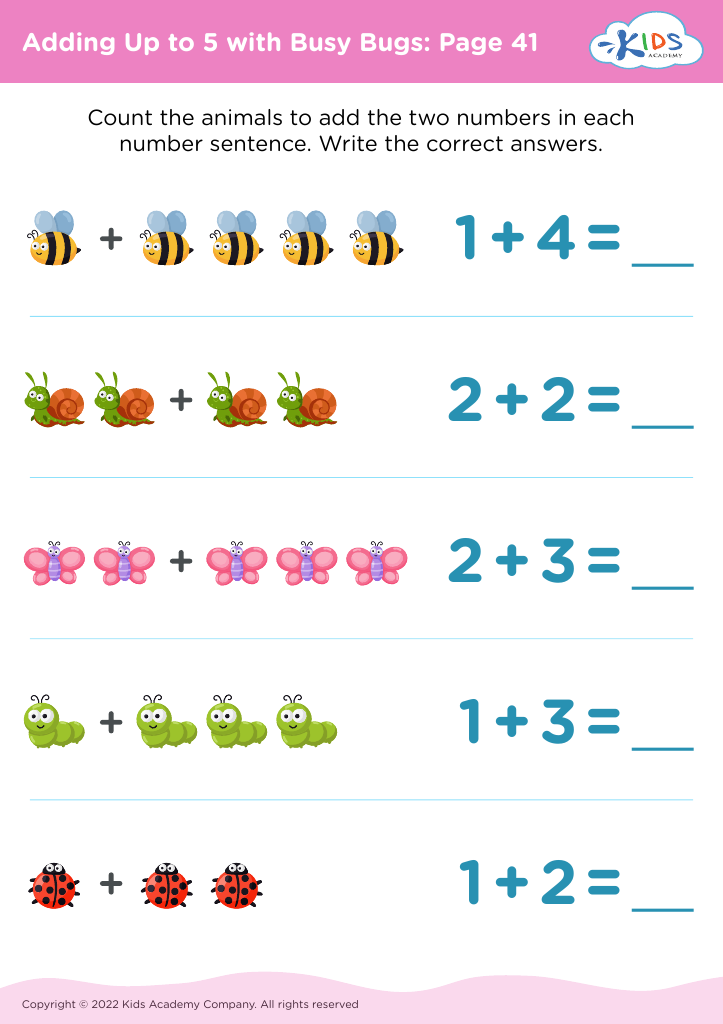
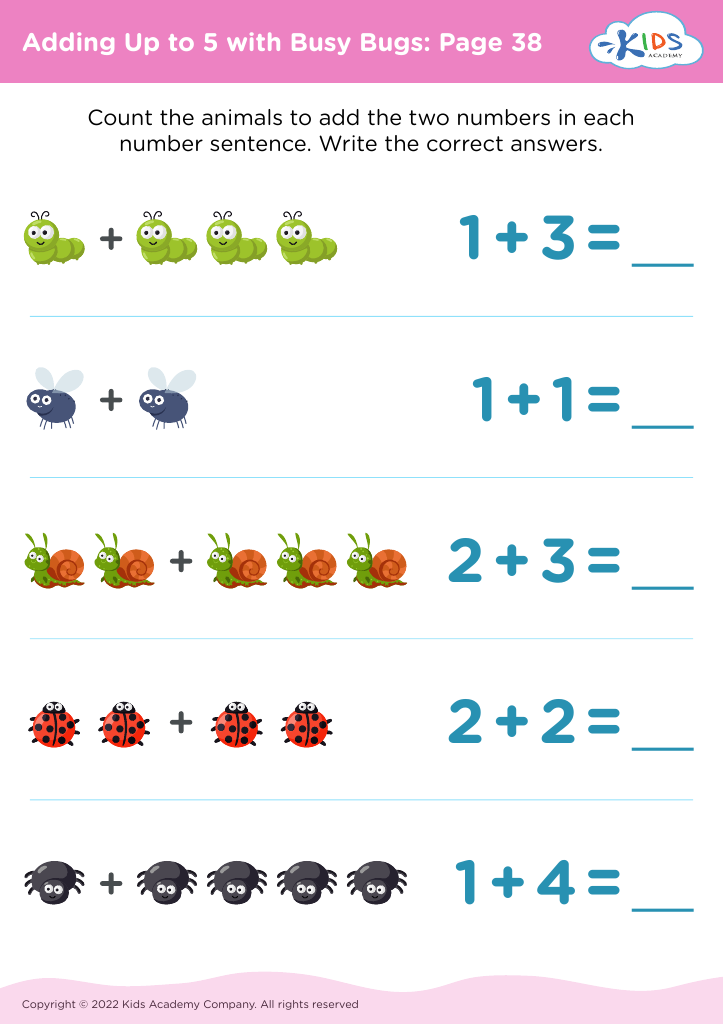
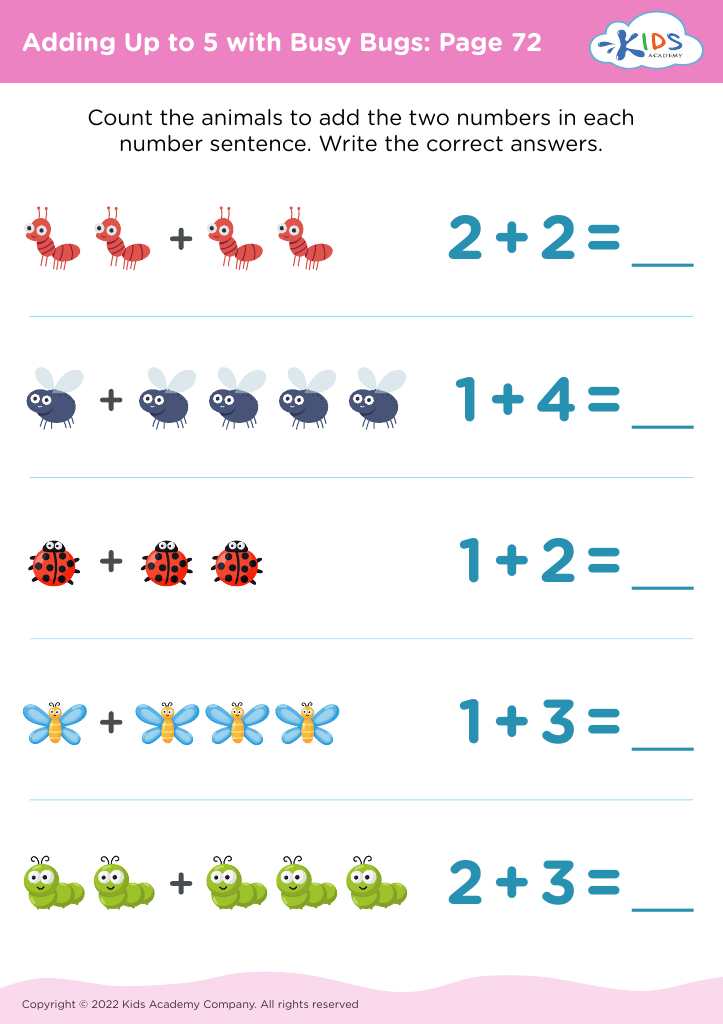
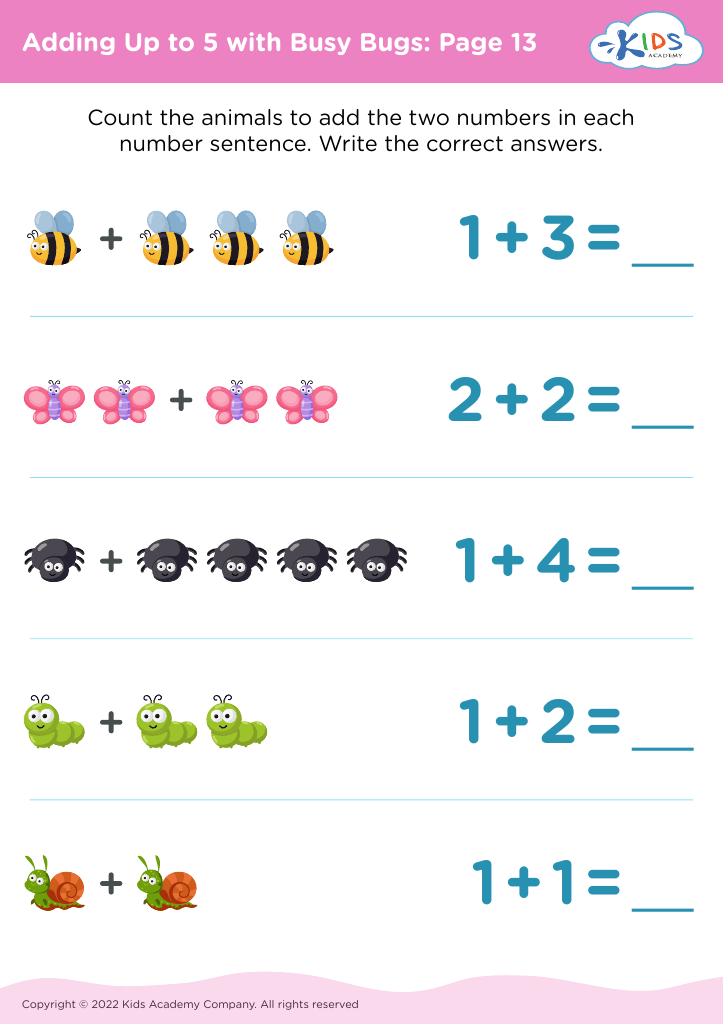
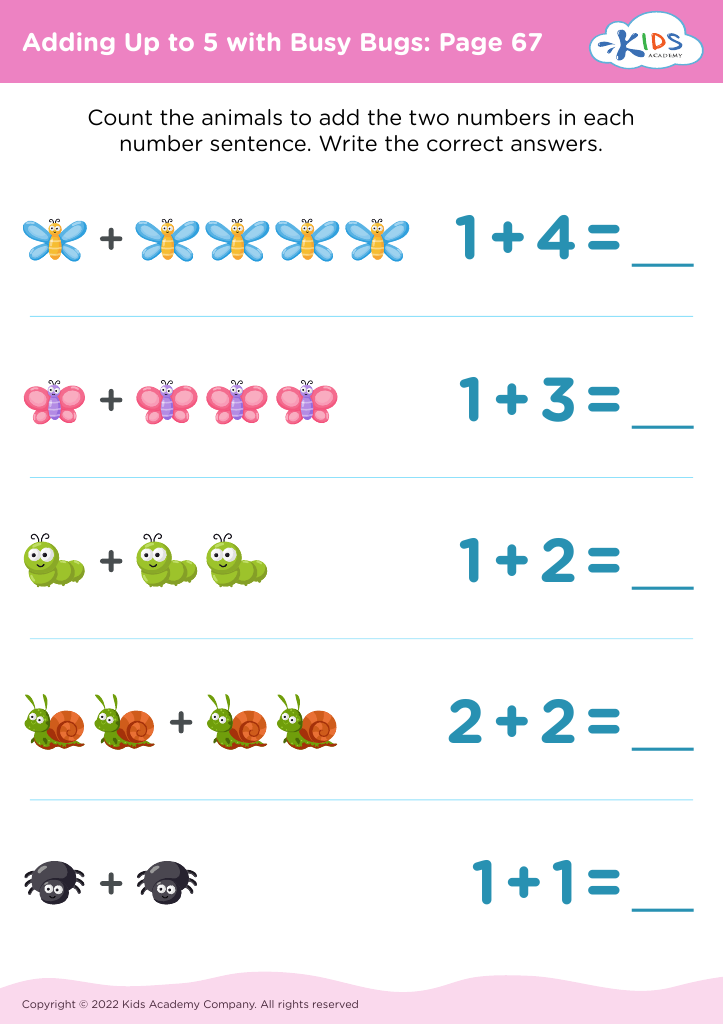



Hand-eye coordination is a crucial developmental skill for children ages 5-8, and incorporating activities like "Hand-eye Coordination Adding with Busy Bugs" can be immensely beneficial. At this age, kids are rapidly developing fine motor skills and the ability to integrate visual information with physical movement, which are essential for everyday tasks such as writing, cutting with scissors, and even tying shoelaces.
Activities involving counting and adding with tangible objects like "busy bugs" provide an engaging, multisensory approach to learning. Children use their hands to manipulate the bugs while their eyes and brain work to process numerical information. This translates into improved spatial awareness and cognitive skills, helping students grasp fundamental mathematical concepts more effectively.
Moreover, such activities also foster concentration, patience, and problem-solving abilities. They give kids the chance to practice precise movements and controlled actions, skills which are transferable to other academic and extracurricular areas.
For parents and teachers, encouraging hand-eye coordination activities can result in noticeable improvements in a child's ability to write legibly and perform other fine motor activities with greater confidence and success. Overall, investing in these developmental exercises paves the way for more robust intellectual and physical growth, equipping children with vital skills for future learning and daily activities.