Understanding Quantities Adding with Busy Bugs Worksheets for Ages 5-8
4 filtered results
-
From - To
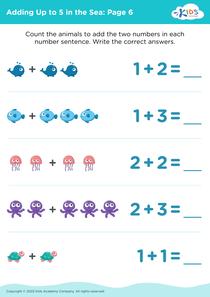
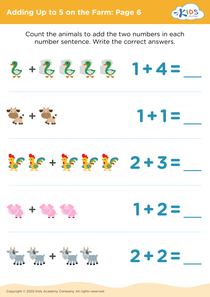
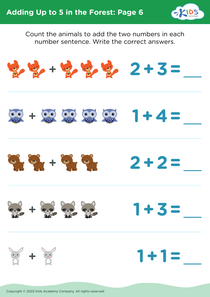
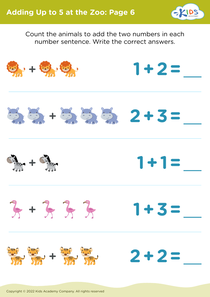
Introduce youngsters to the fun world of math with our "Understanding Quantities: Adding with Busy Bugs" worksheets, designed for children ages 5-8. These colorful and engaging printables make learning addition a delightful adventure. Every page features charming, busy bugs that guide kids through simple addition problems, building their skills in recognizing and understanding quantities. With plenty of practice opportunities, children can develop a strong foundation in basic math while enjoying the playful illustrations and interactive elements. Ideal for both classroom and home learning, these worksheets are perfect for enhancing early math skills in a fun, educational way.
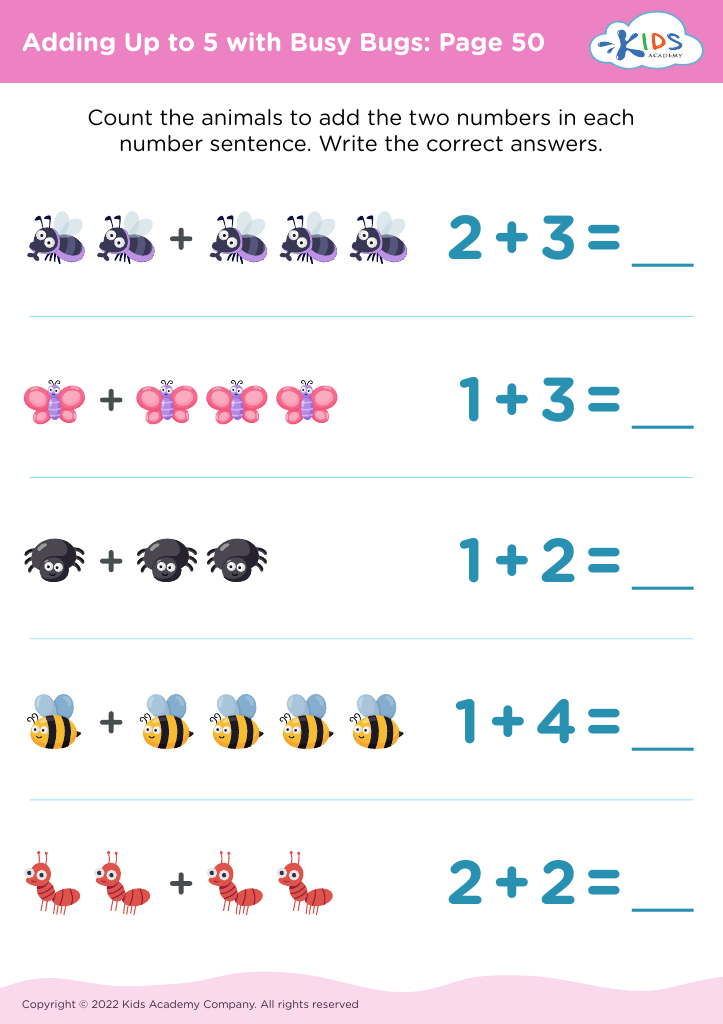
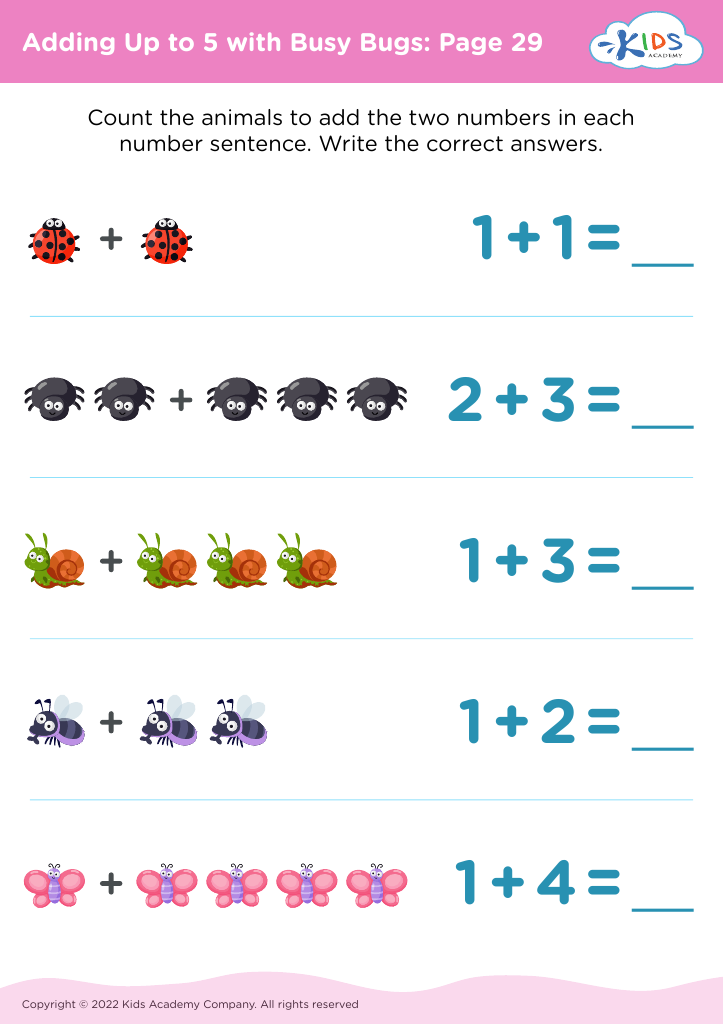
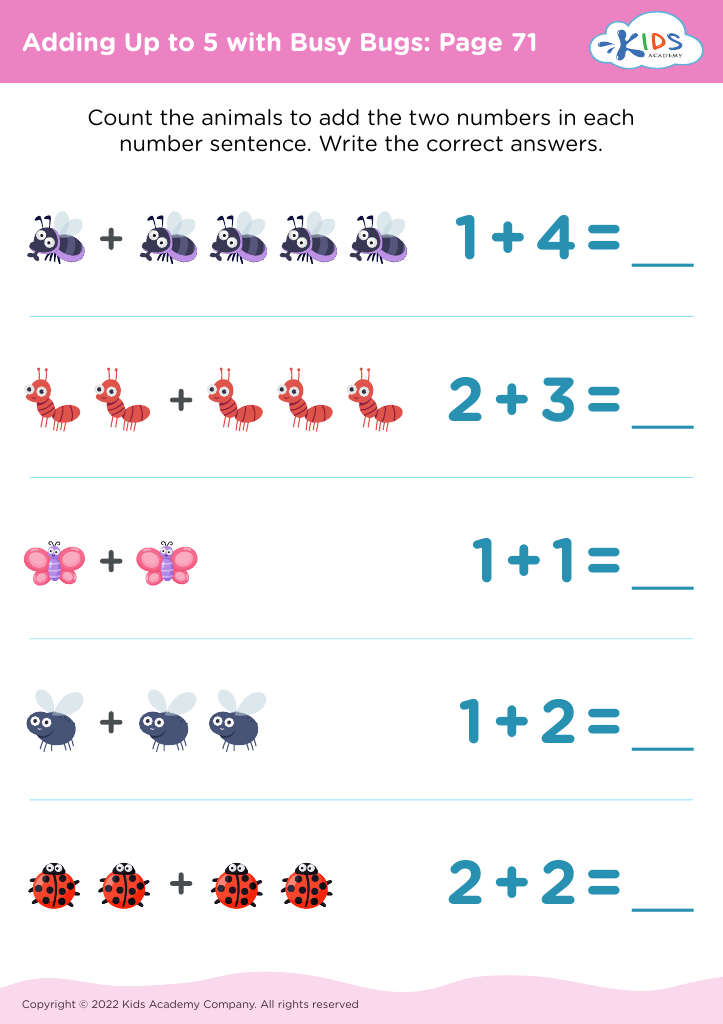
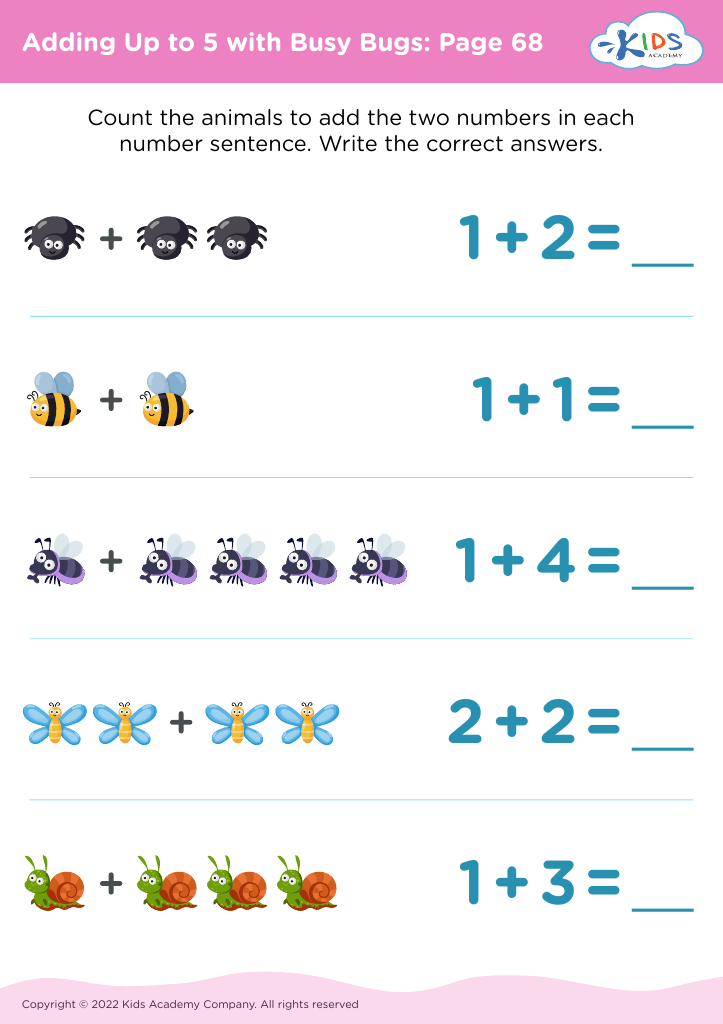



Understanding Quantities Adding with Busy Bugs for ages 5-8 is an engaging and effective tool designed to foster early mathematical skills in young learners. Parents and teachers should care about incorporating this resource because it helps children build a solid foundation in number sense and arithmetic in a fun and interactive way.
At the ages of 5-8, children are in a critical developmental stage where they are naturally curious and eager to explore the world around them. Using whimsical and colorful 'busy bugs', the concept of adding quantities becomes tangible and relatable. This method stimulates a child’s visual and tactile senses, making abstract concepts like addition more concrete.
Moreover, engaging with such materials encourages children to practice critical thinking and problem-solving skills. As they count, group, and add the 'busy bugs', they learn to recognize patterns and develop strategies to find solutions, which are essential skills for their academic journey.
For teachers, using a hands-on approach with physical tools or interactive visuals from Understanding Quantities Adding with Busy Bugs can complement traditional teaching methods. For parents, it provides an opportunity to actively participate in their child's learning, reinforcing concepts taught in school.
Ultimately, fostering a love for learning and confidence in math at an early age sets the stage for future academic success. Understanding Quantities Adding with Busy Bugs ensures that children view math as an enjoyable and manageable endeavor.