Addition up to 5 Addition & Subtraction Worksheets for Ages 5-8
4 filtered results
-
From - To
Introduce your young learners to fundamental math concepts with our "Addition up to 5 Addition & Subtraction Worksheets for Ages 5-8." These printable worksheets are designed to make learning both fun and effective for children aged 5-8. Focusing on addition up to 5, each sheet provides vibrant, engaging activities that help kids develop essential math skills while boosting their confidence. With a variety of exercises, our worksheets cater to different learning styles, making it easy for kids to grasp the basics of addition and subtraction. Unlock your child's potential with these expertly crafted resources. Download yours today!
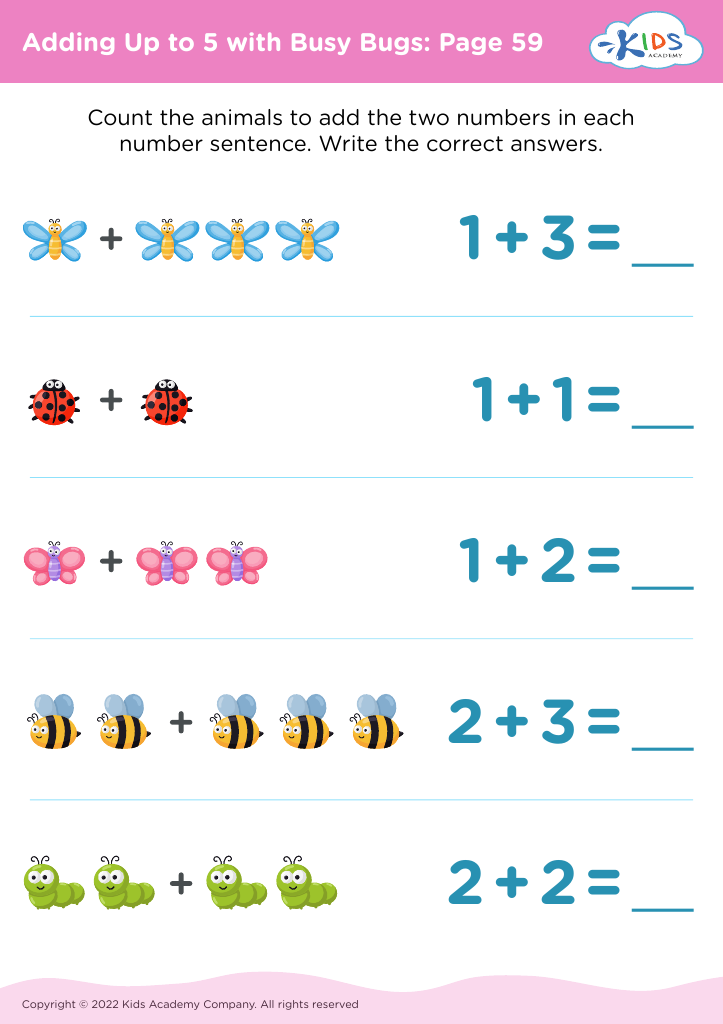
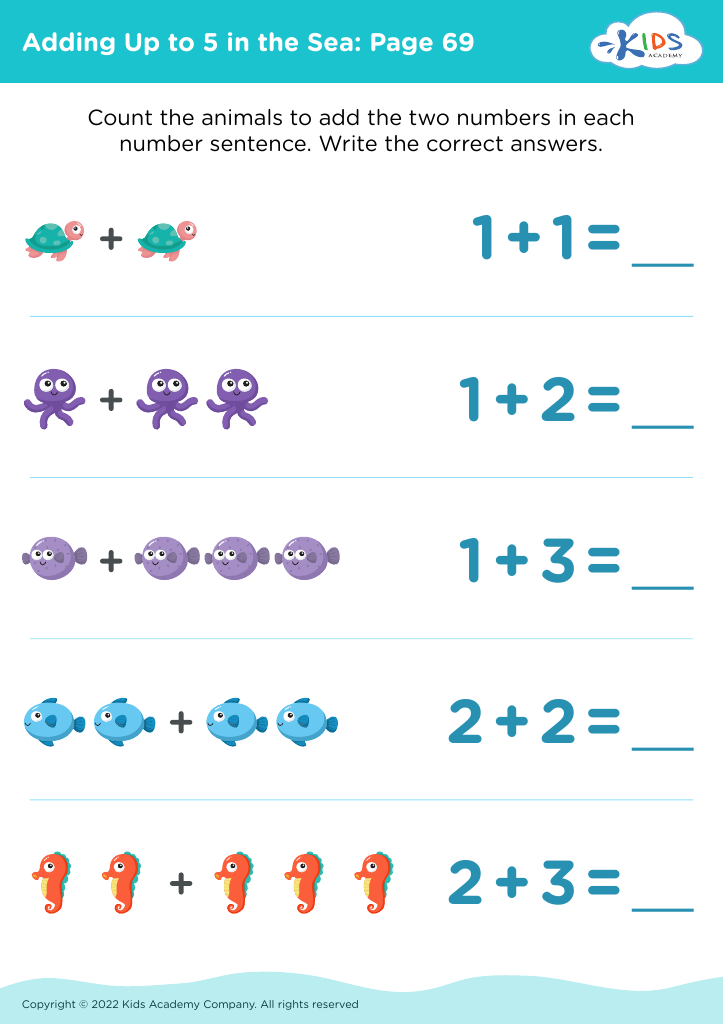
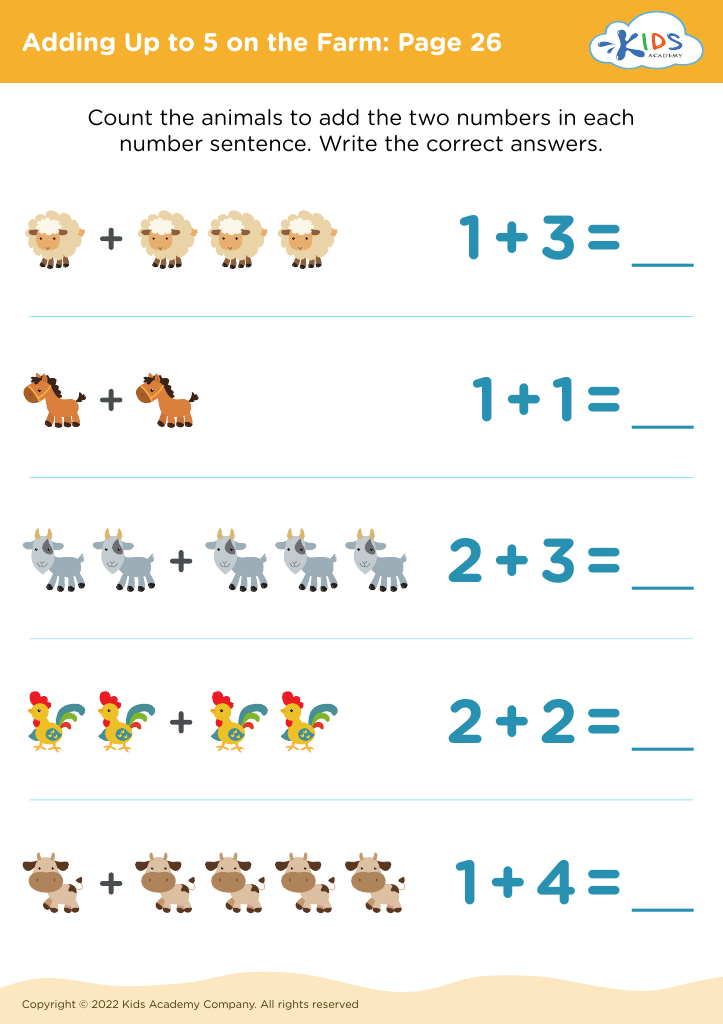
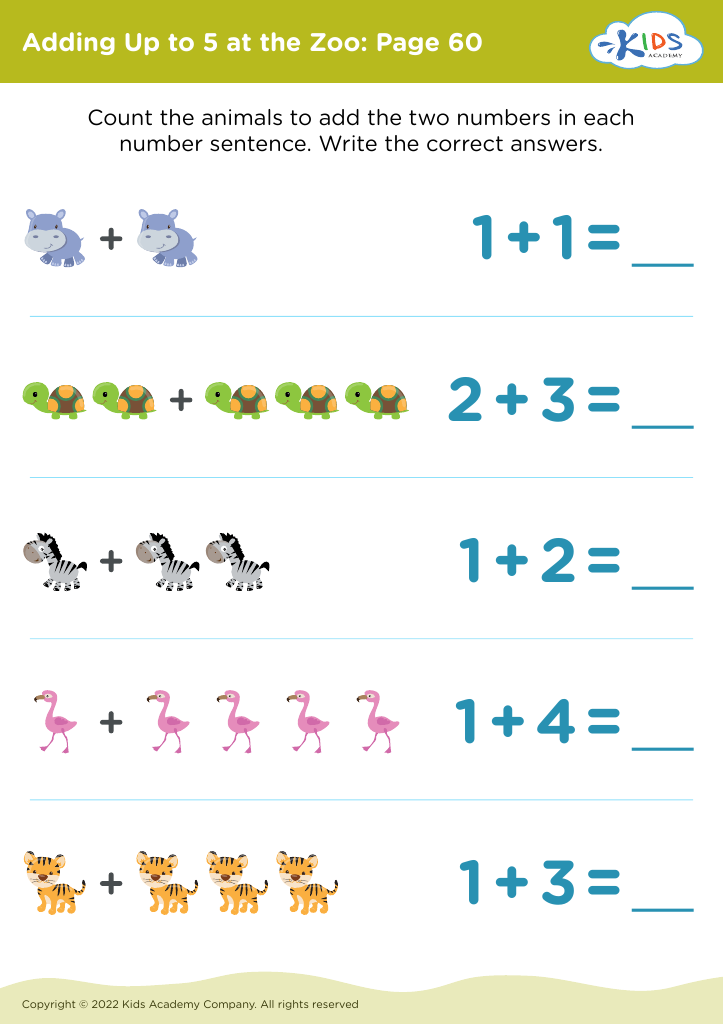








Parents and teachers should care about teaching addition and subtraction up to 5 for children aged 5-8 because these foundational skills are critical for their overall mathematical development. At this stage, children are learning the basic building blocks that will support more complex problem-solving and arithmetic in the future. Understanding simple addition and subtraction boosts cognitive development, including logical thinking and pattern recognition.
For children, mastering addition and subtraction up to 5 fosters a sense of achievement and confidence. These simple calculations are often their first encounter with formal mathematics, and early success can instill a positive attitude towards the subject, making them more likely to enjoy and succeed in math later on. Using tangible objects like fingers, toys, or drawings to perform these operations also helps them bridge concrete and abstract thinking.
Furthermore, early arithmetic skills are interconnected with other essential life skills such as logical reasoning, listening, and following instructions. Mastery of basic arithmetic is often correlated with better performance in academics across the board because it encourages cognitive flexibility and executive functioning skills.
Finally, early math skills help children in daily life, helping them understand concepts like sharing equally, counting toys, or even telling simple time. Engaging in these math activities with parents and teachers builds basic numeracy skills necessary for everyday problem solving.








