Animal identification Addition & Subtraction Worksheets for Ages 5-8
28 filtered results
-
From - To
Explore our engaging Animal Identification Addition & Subtraction Worksheets designed for children aged 5-8! These fun and interactive worksheets help young learners enhance their math skills while exploring the fascinating world of animals. Each activity prompts kids to identify animals while practicing addition and subtraction, making learning enjoyable and effective. These worksheets are tailored to reinforce early numeracy concepts as well as animal recognition, providing a comprehensive learning experience. Perfect for classroom settings or home practice, our resources will captivate young minds while building essential math skills in a playful context. Download and watch your little ones thrive in math and animal knowledge!
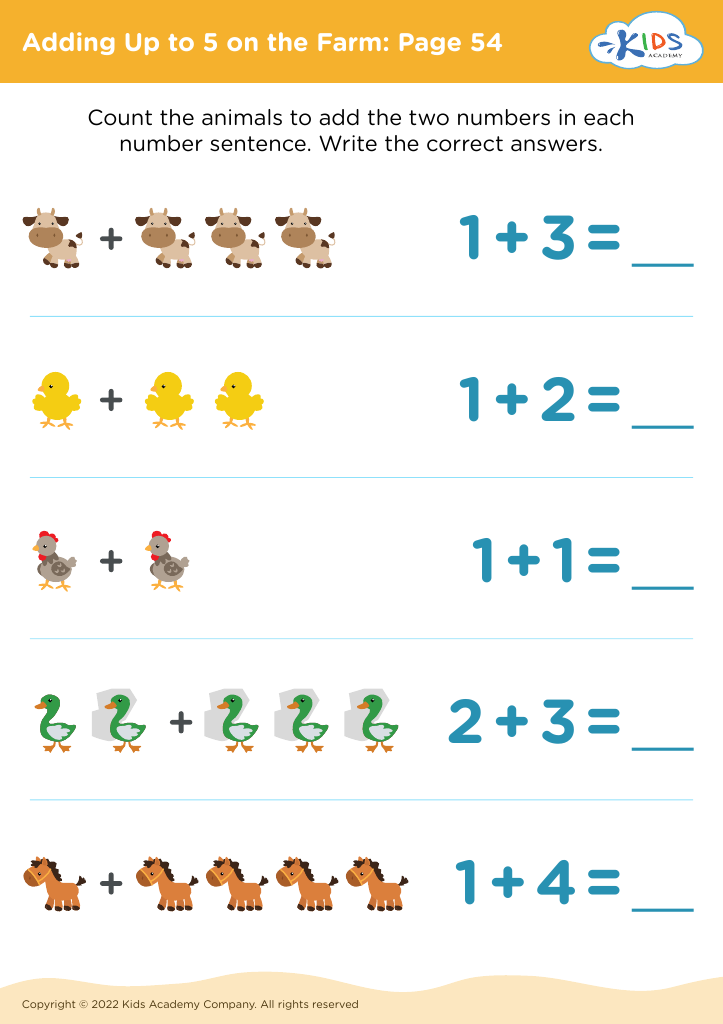
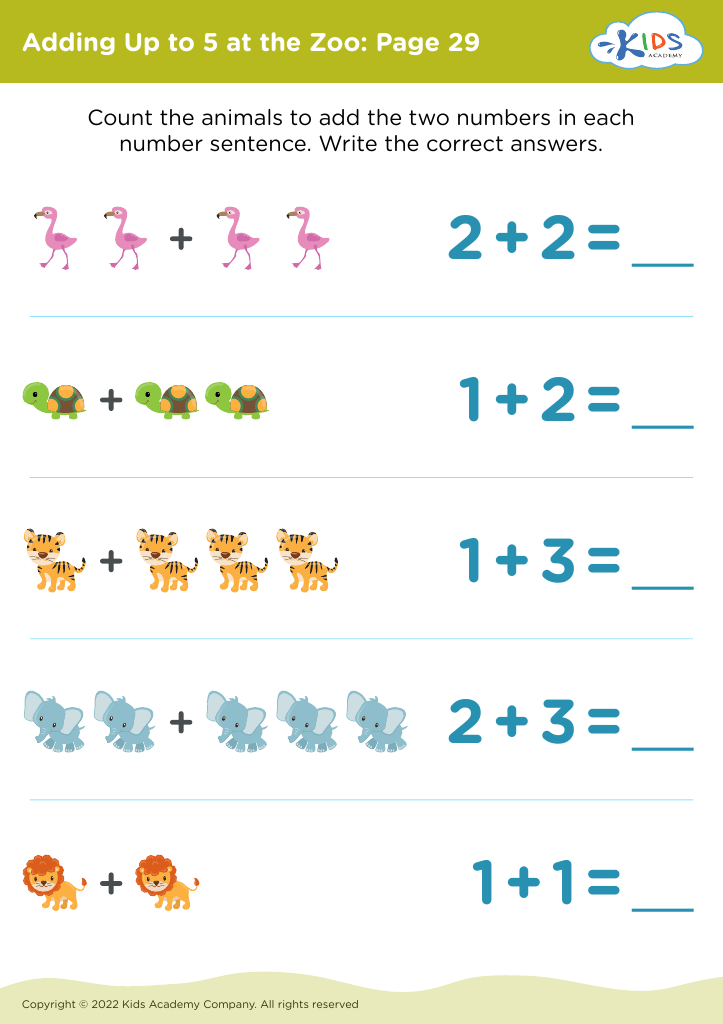
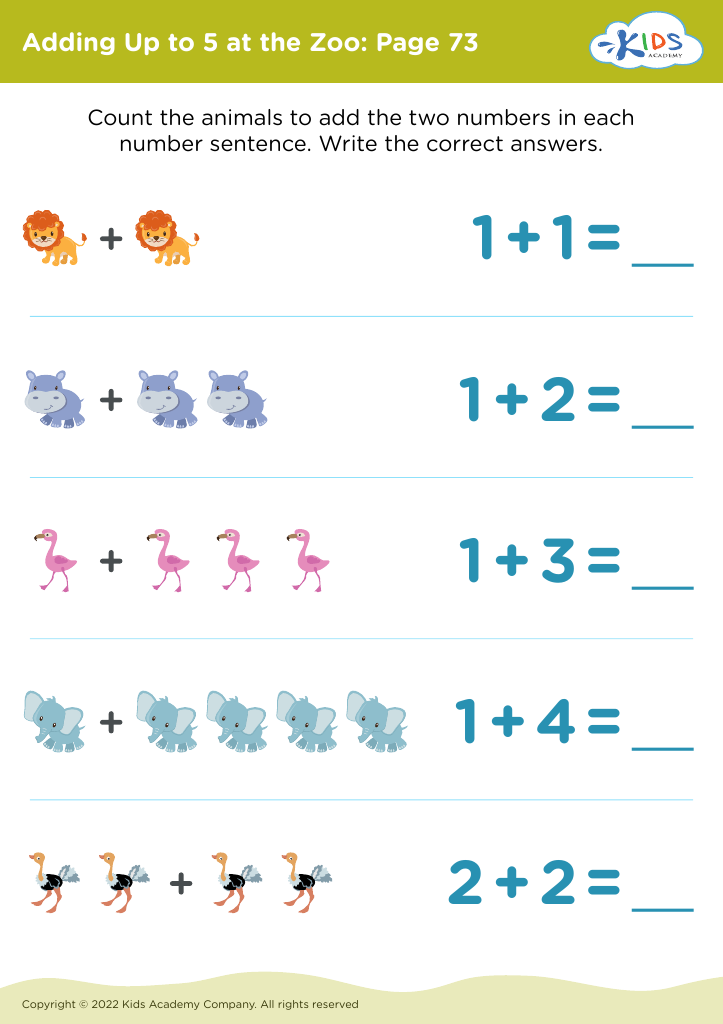
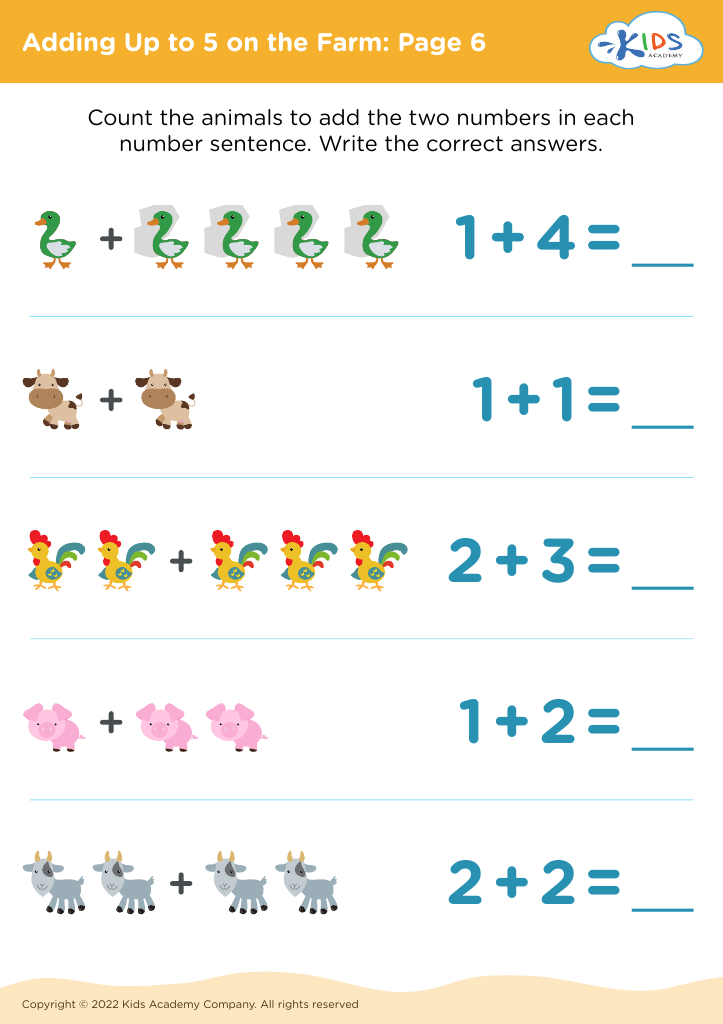
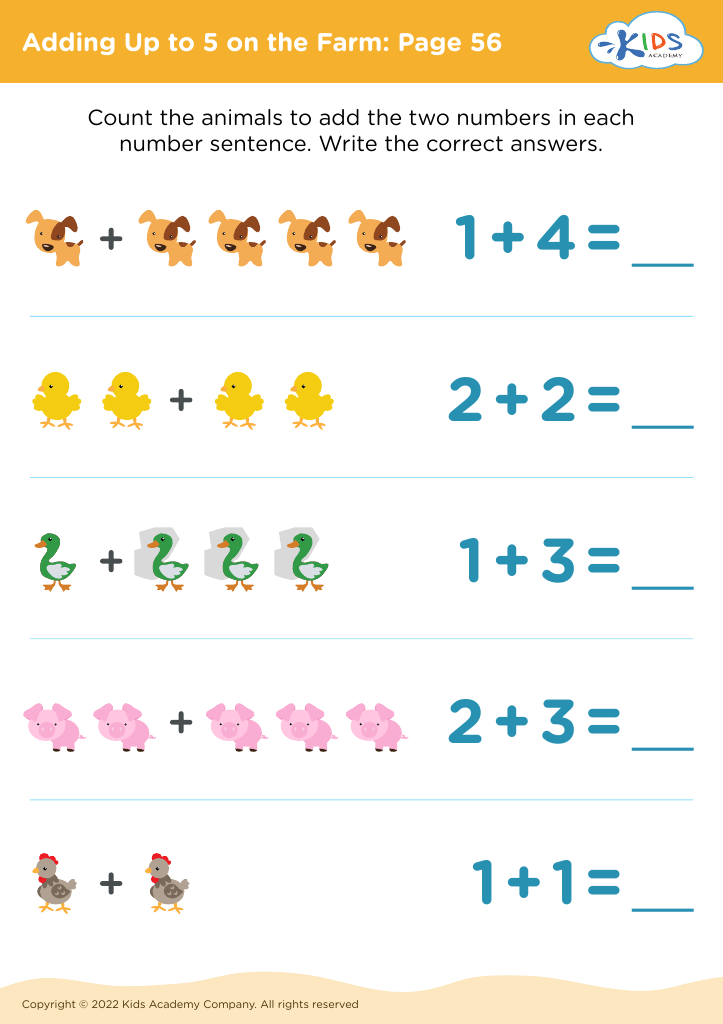
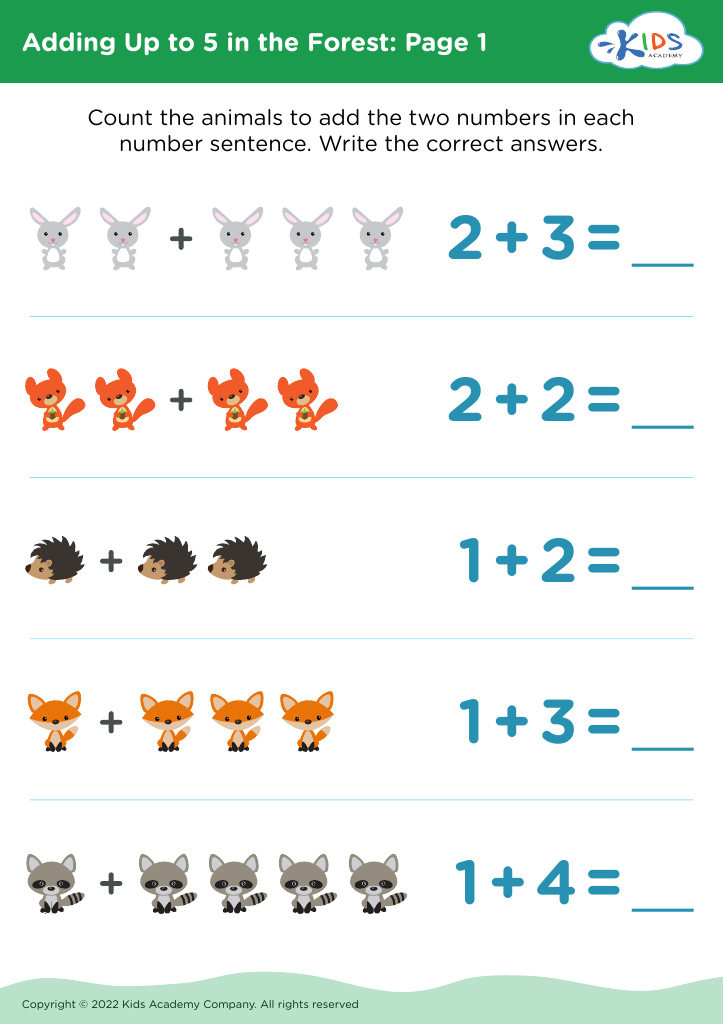
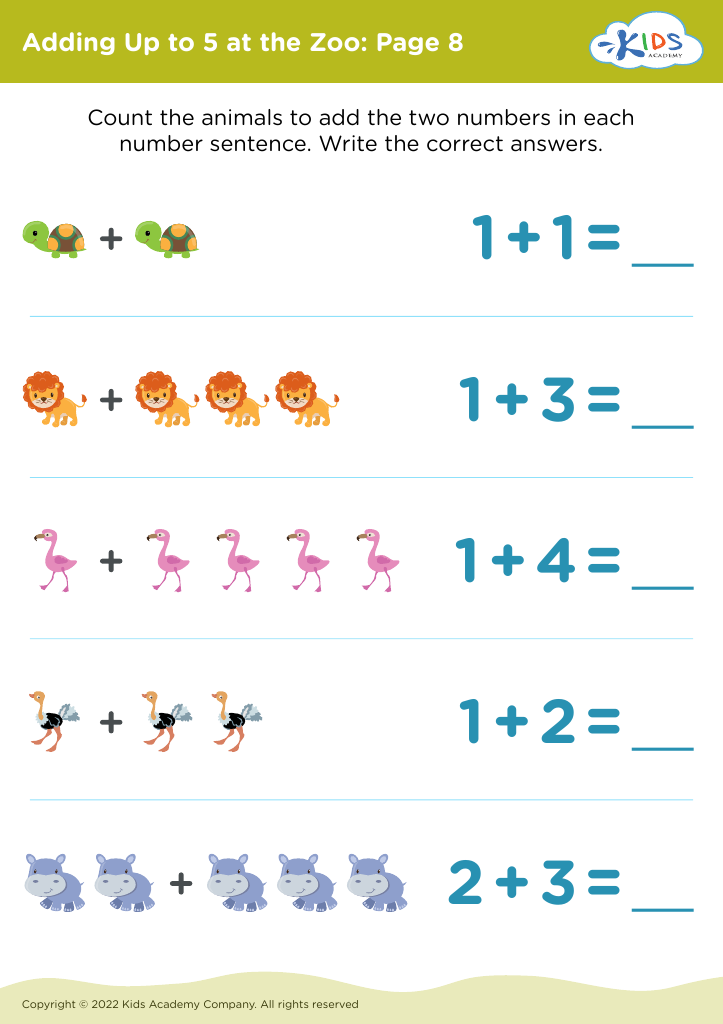
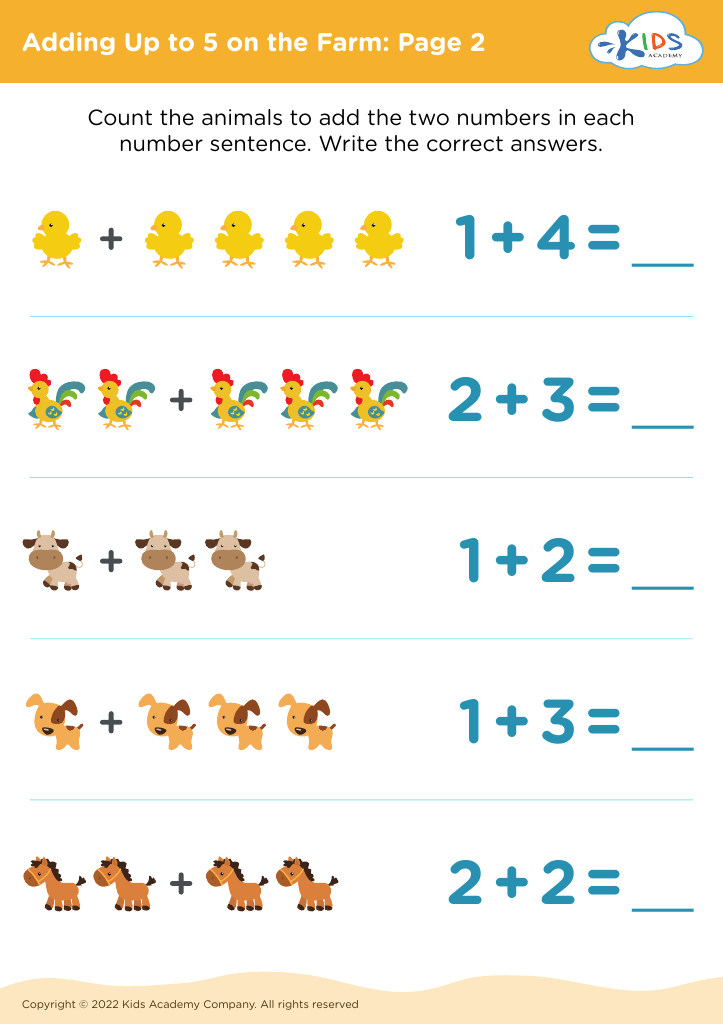
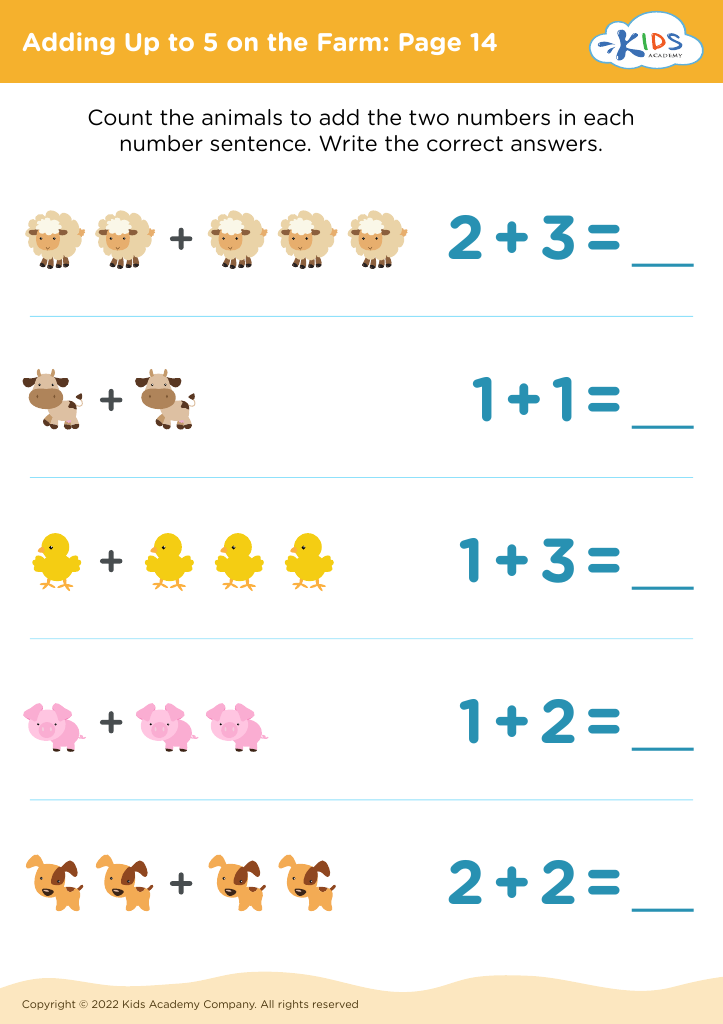
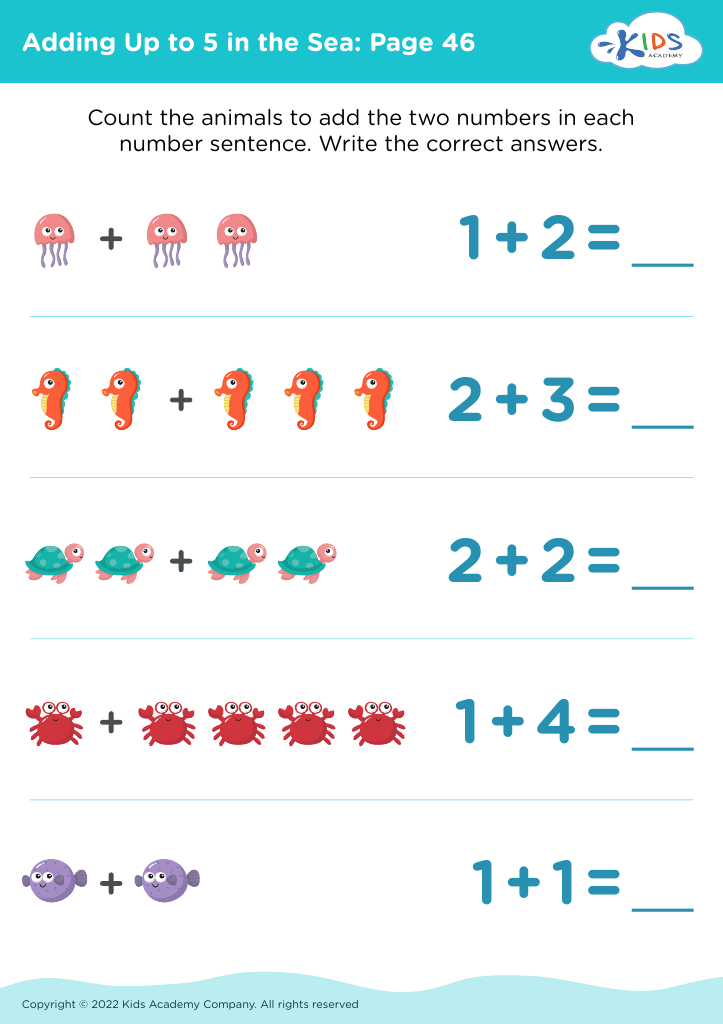
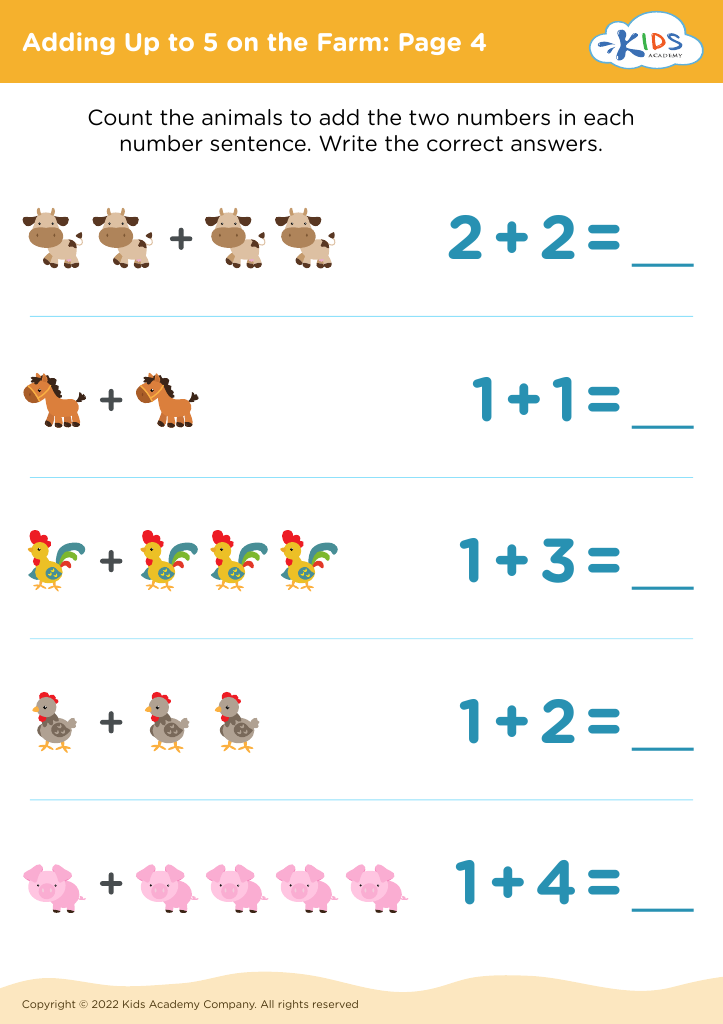
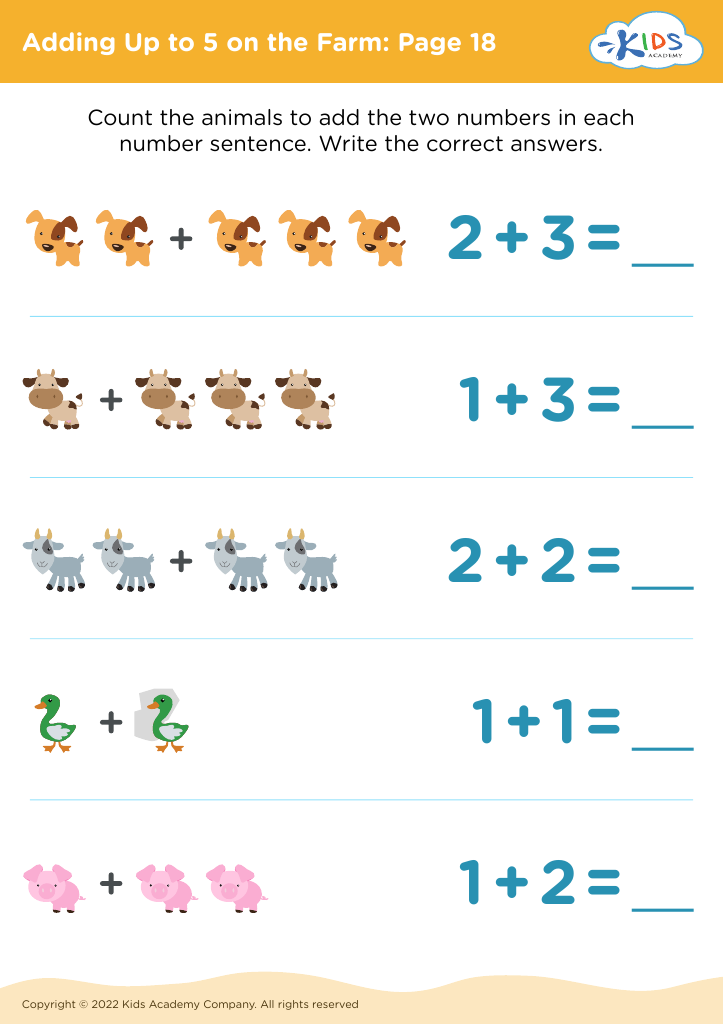
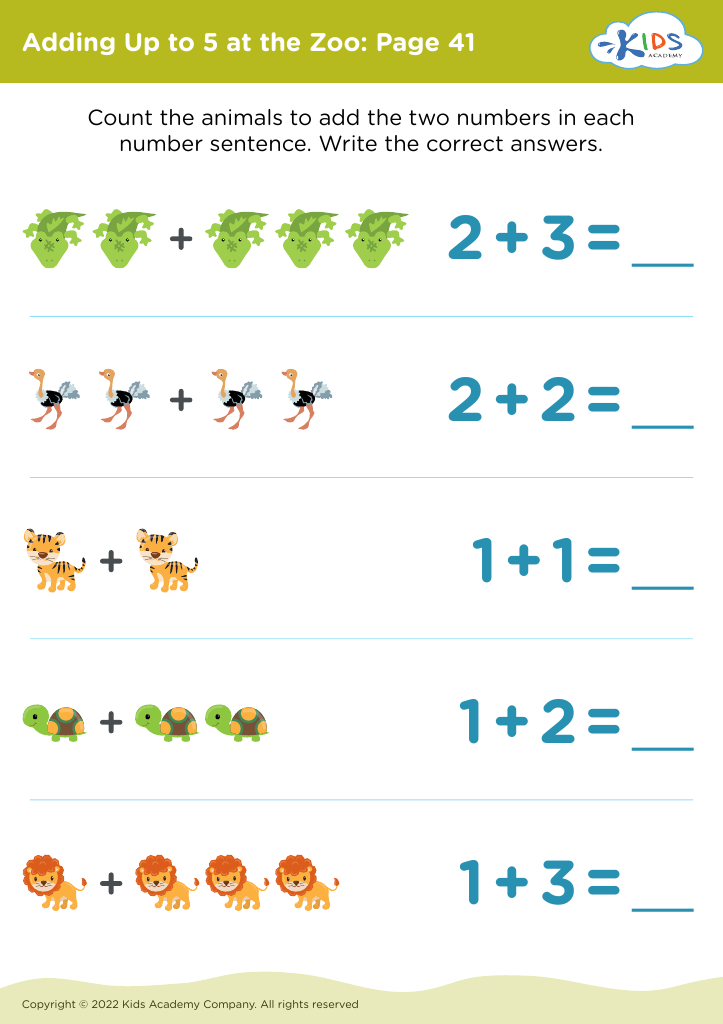
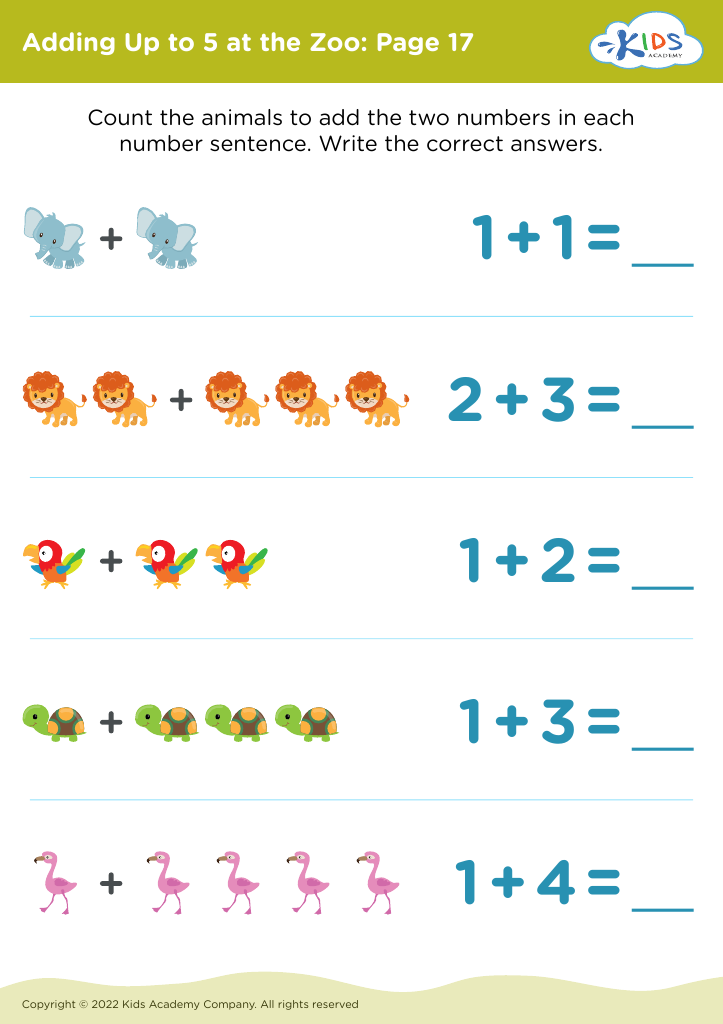
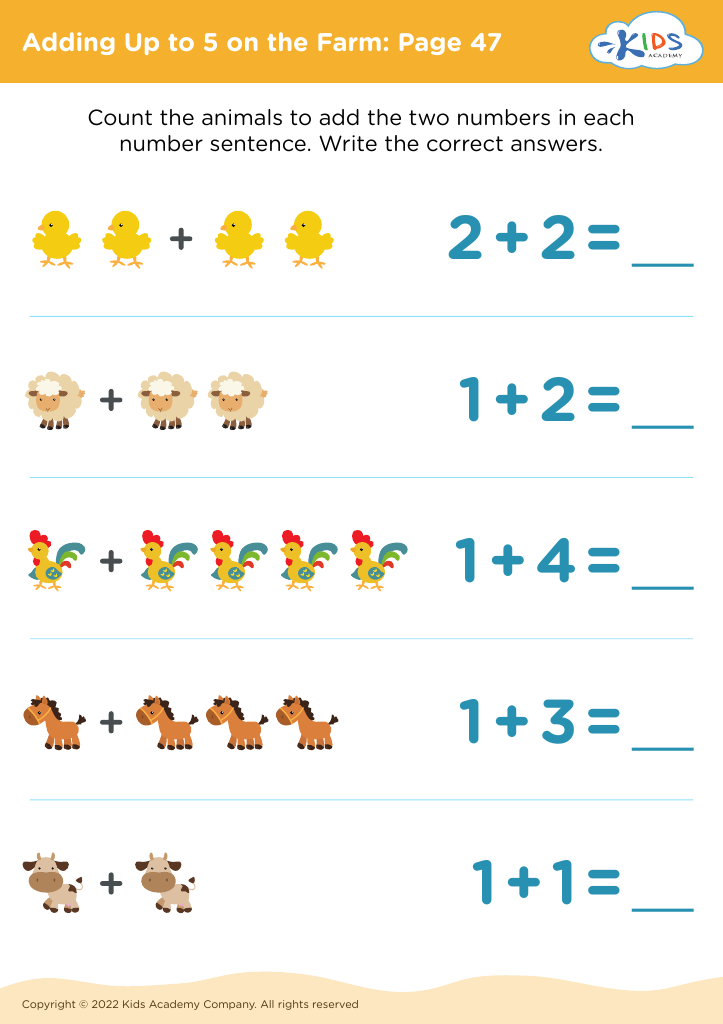
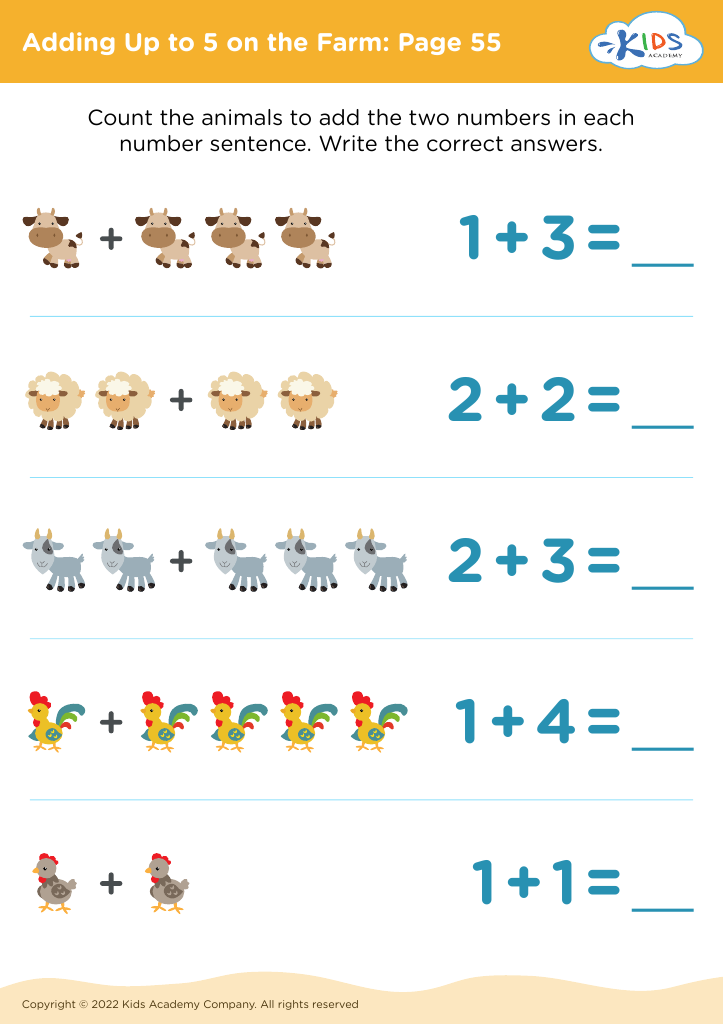
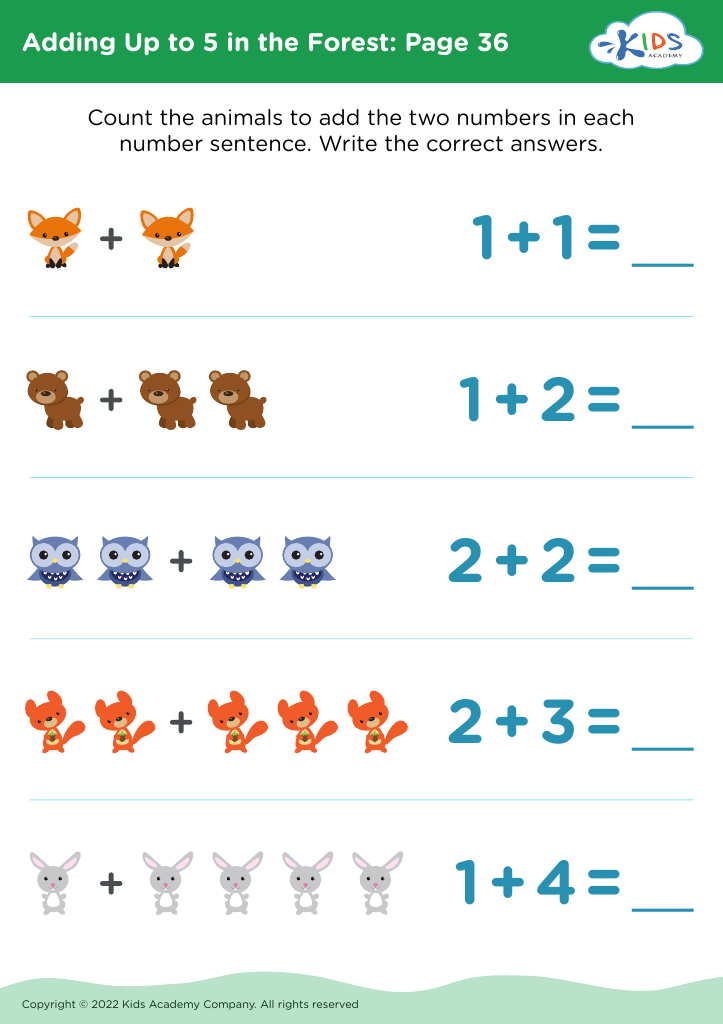
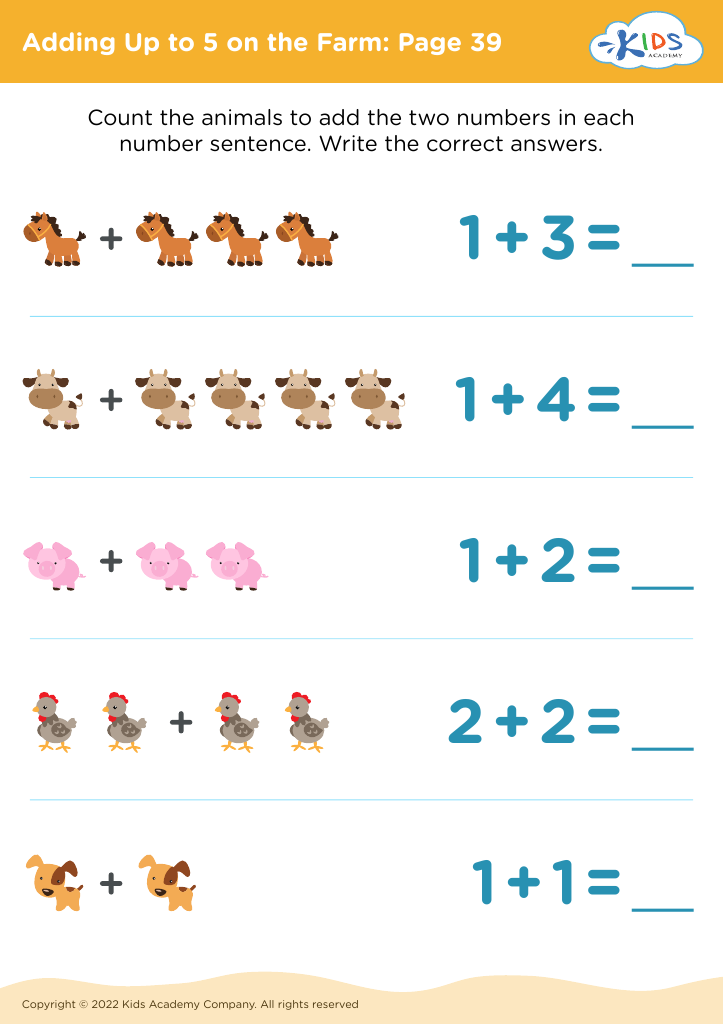
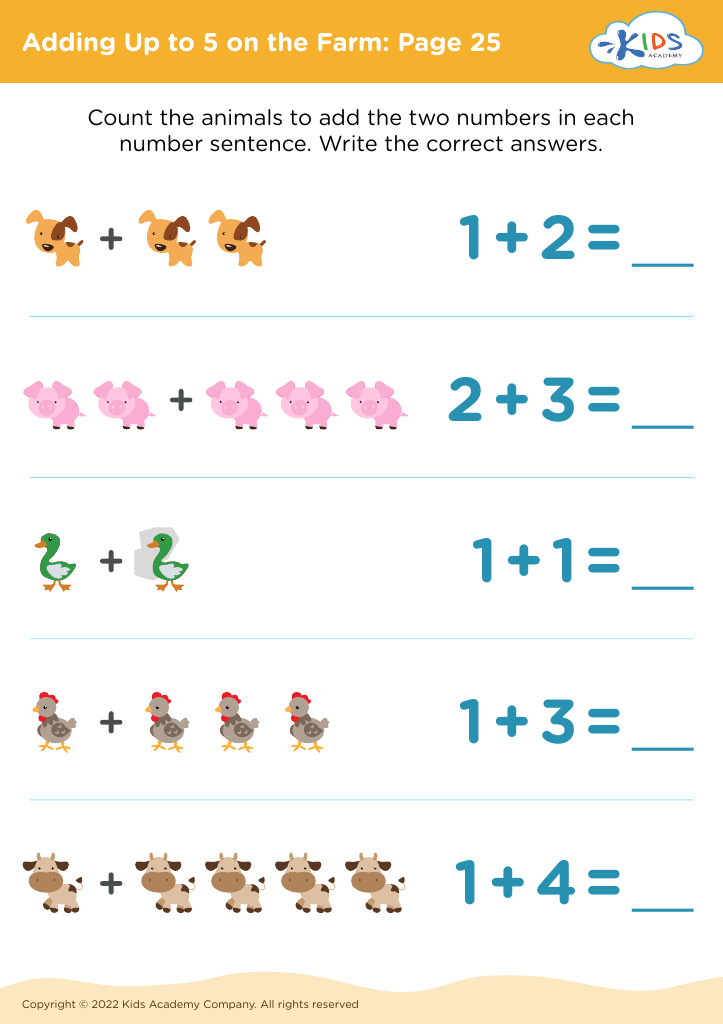
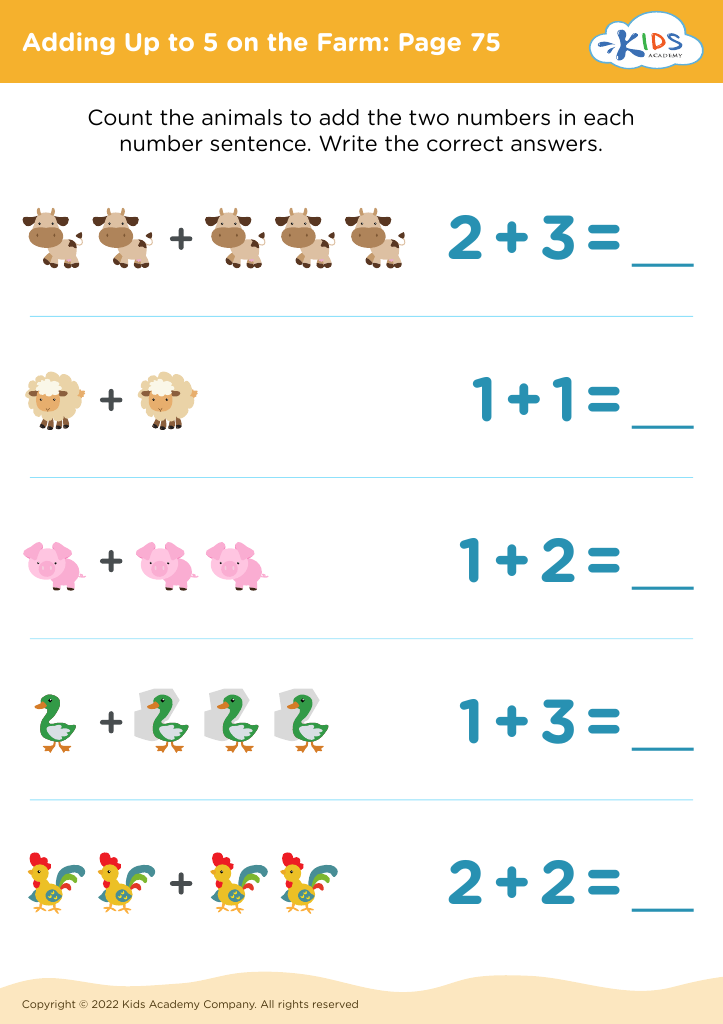
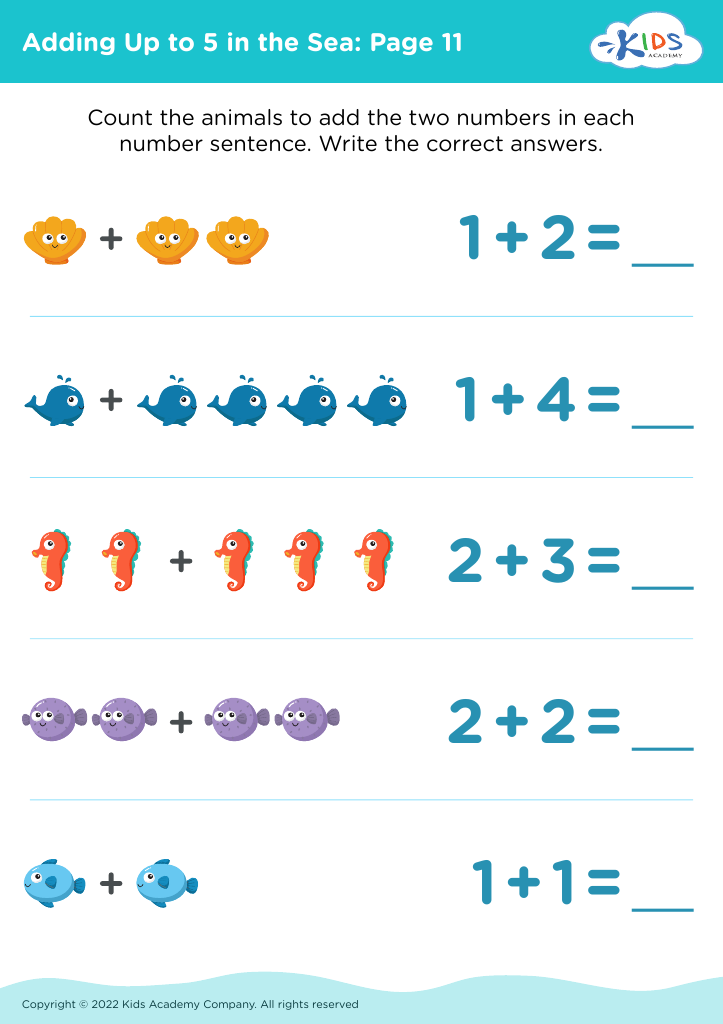
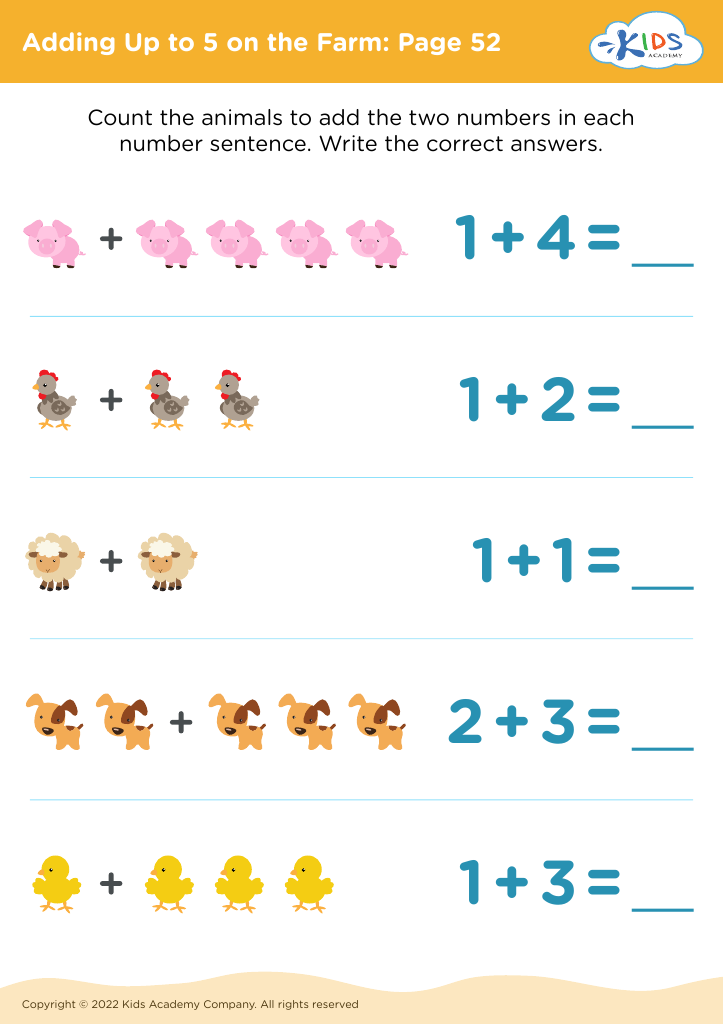
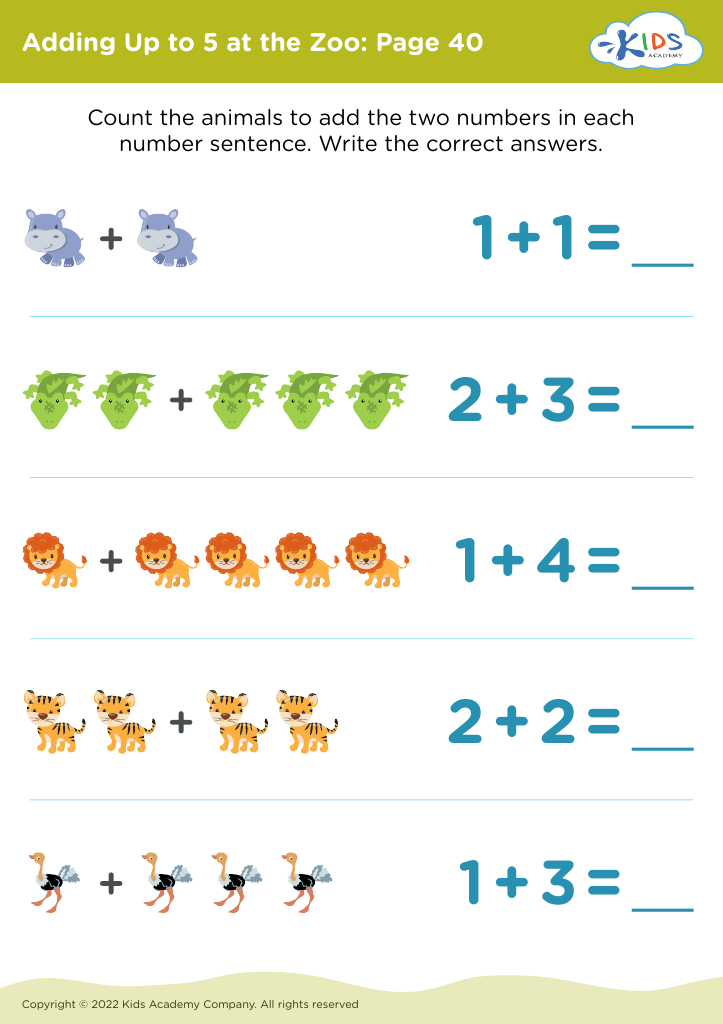
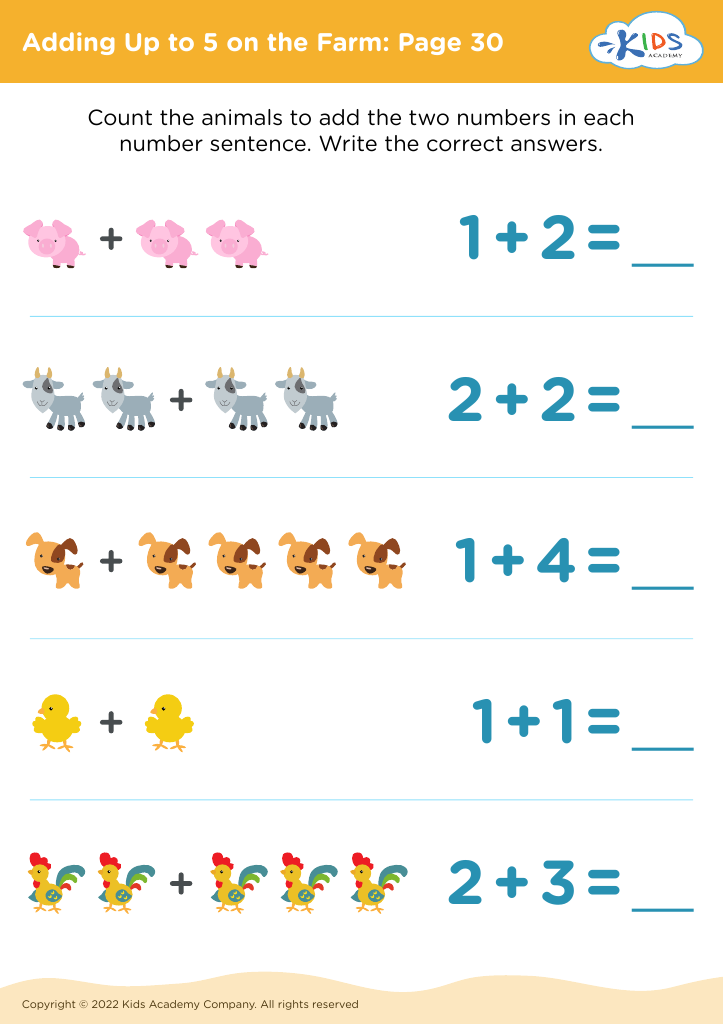








Animal identification Addition & Subtraction is an engaging and effective way to teach early mathematics concepts to children aged 5-8. Understanding these methods fosters not only foundational math skills, such as counting and simple arithmetic, but also enhances cognitive development through playful learning.
For parents and teachers, this approach taps into children's natural curiosity about animals, making the learning process more relatable and enjoyable. Engaging students by using their interest in animals can increase their motivation and attention in lessons, leading to better retention of information. Additionally, combining math with themes of empathy and a sense of responsibility towards living creatures encourages a holistic educational environment.
Moreover, teaching addition and subtraction through animal identification cultivates critical thinking and problem-solving skills. Children learn to categorize and associate numbers with real-world contexts, which reinforces their understanding of quantity and operational relationships.
By integrating these math concepts with animal themes, educators and caregivers create memorable experiences that promote a love for learning. Ultimately, fostering early math skills sets the stage for academic success and prepares children for more complex concepts as they progress in their educational journey. This foundational knowledge is essential for their future development, both in math and beyond.








