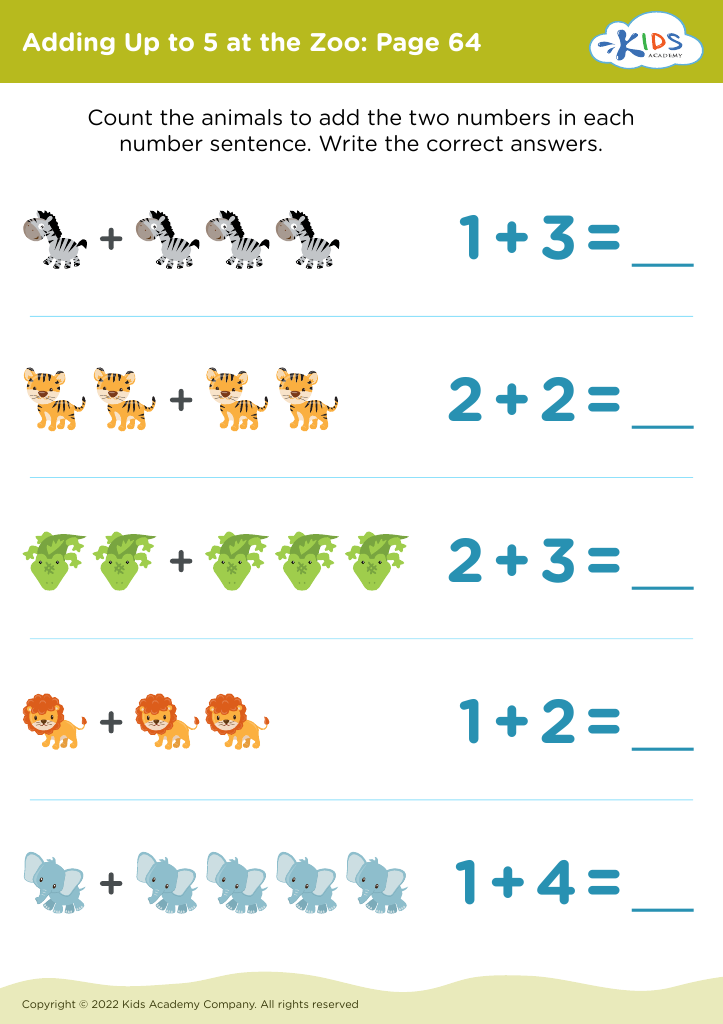
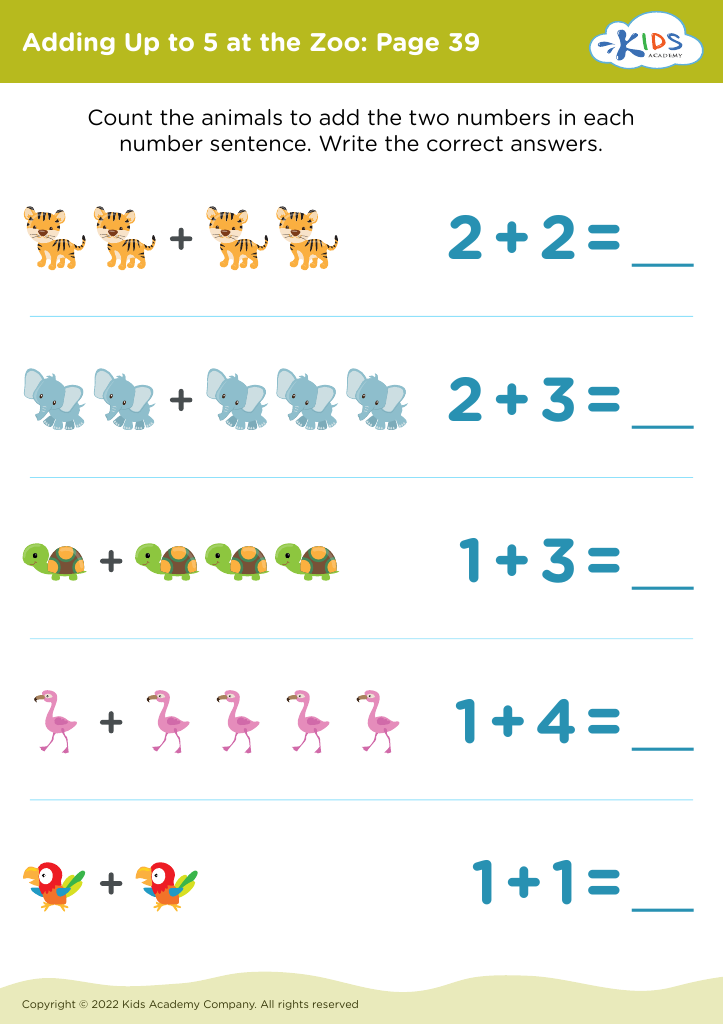
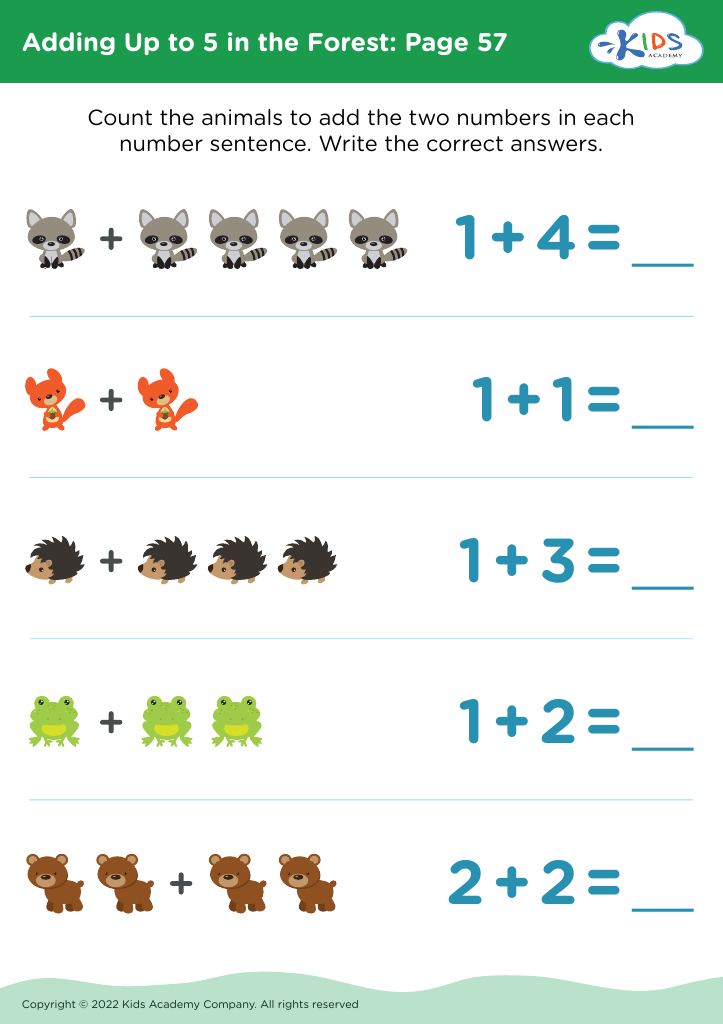








Animal recognition addition and subtraction activities for children aged 5-8 serve as a vital bridge between early math skills and meaningful learning experiences. These engaging activities not only help children understand fundamental math concepts but also foster a love for learning by integrating exciting elements of nature and animals.
When children identify different animals while solving math problems, it stimulates their curiosity and enthusiasm, making the learning process enjoyable. This dual-focus approach assists in reinforcing their number skills while enhancing cognitive functions such as memory and visualization. Using animals as context for mathematical operations also aids in developing storytelling skills, as children can create scenarios involving their favorite creatures.
Moreover, incorporating familiar concepts like animals allows young learners to relate math to their everyday lives, promoting connections between school and the outside world. For parents and teachers, prioritizing these activities can cultivate critical thinking and problem-solving skills early on while catering to diverse learning styles. Overall, animal recognition addition and subtraction encourage active participation, creativity, and a positive attitude toward math, setting a strong foundation for future mathematical understanding and appreciation in children.








